
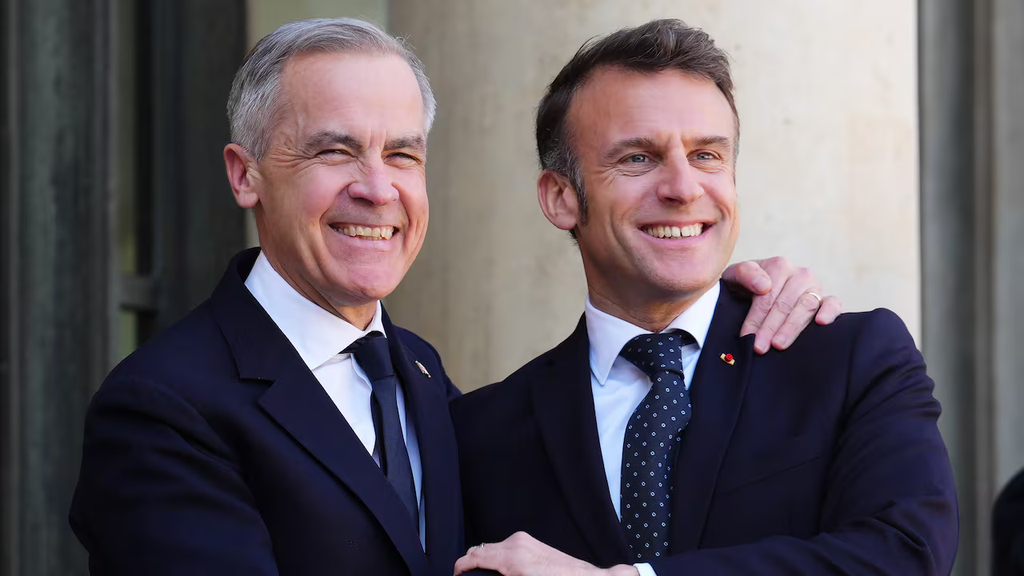
Canadian Prime Minister Mark Carney has officially landed on the tiny French territory of Saint-Pierre-et-Miquelon for a historic face-to-face meeting with French President Emmanuel Macron.
This trip marks the first time in history that a sitting Canadian prime minister has made an official visit to the small island collective located just off the Atlantic coast of North America.
While the islands are quiet and home to only about 6,000 residents, the agenda between the two global leaders is massive. They are meeting to tackle heavy topics like clean energy, critical minerals, military defense, advanced satellite technology, and trade agreements before both head to New York City for the United Nations General Assembly.
Here is the full breakdown of why this surprising meeting happened, what was discussed behind closed doors, and why a tiny patch of French land next to Newfoundland is suddenly at the center of international politics.
Where on Earth Is Saint-Pierre-et-Miquelon?
To understand why this summit is causing such a stir, you first have to look at a map. Saint-Pierre-et-Miquelon is a tiny collection of islands situated barely 25 kilometers off the southern coast of Newfoundland, Canada.
Build Funnels, Email Lists & Sell Online With One Free Tool
Create funnels, send emails, and sell online using Systeme.io without paying for multiple tools.
Create Free AccountFree forever • No credit card • Beginner-friendly
Despite sitting right next to Canadian territory, these islands do not belong to Canada. They are a self-governing overseas territory of France. That means the people who live there speak French, use the Euro as their official currency, and vote in French national elections.
It is the very last remaining piece of France’s once-vast colonial empire in North America. For centuries, the island was a hub for French cod fishermen. Today, it remains a unique geographic anomaly—a small piece of Europe sitting right in North America’s backyard.
Because of this unique setup, Canada and Saint-Pierre-et-Miquelon share everyday connections. People travel back and forth on regular ferry lines, trade local goods, and share deep cultural ties. Yet, until now, no Canadian prime minister had ever made a formal official visit to the islands.
What Happened at the Historic High-Stakes Meeting?
The day began with a warm meeting between Prime Minister Carney and President Macron as they gathered for a high-level working lunch.
After their discussions, both leaders participated in a solemn wreath-laying ceremony at a local war memorial. This memorial honors the brave volunteers of Free France who fought during World War II.
Back in December 1941, Free French forces peacefully liberated the island archipelago from the Vichy regime, which was allied with Nazi Germany. By laying a wreath together, Carney and Macron highlighted the long history of shared values, freedom, and military unity between Canada and France.
The meeting was brief, lasting only a few hours before both leaders prepared to travel onward to New York. However, official representatives from both governments emphasized that the trip was far more than just a symbolic photo opportunity.
What Was Really on the Agenda?
While the location was scenic and quiet, the topics discussed on the island carried serious political and economic weight. Official details released by the Prime Minister’s Office showed that Canada and France are working to lock in major partnerships across key sectors.
Supercomputers, Satellites, and Artificial Intelligence
One of the most notable parts of the summit focused on high-tech cooperation. Both leaders agreed to expand joint projects in advanced technology, including quantum science, satellite communication, and supercomputing systems.
As global industries lean heavily into artificial intelligence and automated systems, Western nations are rushing to build secure supply chains for tech infrastructure. Canada and France want to ensure they stay at the cutting edge together. If you want to keep up with how cutting-edge tools are changing industries, check out our selection of technology and AI articles for fresh insights.
Critical Minerals and Clean Energy Partnerships
Another primary point of discussion was securing critical minerals and advancing green energy projects. Critical minerals like lithium, cobalt, and nickel are necessary for building electric vehicle batteries, solar panels, and wind turbines.
Canada holds vast natural reserves of these minerals, while France and the broader European continent are eager to reduce their reliance on foreign powers for energy supplies. By locking in bilateral agreements, Canada secures major export buyers while France gains a stable, democratic partner for its green transition.
Regional Fishing, Transit, and Local Challenges
Beyond high-level technology and global energy deals, the leaders also spent time talking about everyday issues affecting local island residents.
President Macron’s team noted that the talks covered local fishing rights, ferry transit for travelers between Canada and Saint Pierre, university exchange programs, and local regional trade.
The islands have felt isolated and overlooked by Paris in recent times. On top of that, the nearby island of Miquelon is dealing with severe coastal erosion and rising sea levels, forcing local leaders to consider moving entire coastal neighborhoods. Working directly with nearby Canadian regional authorities offers practical solutions for the islanders.
The Broader Picture: Trade, Europe, and Global Politics
This meeting on a small French island did not happen in a vacuum. It comes during a busy period of global diplomacy for Prime Minister Mark Carney.
Recently, Carney traveled across Europe, giving major speeches to the European Parliament in Strasbourg and holding talks regarding Canada’s economic ties with the European Union. During those trips, Carney pointed out that Canada and Europe share deep alliances that go beyond trade agreements.
At the same time, international trade rules are shifting rapidly. Foreign tariffs and changing economic policies in North America have pushed middle-power nations like Canada and France to stick closer together.
By visiting Saint-Pierre-et-Miquelon right before flying to the UN meeting in New York, Carney and Macron sent a clear message to world leaders: Canada and France stand united on trade, security, and democratic values.
Reporting from major outlets like CBC News and AP News confirms that strengthening these transatlantic connections remains a top priority for both administrations.
Why Understanding Global News Matters Today
Keeping up with fast-moving news stories like this can feel overwhelming. Events happening on a tiny island off the coast of Canada can suddenly impact global energy prices, tech supply chains, and political alliances.
Being informed helps you understand how the world works, whether you are following world politics or looking at new ways to build digital projects online. For example, many creators and modern entrepreneurs use digital automated channels to break down current events and share stories with millions. To discover how creators automate content creation efficiently, take a look at our guide on the YouTube automation section.
Understanding global dynamics is essential whether you are managing a local business or creating content for a global audience.
Frequently Asked Questions (FAQs)
Why is Saint-Pierre-et-Miquelon a French territory?
Saint-Pierre-et-Miquelon remains French because of historic 18th-century treaties between Britain and France. When France lost most of its North American claims, it was allowed to keep these small islands as a base for its cod fishing fleet. Today, it remains an official overseas territory of France.
Has a Canadian Prime Minister ever visited Saint-Pierre-et-Miquelon before?
No. Mark Carney’s visit on September 20, 2026, was the very first official visit by a sitting Canadian prime minister to the French territory.
What main topics were discussed by Carney and Macron?
The two leaders focused on critical minerals, clean energy partnerships, quantum computing, satellite systems, military defense, and local regional trade and transport connections.
How far is Saint-Pierre-et-Miquelon from Canada?
The archipelago is situated roughly 20 to 25 kilometers off the southern coast of Newfoundland, Canada. It is easily accessible by short ferry rides and regional flights from eastern Canada.
Build Funnels, Email Lists & Sell Online With One Free Tool
Create funnels, send emails, and sell online using Systeme.io without paying for multiple tools.
Create Free AccountFree forever • No credit card • Beginner-friendly
Wrapping It All Up
The meeting between Prime Minister Mark Carney and President Emmanuel Macron on Saint-Pierre-et-Miquelon stands out as a historic moment for both nations. It showed that even a tiny island with 6,000 residents can play a big role on the world stage.
By meeting right on Canada’s doorstep, both leaders proved that strong partnerships are built on shared values, direct action, and mutual respect. As both heads of state head into major international talks in New York, the agreements made on this small French island will ripple across clean energy, technology, and trade sectors for months to come.
If you want to know more about who we are, take a look at our about page. Have thoughts or feedback on this story? Reach out to us through our contact page.
Stay connected with us across social media for daily updates and trending news stories:
- Follow us on Instagram
- Connect with us on Facebook
- Join the conversation on X (formerly Twitter)
