
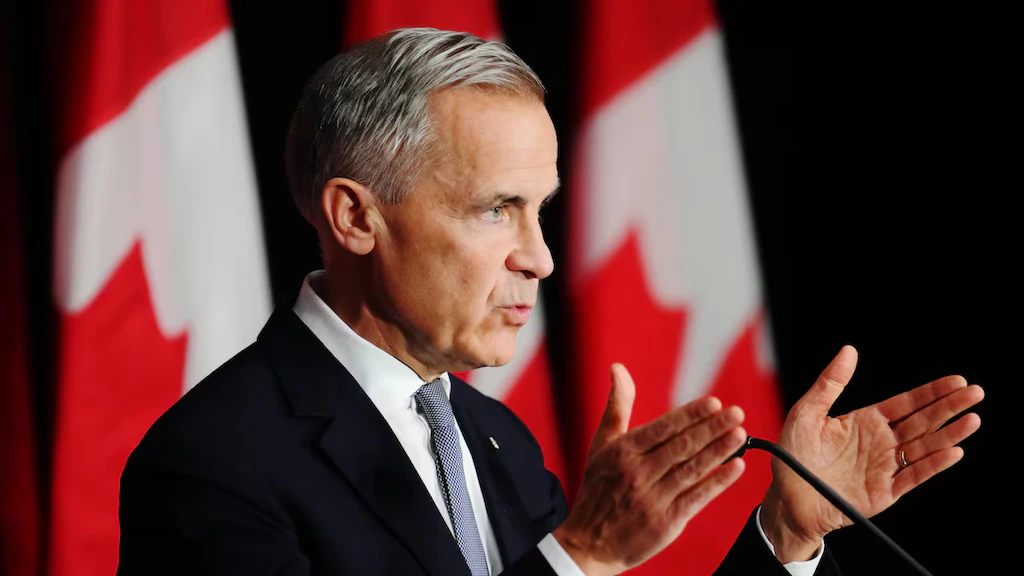
Canadian Prime Minister Mark Carney is currently in Europe holding high-level talks in Strasbourg, and the response back home is overwhelming. A major poll shows that four out of every five Canadians—an astonishing 80 percent—support building a much deeper, closer partnership with the European Union.
This sudden shift comes at a crucial moment in global history. Escalating trade tensions and tariff battles across the southern border have pushed Canadian leaders to look across the Atlantic Ocean for stronger, more reliable allies. Instead of relying so heavily on traditional trade routes, Canada is actively looking to build a brand new economic and strategic bridge to Europe.
What Is Happening in Europe Right Now?
Prime Minister Mark Carney traveled directly to Strasbourg to address the European Parliament and meet with European Commission President Ursula von der Leyen. His goal is simple: secure a unique strategic alliance that protects Canada from international economic shocks and unpredictable foreign policies.
During the talks, European leaders welcomed Canada with open arms. European Commission President Ursula von der Leyen publicly suggested that Canada could become the very first “associate member” of the European Union. While associate membership is not the same as full political membership, it opens doors that were previously closed to non-European countries.
The discussions are focusing on several key areas that affect everyday life and national security:
The $0 Secret To Launching Your Entire Online Empire
Why pay hundreds every month for separate software? Build funnels, send emails, and make sales with Systeme.io completely free.
Get Started For $0Free Forever • No Credit Card Needed • Beginner-Friendly
- Securing stable supply chains for critical minerals, clean energy, and natural gas.
- Expanding mutual access to high-tech research, artificial intelligence, and digital security networks.
- Creating special travel and work privileges for young citizens on both sides of the Atlantic.
- Joining forces on military production and strategic defense manufacturing.
This trip marks one of the most significant foreign policy moves by a Canadian leader in decades.
The Big Shift: Why Canadians Are Turning Their Heads to Europe
The recent poll revealed something remarkable about public opinion in Canada. Across provinces, political parties, and age groups, 80 percent of people agree that Canada needs to get closer to Europe.
For generations, Canada has relied heavily on the United States for trade, security, and consumer goods. Around 70 percent of Canadian exports go directly to the American market. However, recent economic threats, sudden tariff increases, and political instability in Washington have made many Canadians feel unsafe relying on a single major partner.
Europe offers a stable alternative with a massive economy made up of 27 nations. Beyond just money, Canadians share deep cultural and political values with European democracies. Both regions place high importance on democratic rule, public healthcare, environmental responsibility, and social safety nets.
When people feel that their main partner is becoming unpredictable, seeking out old friends with shared values is common sense. That is exactly what is driving this massive wave of public support across Canada.
What Deeper EU Integration Means for Ordinary Citizens
A big headline like “closer EU integration” sounds like high-level politics, but it actually carries major real-world benefits for ordinary people. If these discussions turn into formal agreements, citizens could see major changes in several key areas.
Opportunities for Young People and Students
One of the most exciting ideas on the table is visa-free work and study opportunities. Canadian youth could eventually get the chance to live, work, or attend university across European member states without having to go through long, expensive visa processes. Likewise, young Europeans could come to Canada to lend their skills and experience to Canadian communities.
Lower Trade Barriers and Cheaper Goods
Canada and the European Union already have a trade agreement called CETA, but the proposed associate partnership would take things further. Reducing trade red tape makes it cheaper for Canadian businesses to sell goods in Europe and easier for European products to enter Canadian store shelves. Over time, more trade choices can help stabilize prices for everyday consumers.
Boosting High-Tech and Innovation
The modern global economy is driven by digital technology, clean energy, and advanced computing. Europe and Canada are pooling resources to build independent technology networks so they do not have to rely on foreign superpowers for critical tech. You can learn more about how artificial intelligence and modern tech are changing global industries in our dedicated technology and AI section.
Defense and Security Co-operation
With global tensions rising, defense is a top priority. Canada recently became the first non-European nation to participate in the EU’s joint weapons procurement program. This gives Canadian manufacturers access to European defense contracts while strengthening national security for everyone involved.
Clearing Up the Myths: Is Canada Giving Up Its Dollars or Border Control?
Whenever big news breaks about international deals, misunderstandings quickly follow. It is important to separate real news from viral rumors circulating online.
Myth 1: Canada Is Going to Use the Euro
Canada is not giving up the Canadian dollar. The European Union uses the Euro currency for members inside the Eurozone, but non-member associate partners keep their own financial systems completely separate.
Myth 2: Canada Is Joining as a Full EU Member State
Full EU membership is a lengthy process reserved for countries geographically located inside Europe. Prime Minister Carney has stated clearly that Canada is not seeking full membership or voting rights inside the European Parliament. Instead, Canada is aiming for an associate partnership—a tailored arrangement designed specifically for this unique relationship.
Myth 3: Open Borders with No Rules
Closer ties do not mean borders will suddenly disappear. While visa-free travel or streamlined work permits are being discussed, Canada will maintain total control over its national borders, immigration policies, and legal systems.
How Digital Media and Automation Spread World News
In the modern world, news about global political meetings spreads across the globe in seconds. Years ago, major international summits happened behind closed doors, and citizens waited days to read about them in newspapers. Today, digital creators, video producers, and news outlets use online channels to break down global developments for millions of viewers instantly.
Send, Spend & Hold Money Worldwide Without Hidden Fees
Transfer money internationally at the real exchange rate and hold 40+ currencies in one account.
Open a Wise AccountMid-market rate • Fast transfers • 40+ currencies
Many independent creators leverage automated workflows to publish educational videos and commentary rapidly. If you are curious about how modern content creators build online channels to cover viral global news, check out our guide on YouTube automation to see how modern media works behind the scenes.
The Obstacles and Challenges Standing in the Way
While 80 percent public support is a massive green light, making this alliance a reality will not happen overnight. There are several practical challenges that leaders on both sides must solve.
Geography and Distance
The most obvious hurdle is geography. Canada shares a massive land border with the United States, making cross-border shipping quick and inexpensive. Shipping goods across the Atlantic Ocean takes more time, logistics, and transportation costs.
Differing Regulations and Standards
Europe has very strict rules regarding agriculture, chemical manufacturing, and environmental standards. Aligning Canadian production standards with European rules requires detailed negotiations that can take months or years to finalize.
US Economic Pressure
The United States remains Canada’s largest trading partner by far. Pushing too hard toward European integration could lead to political or trade pushback from American lawmakers. Balancing relations with both power blocs will require smart diplomatic maneuvering.
Staying Connected
Keeping up with international news, political shifts, and global trends can feel overwhelming when stories move so fast. We are here to make sure you get clear, simple, and straightforward breakdowns of the stories that matter most.
If you want to know more about our story and mission, visit our about us page to see how we cover viral news. Have questions, feedback, or a news tip to share? Reach out anytime through our contact page.
You can also join our growing community on social media to get daily news updates, trending stories, and quick breakdowns:
- Follow us on Instagram for visual stories and quick updates.
- Connect with us on Facebook to join community conversations.
- Follow our official X account for real-time news alerts.
Frequently Asked Questions (FAQs)
Is Canada actually becoming a member of the European Union?
No, Canada is not becoming a full member of the European Union. Canadian leaders are negotiating a unique associate partnership that focuses on trade, technology, energy, and defense co-operation without full political membership.
Will Canadians ever have to use the Euro currency?
Not at all. Canada will keep the Canadian dollar as its official national currency. Associate agreements do not affect a nation’s monetary system or currency.
The $0 Secret To Launching Your Entire Online Empire
Why pay hundreds every month for separate software? Build funnels, send emails, and make sales with Systeme.io completely free.
Get Started For $0Free Forever • No Credit Card Needed • Beginner-Friendly
Why are 80% of Canadians supporting this European deal?
Canadians support closer EU ties due to economic uncertainty and trade friction with the United States. Europe offers a reliable economic partner with similar democratic values and strong markets.
Will young Canadians be able to work in Europe without a visa?
Negotiations are actively exploring expanded youth work and study programs. If approved, this would make it much easier for young Canadians to gain work experience or study in European countries.
When will the Canada-EU associate agreement take effect?
Talks are ongoing in Strasbourg and European capitals. While early steps like military procurement participation are already happening, a full associate framework will take time to formally finalize.
Mark Carney’s trip to Strasbourg represents a dramatic turn in Canadian foreign policy. With 80 percent of Canadians backing deeper integration with Europe, the push for stronger transatlantic ties is no longer just political talk—it is what citizens actively want. As negotiations continue over the coming months, this partnership could permanently transform how Canada trades, travels, and defends its interests on the global stage.
