
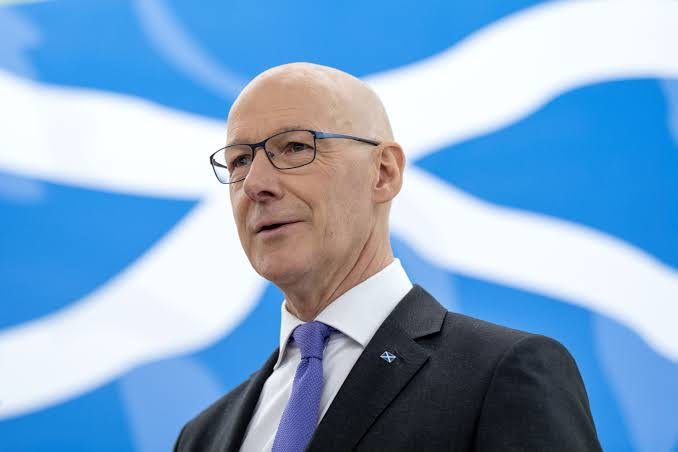
The political map of the United Kingdom is facing one of its biggest challenges in modern history. Leaders from Scotland, Wales, and Northern Ireland are gathering in Cardiff to sign a joint agreement demanding the right to decide their own political futures through democratic referendums. This landmark summit marks the first time that pro-independence and nationalist leaders hold power across all three devolved nations at the same time.
For decades, discussions about self-determination happened separately in each country. Scotland ran its own campaign, Wales focused on expanding local powers, and Northern Ireland followed the path set out by its peace agreements. Now, those individual campaigns have joined together into a single, coordinated push aimed directly at the UK government in London.
The meeting takes place at St David’s Hotel in Cardiff Bay, bringing together Scottish First Minister John Swinney, Welsh First Minister Rhun ap Iorwerth, and Northern Irish First Minister Michelle O’Neill. They are joined by Sinn Féin President Mary Lou McDonald. Together, they are putting direct pressure on British Prime Minister Andy Burnham to open legal pathways for constitutional change.
The Cardiff Summit: A New Era of Political Cooperation
The gathering in Cardiff represents a major shift in how devolved governments interact with Westminster. Rather than negotiating individually with London, the leaders of the three nations are presenting a united stance. Their goal is to force the UK government to acknowledge that the current constitutional arrangement is no longer working for everyone.
The leaders are attending the summit in their roles as party heads rather than strictly as government executives. This allows them to campaign directly for political independence while still managing their daily government responsibilities. The agreement they are signing, known as a Memorandum of Understanding, lays out a shared framework for pushing Westminster to respect future referendum votes.
Build Funnels, Email Lists & Sell Online With One Free Tool
Create funnels, send emails, and sell online using Systeme.io without paying for multiple tools.
Create Free AccountFree forever • No credit card • Beginner-friendly
According to reports covered by ITV News, the leaders argue that the decision to stay in or leave the UK must belong solely to the people living in those nations. They believe that denying referendums goes against basic democratic principles, especially when local voters repeatedly elect pro-independence majorities to their local parliaments.
Beyond independence, the agreement covers practical areas where the three nations plan to work together immediately. These include economic policy, green energy development, international relations, and rebuilding closer ties with the European Union following Brexit.
Meet the Key Leaders Driving the Independence Movement
To understand why this summit is happening now, it helps to look at the key political figures leading the charge across the three nations.
John Swinney and the Scottish National Party
John Swinney leads the Scottish National Party (SNP) and serves as Scotland’s First Minister. The SNP has been the dominant political force in Scotland for nearly two decades, constantly pushing for a second independence referendum following the first vote in 2014.
Swinney has repeatedly stated that Westminster’s refusal to grant a referendum ignores the democratic choices of Scottish voters. He points out that Scotland voted overwhelmingly to remain in the EU during the 2016 Brexit vote, yet was forced to leave alongside the rest of the UK. For Swinney, independence is the only way for Scotland to regain control over its economy, trade, and social policies.
Rhun ap Iorwerth and Plaid Cymru in Wales
Rhun ap Iorwerth is the leader of Plaid Cymru and became First Minister of Wales following historic election results. Plaid Cymru’s recent electoral success transformed the political environment in Wales, turning what was once a quiet movement into a major government priority.
While support for full independence in Wales has historically been lower than in Scotland, it has grown steadily in recent years. Ap Iorwerth focuses heavily on unfair funding structures, arguing that Wales receives fewer resources than it needs for public services, transport, and infrastructure under the current UK system. He views cooperation with Scotland and Northern Ireland as a way to demand better treatment and greater self-governance.
Michelle O’Neill, Mary Lou McDonald, and Sinn Féin
Michelle O’Neill serves as First Minister of Northern Ireland, while Mary Lou McDonald leads Sinn Féin as the party’s president and leader of the opposition in the Republic of Ireland. Sinn Féin’s primary goal is the reunification of Ireland, creating a single nation independent from the UK.
O’Neill and McDonald emphasize that the 1998 Good Friday Agreement already provides a legal mechanism for a border poll on Irish unity. Under that agreement, the UK government is required to call a vote if it appears likely that a majority would support reunification. Sinn Féin argues that changing demographics and political shifts mean preparations for a border vote should begin immediately.
What Is Inside the Joint Declaration?
The Memorandum of Understanding signed in Cardiff is both a political statement and a roadmap for cooperation. It sets out several core commitments that all three parties have agreed to follow.
First, the declaration asserts the fundamental right of self-determination. It states that the UK is a voluntary union of nations, not a centralized state where London holds absolute authority over every region. Therefore, if a national parliament votes in favor of holding a referendum, Westminster should facilitate that process rather than block it.
Second, the pact establishes formal working groups on key policy areas. The three nations plan to collaborate on renewable energy projects, taking advantage of their significant wind and tidal resources. They also intend to coordinate economic policies to attract foreign investment directly to their regions, rather than relying solely on London’s financial channels.
Third, the document highlights a shared desire for stronger relations with Europe. All three leadership teams want to explore pathways back toward European trade alignment, single-market access, or full EU membership for their respective nations in the future.
As reported by The Guardian, the joint statement signals to Westminster that the status quo is no longer accepted by the elected leadership of these three nations.
The View from London: Prime Minister Andy Burnham’s Dilemma
The joint move by the Celtic leaders creates a major political headache for Prime Minister Andy Burnham. Having taken office earlier in the year, Burnham has focused his administration on regional development across England, arguing that giving more power to English mayors and councils can solve economic inequality.
However, his approach toward Scotland, Wales, and Northern Ireland has been much more restrictive. Burnham recently sparked intense debate during Prime Minister’s Questions when he suggested that another Scottish independence vote could be considered if there were a “clear consensus” for one. Pro-independence leaders quickly seized on those words as a sign that London’s stance was softening.
Downing Street was quick to clarify the Prime Minister’s position. In a follow-up letter sent to Scottish First Minister John Swinney, Burnham stated that another referendum remains “off limits” for the foreseeable future, arguing that there is no broad consensus for separation.
This push-and-pull highlights the central dilemma facing any British Prime Minister today. Blocking referendums runs the risk of fueling frustration and increasing support for independence in the devolved nations. On the other hand, allowing referendums risks overseeing the eventual breakup of the United Kingdom.
International Factors: Donald Trump’s Comments in Dublin
Adding fuel to an already intense debate, recent comments from international figures have drawn global attention to the UK’s internal political struggles.
During a visit to Dublin, US President Donald Trump commented publicly on the topic of Irish unity. Trump stated that he would “love” to see a united Ireland and described the idea of Northern Ireland joining the Republic as a “great thing”. He added that he saw no reason why such a step should be viewed negatively.
While US presidents typically take a cautious stance on foreign constitutional matters, Trump’s direct comments were welcomed by Sinn Féin leaders, who cited them as proof that international interest in Irish reunification is growing. For Westminster, such high-profile interventions make it harder to treat these constitutional debates purely as internal British affairs.
Public Opinion: What Do the Voters Actually Want?
While the political leaders in Cardiff are aligned, public sentiment across the three nations shows a more complex picture. Support for independence varies significantly depending on the country, age group, and economic circumstances.
In Scotland, public opinion has remained closely divided for years. Recent polling indicates that around 47% of voters support independence, while 53% prefer staying in the UK. Support rises significantly among younger voters, while older demographics tend to favor maintaining the union for economic stability.
In Northern Ireland, around 36% of respondents favor reunification with Ireland, while a larger block prefers remaining in the UK or remains undecided. However, demographic shifts and the long-term trade impacts of Brexit have caused more voters to express openness to discussing a united Ireland.
In Wales, support for independence sits at around 32%, which is the highest level recorded in modern polling history. While still a minority view, the rapid rise in support over the past decade has elevated independence from a fringe topic into a mainstream political conversation.
These numbers show that while none of the three nations currently has an overwhelming majority pushing for immediate separation, the size of the pro-independence blocks makes the issue impossible for London to ignore entirely.
How Modern Media and Technology Influence Political Movements
Political campaigns today operate very differently than they did during the 2014 Scottish referendum. Today, political parties rely heavily on digital platforms, short-form video content, and automated media strategies to reach voters directly.
Build Funnels, Email Lists & Sell Online With One Free Tool
Create funnels, send emails, and sell online using Systeme.io without paying for multiple tools.
Create Free AccountFree forever • No credit card • Beginner-friendly
Social media algorithms and digital publishing tools allow grassroots organizations to spread their messaging without relying on traditional television networks or newspapers. Activists across Scotland, Wales, and Northern Ireland share campaign strategies, economic data, and promotional videos online, building cross-border networks that did not exist a decade ago.
For creators and organizations looking to understand how modern media trends spread across platforms, exploring tools like YouTube Automation strategies offers valuable insight into how digital content reaches large audiences efficiently.
Similarly, political analysts and campaign managers are increasingly using advanced data tools and artificial intelligence to monitor public sentiment and tailor their messages. Understanding these broader shifts is key to seeing how political ideas spread in the digital era. You can read more about how technology drives modern communication trends in our Technology and AI guide.
Economic Reality: Arguments For and Against Independence
At the heart of every independence debate is the economic argument. Voters on both sides of the issue hold strong views about whether separation would make their countries richer or poorer over time.
Proponents of independence argue that self-governance gives nations the freedom to tailor economic policies to their specific strengths. For instance, Scotland and Wales have vast renewable energy potential, including offshore wind and hydro power. Local leaders believe they could use these resources to build green economies and export energy directly to mainland Europe. They also argue that controlling local taxes would allow them to invest more heavily in healthcare, education, and public transport.
On the other side, defenders of the UK union point to the shared economic benefits of being part of a larger economy. The UK operates as a single market with shared currency, free movement of goods, and centralized welfare spending. Unionists argue that creating trade barriers between Scotland, Wales, or Northern Ireland and England would harm businesses and increase costs for consumers. They also point out that public spending per person in devolved nations currently exceeds local tax revenues, with the gap covered by the central UK treasury.
Finding a balance between economic risk and national identity remains the core challenge for both sides of the debate.
What Comes Next for Westminster and the Devolved Nations?
The signing of the Cardiff declaration is not the end of the story; it is the beginning of a coordinated political campaign. Over the coming months, the leaders of the SNP, Plaid Cymru, and Sinn Féin plan to hold joint events, publish shared economic papers, and continue pushing for constitutional reform.
In Westminster, the British government will need to decide how to respond. Simply refusing to grant referendums may work in the short term, but it risks deepening political divisions and strengthening the argument that the UK central government is out of touch with voters outside of England.
Conversely, agreeing to constitutional negotiations could open the door to major structural changes across the UK, potentially leading to a more federalized system where devolved parliaments hold much greater power over taxation, trade, and lawmaking.
Whatever the eventual outcome, the Cardiff summit makes one thing clear: the future of the United Kingdom as a unified state will remain one of the most heavily debated topics in global politics for years to come.
Frequently Asked Questions (FAQs)
What is the Cardiff Summit about?
The Cardiff Summit is a landmark meeting where leaders from Scotland, Wales, and Northern Ireland sign a joint agreement demanding that the UK government allow referendums on independence and constitutional change.
Who are the leaders involved in signing the pledge?
The key figures are John Swinney (First Minister of Scotland and SNP leader), Rhun ap Iorwerth (First Minister of Wales and Plaid Cymru leader), Michelle O’Neill (First Minister of Northern Ireland and Sinn Féin vice president), and Mary Lou McDonald (Sinn Féin president).
Can Scotland, Wales, or Northern Ireland hold a referendum without London’s permission?
In Scotland and Wales, legal power over constitutional referendums rests with the UK Parliament in Westminster. In Northern Ireland, the UK Secretary of State holds the power to call a border poll under the Good Friday Agreement if it appears a majority favors reunification.
How has UK Prime Minister Andy Burnham responded?
Prime Minister Andy Burnham stated that referendums are currently off limits, arguing there is no clear consensus across the UK to hold independence votes, though he previously noted votes could occur if long-term consensus changes.
What did Donald Trump say about Irish unity?
During a visit to Dublin, Donald Trump expressed support for Irish reunification, stating that he would “love” to see a united Ireland and calling it a “great thing”.
How much public support is there for independence in each country?
Recent polls suggest around 47% of voters in Scotland, 36% in Northern Ireland, and 32% in Wales support independence or reunification.
Looking Forward: A Pivotal Moment for the UK
The signing of this joint declaration highlights a historic shift in British politics. For the first time, leaders from Scotland, Wales, and Northern Ireland are standing side by side to challenge Westminster’s authority over their futures. While legal and political hurdles remain high, the conversation around independence and self-determination has entered a powerful new chapter.
To learn more about our team and mission, check out our about page or get in touch directly through our contact page. You can also stay updated on all our latest stories and discussions by following us on social media via Instagram, Facebook, and X (formerly Twitter).
