
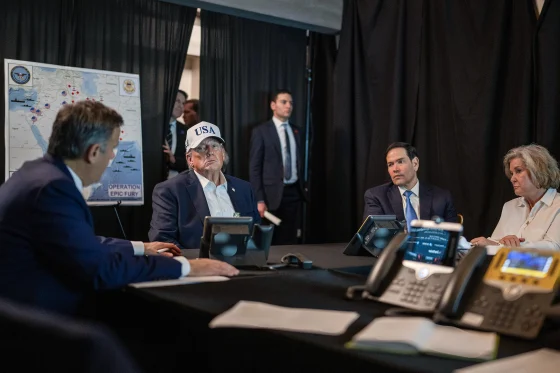
Donald Trump has publicly declared that he has no regrets about initiating military operations against Iran. Speaking during a widely watched interview, the former president made it clear that even as oil prices cross $100 a barrel and economic pressure mounts across global markets, he believes striking Iranian military targets was the right choice. He stated that if given the chance, he would make the exact same decision again without hesitation.
The conflict between Washington and Tehran has now extended past six months. It has evolved into a multi-layered confrontation involving heavy military air strikes, naval blockades in the Persian Gulf, and widespread diplomatic standoffs. While critics raise concerns about rising inflation and potential fallout ahead of the U.S. midterm elections, the White House is doubling down on its strategy to completely isolate Iran from the global financial system.
As tension continues to rise in the Middle East, the U.S. government is expanding its campaign from direct military engagements to aggressive financial pressure. With new sanctions hitting foreign banks, airlines, and shipping networks, this confrontation is shaping up to be one of the most significant geopolitical events of the decade.
Trump’s Bold Stance: Why He Says He Would Strike Iran Again
When asked directly if he felt any doubt or regret regarding the military action taken against Iran, Trump rejected the concept entirely. He explained that allowing Tehran to build up its military aggression or pursue nuclear capability posed an unacceptable threat to international security. In his view, taking decisive action was necessary to protect American interests and regional allies like Israel.
Supporters argue that taking a firm stance against aggressive foreign regimes prevents far larger military conflicts down the road. During his interview, Trump dismissed claims that the ongoing war could harm his political party during upcoming elections. He insisted that national security must always come before political timing, arguing that a strong foreign policy remains a winning message for voters.
Build Funnels, Email Lists & Sell Online With One Free Tool
Create funnels, send emails, and sell online using Systeme.io without paying for multiple tools.
Create Free AccountFree forever • No credit card • Beginner-friendly
However, the reality on the ground remains tense. Military exchanges between American forces and Iranian groups have occurred repeatedly over the last few months. You can read more about how Trump claims Iran is in deep trouble as the Middle East conflict hits six months to understand how both sides reached this critical point.
Despite calls for de-escalation from several international leaders, Washington shows little intent to back away from its current strategy. After previous lulls in fighting were broken by fresh exchanges, Trump warned that any further aggression from Tehran would trigger even stronger military measures. For more background on these military developments, see how U.S. and Iran exchange military fire again as Donald Trump warns of a massive new response.
Escalating Economic Pressure: The U.S. Treasury’s Financial Campaign
Military force is only one side of Washington’s strategy. The administration is heavily relying on a massive economic squeeze to cut off Iran’s access to global funds. Officially labeled as part of a campaign to isolate non-compliant states, the U.S. Treasury Department is rolling out aggressive financial sanctions targeting key industries.
Treasury Secretary Scott Bessent announced that Washington is blacklisting dozens of commercial and cargo aviation entities tied to Tehran. According to official reports, these airlines were allegedly used to transport military supplies, personnel, and restricted cargo across the region. By placing blanket sanctions on these companies, the U.S. is warning international businesses that doing work with Iranian aviation firms will result in being cut off from the global banking system.
The financial restrictions extend far beyond air travel. Washington has also targeted major foreign banking institutions in places like Turkey and the United Arab Emirates that helped facilitate Iranian oil revenues. Official press releases from the U.S. Department of the Treasury detail how financial investigators are tracing foreign transactions to ensure Iranian accounts remain frozen.
This diplomatic collapse has effectively closed the door on near-term peace negotiations. To understand how diplomatic efforts broke down earlier in the conflict, read about how Trump revives calls for Iran regime change as diplomatic talks collapse.
At the same time, administration officials have faced fierce public questioning regarding the true human and financial cost of the war. Misstatements by public figures have drawn public backlash and corrected statements. For instance, check out the story on how Howard Lutnick apologized after claiming no Americans died in the Iran war to get the facts on what happened.
Energy Crisis and the Battle for the Strait of Hormuz
The most sensitive area in this entire conflict is the Strait of Hormuz. This narrow waterway serves as the single most critical transit point for global crude oil. A significant portion of the world’s petroleum passes through the strait every day, making any disruption an immediate threat to global fuel prices.
Iran has repeatedly threatened to shut down the strait or disrupt commercial shipping in response to Western sanctions. In response, the U.S. Navy and military allies have deployed ships to maintain a presence and escort commercial tankers. Central Command has engaged in multiple direct operations to counter threat attempts, including hitting Iranian oil tankers operating in the region.
To explore these naval confrontations in detail, check out the report on how U.S. strikes three Iranian oil tankers after missile attacks on Navy warships.
The battle over maritime trade routes has created extreme uncertainty for commercial shipping lines, insurance providers, and global energy markets. You can review the breakdown on how U.S. and Iran trade air attacks in the Strait of Hormuz to see how air and sea operations collided in this vital shipping lane.
These security threats have forced crude oil prices above $100 per barrel, raising energy bills and shipping costs across Europe, Asia, and North America. Tehran has attempted to set high conditions for reopening shipping channels without military oversight. Read more about how Iran sets its terms on what it will take to reopen the Strait of Hormuz and prevent a global energy crisis.
For everyday families and drivers, wild swings in oil prices directly affect gasoline prices at the pump, grocery bills, and heating costs. To understand how changes in energy diplomacy can impact your personal finances, check out the analysis on oil prices and what Strait of Hormuz diplomacy means for your wallet.
Global Geopolitics and Domestic Political Fallout
Domestic Reaction and Economic Concerns
While the administration remains dedicated to its current strategy, domestic reaction in the United States is mixed. Many citizens express concern over higher fuel prices, general economic inflation, and long-term foreign commitments. Public opinion polls indicate growing voter fatigue over foreign wars, especially when government spending is already under heavy scrutiny.
Local economic concerns are already shaping political sentiment in key states across America. You can see how voters are responding by reading about why Arizona voters give President Donald Trump record-low approval marks over the economy and Iran conflict.
Furthermore, the overall financial cost of maintaining extended military operations abroad adds to existing government budget debates. With national spending reaching historical highs, taxpayers are asking tough questions about long-term fiscal responsibility. Read our detailed article on how the U.S. national debt just passed $40 trillion and what that massive number actually means.
These tensions are not limited to the Middle East. Broader foreign policy and trade strategies have created friction with close neighbors and trading partners as well. To see how tariff discussions and trade disagreements are affecting international relationships, check out how Trump’s tariff chief calls Canada’s trade war label unhinged inside the escalating U.S.-Canada dispute.
International Powers Stepping In
As Washington shifts its focus toward strict sanctions and naval operations in the Middle East, other global powers are attempting to expand their own influence in the region. China and Russia have consistently monitored the standoff, seeking opportunities to strengthen trade ties and diplomatic influence with non-aligned nations.
Beijing has positioned itself as a key trading partner for nations affected by Western sanctions, offering alternative financial mechanisms that bypass U.S. dollars. This strategic shifting of global power dynamics is covered extensively in our feature on how China moves in as Xi Jinping challenges U.S. power in the Middle East.
Major global media networks, including reporting from The Wall Street Journal, note that presidential advisors have quietly discussed the reality that this conflict could easily continue for months or years. With international alliances shifting and global energy markets on edge, the geopolitical map is undergoing rapid shifts.
What Happens Next? Looking Ahead at the Months to Come
The coming months will prove decisive for how this international confrontation unfolds. Washington is betting heavily that a combination of deep banking sanctions, trade blockades, and targeted military deterrence will eventually push Iranian leadership toward a breaking point or force significant concessions.
However, Tehran has shown a willingness to endure heavy economic strain while leveraging its geographical position along crucial trade corridors to keep global energy markets volatile. As long as shipping in the Strait of Hormuz remains risky, global oil markets will likely face continued price swings.
For everyday readers trying to make sense of these complex international developments, staying informed on global news, technology, and financial trends is more important than ever. If you want to explore how modern digital platforms cover breaking events or learn how to leverage online media, explore our detailed YouTube Automation guides to see how digital content creators build audiences around viral global news.
Additionally, keeping up with rapid technological changes, military innovations, and digital communication tools can help you navigate an increasingly connected world. You can read our latest coverage on advanced tech by browsing our technology and AI updates section.
Frequently Asked Questions (FAQs)
Why did Donald Trump say he has no regrets about starting the Iran war?
Trump explained that he believes taking direct military action against Iran was necessary to protect national security and prevent Tehran from acquiring nuclear capabilities. He argued that taking action early was better than allowing regional threats to grow, even if it caused short-term economic disruptions.
How is the U.S. increasing economic pressure on Iran?
The U.S. government is expanding sanctions through its Treasury Department. This includes blacklisting dozens of Iranian commercial and cargo airlines, freezing assets, and restricting foreign banks in countries like Turkey and the UAE that handle Iranian oil revenues.
Why are global oil prices rising because of the Iran conflict?
A major portion of the world’s oil supply travels through the Strait of Hormuz in the Persian Gulf. Military attacks, naval blockades, and threat of disruption in this narrow channel make shipping dangerous and expensive, driving crude oil prices up across global energy markets.
Build Funnels, Email Lists & Sell Online With One Free Tool
Create funnels, send emails, and sell online using Systeme.io without paying for multiple tools.
Create Free AccountFree forever • No credit card • Beginner-friendly
How could this war impact the U.S. midterm elections?
Rising gasoline prices, inflation, and public concern over ongoing military conflict have created political debate among voters. While some support a strong national defense stance, others express concern over government spending and domestic economic stability.
How can I stay updated and connect with the editorial team?
You can read more about our background and mission on our official about us page. If you have questions, story suggestions, or general inquiries, feel free to reach out via our contact page. You can also follow real-time social media updates on Instagram, Facebook, and X.
The ongoing standoff between the United States and Iran represents a major turning point in global politics, combining high-stakes military action with aggressive financial warfare. As Washington continues to apply economic pressure and maintain naval patrols in critical sea lanes, the ripple effects will continue to impact energy markets, international trade, and household budgets around the world. Staying informed on these fast-moving global events will help you understand the bigger picture as world leaders navigate the complex decisions ahead.
