
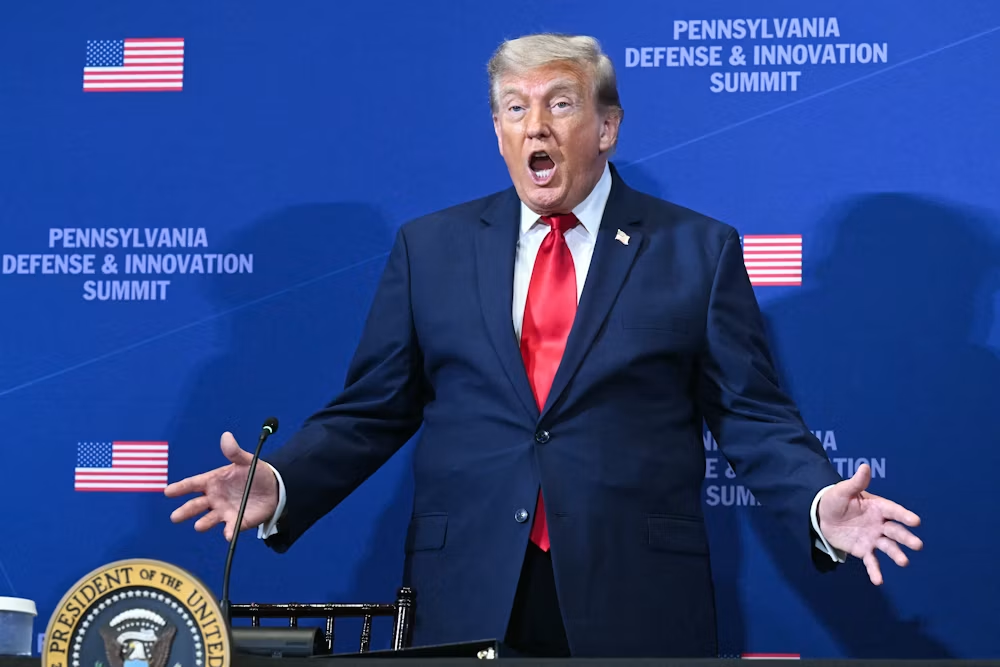
President Donald Trump has announced a major new policy pledge that has caught the attention of millions of American households: a proposed $5,000 check for every adult U.S. citizen. Speaking at the Republican Midterm Convention in Dallas, Trump pitched the cash payment as a “Trump Dividend,” comparing the federal government to a successful company sharing profits with its shareholders.
The proposed cash giveaway comes with a clear catch. Trump stated that the checks would only happen if the Republican Party retains control of both the U.S. House of Representatives and the Senate in the upcoming midterm elections. Additionally, the President specified that the money must be spent within the United States to boost the domestic economy.
While the idea of receiving a $5,000 check is an exciting prospect for families managing everyday bills, the proposal raises major questions regarding its feasibility, cost, and legal standing. To understand what this promise means, it is essential to look at how the program would work, where the money would come from, and the legislative steps required before any checks could be sent out. For a detailed look at the initial announcement, check out our breakdown of Trump’s $5,000 dividend pledge.
What Is Trump’s $5,000 Dividend Proposal?
The concept behind the $5,000 dividend was presented during Trump’s keynote address in Dallas, where he laid out his economic platform heading into the midterms. According to Trump, the United States is generating massive financial wealth through foreign tariffs and trade policies, and that money should go directly into the hands of American citizens.
In his speech, Trump outlined a few basic rules for the proposed checks:
Build Funnels, Email Lists & Sell Online With One Free Tool
Create funnels, send emails, and sell online using Systeme.io without paying for multiple tools.
Create Free AccountFree forever • No credit card • Beginner-friendly
- Target Audience: The payout would go to adult U.S. citizens. Vice President JD Vance later clarified in media interviews that the focus would be on supporting working-class and middle-class Americans.
- Domestic Spending Requirement: Recipients would be required to spend the money within the United States rather than on foreign travel or imported goods from countries like China or Germany.
- Election Contingency: The distribution of the checks depends entirely on Republicans keeping their majorities in both chambers of Congress.
This announcement is part of a broader political strategy as the White House prepares a major push for the midterms. You can read more about how Donald Trump promises a full campaign blitz for the midterms to keep voters engaged.
The Math Behind the Plan: How Much Would It Cost?
While a $5,000 check sounds appealing, calculating the total price tag reveals an immense financial commitment for the federal government.
According to figures from the U.S. Census Bureau, there are approximately 245 million adult U.S. citizens living in the country. If every adult citizen were to receive a $5,000 check, the total cost would reach roughly $1.225 trillion.
To put $1.225 trillion into perspective, consider these national financial benchmarks:
- Defense Spending: The annual budget for the U.S. military sits at approximately $870 billion. A single round of $5,000 dividend checks would cost significantly more than the entire annual military budget.
- COVID-19 Relief: The combined total of all three rounds of stimulus checks issued during the COVID-19 pandemic was less than $1.2 trillion.
- National Debt: This proposal comes at a time when the U.S. national debt just passed $40 trillion, creating heightened concern among fiscal policy experts.
Even if the administration decides to restrict eligibility based on income levels—similar to past stimulus programs—the total cost would still likely run into hundreds of billions of dollars.
Can Tariff Revenue Really Pay for the Checks?
Trump stated in his speech that the revenue to fund these $5,000 checks would come from foreign tariffs collected by the U.S. government. However, economic data from government agencies and policy research groups shows a substantial gap between tariff revenue and the cost of the proposed checks.
Data from the Congressional Budget Office indicates that overall customs duties and tariffs brought in roughly $167 billion through the first 11 months of the fiscal year. That works out to an average collection rate of about $21 billion per month.
At a rate of $21 billion per month, the federal government would need to collect tariff duties for nearly five full years (roughly 58 months) just to gather $1.225 trillion. That assumes that every single dollar collected from tariffs would go toward funding the $5,000 checks, without allocating any funds to existing federal programs or deficit reduction.
Erica York, a senior economist at the Tax Foundation, noted that funding a $1.23 trillion payout would consume nearly a decade’s worth of projected revenue from current tariffs. As a result, nonpartisan budget analysts conclude that tariff collections alone are not sufficient to fund checks of this size without relying heavily on additional government borrowing.
Looking Back at Similar Dividend Promises
This is not the first time that direct cash payouts or specialized dividends have been proposed by political leaders. Examining past proposals provides useful context for how likely this new plan is to become reality.
The DOGE Dividend Checks
In early 2025, discussions emerged regarding a potential “DOGE dividend check” of up to $5,000 for taxpayers. The idea was that savings identified by the Department of Government Efficiency through reduced government waste would be returned directly to citizens. However, those payments were never authorized by Congress or distributed to the public.
The $2,000 Tariff Dividend
Trump previously floated the concept of a $2,000 tariff dividend funded by trade duties. Like the DOGE proposal, that idea remained a talking point and was never drafted into enforceable federal law or passed by the legislature.
What This Means for Individual Planning
Given that political proposals often face long legislative journeys and frequent modifications, financial advisors recommend that individuals avoid budgeting around unapproved government checks. For those looking to improve their personal financial situation today, exploring practical opportunities like 10 no-experience side hustles you can start right now or learning how to get a fully remote job that lets you work from anywhere provide far more direct control over personal income.
The Legal and Congressional Roadblocks
Even if the executive branch is fully committed to issuing $5,000 checks, the President does not have the legal authority to distribute federal money unilaterally.
Under Article I of the U.S. Constitution, Congress holds the “power of the purse.” Any plan that involves spending federal funds must originate as a bill in Congress, pass both the House of Representatives and the Senate, and be signed into law.
Support in Congress
Some lawmakers have expressed immediate enthusiasm for the idea. Senator Bernie Moreno (R-OH) publicly stated that he plans to draft legislation to establish the “Trump Dividend” so that Congress can vote on it following the midterms. Representative Jason Smith (R-MO), chairman of the House Ways and Means Committee, also indicated that discussions about tax relief and cash returns have been ongoing.
Opposition and Fiscal Hesitancy
Despite support from key allies, the bill would face significant hurdles on Capitol Hill:
- Fiscal Conservatives: Many conservative lawmakers are deeply concerned about national spending levels and growing budget deficits. Adding $1.2 trillion in new spending could spark pushback from fiscal hawks within the party.
- Inflation Concerns: Injecting over a trillion dollars into the economy could reignite inflationary pressures. This comes at a time when Fed Chair Warsh hints at rate hikes and what high inflation means for your money, making many economists and lawmakers wary of sudden stimulus spending.
- Democratic Opposition: Democratic leaders have strongly criticized the proposal, characterizing it as an unrealistic election promise intended to influence voters rather than a sustainable economic policy.
Political Context of the Midterm Elections
The timing of the $5,000 dividend announcement is closely tied to the political dynamics of the midterm election cycle. Control of Congress is hanging in the balance, and economic issues like inflation, interest rates, and consumer prices are top concerns for voters across the country.
Political analysts point out that the proposal is designed to energize the conservative voting base and offer a direct financial incentive to working families. This move comes as political strategists evaluate why Republicans are panicking heading into the midterm elections due to tight polling numbers in key swing districts.
At the same time, changes in voting regulations across several states are adding complexity to the upcoming election. To understand how election rules are evolving, read about the Supreme Court showdown on how new mail-in voting limits could reshape the midterms.
How Would $5,000 Checks Impact the Economy?
If a $5,000 dividend check were eventually approved and distributed, it would have significant short-term and long-term effects on the broader U.S. economy.
Short-Term Relief for Consumers
For millions of households, receiving a $5,000 payment would provide immediate financial breathing room. Families could use the funds to pay off credit card debt, cover medical expenses, build emergency savings, or purchase major household items. Because the plan requires the money to be spent domestically, local businesses, retail stores, and service providers could see a temporary surge in sales.
Long-Term Inflation Risks
On the macroeconomic side, economists warn of potential drawbacks:
- Increased Demand: Adding $1.2 trillion in consumer purchasing power without an equal increase in the supply of goods and services can drive prices higher.
- Interest Rate Reactions: If consumer spending surges rapidly and pushes inflation back up, the Federal Reserve might respond by raising interest rates or keeping them higher for longer, making mortgages and car loans more expensive.
- Bond Market Volatility: Massive government borrowing to fund cash checks can lead to higher yields on U.S. Treasury bonds, increasing the cost of government borrowing across the board.
Frequently Asked Questions
Is the $5,000 Trump dividend check guaranteed?
No, the $5,000 check is currently a campaign proposal and is not guaranteed. For the checks to happen, Republicans must win majorities in both the House and the Senate in the midterm elections, and Congress must draft, vote on, and pass a bill authorizing the spending.
Who would qualify to receive the $5,000 check?
In his Dallas speech, Trump stated that the checks would go to adult U.S. citizens who spend the funds within the United States. Vice President JD Vance later indicated that eligibility might be focused on middle-class families and working Americans, though official criteria have not been written into law.
Can the President approve these checks without Congress?
No. Under the U.S. Constitution, only Congress has the power to authorize federal spending. The President cannot issue direct cash checks to citizens through an executive order without legislative approval and funding from Congress.
Where is the money for the checks supposed to come from?
Trump proposed using revenues collected from foreign tariffs to fund the checks. However, independent budget analysts point out that current tariff revenues fall far short of the estimated $1.23 trillion total cost, meaning additional funding or borrowing would be required.
Build Funnels, Email Lists & Sell Online With One Free Tool
Create funnels, send emails, and sell online using Systeme.io without paying for multiple tools.
Create Free AccountFree forever • No credit card • Beginner-friendly
When would the checks be sent out if approved?
Because the proposal is tied to the outcome of the midterm elections, no legislative action can take place until after the election results are finalized and the new session of Congress takes office. If legislation were passed quickly, the earliest possible distribution would be well into the following year.
The proposal to send $5,000 “Trump Dividend” checks to every adult American citizen has sparked intense debate among voters, economists, and lawmakers. While the prospect of direct financial relief appeals to many households facing elevated living costs, the plan faces steep mathematical and constitutional hurdles. With an estimated price tag exceeding $1.2 trillion, current tariff revenues fall well short of covering the cost, meaning any future distribution depends entirely on intense congressional debate and legislative approval.
As the midterm elections draw closer, staying informed on official policy updates, market trends, and economic developments is essential. To stay ahead of the curve on digital trends and modern business tools, explore our dedicated sections on Technology and AI as well as YouTube Automation.
To learn more about our mission to bring you clear, accessible news on trending topics, visit our About Page or get in touch through our Contact Page. You can also follow our community and get real-time updates by connecting with us on Instagram, joining our conversation on Facebook, and following our latest news feeds on X (formerly Twitter).
