
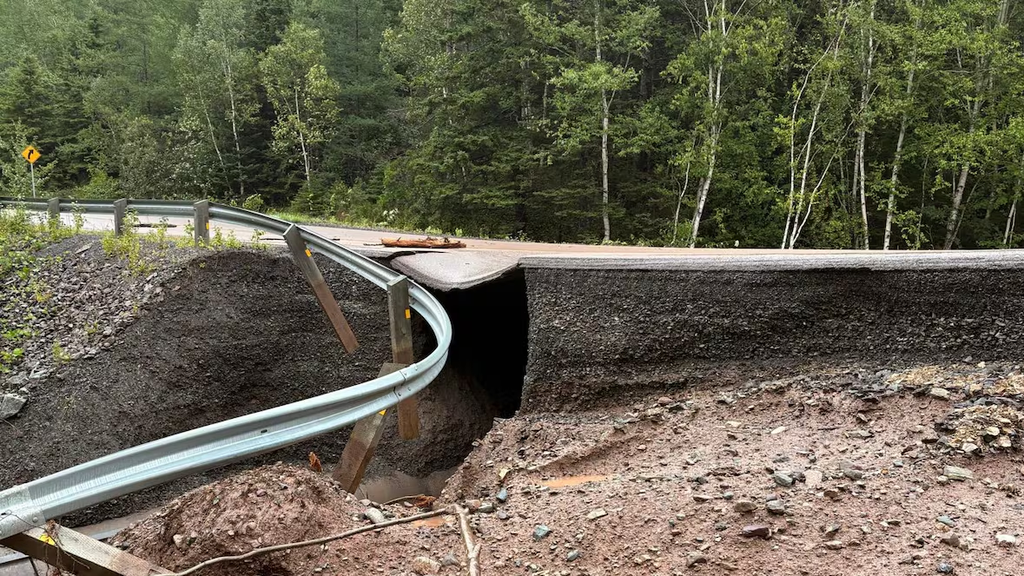
A massive rainstorm hit Nova Scotia hard, causing serious flooding and major road washouts across Cape Breton. Municipal leaders in Inverness, Richmond, and Victoria counties officially declared a state of local emergency as relentless downpours poured over 200 millimeters of rain onto the island in a very short time.
The heavy rainfall destroyed main roads, flooded house basements, trapped families in their neighborhoods, and knocked out electricity for tens of thousands of households. Local leaders urge everyone to stay off the roads and check on nearby friends and family while emergency crews work around the clock to assess damaged areas.
This storm shows how fast weather can turn dangerous. The structural damage is widespread, and for many people living across these eastern communities, it is the worst flooding event they have seen in decades.
The Massive Downpour That Underwatered Cape Breton
Rain started falling across eastern Nova Scotia and Cape Breton late Friday night and continued heavily into Saturday. Weather forecasts had warned about heavy rain, but the actual numbers shocked local officials. Parts of Richmond County recorded as much as 250 millimeters of rain in less than twenty-four hours.
To understand how serious that is, 200 millimeters of rain equals what many towns receive across two full months. Ground that was already wet could not soak up the endless water. Small streams overflowed their banks, rivers burst into nearby streets, and quiet ditches quickly turned into roaring rivers.
The $0 Secret To Launching Your Entire Online Empire
Why pay hundreds every month for separate software? Build funnels, send emails, and make sales with Systeme.io completely free.
Get Started For $0Free Forever • No Credit Card Needed • Beginner-Friendly
According to meteorologists, a slow-moving storm system sat directly above the island. Because the storm moved so slowly, it poured heavy rain over the exact same neighborhoods for hours without stopping. Water could not drain fast enough into local lakes or the ocean, causing sudden flash floods across rural towns and residential streets.
Real Stories from Inverness, Richmond, and Victoria Counties
The destruction across the three affected counties has left many small towns completely isolated. In Inverness County, roads connecting smaller coastal communities suffered deep cracks and total structural washouts. Large chunks of asphalt peeled off like paper, leaving deep gaps where solid roads used to be.
In Richmond County, the situation became critical as floodwaters surged into areas that had never experienced flooding before. Local municipal leaders reported that entire neighborhoods were suddenly cut off from main highways because bridges and culverts collapsed under heavy water pressure.
In Victoria County, heavy rain combined with strong coastal waves along Bras d’Or Lake battered local roads. Debris, rocks, and mud washed across highways, making travel impossible for passenger cars and dangerous for heavy emergency vehicles.
Local residents faced terrifying moments as water surrounded their homes. In Richmond County, Wendy Owens Abbott, who manages the Bras d’Or Lakes Inn in St. Peter’s, found herself trapped at her home in River Bourgeois because all roads leading out were washed away. Her inn was scheduled to host a wedding that day, but emergency crews could not clear a path through the destroyed roads.
In another part of the region, 86-year-old Raymond Morris and his wife were trapped in their home in Sand Point after two large culverts collapsed on their road. Raymond explained that he relies on a cane and medical support, meaning any sudden health emergency would require help by boat because ground emergency vehicles simply could not reach his house.
Stories like these are popping up all over the island as families deal with water entering their homes, yards turning into lakes, and travel routes disappearing overnight.
Widespread Power Outages and Structural Failure
Flooding was not the only problem brought by this severe storm. High winds and falling tree branches knocked down power lines across eastern Nova Scotia. At the height of the storm on Saturday afternoon, electricity providers reported that around 40,000 customers were left without power.
Losing electricity makes flood situations much harder to handle. Without power, electric sump pumps stop working, allowing floodwater to fill up basements quickly. Fire departments across Cape Breton received dozens of calls from homeowners asking for emergency help to pump out rapidly rising water.
Utility crews worked through tough conditions to restore power where possible. By Saturday evening, workers managed to bring the number of power outages down to around 7,000 homes. However, repairs on flooded streets take extra time because line crews cannot safely access broken poles until water recedes and roads are cleared.
The physical infrastructure damage across the island will take weeks to repair completely. Culverts that sit under roadways to direct small streams were completely overwhelmed. When a culvert fails, water forces its way around the pipe, washing away dirt, gravel, and asphalt from underneath the road surface. This leaves floating pavement that can collapse without warning if a car drives over it.
Emergency Action and Official Support Lines
To manage the growing crisis, leaders in Inverness, Richmond, and Victoria counties declared formal states of local emergency late Saturday afternoon. This declaration gives local governments extra powers to organize resources, restrict travel on dangerous roads, and coordinate emergency teams.
Officials opened a special toll-free municipal support line at 902-625-7888 to help residents in Inverness, Richmond, Victoria, and the town of Port Hawkesbury. This phone line allows people to report non-emergency issues, such as blocked culverts, road damage, or localized flooding, freeing up 911 lines for life-threatening emergencies.
Emergency management officials urge residents to follow a few core safety guidelines:
- Stay home and avoid unnecessary driving so repair crews can work safely.
- Do not try to drive across flooded roads or bypass official police barricades.
- Check on elderly neighbors, family members, and anyone living alone in your area.
- Keep emergency supplies ready in case power goes out again or evacuation warnings are issued.
Emergency responders are assessing damaged roadways to prioritize which routes must be fixed first. Major highways that connect regional hospitals and supply routes will receive immediate attention, while smaller residential streets will follow as floodwaters go down.
Send, Spend & Hold Money Worldwide Without Hidden Fees
Transfer money internationally at the real exchange rate and hold 40+ currencies in one account.
Open a Wise AccountMid-market rate • Fast transfers • 40+ currencies
Why Coastal Storms Are Becoming More Severe
A storm of this scale raises important questions about changing weather patterns. Coastal regions like Cape Breton face growing risks from intense atmospheric storms, stalling weather systems, and heavier rainfall events.
When ocean temperatures rise, warmer air holds more moisture. When a storm system moves over coastal water, it absorbs huge amounts of water vapor and drops it as extreme downpours over land. This creates flash floods that quickly overwhelm older drainage systems designed decades ago for smaller rainfall totals.
Understanding how weather moves is crucial for staying safe. Today, modern forecasting tools use sophisticated software to give communities advance warning before bad weather strikes. Readers interested in technological developments can explore how technology and AI are helping meteorologists collect real-time data, predict severe rainfall paths, and issue faster flood warnings to local authorities.
Better weather tools give emergency workers extra hours to clear drainage ditches, protect vital infrastructure, and warn the public to prepare emergency supplies.
Step-by-Step Guide to Staying Safe During Floods
Floods are among the most common and destructive natural hazards. When heavy rain hits your town, taking the right steps quickly can save lives and protect your home from severe damage.
Indoor Safety Actions
If water starts rising around your house or begins entering your basement, follow these important safety steps:
- Turn off your main electrical breaker if you can reach it safely without standing in water. Water and electricity are a dangerous combination.
- Move valuable items, important legal documents, electronics, and medicine to upper floors or high shelves.
- Never walk through basement floodwater if electrical outlets or appliances are underwater.
- Disconnect gas appliances if local officials advise doing so and it is safe to act.
Driving Hazards During Floods
Driving during a flood is one of the biggest causes of storm-related injuries. It is easy to misjudge how deep water really is on a covered street.
- Never drive into flooded streets or standing water. As little as six inches of water can reach the bottom of most passenger cars, causing loss of control and engine stalling.
- Twelve inches of moving water can easily carry away a small car, while two feet of rushing water can sweep away large trucks and SUVs.
- Washed-out roads often look fine on top, but the dirt underneath may have washed away completely. Driving on compromised pavement can cause the road to collapse under your car’s weight.
Building a Basic Emergency Survival Kit
Every household should have a simple emergency kit ready at all times. A good kit helps your family stay safe if power goes out or roads are blocked for several days. Make sure your kit contains:
- Drinking water: Store at least one gallon of clean water per person per day for at least three days.
- Non-perishable food: Keep a three-day supply of canned soup, dry fruit, nuts, and crackers.
- Lighting: Include bright flashlights, headlamps, and extra batteries instead of candles, which pose a fire hazard.
- First aid supplies: Pack bandages, disinfectant wipes, pain relievers, prescription medications, and hand sanitizer.
- Communication tools: Keep a battery-powered or hand-crank radio to listen to official weather reports and community announcements.
Post-Flood Safety and Cleanup
Returning home or starting cleanup after floodwaters recede requires caution:
- Wait for official clear signals from local emergency teams before returning to evacuated areas.
- Wear protective gear like thick rubber boots, heavy gloves, and N95 masks during cleanup to avoid exposure to dirty water or mold.
- Throw away food that came into contact with floodwater, as floodwater often carries bacteria, sewage, and dirty runoff.
- Take detailed photos and videos of all damaged property before starting cleanup for insurance claims.
Community Spirit and Local Support Systems
During times of crisis, community support makes a massive difference. Across Cape Breton, neighbors are stepping up to help one another. People with tractors and heavy equipment are clearing fallen trees from driveways, while local volunteer groups are checking on isolated seniors.
The $0 Secret To Launching Your Entire Online Empire
Why pay hundreds every month for separate software? Build funnels, send emails, and make sales with Systeme.io completely free.
Get Started For $0Free Forever • No Credit Card Needed • Beginner-Friendly
Local shelters and community centers are preparing to offer warm meals and safe shelter for families who had to leave flooded homes. Municipalities are working alongside provincial agencies to bring temporary bridges and heavy gravel to repair broken road connections as quickly as possible.
Staying informed through verified local news outlets and municipal updates helps keep rumors away and ensures people get accurate information about shelter locations, water safety notices, and road openings.
How Digital Media Helps People Stay Connected
During severe weather emergencies, fast communication saves lives. Digital news channels and social media platforms play a huge role in spreading real-time updates from emergency managers and road crews.
You can stay connected and follow updates on our official social channels, including Facebook, Instagram, and X (Twitter). Keeping up with online updates helps you know which roads are open and where to find local assistance.
For creator communities interested in how online news distribution and media channels operate behind the scenes, exploring concepts like YouTube automation offers great insights into how news channels quickly produce and share breaking updates during major global events.
If you want to read more about our mission to bring clear, honest stories to curious readers, visit our about page. You can also share local reports, storm pictures, or questions directly with our team through our contact page.
Frequently Asked Questions (FAQs)
Which Cape Breton counties declared a state of emergency?
The three Cape Breton counties that declared a state of local emergency are Inverness County, Richmond County, and Victoria County. These declarations were issued after a severe weekend storm dumped massive amounts of rain across the region.
How much rain fell during the Cape Breton storm?
Parts of Cape Breton received over 200 millimeters of rain, with specific areas in Richmond County recording up to 250 millimeters. This extreme volume overwhelmed local drainage systems, rivers, and roadways.
What support phone line can residents call for non-emergency help?
Residents in Inverness, Richmond, Victoria, and Port Hawkesbury can call the municipal support line at 902-625-7888 to report non-emergency flood issues, road damage, or drainage problems.
Why is driving through floodwater so dangerous?
Floodwater can easily hide washed-out roads, deep holes, and sharp debris. In addition, just six inches of water can stall a car, while twelve to twenty-four inches of moving water can sweep heavy vehicles off the road entirely.
What should I do if water enters my basement?
If water enters your basement, do not walk through it if electrical outlets or appliances are underwater. If safe to reach, turn off your main power switch. Contact local emergency services or restoration professionals for assistance.
How can I check if local roads are open or closed?
You can track road conditions through official provincial transportation websites, municipal updates, local reports from outlets like CBC News, and local emergency social media channels.
Recovery from a storm like this takes time, patience, and hard work. As floodwaters slowly recede across Cape Breton, local road crews, emergency responders, and utility workers are focused on repairing critical infrastructure and reopening essential travel routes.
The immediate goal is restoring power to every home, clearing debris from bridges, and ensuring vulnerable residents have access to food, clean water, and medical care. While physical roads and culverts will take weeks to rebuild fully, the strength and unity shown by local communities prove that Cape Breton will recover from this unexpected environmental challenge. Keep an eye on official municipal bulletins, follow local traffic warnings, and keep supporting your neighbors as cleanup efforts continue across Inverness, Richmond, and Victoria counties.
