
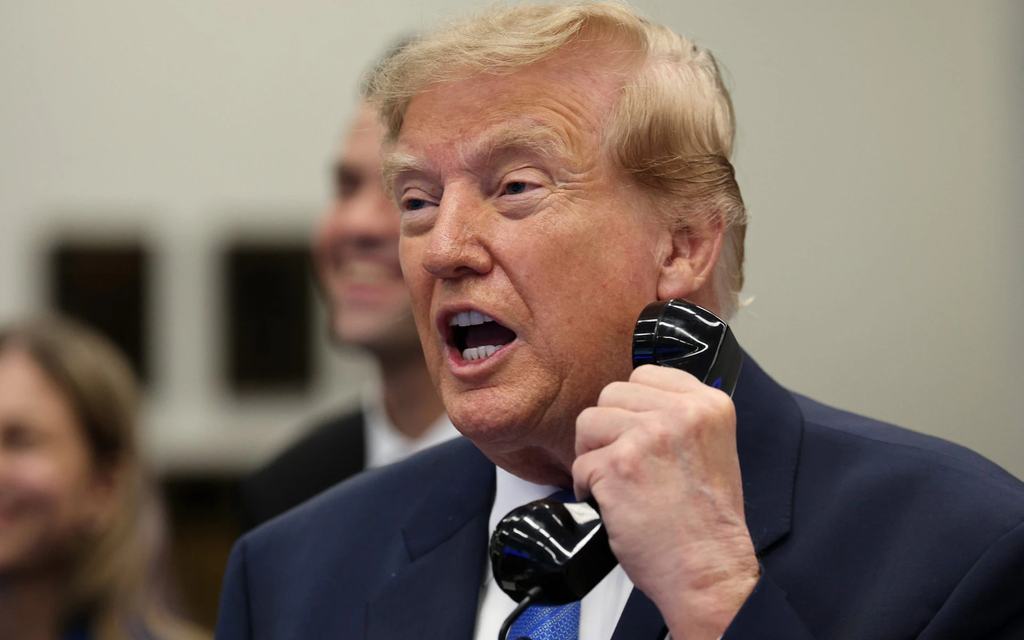
US President Donald Trump has sparked international debate after suggesting that Washington is reviewing its long-standing position on the Falkland Islands. During an exchange with reporters in the Oval Office, Trump made remarks indicating that America’s traditional stance regarding British sovereignty over the South Atlantic territory could be under reconsideration.
This unexpected statement has raised eyebrows across political centers in London, Buenos Aires, and Washington. For decades, the United States has maintained a delicate diplomatic posture. Officially, Washington recognizes British administration over the islands while staying neutral on the formal question of legal sovereignty. Trump’s comments hint that this long-held diplomatic balance might not be set in stone.
The announcement comes at a delicate moment for international relations. Britain and the United States have shared a diplomatic and military partnership commonly known as the special relationship. At the same time, Washington has built increasingly close economic and political ties with Argentina under President Javier Milei. The comment has ignited widespread discussion about what this could mean for NATO commitments, defense budgets, and the future of the islanders themselves.
What Donald Trump Said in the Oval Office
The conversation unfolded during a routine media gathering at the White House. Reporters asked the president whether his administration was actively reviewing the United States’ position on the Falkland Islands. The question followed earlier reports from media outlets like The Guardian suggesting that Pentagon officials had discussed the territory in relation to foreign policy reviews.
Trump responded with a direct but open-ended answer. He stated that he always reviews every position, describing the Falkland Islands issue as just one of many positions under consideration.
The $0 Secret To Launching Your Entire Online Empire
Why pay hundreds every month for separate software? Build funnels, send emails, and make sales with Systeme.io completely free.
Get Started For $0Free Forever • No Credit Card Needed • Beginner-Friendly
While the president did not explicitly confirm that a policy change was guaranteed, his willingness to publicly question the existing arrangement sent clear signals across global diplomatic channels. In world politics, even subtle shifts in language from a US president can carry enormous weight.
Understanding the History of the Falkland Islands
To make sense of why a single statement caused such a reaction, it helps to understand the history behind the archipelago. The Falkland Islands, known in Argentina as Las Malvinas, are a group of islands located in the South Atlantic Ocean, about 300 miles off the coast of mainland Argentina.
Britain first claimed the islands in the late 17th century and has maintained continuous administration over them since 1833. However, Argentina has consistently claimed that the islands belong to them, citing geographical proximity and historic territorial inheritances. You can read a complete overview of the conflict’s origins on Britannica’s historical guide.
The 1982 Falklands War
The tension reached a breaking point in April 1982 when Argentine military forces invaded the islands. British Prime Minister Margaret Thatcher quickly dispatched a military naval task force to retake the territory.
The resulting conflict lasted 74 days and cost the lives of 649 Argentine military personnel, 255 British troops, and three civilian islanders. During the conflict, US President Ronald Reagan initially attempted to mediate peace. When those talks failed, the United States provided key military intelligence, fuel, and logistical support to Great Britain, helping secure a British victory.
The 2013 Sovereignty Referendum
Since 1982, the people living on the islands have repeatedly expressed their desire to remain part of the British family. In a historic referendum held in 2013, residents were asked whether they wished the Falkland Islands to retain their political status as an Overseas Territory of the United Kingdom.
Out of more than 1,500 votes cast, an overwhelming 99.8 percent voted in favor of remaining British. For London, this vote settled the matter entirely under the principle of self-determination, which is protected by the United Nations Charter. Argentina, however, rejected the referendum, arguing that the islanders are a settled population rather than an indigenous people.
Why Is Washington Considering a Policy Review Now?
When a US administration hints at changing a position that has lasted for decades, there are usually several strategic reasons behind it. Political analysts point to three main factors driving the current discussion.
1. Pressure on NATO Defense Budgets
One of the strongest motivators appears to be defense spending. Throughout his time in office, Donald Trump has insisted that European allies increase their military spending rather than relying primarily on American taxpayer dollars.
Reports indicate that Washington is applying pressure on the British government, led by Prime Minister Andy Burnham and Chancellor John Healey, to boost military expenditure. Recent discussions in Westminster regarding defense budget targets have caused concern in Washington. Re-evaluating diplomatic support for the Falkland Islands is seen by some observers as a powerful political bargaining chip to encourage higher defense contributions to NATO.
2. Differing Views on Military Strategy
Tensions have also surfaced regarding military cooperation. Earlier in the year, leaked Pentagon documents suggested that US officials were unhappy with the level of support provided by certain European allies during international security operations in the Middle East.
When allies disagree on security priorities, traditional diplomatic backing can sometimes be re-examined. Using territorial claims as leverage is a strategy that signals Washington’s expectation of full alignment from its partner nations.
3. Strengthening Links with Argentina
Another key factor is the close relationship between Donald Trump and Argentine President Javier Milei. Milei, a vocal libertarian leader who took office in Argentina, has maintained strong personal and political ties with Trump.
Washington recently backed a major financial assistance package to help stabilize Argentina’s economy and opened trade agreements for items like beef imports. President Milei remains passionate about Argentina’s claim over the islands. By signaling a potential review, Washington demonstrates goodwill toward Buenos Aires, strengthening economic and political ties in Latin America.
The Impact on UK-US Relations
The suggestion that America might soften its support for British control over the Falklands has sent ripples through the British political establishment. For London, control over the Falkland Islands is not up for negotiation.
Send, Spend & Hold Money Worldwide Without Hidden Fees
Transfer money internationally at the real exchange rate and hold 40+ currencies in one account.
Open a Wise AccountMid-market rate • Fast transfers • 40+ currencies
British leaders across all major political parties maintain that the sovereignty of the islands is non-negotiable. They point out that the democratic rights of the island residents must be respected above all else.
If the United States were to shift from a stance of neutral recognition toward supporting Argentina’s claim, it would mark one of the most significant diplomatic shifts in Western policy in decades. It could strain cooperation on intelligence sharing, international security, and trade negotiations between London and Washington.
What This Means for the Island Residents
Behind the big political headlines are the real people who live on the islands. The archipelago is home to around 3,500 people, most of whom live in the capital town of Stanley.
The economy of the islands relies on fishing, sheep farming, tourism, and potential offshore energy development. For the local population, discussions about their home being used as leverage in international negotiations create unnecessary uncertainty.
Local government representatives have consistently stated that their right to choose their own future is guaranteed under international law. They argue that no agreement between external nations should override the democratic votes of the people who actually live on the land.
How News Spreads in the Digital Age
This story highlights how fast geopolitical events move across modern media. A short comment made during an press conference in Washington can instantly become global news, generating millions of views across online platforms within minutes.
People no longer wait for the evening news to find out what is happening worldwide. Updates break rapidly across social platforms, where real-time discussions take place on our X profile, updates are shared on our Facebook page, and visual stories are posted on our Instagram page.
Digital news channels and video creators play a major role in explaining these complex political topics to global audiences. For creators looking to understand how modern media channels automate content production to cover breaking news, our section on YouTube automation offers helpful practical breakdowns. Similarly, smart tools and algorithms now help process massive amounts of international news data, which we cover regularly in our section on technology and AI.
Potential Scenarios: What Could Happen Next?
As diplomats digest the president’s statements, several possible paths forward emerge:
Scenario A: A Symbolic Leverage Point
The review could simply remain a diplomatic tool used to encourage Britain to increase its defense spending commitments. Once budget negotiations align with Washington’s expectations, the traditional neutral stance might continue without formal changes.
The $0 Secret To Launching Your Entire Online Empire
Why pay hundreds every month for separate software? Build funnels, send emails, and make sales with Systeme.io completely free.
Get Started For $0Free Forever • No Credit Card Needed • Beginner-Friendly
Scenario B: Formal US Neutrality Strengthening
Washington might clarify that its official stance remains strictly neutral, explicitly requesting that both London and Buenos Aires resolve their territorial claims exclusively through peaceful, bilateral negotiations.
Scenario C: A Policy Shift Toward Buenos Aires
In a more dramatic development, the US could officially drop its recognition of British administration and advocate for joint management or direct talks regarding sovereignty. While this scenario remains less likely due to deep military ties between the US and UK, it is no longer viewed as entirely impossible.
To learn more about how global trends and breaking news shape world events, you can visit our about page to see how we cover important global updates.
Frequently Asked Questions (FAQs)
What did Donald Trump say about the Falkland Islands?
When asked by reporters in the Oval Office if he was reviewing the US stance on the Falkland Islands, Trump stated that he always reviews every position and that it was just one of many under consideration.
Has the US traditionally supported Britain over the Falkland Islands?
Officially, the US has maintained neutrality regarding who holds ultimate legal sovereignty over the islands. However, in practice, Washington recognizes British administration of the territory and provided vital military and intelligence support to Britain during the 1982 Falklands War.
Why does Argentina claim sovereignty over the Falkland Islands?
Argentina calls the islands Las Malvinas and claims them based on geographical proximity and Spanish colonial history prior to British takeover in 1833. Argentine President Javier Milei has continued to strongly assert this claim.
What do the residents of the Falkland Islands want?
In a 2013 referendum, 99.8 percent of Falkland Island residents voted to remain an Overseas Territory of the United Kingdom, asserting their right to self-determination.
Could a change in US policy alter control of the islands?
A change in US policy would represent a major diplomatic blow to Great Britain, but it would not automatically change physical control of the islands. Britain maintains a strong military presence on the islands and has pledged to defend the territory and its residents.
The situation surrounding the Falkland Islands remains a striking example of how historic disputes can resurface in modern geopolitics. As Washington balances its military commitments with European allies alongside growing economic ties in South America, every comment from the White House will be closely monitored. Whether these remarks lead to an official policy shift or remain part of international budget negotiations, the coming months will reveal how the diplomatic relationship between the US, UK, and Argentina evolves. If you have thoughts on this topic or want to reach out to our team, feel free to visit our contact page.
