
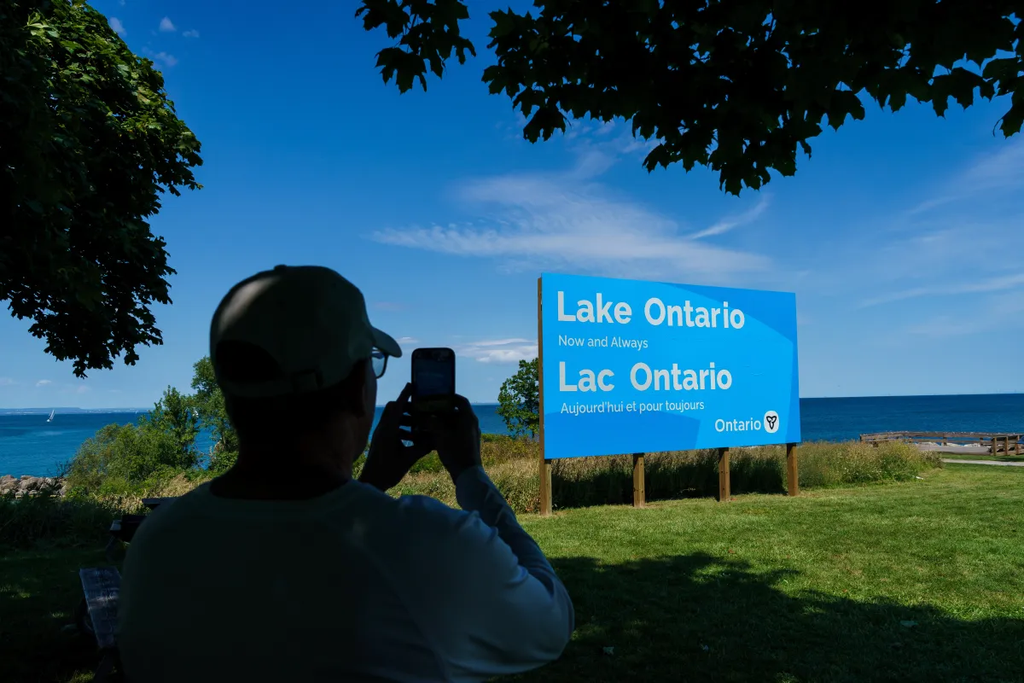
Google has officially updated its mapping software to display the name “Lake America” instead of “Lake Ontario” for users located inside the United States. The sudden change comes directly after an executive order signed by US President Donald Trump, which instructed federal agencies to rename the shared body of water.
If you open the Google Maps app on your phone while standing anywhere in the United States today, the giant body of water sitting between New York State and Canada will no longer bear its historical name. Instead, you will see “Lake America” printed across the water. However, if you cross the border into Canada or open the app anywhere else in the world, the original name remains unchanged.
This update has sparked massive debate across the internet, drawing reactions from political leaders, technology lovers, and everyday users. It raises big questions about how digital maps work, who gets to decide what places are called, and how tech platforms navigate international disputes.
How Google Decides What Names Appear on Your Screen
Many people were surprised to see Google implement the new label so quickly. To understand why this happened, you have to look at how tech companies handle geographic data. Google relies heavily on official government databases to name roads, towns, landmarks, and natural features inside specific countries.
For the United States, that official source is the Geographic Names Information System, often shortened to GNIS. The GNIS is managed by the US Department of the Interior. When the US government formally updated its official naming database to list “Lake America,” Google followed its standard technical policy by updating the map display for American IP addresses.
The $0 Secret To Launching Your Entire Online Empire
Why pay hundreds every month for separate software? Build funnels, send emails, and make sales with Systeme.io completely free.
Get Started For $0Free Forever • No Credit Card Needed • Beginner-Friendly
In a public statement regarding the update, Google explained how its mapping software handles localized government data. The company noted that its primary goal is to display names that match official local government records. Because Canada maintains its own official naming databases, users located in Canada will continue to see “Lake Ontario”.
This type of localized display is not entirely new in the world of software development. As mapping platforms grow more advanced, companies rely on artificial intelligence and location tagging to serve custom views to users based on where they live. You can read more about how tech companies use smart algorithms in our breakdown of technology and AI developments on WhatsBuzzn.
The Political Backstory: Tariffs and Trade Disputes
The decision to rename the lake did not happen in a vacuum. It comes in the middle of severe political and economic tension between the United States and Canada.
The friction escalated when the US administration announced heavy 50% tariffs on a wide range of Canadian products. Canada responded almost immediately by placing matching tariffs on billions of dollars worth of American goods, including steel, agricultural equipment, and dairy products.
During the executive order signing at the Oval Office, a large display map showed the Great Lakes with “Lake America” written in bright red letters over Lake Ontario. During speeches, officials voiced frustration over trade agreements, arguing that the US needed to take a firmer stance with its northern neighbor.
This is also not the first time a major body of water has received a national name change in recent memory. Earlier in his term, President Trump signed a similar order directing federal agencies to refer to the Gulf of Mexico as the “Gulf of America”. At that time, Google and Apple updated their map views inside the US while keeping traditional labels for international users.
The 400-Year History Behind the Name ‘Ontario’
While political figures argue over trade policy, historians and Indigenous community leaders have pointed out that the name “Ontario” carries centuries of cultural heritage.
The word “Ontario” comes from the Huron and Wendat Indigenous languages. The original word, “Ontari’io,” roughly translates to “lake of shining waters” or “great lake”. Native peoples used this name long before European settlers arrived in North America.
The name “Ontario” was used for the lake over 400 years ago, making it much older than the Confederation of Canada or the US Declaration of Independence. The Canadian province of Ontario actually took its name from the lake, not the other way around.
Because the international border runs straight through the middle of the lake—with New York State to the south and the province of Ontario to the north—both countries have shared the water peacefully for generations. Many residents living along the border view the sudden name change as an unnecessary erasure of local heritage.
How Canada and Local US Leaders Are Reacting
The reaction from Canadian officials was swift and firm. Canadian Prime Minister Mark Carney publicly stated that Canada will not recognize the name change under any circumstances. He emphasized that the historical name belongs to both nations and carries deep cultural roots that cannot be altered by a unilateral order from another country.
Opposition to the change is not limited to Canada. Several prominent American politicians representing border states have openly voiced their disagreement.
New York Governor Kathy Hochul publicly criticized the decision during a press briefing, calling the name change absurd and a distraction from pressing economic issues like rising utility costs, grocery prices, and energy bills. She explicitly stated that state agencies in New York would not use the new term.
US Senate leaders from border states also pushed back, pointing out that local businesses and tourism agencies in cities like Buffalo and Rochester rely heavily on established cross-border relationships with Canadian cities like Toronto.
How Rival Tech Companies Are Handling the Change
While Google moved quickly to align its US map views with the GNIS database, other mapping platforms have taken completely different paths.
Send, Spend & Hold Money Worldwide Without Hidden Fees
Transfer money internationally at the real exchange rate and hold 40+ currencies in one account.
Open a Wise AccountMid-market rate • Fast transfers • 40+ currencies
MapQuest, one of the oldest mapping services on the web, openly refused to update the lake’s name. Taking a lighthearted approach to the situation, MapQuest posted a message on social media letting users know they would keep “Lake Ontario” as the default name.
To make things even more interesting, MapQuest launched a custom interactive tool on its website. The tool allows visitors to type in any nickname they want and generate a customized screenshot of the map. Users flooded social media with hilarious custom map names, turning MapQuest’s stance into a viral trend.
Apple Maps, on the other hand, took a slower approach. During the initial rollout, Apple Maps did not immediately reflect the new “Lake America” label. Tech analysts point out that Apple often takes additional time to verify geographical changes across its data networks before updating consumer devices.
Online video creators and digital journalists have been breaking down these tech rivalries in detail. If you are interested in how modern creators turn viral tech news into engaging video content, check out our guide on YouTube automation trends on WhatsBuzzn.
Internet Culture, Review Bombing, and Online Backlash
Whenever a major tech platform changes something as visible as a map name, the internet responds instantly. Within hours of the Google Maps update going live, thousands of internet users rushed to the app to leave reviews and upload joke images.
People left hundreds of comedic one-star reviews on the location pin for the lake. Some users posted memes, while others uploaded photos of rubber ducks, swimming pools, and fictional monsters to mock the political back-and-forth.
The wave of spam became so intense that Google was forced to temporarily lock the review features for the lake. This prevents users from adding new ratings, photos, or comments until the viral attention cools down.
The story has dominated social platforms all week. You can follow our live coverage and community discussions on the WhatsBuzzn Instagram page, join the conversation on our WhatsBuzzn Facebook group, or check out real-time updates on the WhatsBuzzn X account.
What This Means for the Future of Digital Maps
This situation highlights a growing challenge for modern tech companies. Digital maps are no longer simple paper prints folded in your glove box. They are dynamic software systems that adapt in real time based on your physical location, local laws, and political boundaries.
When two nations share a geographical feature but disagree on what to call it, tech companies are caught in the middle. If a company ignores local government directives, it risks legal complications or regulatory pressure. But if it updates the map, it risks alienating users and erasing historical context.
The $0 Secret To Launching Your Entire Online Empire
Why pay hundreds every month for separate software? Build funnels, send emails, and make sales with Systeme.io completely free.
Get Started For $0Free Forever • No Credit Card Needed • Beginner-Friendly
As a result, we are entering an era of localized digital reality. Two people sitting in different countries looking at the exact same location on their phones may see totally different names, borders, and labels.
For everyday travelers and logistics drivers, these updates rarely affect navigation routes or GPS directions. The roads, ferry lanes, and shipping channels remain identical. However, it changes how people perceive borders in an increasingly connected digital world.
Frequently Asked Questions
Will Lake Ontario be called Lake America outside the United States?
No. The name change only applies to users viewing Google Maps inside the United States. People using Google Maps in Canada, Europe, Asia, or anywhere else will still see the traditional name “Lake Ontario”.
Did Canada agree to this name change?
No, Canada did not agree. Canadian Prime Minister Mark Carney and provincial leaders rejected the executive order, pointing out that the name “Ontario” has Indigenous origins dating back more than 400 years.
Is Google required by law to change map names?
Google follows official government naming databases, such as the US Geographic Names Information System (GNIS), to ensure local accuracy for users. While private tech companies have some flexibility, most major platforms align their local views with official government sources to comply with national standards.
Can I change my Google Maps settings to show Lake Ontario again?
If you are located inside the US, Google Maps automatically defaults to “Lake America” based on your device location and IP address. You can view the original name by using alternative mapping platforms like MapQuest or by accessing the map through a VPN set to a location outside the US.
Has a body of water been renamed like this on digital maps before?
Yes. A similar update occurred when the Gulf of Mexico was designated as the “Gulf of America” in federal databases. Google Maps similarly updated its view for US users while maintaining standard naming for international audiences.
Does Apple Maps show Lake America as well?
Apple Maps did not instantly change the name on its platform. Apple typically reviews official changes across its system before pushing out updates, leading to a slower rollout compared to Google.
As tech platforms continue to adapt to changing political landscapes, keeping up with these shifts is essential for staying informed. To learn more about our editorial vision and how we cover trending global stories, visit the WhatsBuzzn about page. If you have feedback, questions, or news tips you would like to share with our writing team, feel free to reach out directly through the WhatsBuzzn contact page.
