
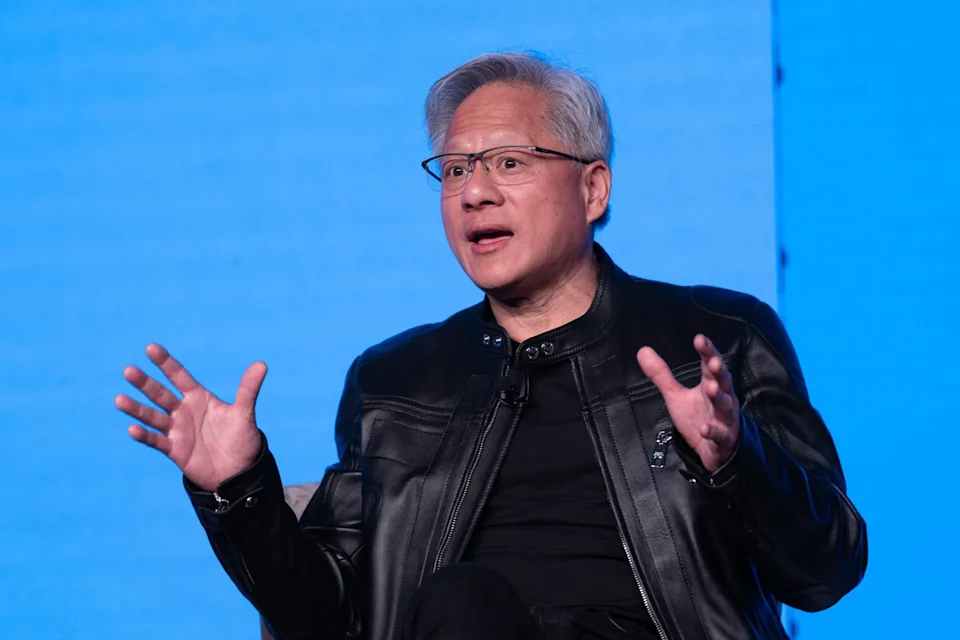
Nvidia chief executive officer Jensen Huang has stepped directly into the global debate surrounding artificial intelligence, taxation, and job security. In a recent interview with FOX Business, Huang responded to concerns raised by Microsoft co-founder Bill Gates regarding the future of work and automated systems.
While Huang openly stated that he favors paying taxes as a high-earning business leader, he strongly rejected the idea of taxing AI tokens or slowing down technological progress to protect jobs.
The debate comes at a critical moment for the global economy. Companies around the world are rushing to adopt machine learning models and automated software tools. At the same time, workers across many sectors are asking what these rapid changes mean for their paychecks and career stability.
Understanding the difference between these two tech leaders gives us a clear look at how the tech industry views the future of work. Here is a close breakdown of what Jensen Huang said, why he disagrees with Bill Gates, and what it means for everyday workers.
Bill Gates and the Proposal to Tax Artificial Intelligence
To understand Jensen Huang’s response, it helps to look at what Bill Gates originally proposed. Gates has expressed serious concerns about how fast automation could disrupt traditional office jobs.
The $0 Secret To Launching Your Entire Online Empire
Why pay hundreds every month for separate software? Build funnels, send emails, and make sales with Systeme.io completely free.
Get Started For $0Free Forever • No Credit Card Needed • Beginner-Friendly
Gates suggested that governments should consider levying taxes on AI-generated work, often referred to as taxing AI tokens or robot taxes. The idea behind this tax is simple: if a software program or machine replaces a human employee, the company using that tech should pay a tax on the work the system produces.
The revenue generated from these taxes would then be used to fund social safety nets. Governments could use the money to pay for job retraining programs, financial support for displaced workers, and education initiatives.
Gates argued that this tax would also serve another purpose. It would intentionally slow down the pace of AI deployment. By making automation slightly more expensive, companies would have an incentive to keep human workers employed longer, giving society more time to adapt.
For many labor advocates and economists, this proposal sounds like a sensible way to prevent massive unemployment. It creates a cushion for workers while forcing companies that benefit from automation to contribute to society.
Jensen Huang’s Stance on Taxes and Government Contributions
Jensen Huang takes a completely different view on how society should handle the rise of artificial intelligence. However, he made it clear that his objection is not based on a refusal to pay taxes.
In his public statements, Huang emphasized that he supports paying taxes as a standard civic responsibility. He has noted that high-productivity businesses and high-earning individuals should contribute to the economy and public infrastructure.
Huang has previously voiced support for staying in high-tax regions like California, stating that paying taxes is a fair trade-off for access to top-tier talent and innovation hubs. For Huang, paying taxes is simply part of operating a successful enterprise in a modern economy.
His disagreement with Gates is not about avoiding taxes altogether. Instead, it is about how those taxes are collected and what kind of behavior they encourage.
Huang argues that imposing a tax specifically on AI activity or automated tasks is counterproductive. He believes that penalizing productivity is the wrong way to solve economic challenges.
Why Huang Believes AI Will Create More Jobs, Not Fewer
The biggest split between Jensen Huang and Bill Gates comes down to how they view the impact of automation on employment. Gates sees automation as a potential threat to millions of white-collar jobs. Huang sees it as an engine for job creation.
According to Huang, technology has historically transformed work without reducing overall employment. While some specific tasks become automated, workers become far more productive.
Huang pointed out that when companies become more productive and profitable, they rarely decide to stop growing and fire everyone. Instead, ambitious companies use their increased profits to expand into new markets, build new products, and hire more people.
In his view, AI will change almost every job on the planet, including his own. But changing a job is not the same thing as eliminating a worker.
When a tool automates administrative tasks, employees can focus on higher-value work that machines cannot handle. This shift creates brand-new roles and industries that did not exist before.
The Difference Between Tasks and Jobs
One of the key points Huang emphasized is the distinction between automating tasks and replacing entire positions. Most jobs consist of dozens of different daily tasks.
Send, Spend & Hold Money Worldwide Without Hidden Fees
Transfer money internationally at the real exchange rate and hold 40+ currencies in one account.
Open a Wise AccountMid-market rate • Fast transfers • 40+ currencies
When an AI system automates one or two of those tasks, the employee does not become obsolete. Instead, the worker can complete those specific tasks in a fraction of the time.
This extra time allows workers to take on larger projects, learn new skills, and deliver better results for their employers. Over time, this leads to career growth rather than career loss.
Huang used his own daily routine as an example. Much of his work involves writing, communicating, and reviewing technical materials—tasks that AI can now assist with. Yet, he noted that he is busier today than ever before because the scope of what his company can build has grown dramatically.
Re-Industrialization and the Rise of Skilled Workers
Huang also offered a broader view of how AI could reshape the entire structure of the global economy. For decades, many developed nations have shifted away from industrial manufacturing toward white-collar service roles.
Huang believes that widespread automation will help trigger a process of re-industrialization. As companies build massive data centers and AI infrastructure, new demand is created for skilled technical workers, hardware engineers, and maintenance specialists.
Instead of concentrating economic opportunities solely in office settings, the expansion of hardware infrastructure creates practical jobs across multiple sectors. This builds a more balanced economic foundation.
Additionally, the growth of these systems relies on massive physical supply chains. From power generation to memory chips and server racks, building out automated capability requires physical labor and specialized craft skills.
Rather than shrinking the economy into a few software programs, Huang sees the technology wave driving real-world industrial activity that benefits broad groups of workers.
The Current Bottleneck: Compute Capacity vs. Labor
While critics worry that software will quickly take over workplaces, Huang points out a very practical limitation holding back rapid adoption: physical compute capacity.
Right now, the main challenge facing tech companies is not a lack of customer interest or a shortage of ideas. The real bottleneck is having enough microchips, data centers, and power supplies to run these advanced models.
The $0 Secret To Launching Your Entire Online Empire
Why pay hundreds every month for separate software? Build funnels, send emails, and make sales with Systeme.io completely free.
Get Started For $0Free Forever • No Credit Card Needed • Beginner-Friendly
AI models require immense processing power to perform complex tasks effectively. Developing and running these systems consumes huge amounts of physical resources and infrastructure.
Because hardware production takes time, build-outs cannot happen overnight. This natural speed bump gives businesses, workers, and educational institutions time to adapt to new tools.
It also means that companies cannot simply replace human workers overnight with software, even if they wanted to. The physical reality of tech infrastructure keeps the rollout moving at a manageable pace.
How Businesses Are Using Automated Tools Today
Across different industries, companies are already finding practical ways to integrate automated software without replacing their core teams. Businesses use these tools to speed up routine processes and boost overall output.
In software development, programmers use AI coding assistants to write boilerplate code and catch bugs faster. This lets engineers build better software products in less time.
In customer support, automated tools answer basic routine queries, allowing human support representatives to solve complex customer problems that require empathy and judgment.
In marketing and media, creators use software tools to handle video editing, transcriptions, and audience analytics. This frees up creative teams to focus on strategy and storytelling.
You can learn more about how creators and businesses use software tools to scale operations by visiting our guide on YouTube automation. Seeing these tools in action shows how technology functions as an assistant rather than a replacement.
The Role of AI in Everyday Business Growth
For small business owners and freelancers, the ongoing debate between billionaires might feel distant. But the core lesson applies directly to how modern businesses operate.
Adopting smart technology allows small teams to compete with much larger organizations. A three-person team using modern software can handle workload levels that used to require twenty full-time staff members.
Instead of viewing automation as a threat to staff, smart business owners treat it as leverage. Leverage allows small companies to produce higher quality work, deliver faster service, and increase their revenue per employee.
This increased profitability creates a stable financial foundation for the business. When a company is profitable, it can offer better wages, invest in worker training, and hire additional talent to support long-term goals.
If you want to stay updated on how new tech developments are changing the business landscape, check out our dedicated technology AI category for fresh insights and practical tips.
Why Taxing Innovation Could Backfire
Huang’s opposition to Gates’ proposal rests on a simple economic idea: taxing an activity usually results in less of that activity. If governments tax AI usage, companies will slow down their investments in technology.
Slowing down technology investment can have serious unintended consequences for national competitiveness. Countries that tax automation might fall behind nations that encourage rapid technological adoption.
When a country falls behind in technological development, its domestic businesses become less competitive on the global stage. This can lead to broader economic decline and job losses across multiple industries.
Instead of penalizing companies for using modern tools, Huang suggests that society should focus on supporting workers directly through continuous education and training.
By focusing on skill building and economic growth, society can enjoy the benefits of higher productivity while helping workers adapt to new roles naturally.
Preparing for the Changing Job Market
Workers who want to protect their careers do not need to fear technological progress. The best strategy is to focus on developing skills that complement modern tools.
Learning how to use software assistants, data analysis tools, and automated workflows makes a worker far more valuable to prospective employers.
Skills like critical thinking, creative problem solving, emotional intelligence, and leadership remain difficult for machines to replicate. Combining strong human skills with technical proficiency creates a powerful advantage in the hiring market.
Companies also share the responsibility of providing ongoing training for their workforce. When businesses invest in upskilling their existing employees, they create a loyal, adaptable workforce capable of handling new challenges.
Government policies should aim to support this transition by offering tax incentives for employee training programs rather than taxing the technology itself.
Comparing the Two Visions for the Future
The debate between Jensen Huang and Bill Gates highlights two distinct philosophies on economic management and technological change.
Bill Gates represents a cautious approach that prioritizes risk management, social safety nets, and controlled adoption. His goal is to protect workers from sudden disruption by using tax policy to cushion the blow.
Jensen Huang represents an optimistic, growth-oriented approach that relies on market expansion, productivity gains, and industrial growth. His goal is to accelerate technology to build a larger overall economic pie.
Both viewpoints come from a desire to address real economic challenges, but they offer fundamentally different paths forward.
Understanding both perspectives helps workers, business leaders, and policymakers make informed decisions about how to navigate the evolving landscape of work.
Frequently Asked Questions (FAQs)
Does Jensen Huang support paying taxes?
Yes. Jensen Huang has repeatedly stated that he supports paying taxes as a high-earning individual and business leader. He views taxes as a vital contribution to public infrastructure and society. However, he opposes creating specific taxes designed to slow down artificial intelligence or tax automated tasks.
What is Bill Gates’ proposed robot tax?
Bill Gates proposed levying a tax on companies that use artificial intelligence or automated systems to replace human workers. The revenue from this tax would be used to fund job retraining, social safety nets, and support services for displaced workers, while slowing down the speed of worker displacement.
Why does Nvidia’s CEO disagree with taxing AI?
Jensen Huang believes that AI will ultimately create more jobs than it replaces by making businesses more productive and profitable. He argues that productive companies expand and hire more workers. Taxing AI would slow down technological progress and harm economic growth.
Will AI cause widespread job losses according to tech leaders?
Opinions vary among tech executives. Bill Gates cautions that rapid automation could disrupt millions of traditional jobs. In contrast, Jensen Huang argues that while AI will change the nature of most jobs, it will act as a net job creator by spurring new industries and increasing economic demand.
How can workers prepare for AI in the workplace?
Workers can prepare by learning how to incorporate digital tools into their daily routines. Focusing on human-centric skills like problem solving, leadership, and emotional intelligence—alongside basic technology literacy—helps workers stay competitive as job requirements evolve.
Final Thoughts
The discussion between Jensen Huang and Bill Gates reflects a vital conversation about the future of work, economics, and technological advancement. While leaders agree that technology is transforming workplaces worldwide, their approaches to managing that change remain vastly different.
Whether through cautious regulation or rapid innovation, staying informed about these developments is essential for navigating tomorrow’s career landscape.
To learn more about our team and our mission to bring you simple, clear explanations of major global trends, visit our about page. If you have questions, thoughts, or suggestions about our content, feel free to reach out directly through our contact page.
You can also join our growing community online and share your views on this debate. Connect with us on our social channels: follow us on Instagram, like our page on Facebook, and join the conversation on X.
