
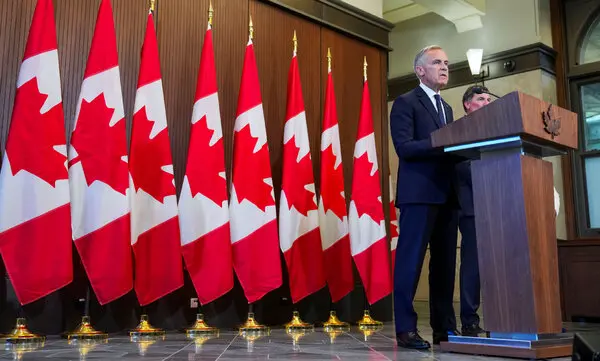
Trade negotiations between Canada and the United States have abruptly broken down, leaving both countries bracing for a prolonged economic conflict. Prime Minister Mark Carney walked away from high-stakes talks after concluding that Washington requested far too many concessions while offering very little in return. Canadian officials now expect this trade dispute to drag on for months, likely lasting past the upcoming US midterm elections and potentially through the remainder of President Donald Trump’s term.
The sudden breakdown marks a major shift in what has historically been one of the closest economic partnerships in the world. Canada and the US exchange hundreds of billions of dollars in goods and services every year. Their supply chains are deeply connected across vital sectors like manufacturing, energy, and agriculture. With new US tariffs taking effect and Canadian retaliation set in motion, businesses and consumers on both sides of the border are getting ready for a difficult stretch.
Reports from reporting outlets like [StockWatch](https://www.stockwatch.com.cy/en/news/canada-sees-long trade-war-with-us-that-may-last-beyond-midterms) indicate that the Canadian government sees little chance of resuming negotiations anytime soon. Instead, Canada is putting together long-term domestic support packages designed to help Canadian industries ride out a lengthy trade war.
How Canada and the US Reached a Trade Deadlock
The breakdown in negotiations happened quickly after intensive meetings failed to yield a balanced deal. Canadian and American trade officials had been meeting for weeks to resolve tariff disputes over key goods. As deadlines approached, negotiators attempted to map out a compromise that would satisfy both leaders.
However, the talks fell apart when American negotiators insisted on demands that Canadian leaders considered unacceptable. Carney stated that the US side asked for major structural changes while offering minimal relief from tariffs. Rather than sign a deal that would disadvantage Canadian industries, Carney chose to walk away from the table.
The $0 Secret To Launching Your Entire Online Empire
Why pay hundreds every month for separate software? Build funnels, send emails, and make sales with Systeme.io completely free.
Get Started For $0Free Forever • No Credit Card Needed • Beginner-Friendly
This standoff represents a big departure from traditional diplomacy between the two nations. The two countries share a 5,525-mile border and carry out roughly two billion dollars in daily cross-border commerce. In the past, disputes over products like softwood lumber or dairy were handled through specific arbitration or trade agreements. Now, broad cross-sector tariffs are placing stress on the overall relationship.
According to reporting from Seeking Alpha, the collapse of talks has forced Canadian leadership to prepare for a long economic winter. While the situation remains somewhat fluid, neither government is rushing to reopen formal discussions.
Prime Minister Mark Carney’s Battle Strategy
Rolling Out Business Aid for the Long Haul
In response to the tariff escalation, Carney announced that Canada is launching a comprehensive domestic aid package for affected businesses. This program is being designed specifically to cushion the blow for companies hit hardest by American import duties.
Carney informed provincial premiers that the federal support will stay in place for as long as the dispute continues. He noted that the government is planning for scenarios where support must last beyond the current US presidential term. The goal is to ensure Canadian firms do not collapse under financial pressure while waiting for trade talks to resume.
By creating a long-term safety net, the Canadian government wants to signal to Washington that it cannot be forced into a quick, unfavorable deal out of financial desperation. Details on the exact funding mechanisms and industry allocations are expected to be released in the coming days.
Canada’s Target Counter-Tariffs
In addition to internal financial support, Canada has announced retaliatory tariffs against a wide selection of US exports. These targeted counter-measures are scheduled to go into effect on September 8.
The Canadian counter-tariffs focus on key goods produced in economically and politically significant US regions. The target list includes items such as:
- American steel and aluminum products
- Agricultural products and dairy items
- Farm machinery and heavy equipment
- Consumer electronics and household appliances
- Pulp and paper goods
The three-week window between the announcement and the implementation date was chosen deliberately. It provides a brief grace period for diplomatic cooler heads to prevail, while establishing a clear deadline for counter-measures if no progress is made.
Why the Trade Standoff Could Drag On Beyond the Midterms
Washington’s Firm Position
Statements from American officials suggest that the White House is in no hurry to change its stance. US Trade Representative Jamieson Greer confirmed on public broad-casts that no new formal negotiations are on the calendar.
The US administration maintains that its tariff strategy is designed to protect domestic manufacturing and address trade imbalances. Washington has indicated that any future talks would require Canada to make substantial policy shifts.
Because both nations have staked out firm positions, finding common ground has become complicated. Neither side wants to appear weak or eager to compromise, which reduces the chance of a breakthrough in the short term.
The Political Calendar and Trade Realities
The timing of the conflict makes a quick resolution even less likely due to the upcoming US midterm elections. During election cycles, trade policy becomes a major topic on the campaign trail. Candidates often adopt tougher stances to appeal to voters in industrial and agricultural states.
Reversing tariffs right before an election can be politically difficult for an administration. Once import taxes are put in place, domestic industries that benefit from reduced foreign competition often lobby heavily to keep those protections active.
Former trade officials and analysts note that even if political leadership changes after an election, removing trade barriers takes time. Once protectionist measures take root, returning to open trade policies requires extensive negotiation, making a multi-year standoff a realistic outcome.
Sector Breakdown: Who Feels the Economic Pain First?
Automotive and Heavy Industry
The automobile sector is one of the most tightly integrated components of the North American economy. Vehicle components frequently cross the border between Canadian and American plants multiple times during assembly.
Send, Spend & Hold Money Worldwide Without Hidden Fees
Transfer money internationally at the real exchange rate and hold 40+ currencies in one account.
Open a Wise AccountMid-market rate • Fast transfers • 40+ currencies
When tariffs are applied to car parts, raw steel, or finished vehicles, production costs rise instantly. Auto manufacturers in regions like Ontario, Michigan, and Ohio face higher operational expenses, which can lead to reduced factory shifts or delays in new vehicle manufacturing.
Heavy machinery and industrial equipment face similar challenges. Construction firms and manufacturers that rely on specialized cross-border equipment must deal with higher purchase costs and disrupted supply lines.
Agriculture, Energy, and Everyday Consumer Goods
Farmers in both nations are directly exposed to trade tensions. Canada imports significant amounts of fresh produce, processed foods, and dairy from the US. At the same time, American agricultural producers rely on Canadian fertilizers, such as potash, to grow their crops.
When retaliatory tariffs hit agricultural equipment and food products, costs tend to ripple down to grocery store shelves. Consumers may notice price increases on everyday items, from dairy products to household appliances and paper goods.
Energy and raw materials are also impacted. Canada remains a primary supplier of crude oil, natural gas, electricity, and raw aluminum to American markets. Prolonged trade friction creates pricing volatility that affects both industrial producers and everyday energy users.
Navigating Trade Uncertainty in the Modern Economy
Economic friction between major trading partners highlights the importance of adaptability for businesses of all sizes. Companies that depend heavily on single markets or traditional supply chains often face the greatest risks during global trade disputes.
To stay resilient, many businesses are exploring modern technological solutions to streamline operations, cut overhead costs, and find new revenue streams. Embracing smart software and modern automation allows companies to stay flexible when economic landscapes shift.
To learn more about how technology is changing business practices and global systems, check out our insights on Technology & AI.
For entrepreneurs looking into digital income models and content platforms that operate outside traditional supply chain barriers, check out our guide to YouTube Automation.
Staying informed on global events helps individuals and business owners make smart decisions. To learn more about our publication and mission, visit our About Page. If you have questions, feedback, or news tips to share, feel free to visit our Contact Page.
The $0 Secret To Launching Your Entire Online Empire
Why pay hundreds every month for separate software? Build funnels, send emails, and make sales with Systeme.io completely free.
Get Started For $0Free Forever • No Credit Card Needed • Beginner-Friendly
You can also join the conversation on social media by following our updates on Instagram, staying connected on Facebook, and getting real-time posts on X (formerly Twitter).
Frequently Asked Questions (FAQs)
Why did Canada-US trade negotiations collapse?
The negotiations collapsed after Canadian officials concluded that the US asked for major policy concessions while offering very little tariff relief in return. Prime Minister Mark Carney decided to walk away rather than sign an unbalanced deal.
When do Canadian retaliatory tariffs start?
Canada’s retaliatory tariffs are scheduled to take effect on September 8. This timeline was designed to give both sides a window to reconsider while setting a firm deadline for counter-measures.
How long is the Canada-US trade war expected to last?
Canadian government officials expect the trade war to last for a significant period, likely stretching past the US midterm elections and potentially through the remainder of the current US presidential term.
Which goods are targeted by Canadian counter-tariffs?
The retaliatory tariffs target several US imports, including steel, aluminum, dairy products, agricultural equipment, household appliances, electronics, and pulp and paper goods.
What is Canada doing to support local businesses affected by tariffs?
The Canadian government is rolling out a dedicated domestic aid package. This program is designed to provide long-term financial support to Canadian businesses and industries affected by US trade actions.
The Path Ahead for North American Economic Relations
The breakdown in trade negotiations between Canada and the United States marks the beginning of a challenging chapter for North American commerce. With Prime Minister Mark Carney building long-term aid packages and US officials holding firm on tariff policies, neither nation appears ready to yield quickly.
As both countries prepare for a trade war that could last beyond the midterms, businesses and consumers will need to adjust to higher costs and altered supply routes. Whether diplomatic talks resume soon or economic friction continues over the long haul, North American trade dynamics have undergone a lasting change. Staying updated on international developments remains essential as this situation unfolds.
