
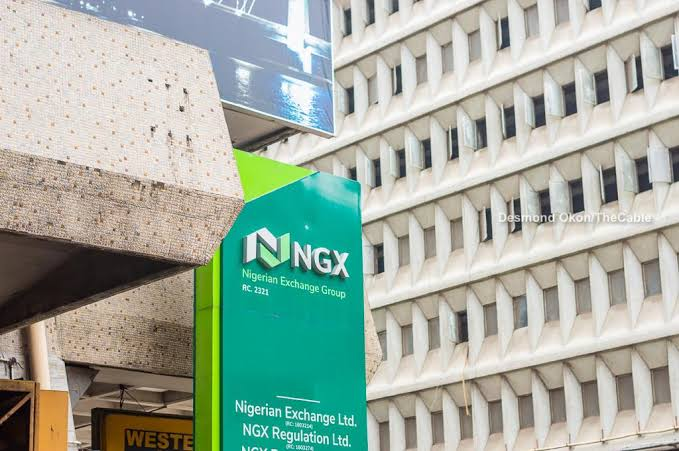
The Nigerian equities market posted a remarkable 57 percent return in the first seven months of 2026, growing market capitalisation by N58.9 trillion to close at N158.2 trillion. Rather than being driven by foreign portfolio inflows, this historic stock market rally was propelled almost entirely by domestic capital and local institutional investors.
Managing Director of Coronation Asset Management, Aigbovbioise Aig-Imoukhuede, revealed these numbers during the Coronation H1 2026 Capital Market Review and Outlook presentation in Lagos. According to data cited from Bloomberg, the Nigerian Exchange Limited (NGX) emerged as one of the world’s strongest-performing equity markets in dollar terms during this period.
Breaking Down the Numbers Behind the NGX Rally
To truly appreciate what is happening on the floor of the stock exchange, it helps to look at how rapidly the local financial landscape has shifted over the past year. Between January and July 2026, the NGX All-Share Index climbed relentlessly, adding tens of trillions of Naira in shareholder value.
A growth rate of 57 percent in seven months is uncommon even in fast-moving emerging markets. A total valuation reaching N158.2 trillion shows that local capital is now big enough to shift entire markets without waiting for outside approval.
As highlighted in recent financial reporting by Punch Newspapers coverage, this expansion highlights a strengthening domestic capital base. Local investors are no longer sitting on the sidelines holding cash or waiting for foreign funds to set the trend. Instead, everyday Nigerians, domestic investment firms, pension fund administrators, and local corporations are taking charge of their own financial assets.
The $0 Secret To Launching Your Entire Online Empire
Why pay hundreds every month for separate software? Build funnels, send emails, and make sales with Systeme.io completely free.
Get Started For $0Free Forever • No Credit Card Needed • Beginner-Friendly
Local Capital vs Foreign Inflows: A Major Shift in Market Dynamics
For decades, the story of the Nigerian stock market was heavily tied to international foreign portfolio investors. When foreign money came in, the market boomed. When foreign investors pulled back, stock prices often stagnated or fell.
The year 2026 has flipped that traditional story completely on its head.
Why Foreign Participation Dropped to 12%
By June 2026, foreign portfolio investors accounted for just 12.1 percent of the total transaction value on the NGX. This represents a steep drop from the 27 percent recorded during the same period in 2025.
However, as the Coronation chief clarified during his address, this decrease does not mean foreign investors fled the country entirely. The actual nominal value of foreign-held portfolios grew slightly, moving from N1.13 trillion up to N1.16 trillion in the first half of the year.
The primary reason foreign funds took a cautious step back from stocks was the tempting high yields offered by short-dated Nigerian government securities. With Treasury bills and government paper offering returns close to 20 percent, many foreign fund managers preferred to lock in fixed interest yields rather than take on stock market volatility.
The 129% Surge in Domestic Investor Activity
While foreign participation stayed flat in relative terms, domestic participation exploded by 129.1 percent during the exact same period.
Local institutional players and retail investors stepped in aggressively to buy equities. When domestic investors realized that top Nigerian companies were trading at attractive prices relative to their earnings, they began deploying billions of Naira directly into the stock market.
This surge proves that when local savings are mobilized efficiently, domestic financial systems can maintain strong momentum even when global foreign capital remains cautious.
Is the Stock Market Surge Sustainable or a Short-Term Re-Rating?
While a 57 percent return sounds like cause for celebration, smart investors always ask important questions before putting more money to work. Is this growth based on solid corporate performance, or is it just a temporary re-rating driven by inflation and currency adjustments?
Understanding the June Profit-Taking Pullback
During June 2026, the stock market experienced a brief cooling-off period where index growth slowed down and prices dipped slightly. Some market observers worried that the bull run was ending, but financial analysts view it differently.
The minor pullback in June was simply routine profit-taking. After an extraordinary run in the first five months of the year, domestic investors made the prudent choice to lock in some of their profits. Locking in gains is a healthy feature of normal trading, allowing markets to catch their breath before continuing their upward trend.
Macroeconomic Factors and Interest Rate Stability
The broader economic environment plays a crucial role in deciding where money flows. The Central Bank of Nigeria (CBN) held its benchmark Monetary Policy Rate (MPR) steady at 26.5 percent after two consecutive Monetary Policy Committee meetings, following an earlier 50-basis-point rate cut from 27 percent.
Coronation Research forecasts that the benchmark rate will likely stay around current levels through the rest of the year. When interest rates remain stable, investors gain clarity, making it easier to project corporate earnings and calculate long-term investment returns.
At the same time, global rating agencies like FTSE Russell and S&P Dow Jones are closely reviewing Nigeria’s status on their frontier market indices. If Nigeria is reclassified positively, it could trigger a fresh wave of international capital returning to the market.
Pension Funds and Retail Investors: The Twin Engines of Growth
Two main groups of local investors deserve the credit for driving this 57 percent stock market surge: pension funds and individual retail investors.
Send, Spend & Hold Money Worldwide Without Hidden Fees
Transfer money internationally at the real exchange rate and hold 40+ currencies in one account.
Open a Wise AccountMid-market rate • Fast transfers • 40+ currencies
The Impact of Updated PenCom Investment Guidelines
The National Pension Commission (PenCom) updated its regulatory frameworks to allow Pension Fund Administrators (PFAs) greater flexibility in equity allocations. Pension funds hold trillions of Naira in retirement savings collected from workers across Nigeria.
When PenCom adjusted its investment guidelines, PFAs gained the freedom to allocate a larger portion of their managed assets into high-performing equities. Because pension funds invest with a horizon spanning decades, their capital provides steady, long-term stability to the stock exchange.
When stock markets are supported by long-term retirement savings rather than short-term speculative trading, price growth becomes far more resilient against panic selling.
How Retail Investors Are Reclaiming Their Financial Future
Individual retail investors are also playing an active role in this stock rally. In previous years, buying stocks required visiting a traditional broker’s office, filling out paper forms, and waiting days for trade executions.
Today, modern digital technology has completely transformed how people interact with money. Through user-friendly mobile applications, young professionals and everyday workers can buy shares in top banking, consumer goods, and telecom companies directly from their mobile phones.
Smart Money Moves: How Everyday Citizens Can Capitalize on Market Growth
Seeing headlines about a 57 percent stock market surge is exciting, but knowing what to do with that information is what transforms headline news into personal wealth. Building financial independence requires practical, disciplined action rather than jumping into hype blindly.
Diversifying Between Fixed Income and Equities
Never put all your savings into a single basket. While equities offer exciting growth potential, fixed-income instruments like government bonds, Treasury bills, and high-yield money market funds offer steady, guaranteed returns.
A balanced portfolio gives you peace of mind. During market rallies, your stock holdings generate capital growth. During market pullbacks, your fixed-income assets provide a steady cash flow cushion.
Focusing on Long-Term Value Over Quick Speculation
When choosing stocks, focus on companies with strong balance sheets, consistent earnings growth, experienced leadership, and regular dividend payouts.
Companies in sectors like financial services, telecommunications, agriculture, and fast-moving consumer goods often possess the pricing power needed to navigate inflation and economic shifts. Buying quality stocks and holding them for years allows compound interest to work its magic.
The $0 Secret To Launching Your Entire Online Empire
Why pay hundreds every month for separate software? Build funnels, send emails, and make sales with Systeme.io completely free.
Get Started For $0Free Forever • No Credit Card Needed • Beginner-Friendly
Leveraging Digital Platforms for Modern Wealth Building
The expansion of local financial markets goes hand-in-hand with the growth of modern digital tools. From digital banking to automated business models, technology is breaking down traditional barriers to financial success.
If you are eager to explore how modern digital tools can create additional streams of income to fuel your investment portfolio, check out our insights on technology and AI insights. Understanding automation and modern artificial intelligence gives smart entrepreneurs a significant advantage in today’s economy.
Similarly, many forward-thinking individuals are building digital content assets to build online revenue. To learn more about constructing automated digital content streams, explore our guide to YouTube automation category. Building reliable digital cash flow gives you extra capital that can be invested directly into high-performing stocks or government securities.
To learn more about our publication and our mission to simplify complex topics, visit our about page. If you have questions or want to collaborate with our editorial team, feel free to reach out via our contact team page.
You can also join our growing community on social media to stay updated on breaking news and financial market trends:
- Connect with us on our Facebook community
- Follow our visual updates on our Instagram page
- Join the conversation on our X account
Frequently Asked Questions (FAQs)
What does the 57 percent NGX surge mean for an average person?
The 57 percent surge means that the total value of public companies listed on the Nigerian Exchange increased significantly. If you owned stocks or had money invested in equity pension funds during this period, your wealth grew. It also signals strong local business confidence and demonstrates that domestic capital can power economic expansion.
Why are foreign investors putting less money into Nigerian stocks right now?
Foreign investors have not abandoned Nigeria, but many have chosen short-term government debt securities like Treasury bills instead of stocks. These fixed-income products offer high yields near 20 percent with lower risk. Additionally, some global fund managers are waiting for further exchange rate stability before committing large amounts of equity capital.
How do pension funds affect stock market performance?
Pension funds manage huge sums of money saved by workers across the country. When regulatory authorities update rules to permit larger equity investments, pension fund administrators buy significant shares in strong companies. Because pension funds hold investments for years, their buying power stabilizes stock prices and drives continuous market growth.
Is it too late to start investing in the Nigerian stock market?
It is rarely too late to start investing if you take a long-term approach. While short-term pullbacks and profit-taking always occur, buying quality stocks with good dividends and holding them over several years remains one of the best ways to build long-term wealth and protect your cash against inflation.
What is the main difference between buying stocks and buying Treasury bills?
When you buy stocks, you purchase partial ownership in a company, meaning your returns depend on the company’s profit performance and stock price movements. When you buy Treasury bills, you are lending money to the government for a fixed period in exchange for a guaranteed interest payout.
The strong performance of the Nigerian Exchange in 2026 marks an important turning point for the local economy. When domestic capital takes the wheel, financial markets become more resilient, less dependent on foreign mood swings, and better grounded in local realities. As banking recapitalization progresses and foreign exchange liquidity continues to improve, the foundation laid by local investors will remain the central pillar of long-term economic growth.
