
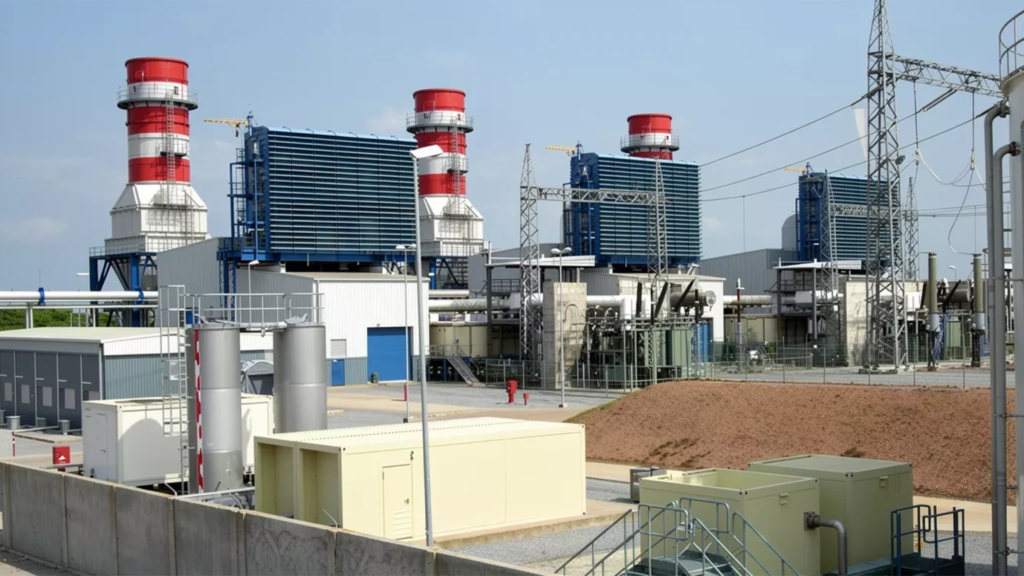
Geregu Power Plc, one of Nigeria’s primary electricity generation companies, has stepped forward to address growing public concern after missing a scheduled debt payment on its corporate bond. The company recently failed to meet its eighth semi-annual coupon payment and its fourth scheduled principal repayment on a major corporate bond. This development caught immediate attention across the Nigerian capital market, as it marks the country’s first major corporate bond default in nearly seven years. In response to widespread market reactions, management has started a comprehensive review of its liabilities, debt contracts, and operational commitments to restore balance and reassure investors.
The sudden financial strain surrounding the power producer follows a steep drop in earnings during the first half of 2026. However, company executives insist that plant operations remain fully active, electricity generation continues to feed into the national grid without interruption, and constructive talks with creditors are already underway to reach an orderly resolution. Understanding how a major power producer faced this cash crunch requires a close look at its financial numbers, operational challenges, and the broader realities of Nigeria’s energy sector.
The Debt Event That Caught Market Attention
When reports first surfaced that Geregu Power Plc missed its scheduled debt service obligations, shockwaves moved through the Nigerian financial community. The company had issued a Series 1 Senior Unsecured Fixed Rate Bond in July 2022 to raise funds for expansion and long-term capital needs. For years, corporate bonds issued by established energy and industrial firms were viewed by Nigerian investors as reliable financial instruments that provided dependable interest income.
Missing a scheduled debt payment changes market sentiment quickly. Because Nigeria had enjoyed a long stretch of stability in corporate bond repayments over the last seven years, this default drew swift attention from bondholders, stockbrokers, pension fund managers, and regulatory bodies like the Securities and Exchange Commission (SEC) and the Nigerian Exchange (NGX).
According to updates published by leading financial outlets like BusinessDay, the company issued an official regulatory notice to address public concerns directly. Geregu emphasized that its current board and management team are not ignoring the debt situation. Instead, they are taking direct ownership by reviewing every financial arrangement on their books to establish clarity without disrupting their main responsibility: providing electricity to millions of consumers.
The $0 Secret To Launching Your Entire Online Empire
Why pay hundreds every month for separate software? Build funnels, send emails, and make sales with Systeme.io completely free.
Get Started For $0Free Forever • No Credit Card Needed • Beginner-Friendly
Breaking Down the Numbers: What Is Owed?
When financial headlines talk about a corporate bond default, large numbers can easily confuse everyday readers. Many initial news reports pointed out that Geregu Power issued a N40.09 billion bond program in July 2022 at a fixed annual interest rate of 14.50 percent, set to mature in 2029. This led some people to assume that the entire N40.09 billion was lost or due immediately.
That is not what happened. As financial analysts have explained, N40.09 billion represents the original total face value of the entire seven-year bond program, not the specific payment amount that was missed in this single payment cycle. Between 2022 and 2025, Geregu Power successfully made multiple scheduled interest and principal repayments to investors, gradually lowering its total outstanding debt.
The specific missed payment involved the eighth semi-annual coupon (interest) distribution and the fourth scheduled partial principal repayment. Financial reports, including detailed market coverage by ThisDay Live, clarify that the actual missed payment amount for this specific installment stands at approximately N6.26 billion. While N6.26 billion remains a substantial sum of money, understanding the difference between the overall bond program value and the immediate default amount offers a much clearer picture of the company’s real position.
To make sense of how these bond payments work, consider these three core components:
- Principal Repayment: This is the actual borrowed sum that a company agrees to pay back to investors over time in planned chunks or as a final lump sum.
- Coupon Payment: This is the regular interest paid to bondholders, usually every six months, as profit for lending their money to the company.
- Amortization Schedule: Rather than paying back all N40 billion at the end in 2029, Geregu’s bond was designed to be paid down step-by-step over its seven-year lifespan.
Missing one scheduled step in this amortization plan creates a technical default, which triggers immediate discussions between the borrower and financial advisers to restructure the repayment timeline.
Why Did Geregu Power Experience a Cash Crunch?
To understand how Geregu Power ran into a temporary cash shortage, one must look at its financial results from the first half of 2026. The company experienced a severe drop in both total revenue and net profit compared to the exact same period in 2025.
During the first six months of 2026, Geregu’s total revenue fell by 78.7 percent, dropping to N18.65 billion from the N87.63 billion recorded in the first half of 2025. With revenue dropping so sharply, profitability took an equally heavy hit. The company’s profit after tax plunged by almost 88 percent, down to N2.54 billion from N20.27 billion in the previous year.
When a company experiences a revenue drop of nearly four-fifths within a single year, meeting fixed cash commitments becomes extremely challenging. Every naira coming in must cover ongoing fuel costs, employee salaries, plant safety, and debt service. When cash inflow slows down so quickly, liquid funds dry up fast.
The core reason behind this sharp drop in earnings was a necessary operational commitment: a massive N61.47 billion turbine maintenance programme.
Power plants rely on heavy gas turbines to generate electricity. Over years of continuous operation, these turbines endure severe mechanical stress. To keep them running safely and efficiently, companies must periodically take them offline for major technical overhauls.
Carrying out a major turbine overhaul impacts cash flow in two major ways at the same time:
- Substantial Capital Outflow: The company must spend huge amounts of money upfront—in this case, over N61 billion—to purchase technical spare parts, hire specialized engineers, and overhaul internal components.
- Reduced Power Output: While a turbine is offline undergoing maintenance, it cannot produce electricity. Reduced power production means fewer megawatt-hours sold to the national grid, causing immediate declines in daily cash collections.
This maintenance schedule created a classic short-term cash squeeze. The company committed huge capital toward long-term plant maintenance at the exact moment its immediate capacity to generate daily revenue was temporarily reduced.
Bigger Pressures Facing Nigeria’s Power Generation Market
While the turbine maintenance program was the main internal cause of Geregu’s cash squeeze, the broader environment in Nigeria’s power market also played a significant role. Power generation companies (GenCos) across the country operate in a demanding financial landscape shaped by structural market bottlenecks.
Power producers deal with several recurring industry challenges:
- Payment Delays from Market Operators: GenCos sell the electricity they produce to the national grid through the Nigerian Bulk Electricity Trading Plc (NBET). However, downstream distribution companies (DisCos) often struggle to collect complete payments from electricity consumers. As a result, funds flowing back to generation companies are frequently delayed or paid in partial installments, leaving GenCos with massive unpaid receivables.
- High Maintenance Costs and Foreign Exchange Stress: Crucial turbine parts, specialized equipment, and heavy machinery services are imported from international suppliers and priced in foreign currencies like US dollars. Fluctuations in foreign exchange rates raise the local naira cost of carrying out essential plant maintenance.
- Gas Supply and Logistics: Thermal power plants rely heavily on natural gas. Any interruption in gas pipelines or changes in gas pricing can force power plants to run below capacity, further squeezing overall revenue generation.
These broader industry conditions mean that even solid power companies can face cash shortages when large maintenance expenses hit at the same time as delayed market receivables. Readers curious about how modern tech solutions are addressing energy sector challenges can explore related ideas in our Technology & AI section.
Send, Spend & Hold Money Worldwide Without Hidden Fees
Transfer money internationally at the real exchange rate and hold 40+ currencies in one account.
Open a Wise AccountMid-market rate • Fast transfers • 40+ currencies
Ownership Transition and Management Leadership
Another factor surrounding Geregu Power’s recent development is a change in corporate ownership and leadership.
Geregu Power Plc was previously led by prominent investor and business leader Femi Otedola. However, ownership of the core majority stake transitioned to Senator Abdulazeez Yari, former governor of Zamfara State.
Whenever major ownership changes occur, incoming boards and executive management teams must conduct a thorough inventory of all corporate assets, debt commitments, contracts, and financial arrangements. In an official release signed by company secretary The Structure HQ, Geregu explained that its new management team immediately initiated a comprehensive financial reconciliation process upon taking charge.
This internal review covers every financial obligation, liability, financing agreement, and corporate document on record. The primary goal is to establish accurate accounting, ensure total transparency, and put prudent financial management practices in place.
Taking charge during a period of heavy maintenance expenses and tight bond deadlines presented the new leadership with an immediate hurdle. Rather than delaying action, management chose open communication and active engagement with stakeholders to resolve the issue systematically.
Step-by-Step: How Geregu Is Moving to Resolve the Debt Issue
When a high-profile company experiences a debt default, investors, regulators, and the general public want to know one thing: What steps are being taken to fix the situation?
Geregu Power has outlined a structured approach to address its bond obligations. As reported in coverage by The Guardian Nigeria, the company is actively executing four primary measures:
1. Detailed Debt Reconciliation
Management is completing an itemized audit of every single liability and financial commitment. By verifying exact debt figures, interest calculations, and payment dates, the company ensures that all ongoing talks are built on clear, accurate financial data.
2. Direct Engagement with Bondholders and Advisers
Geregu is actively meeting with financial advisers, bond trustees, and institutional investors to agree on a mutually acceptable restructuring plan. Restructuring usually involves adjusting payment schedules, extending repayment periods, or reorganizing coupon payments so the company can meet its obligations comfortably as cash flow recovers.
3. Open Communication with Regulators
The company is keeping key market regulators, including the Securities and Exchange Commission (SEC) and the Nigerian Exchange (NGX), fully informed about progress. Maintaining open channels with regulatory bodies builds trust and ensures compliance with capital market standards.
The $0 Secret To Launching Your Entire Online Empire
Why pay hundreds every month for separate software? Build funnels, send emails, and make sales with Systeme.io completely free.
Get Started For $0Free Forever • No Credit Card Needed • Beginner-Friendly
4. Uninterrupted Power Generation
Crucially, Geregu has assured the public that debt negotiations will not impact daily power plant operations. The plant continues to generate power and feed electricity into the national grid. Keeping electricity flowing is vital because active power generation provides the revenue stream required to service debt over time.
Market Impact: What This Means for Investors and Nigeria’s Financial Sector
This default offers useful insights for everyone following Nigeria’s corporate debt market. For years, local corporate bonds were viewed as nearly risk-free options for capital preservation. This event serves as a practical reminder that every corporate instrument is connected to real-world business cycles and operational cash flows.
Different market participants can draw key takeaways from this situation:
- For Bondholders: A temporary default requires patience, but it rarely means a total loss of principal. Because Geregu owns valuable physical power assets and operates in a critical sector, reaching a negotiated debt restructuring plan remains the most logical outcome for all parties.
- For Capital Markets: The situation underlines the importance of liquidity management for companies issuing long-term debt. It also shows why market regulators encourage open communication during periods of corporate financial stress.
- For the Energy Sector: It highlights the urgent need to address systemic payment bottlenecks across the power value chain so generation companies can maintain steady cash flow for debt service and capital expansion.
Understanding how corporate brands handle public communication and business challenges is an engaging topic across many industries. If you enjoy discovering how creators and businesses manage media, content, and digital strategies, feel free to check out our guides on YouTube Automation.
Frequently Asked Questions (FAQs)
Has Geregu Power stopped generating electricity because of this debt default?
No, Geregu Power has not stopped generating electricity. The company confirmed that its bond debt discussions are purely financial and do not affect plant operations. The power station remains active and continues to supply electricity to the national grid.
How much money did Geregu Power miss in this bond repayment?
While the total value of the original bond program issued in 2022 was N40.09 billion, the actual missed payment amount for this cycle was approximately N6.26 billion. This sum represents the eighth semi-annual coupon payment along with the fourth scheduled principal repayment installment.
Why did Geregu’s revenue fall so sharply in the first half of 2026?
The primary driver behind the 78.7 percent drop in revenue was a major N61.47 billion turbine maintenance programme. Shutting down turbines for necessary technical overhauls temporarily reduced power generation capacity and sales, while requiring substantial upfront cash spending for equipment and technical service.
Is Geregu Power working with its lenders to resolve the issue?
Yes, Geregu Power is actively meeting with bond trustees, financial advisers, institutional investors, and regulatory authorities to negotiate a restructured repayment plan and achieve an orderly, mutually beneficial resolution.
Who holds majority ownership in Geregu Power Plc?
The core majority stake in Geregu Power Plc was acquired by Senator Abdulazeez Yari, former governor of Zamfara State, following an ownership transaction with former chairman and core investor Femi Otedola.
Moving Forward: Resolving the Crisis and Restoring Stability
Geregu Power’s proactive response to its bond repayment concerns marks an important turning point in resolving its immediate financial challenge. Navigating a corporate debt default requires clear facts, practical management, and transparent engagement with investors. By addressing the default publicly, auditing its corporate records, and maintaining uninterrupted power supply to the grid, Geregu is laying the groundwork to stabilize its balance sheet.
As discussions between the company, financial advisers, and bondholders move forward, market participants remain focused on the final restructuring agreement. A successful debt resolution will help Geregu rebuild financial flexibility and reinforce confidence across Nigeria’s corporate bond market.
To learn more about our work and editorial mission, take a look at our About Page. If you have questions or want to reach out to our editorial team, feel free to visit our Contact Page. You can also stay up to date with our community by following us on Instagram, Facebook, and X (formerly Twitter).
