
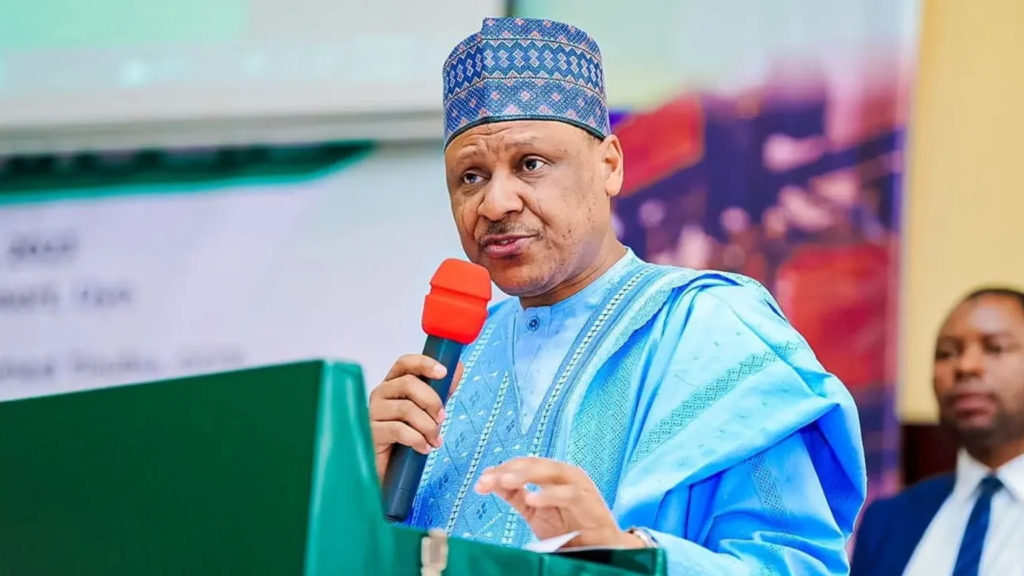
The Minister of Information and National Orientation, Mohammed Idris, recently delivered a message that resonated across the country. Speaking in Abuja during an official visit from Major-General Adeyinka Famadewa (rtd.), the Special Adviser to the President on Homeland Security, Idris stated clearly: “You cannot shoot yourself out of this problem.”
His message was simple and direct. Relying only on military force will not solve the complex security challenges facing Nigeria. While tactical military operations are essential for maintaining order and stopping active threats, physical weapons alone cannot build lasting peace. Real security requires real cooperation between the armed forces, government institutions, local communities, traditional leaders, and everyday citizens.
This statement marks a realistic and necessary shift in how national security is discussed. For a long time, public attention focused almost entirely on purchasing hardware, sending troops to conflict zones, and launching air strikes. However, as banditry, terrorism, and violent crimes continue to affect lives and livelihoods, government officials are acknowledging that physical force is only one piece of a much larger puzzle.
Understanding Kinetic vs. Non-Kinetic Operations
To understand why the minister emphasized this point, it helps to break down how security experts look at solutions. In national defense, solutions are usually divided into two main categories: kinetic and non-kinetic measures.
What Are Kinetic Operations?
Kinetic actions refer to direct physical force. This includes army patrols, police raids on criminal hideouts, aerial bombardments, and direct combat against insurgent groups. It is hard power designed to neutralize immediate threats and protect citizens in active danger zones.
The $0 Secret To Launching Your Entire Online Empire
Why pay hundreds every month for separate software? Build funnels, send emails, and make sales with Systeme.io completely free.
Get Started For $0Free Forever • No Credit Card Needed • Beginner-Friendly
What Are Non-Kinetic Operations?
Non-kinetic actions focus on soft power, prevention, and root causes. This includes gathering local intelligence, building community trust, resolving communal disputes, creating jobs for young people, improving public education, and stopping fake news. Non-kinetic operations aim to eliminate the reasons why crime happens in the first place.
When Minister Idris noted that military force is not enough, he was explaining that kinetic power must work hand-in-hand with non-kinetic efforts. Without solving poverty, unemployment, and bad information, military victories will only be temporary. As reported by The Guardian Nigeria, a comprehensive response involving intelligence gathering, responsible communication, and civilian participation is necessary for long-term safety.
Misinformation as a Modern Security Threat
During the meeting, Minister Idris highlighted another major danger that threatens national stability: misinformation, fake news, and deliberate disinformation campaigns.
In modern society, unverified rumors can travel across social media within seconds. False news can spark panic, provoke ethnic tensions, or ruin public trust in defense forces. When false narratives go viral, they complicate emergency responses and make the job of soldiers and police officers much harder.
“Information is key in asymmetric warfare. The first person to speak wins, and we cannot sit back and allow others to shape perception for us.”
— Major-General Adeyinka Famadewa (rtd.), Special Adviser on Homeland Security
Managing national security is no longer restricted to physical battlefields. It takes place online every single day. Responsible media coverage and public education are required so that false reports do not fill the void during a crisis.
As digital spaces expand, anyone creating content or publishing stories online must practice high standards of accuracy. Whether individuals cover daily events manually or use modern digital tools like YouTube automation to produce informational videos, checking facts before sharing is vital for national peace. Rapid advancements in technology and AI mean that fake images and deepfake videos can be created in minutes, making public media literacy more critical than ever.
The Economic Drivers Behind Insecurity
Security challenges do not appear out of nowhere. They are tied to economic conditions, access to basic education, and social opportunities. Regional reports, including insights covered by BusinessDay Nigeria, show that rising unemployment, factory closures, and rural poverty create an environment where criminal groups easily recruit vulnerable people.
When young people cannot find honest work, when small businesses fold, and when farmers cannot safely clear their fields due to fear, criminal networks step in. Bandit leaders and extremist groups offer cash, food, or a false sense of protection to desperate youth.
Solving national security requires repairing these broken economic foundations:
- Youth Employment: Providing vocational training, technology hubs, and trade apprenticeships so young citizens can earn a decent living.
- Support for Agriculture: Protecting rural farming communities so food supplies stay stable and local economies stay strong.
- Educational Reform: Restructuring vulnerable educational systems, including addressing out-of-school children, to give young people practical skills.
- Business Grants: Supporting micro and small enterprises so local markets can recover from years of disruption.
Without addressing these economic realities, armed groups will continue to find new recruits, regardless of how many camps are destroyed in military raids.
Broad Agreement Across Military and Traditional Leaders
Minister Idris is not the only high-ranking leader making this argument. Military commanders and traditional rulers across Nigeria share the exact same view.
Chief of Army Staff, Lieutenant General Waidi Shaibu, noted recently that no single agency can tackle complex security threats alone. He pointed out that physical combat must be complemented by accurate strategic communication, intelligence sharing, and active cooperation from the public. Troops need reliable information from locals to track down threats effectively.
Similarly, traditional rulers like the Emir of Potiskum, Alhaji Umaru Bubaram Ibn Wuriwa Bauya, have publicly urged government authorities to look beyond guns. Because traditional leaders live directly among the people, they understand local grievances and dispute resolution better than distant institutions. They argue that true stability comes from justice, fair governance, and community dialogue.
Send, Spend & Hold Money Worldwide Without Hidden Fees
Transfer money internationally at the real exchange rate and hold 40+ currencies in one account.
Open a Wise AccountMid-market rate • Fast transfers • 40+ currencies
State governments are also seeing results by blending methods. In Katsina State, Governor Dikko Radda noted that security conditions improved significantly after combining kinetic troop deployments with non-kinetic efforts like community policing and local security outfits.
Four Main Steps for a Safer Nation
Creating a safe country requires a balanced approach that combines law enforcement with social development. Here are four essential steps that can make a lasting difference:
1. Unified Intelligence and Agency Cooperation
Security agencies cannot work in silos. The armed forces, police units, intelligence services, and civil defense agencies must share real-time information. When agencies communicate seamlessly, threats can be stopped before violence occurs.
2. Building Trust with Local Communities
Citizens are the primary eyes and ears on the ground. However, people will only report unusual activities if they trust that security agencies will protect their identities and safety. Respectful, transparent relationships between officers and residents are essential.
3. Clear, Fact-Based Public Communication
Government agencies must share quick, truthful updates during crises. When official communication is fast and honest, rumor-mongers and dangerous actors lose their ability to panic the public.
4. Youth Opportunities and Poverty Alleviation
Long-term safety requires giving young people a clear path to a productive life. Investing in tech skills, business grants, and accessible schools removes the temptation to join illegal syndicates.
How Citizens Can Help Protect Their Communities
While government officials and defense forces hold the primary duty to maintain order, citizens also have a practical role to play. National safety relies on everyday cooperation.
Here are plain actions anyone can take:
- Report Suspicious Activity: Inform local security officers or trusted community leaders immediately if you notice strange movements or unlawful behavior in your area.
- Verify Before Sharing: Do not forward unverified violent stories, voice notes, or sensational videos on messaging apps or social networks.
- Support Local Peace Initiatives: Engage positively in neighborhood meetings, foster good relations with neighbors, and settle local squabbles peacefully.
- Encourage the Youth: Mentor young people around you, guide them toward skills, and warn them against joining criminal gangs or violent groups.
FAQs
Why did Information Minister Mohammed Idris say military force alone cannot stop insecurity?
Minister Idris stated that complex security threats are rooted in social issues like poverty, lack of jobs, fake news, and poor community trust. Military weapons can fight active threats, but they cannot fix underlying social problems.
What is the difference between kinetic and non-kinetic security approaches?
Kinetic operations use physical force, weapons, and troop movements. Non-kinetic approaches use soft strategies like intelligence gathering, community dialogues, job creation, public education, and combating false information.
The $0 Secret To Launching Your Entire Online Empire
Why pay hundreds every month for separate software? Build funnels, send emails, and make sales with Systeme.io completely free.
Get Started For $0Free Forever • No Credit Card Needed • Beginner-Friendly
How does fake news make insecurity worse?
Fake news causes unnecessary fear, turns groups against each other, and confuses the public during active crises. It also makes it harder for official security forces to pass along accurate safety instructions.
What is the role of traditional rulers in keeping peace?
Traditional rulers live close to the people, understand local customs, and know community concerns. They help mediate local conflicts, build trust between residents and government forces, and provide valuable guidance.
Can economic growth help reduce crime levels?
Yes. When citizens have stable jobs, good trade opportunities, and working farms, criminal groups struggle to recruit members. Economic stability reduces the financial desperation that drives people into crime.
Conclusion
Minister Mohammed Idris’s remarks are a clear reminder that national security belongs to everyone. Physical defense operations are necessary, but they must be matched by honest communication, economic growth, strong intelligence, and community trust. Combining kinetic strength with non-kinetic wisdom is the surest way forward for lasting safety across the nation.
For more coverage on current news, technology, and national developments, feel free to review our complete sitemap or visit our official About Us page to see what drives our work. If you have questions, story ideas, or feedback, feel free to drop a message on our Contact Page. You can also stay updated by following us on Instagram, joining our community on Facebook, and getting involved in discussions on X (formerly Twitter).
