
The market for wearable technology is undergoing a massive shift. For years, Meta has held a near-monopoly on stylish, daily-wear smart glasses with its Ray-Ban collaboration. Millions of people have adopted these specs to record quick videos, listen to music, and ask quick questions to an AI assistant without pulling out a smartphone.
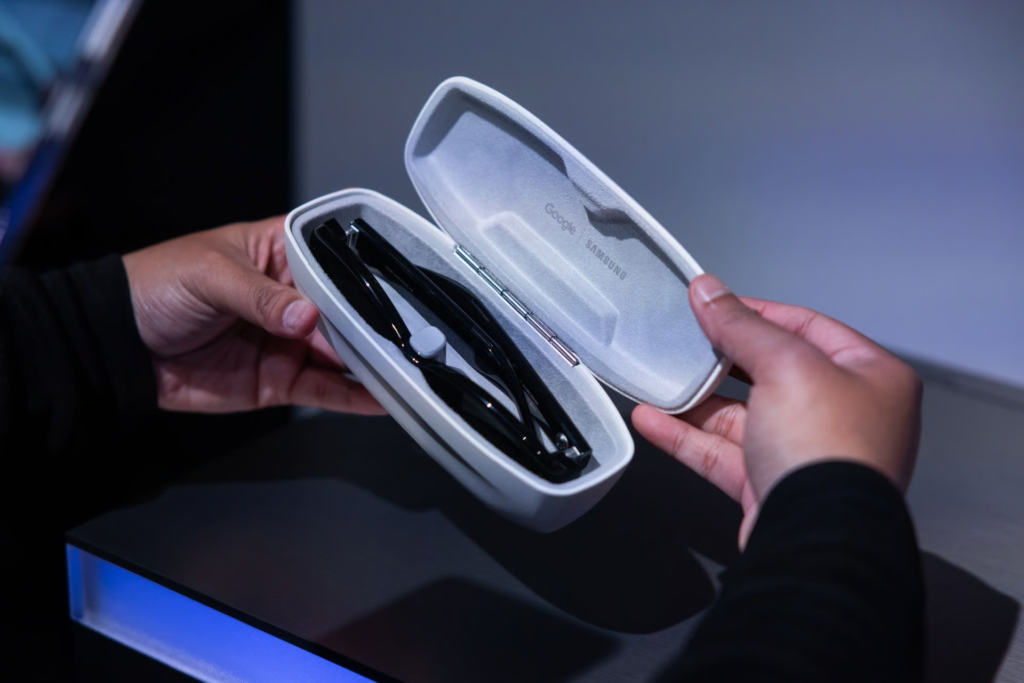
Now, Samsung is stepping into the ring with a bold answer of its own. Partnering with Google and renowned eyewear designers, Samsung has officially revealed key features for its upcoming smart glasses lineup. Known as Samsung Intelligent Eyewear, this new device aims to bring context-aware artificial intelligence, long battery life, and high-fashion aesthetics directly to your face.
At WhatsBuzzn, we keep a close eye on major tech shifts and viral consumer trends. If you follow our Tech & AI coverage, you already know that wearable hardware is the next big battleground. Samsung’s entry into this category promises to shake up the entire industry and give consumers a genuine alternative to Meta’s dominant frames.
The Rise of Smart Glasses and Meta’s Early Dominance
To understand why Samsung’s move matters so much, it helps to look at how Meta built its head start in the wearable market. When Meta launched its second-generation Ray-Ban smart glasses, many industry experts were skeptical. Early smart glasses from a decade ago were bulky, expensive, and looked unusual in public settings.
Meta took a completely different path. Instead of trying to force a heavy, power-hungry display screen into the lenses, Meta focused on three basic pillars: stylish design, hands-free cameras, and open-ear audio. By pairing up with major eyewear brand EssilorLuxottica, Meta made smart glasses look like regular designer sunglasses.
Build Funnels, Email Lists & Sell Online With One Free Tool
Create funnels, send emails, and sell online using Systeme.io without paying for multiple tools.
Create Free AccountFree forever • No credit card • Beginner-friendly
That decision paid off massively. Meta quickly captured around 80 percent of the screenless smart glasses market. People loved being able to take high-quality photos, record hands-free video clips, and chat with Meta AI while walking down the street, traveling, or attending live events.
However, tech competition always moves fast. Samsung saw a clear opportunity to jump into the space with superior hardware engineering, deeper Google app integration, and a fresh approach to fashion partnerships.
What Are Samsung Intelligent Eyewear Smart Glasses?
Samsung’s newly revealed smart glasses are built in close partnership with Google and Qualcomm. According to an official announcement from Samsung Newsroom, they are designed to act as a sleek companion device to your smartphone, helping you interact with the physical world without staring down at a screen all day.
Rather than building a heavy augmented reality headset, Samsung made a strategic choice for its first-generation model. The company skipped a built-in display screen inside the glass lenses. Instead, Samsung prioritized a lightweight frame that feels natural to wear from morning until night.
“Intelligent eyewear represents a powerful step forward in our shared vision to make AI more helpful and accessible in everyday life.” — Shahram Izadi, Vice President and GM of Android XR at Google.
The hardware relies on Qualcomm’s Snapdragon AR1 Gen 1 processor. This is the same high-performance, energy-efficient microchip built specifically for lightweight wearable devices. Running on Google’s brand-new Android XR platform with Samsung’s custom software layer, the glasses link directly with your mobile ecosystem.
To match Meta’s fashion appeal, Samsung avoided generic plastic frames. Instead, Samsung teamed up with two iconic fashion eyewear powerhouses: Gentle Monster and Warby Parker.
- Gentle Monster Styles: Known for bold, modern, and high-fashion aesthetic designs with clean geometric lines.
- Warby Parker Styles: Focused on classic, timeless, and approachable frame shapes suited for everyday work and casual wear.
By working directly with optical experts, Samsung ensured that the glasses sit comfortably on your nose bridge and ears without causing fatigue during long wear.
Key Features Packed Into Samsung’s Smart Glasses
While Samsung’s smart glasses may look like standard designer frames at first glance, the internal tech offers a serious upgrade for personal productivity and hands-free convenience.
Built-in Google Gemini AI
The biggest highlight of Samsung’s intelligent eyewear is its deep integration with Google Gemini AI. Equipped with frame-mounted camera sensors and directional micro-speakers, the glasses give Gemini a live view of what you are seeing and hearing in real time.
You can ask Gemini about a restaurant as you walk past it, request live language translations heard directly through your open-ear speakers, or get step-by-step walking directions without looking at a map.
Workplace and Productivity Tools
Samsung and Google have designed these glasses to excel at everyday tasks. For example, during a meeting or lecture, you can glance at a whiteboard and ask Gemini to capture the written notes. The glasses automatically format and save the text straight into Samsung Notes on your phone.
You can also ask the AI assistant to summarize missed text messages, filter incoming calendar alerts, or place a coffee order while you are on your morning commute.
Up to 9 Hours of Battery Life
Battery life is often the weakest point for wearable tech. Samsung addresses this challenge by promising up to nine hours of continuous battery life on a single charge.
In addition, the protective carrying case doubles as a portable charger. The case holds enough extra power to fully charge the glasses up to seven times before needing a wall outlet plug. This makes extended weekend trips far more practical.
Ecosystem Integration and Watch Gestures
For users who rely on Samsung devices, these smart glasses connect seamlessly with Galaxy smartphones and Galaxy Watches. You can accept phone calls, snap photos, or toggle audio playback using simple hand gestures on your smartwatch or soft touch controls on the frame arm.
According to detailed breakdowns from tech publications like Lifehacker and hands-on testing reported by Tom’s Guide, the integration with Google services gives Samsung a distinct advantage in daily utility.
Samsung vs Meta: How the Competition Stacks Up
Samsung entering the market creates a direct head-to-head battle with Meta’s Ray-Ban frames. Both devices share similar physical goals—screenless designs, open-ear sound, ultra-light frames, and voice-assisted AI—but their approaches differ significantly.
Ecosystem and Software Openness
Meta’s smart glasses rely heavily on Meta AI and connect primarily with Meta-owned social networks like Instagram and WhatsApp, alongside a small selection of audio apps.
Samsung’s smart glasses run on Android XR and leverage the full power of Google’s software ecosystem. This gives users immediate access to Google Maps, Google Calendar, Google Workspace, and Android notifications. For people who rely on Google tools for work and daily organization, Samsung offers a far more versatile setup.
Style and Aesthetics
Meta partnered with EssilorLuxottica to offer classic Ray-Ban and Oakley frames. These designs appeal strongly to fans of iconic retro sunglasses.
Samsung’s choice to partner with Gentle Monster and Warby Parker targets a slightly different audience. Gentle Monster brings an edgy, luxury-fashion style popular among modern trendsetters, while Warby Parker provides sleek, modern optical frames that look natural in an office setting or remote workspace.
Camera and Privacy Protections
Privacy has always been a major concern with camera-equipped eyewear. Meta faced criticism over subtle recording lights that could be easily covered up by bad actors.
Samsung has built advanced privacy protections into its hardware. The front-facing LED recording indicator is hardwired to the camera system. If the LED sensor is covered up or blocked by tape, the camera automatically disables itself. Samsung hardware engineers have also implemented reverse-engineering protections to prevent black-market modifications.
How Smart Glasses Are Changing Content Creation
Smart glasses are no longer just a luxury gadget for tech enthusiasts. They are quickly becoming essential tools for content creators, vloggers, and digital storytellers who want to record point-of-view footage effortlessly.
With a high-definition camera positioned right at eye level, creators can capture hands-free footage of cooking, unboxing products, traveling, or recording behind-the-scenes moments. There is no need to set up tripods or hold a smartphone awkwardly in front of your face.
If you are exploring creative ways to generate engaging digital video content, check out our guide on YouTube Automation strategies to see how modern creators use automated workflows and wearable camera tech to build viral channels.
Build Funnels, Email Lists & Sell Online With One Free Tool
Create funnels, send emails, and sell online using Systeme.io without paying for multiple tools.
Create Free AccountFree forever • No credit card • Beginner-friendly
Why Skipping the Display Is Actually a Smart Strategy
When people hear the phrase “smart glasses,” many picture sci-fi heads-up displays floating right in front of their eyes. However, skipping a display screen for this generation of eyewear is a calculated decision that benefits consumers in several ways.
- Weight and Comfort: Display engines, micro-projectors, and heavy glass prisms add significant weight. By omitting them, Samsung kept the frames around 48 grams, making them as light and comfortable as standard prescription glasses.
- Thermal Management: Screens generate heat very close to your temples. Going screenless prevents thermal throttling and keeps the frame cool against your skin.
- Affordability: AR displays drive up manufacturing costs dramatically. An audio-and-camera AI approach keeps the retail price accessible for everyday shoppers.
- Battery Efficiency: Driving bright displays drains small micro-batteries within two to three hours. A screenless design allows for full-day, 9-hour battery stamina.
Samsung is actively developing true AR display glasses for future releases, but the company wants to ensure display technology reaches mature visual clarity before pushing it into consumer hands.
Frequently Asked Questions (FAQs)
Do Samsung’s new smart glasses have a screen inside the lenses?
No, Samsung’s first-generation smart glasses do not feature built-in screen displays or visual overlays. They focus entirely on audio interactions, AI camera vision, and hands-free voice assistance to maintain a lightweight, stylish frame design.
When will Samsung’s smart glasses be available for purchase?
Samsung revealed the initial designs and features alongside its partner network, with official retail availability planned for the fall season.
What AI assistant runs on Samsung’s intelligent eyewear?
The glasses run on Google Gemini AI within the Android XR operating system platform, allowing real-time voice, vision, and contextual assistance.
How long does the battery last on a single charge?
The glasses offer up to nine hours of battery life per charge, with up to seven additional full charges provided by the included portable charging case.
Can you use Samsung smart glasses with non-Samsung phones?
Yes, because the glasses run on Android XR and connect through Google Gemini, they are designed to work seamlessly with broad Android mobile devices while offering special gesture perks for Galaxy users.
Final Thoughts: The Battle for Your Face Has Just Begun
Samsung entering the smart glasses market marks the beginning of a fierce new era in wearable technology. By combining hardware engineering from Samsung, AI intelligence from Google, and trendy frame designs from Gentle Monster and Warby Parker, Samsung has built a contender that directly challenges Meta’s dominance.
As artificial intelligence becomes an invisible part of our daily lives, voice-driven smart glasses offer a natural way to stay connected without getting glued to our phone screens.
What are your thoughts on Samsung’s new AI eyewear? Would you swap your traditional sunglasses for a pair of Gemini-powered smart glasses?
To stay updated on the latest trending news in technology, pop culture, and lifestyle, follow us on our social channels:
- Follow us on Instagram
- Like our page on Facebook
- Connect with us on X (Twitter)
Have a question or a story tip for our editorial team? Reach out directly on our Contact Us page.
