
A fiery strike on a major international airport just flipped the switch in Washington. When missiles and explosive drones slammed into King Khalid International Airport in Riyadh, Saudi Arabia, the shockwaves traveled straight across the Atlantic into the White House. For months, the United States tried to keep a safe distance from the renewed fighting between Saudi Arabia and Yemen’s Houthi rebels. But direct hits on civilian air terminals, reports of American casualties, and surging oil prices have blown past Washington’s comfort zone.
Standing on the South Lawn, Donald Trump did not dance around the question. Asked directly if the United States would join Saudi military strikes against the Houthis, Trump made his stance plain. He warned that the US is actively looking at it, noting that his team will make a decision and that they move very quickly. Trump followed up by calling the Houthi actions reckless, pointing out that the rebel group was intentionally trying to spike global fuel prices.
Behind closed doors in Washington and Riyadh, the conversation has moved far beyond simple words of support. Military planners, intelligence officials, and economic advisers are weighing an overt US intervention. The pressure on Trump to pull the trigger is building from every direction. From protecting global energy supplies to defending key allies and responding to direct threats against American citizens, the momentum toward direct action is growing fast.
The Airport Attack That Changed Everything
The strike on Riyadh was not just another routine border skirmish. On a busy weekend, several drones and cruise missiles penetrated Saudi air defense networks and slammed into the passenger areas around Terminals 3 and 4 at King Khalid International Airport. Glass shattered across boarding gates, explosions ripped through waiting lounges, and smoke billowed over the tarmac.
Eyewitnesses reported terror as travelers ran for cover. Scores of civilians were hurt, and several people lost their lives in the blast. To make matters even more explosive for Washington, reports surfaced that an American citizen was among those killed in the terminal.
The $0 Secret To Launching Your Entire Online Empire
Why pay hundreds every month for separate software? Build funnels, send emails, and make sales with Systeme.io completely free.
Get Started For $0Free Forever • No Credit Card Needed • Beginner-Friendly
Secretary of State Marco Rubio quickly called the attack reprehensible and demanded an immediate halt to Houthi operations. The official Saudi coalition leadership labeled the attack a blatant war crime and promised an overwhelming response.
For months, the Houthis had focused much of their firepower on cargo ships passing through the Red Sea and the Gulf of Aden. By hitting a major civilian aviation hub deep inside Saudi territory, they crossed an unmistakable red line. You can read the detailed breakdown of the strikes and initial reactions on The Guardian’s foreign desk report.
This single event shifted the conversation from regional containment to direct intervention. Trump had previously resisted calls to drag US forces back into direct Middle Eastern battles, but a strike of this scale leaves very little room to sit on the sidelines.
Gas Prices and the Midterm Clock: The Economic Trap
To understand why Trump might jump into this fight, you have to look at the gas pump. Trump has built his political message around energy independence, low fuel costs, and curbing inflation. Nothing threatens that message faster than an active war targeting Middle Eastern oil hubs and vital trade lanes.
Yemen sits right next to the Bab el-Mandeb strait, a tiny body of water connecting the Red Sea to the Gulf of Aden. About ten percent of all seaborne-traded crude oil and petroleum products flows through that narrow passage. When the Houthis launch missiles or target commercial vessels, shipping giants divert their tankers around the southern tip of Africa. That extra journey adds weeks of travel time, doubles shipping insurance rates, and burns millions of extra gallons of fuel.
Why Energy Disruptions Hurt Trump Directly
The economic fallout does not stay overseas. When shipping costs rise, global crude oil prices spike. When oil prices spike, American drivers pay significantly more at the pump within days.
Trump is acutely aware of this dynamic. With crucial midterm elections around the corner, rising gas prices are political poison. Trump publicly accused the Houthis of intentionally timing their attacks on Saudi energy facilities and transport hubs to cause economic chaos right before voters head to the polls.
If oil supplies from Saudi Arabia are choked off, or if major refineries face repeated drone swarms, global crude could easily blow past record highs. For an administration that views affordable gasoline as a core domestic promise, allowing a rebel militia to disrupt world oil flows is simply unacceptable.
American Blood on Foreign Soil Changes the Political Math
Military entanglements overseas are often deeply unpopular with the American public. Voters generally want Washington to focus on problems at home rather than policing conflicts thousands of miles away.
That public calculation changes instantly when American citizens are injured or killed.
The news that an American died during the Riyadh airport attack raised the political temperature in Washington dramatically. In US foreign policy history, strikes that harm Americans create an immediate demand for retaliation. Critics jump on any sitting president who appears hesitant, framing restraint as weakness.
Trump has always placed immense value on projecting absolute strength on the world stage. Throughout his political career, he has repeatedly warned that anyone who harms an American will face severe consequences. Letting a deadly strike slide without a military response would contradict his entire brand of leadership.
National security analysts tracking the administration note that the death of a US citizen removes the luxury of patience. Trump faces intense pressure from both defense hawks in Congress and his own cabinet officials to authorize strikes that show the Houthis, and the world, that American lives cannot be taken without a swift counterblow.
The Special Relationship: Crown Prince MBS Calls for Backup
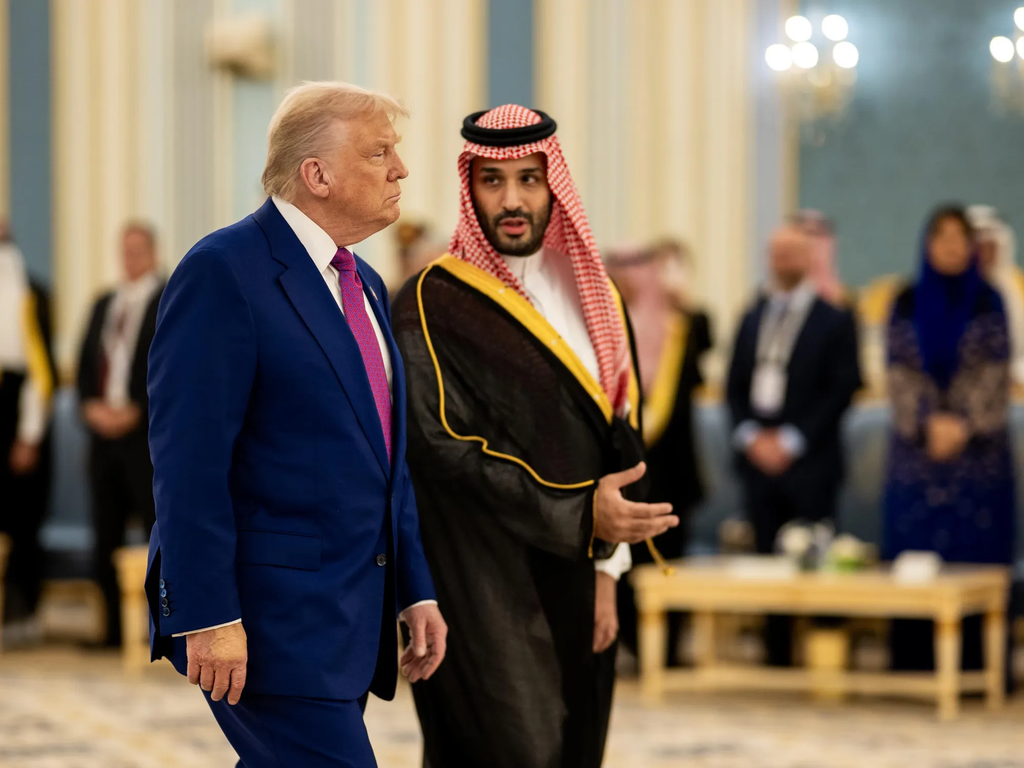
Saudi Arabia is not just an ordinary trading partner. Riyadh is one of Washington’s most important strategic partners in the Middle East, and Donald Trump has enjoyed a remarkably close relationship with Saudi Crown Prince Mohammed bin Salman (MBS) for years.
During his first term, Trump picked Saudi Arabia as the destination for his very first foreign trip. The two nations have signed massive defense deals, coordinated closely on regional security, and worked together to isolate hostile actors in the Persian Gulf.
Send, Spend & Hold Money Worldwide Without Hidden Fees
Transfer money internationally at the real exchange rate and hold 40+ currencies in one account.
Open a Wise AccountMid-market rate • Fast transfers • 40+ currencies
Now, Saudi leadership is calling in every favor. After the airport strike, Saudi diplomats and military officials made urgent appeals to the White House for direct military backing, advanced munitions, and operational air support.
The Cost of Saying No to Riyadh
What happens if Washington tells Saudi Arabia to fight this war alone? The risks for the US are massive:
- Saudi Arabia Could Seek Other Allies: If the White House refuses to help defend Saudi skies, Riyadh could look to other global powers, such as Beijing or Moscow, for air defense systems, fighter jets, and long-term security partnerships.
- Loss of Leverage Over Oil Production: The US relies on Saudi Arabia and OPEC to help stabilize energy markets during crises. If the US abandons Saudi Arabia in its hour of need, Washington loses its seat at the table when Riyadh decides whether to raise or lower oil output.
- Regional Security Collapse: If Saudi Arabia feels defenseless against drone attacks, other Gulf states like the United Arab Emirates, Qatar, and Bahrain will question whether their own security agreements with Washington are worth anything at all.
Foreign policy researchers at the Quincy Institute have warned that while Trump may want to avoid long-term commitments, the structural pressure to stand shoulder-to-shoulder with Riyadh will be nearly impossible to resist. You can read their detailed strategic breakdown on Responsible Statecraft.
The Tehran Connection: A Shadow War With Iran
You cannot talk about the Houthis without talking about Iran. The Houthi movement, officially known as Ansar Allah, is not just a localized rebel force in the mountains of northern Yemen. Over the past decade, Iran has provided them with sophisticated ballistic missile technology, drone components, naval mines, and battlefield intelligence.
For Washington, the fight in Yemen is a proxy conflict against Iran. The Iranian government has used the Houthis to exert maximum pressure on Saudi Arabia, Israel, and Western shipping lanes without getting into a direct, head-on war with the United States.
Trump has consistently taken a hardline stance against Iranian expansion. His administration previously implemented the “maximum pressure” sanctions campaign, withdrew from the Iran nuclear deal, and authorized high-profile military actions against Iranian military leadership.
Allowing the Houthis to bombard Saudi civilian infrastructure with Iranian-supplied weaponry makes Iran look dominant in the region. By joining Saudi strikes, Trump would not just be hitting Houthi rebel outposts in Yemen; he would be sending an unmistakable warning shot directly to the leadership in Tehran.
Trump wants to make it clear that hiding behind proxy forces will no longer provide a shield from American firepower.
The Math Problem: Why Defense Alone Is Failing
There is a cold, hard mathematical reality forcing Washington toward offensive action: modern air defense is running out of bullets.
For years, Saudi Arabia and US naval vessels have relied on high-end missile defense systems, like the Patriot and Standard Missile interceptors, to shoot incoming threats out of the sky. These systems are incredibly effective. They can knock down high-speed ballistic missiles with pinpoint precision.
The $0 Secret To Launching Your Entire Online Empire
Why pay hundreds every month for separate software? Build funnels, send emails, and make sales with Systeme.io completely free.
Get Started For $0Free Forever • No Credit Card Needed • Beginner-Friendly
There is just one giant problem.
An interceptor missile costs anywhere from $2 million to $4 million.
The one-way attack drones used by the Houthis, modeled on Iranian Shahed designs, cost roughly $20,000 to $50,000 each.
The Bleeding of Air Defense Stockpiles
When the Houthis launch thirty or forty cheap drones alongside several cruise missiles in a single evening, defending forces have to burn through tens of millions of dollars worth of rare, precision interceptors just to keep their runways and power plants intact.
Defense factories in the West simply cannot manufacture replacement interceptors fast enough to match the production rate of low-cost drones. Saudi Arabia has been burning through its stockpiles at an unsustainable rate.
Military leaders know you cannot win a war by only playing defense against swarms of cheap drones. The only viable military answer is to destroy the launch pads, radar stations, storage bunkers, and drone assembly factories at their source.
Saudi Arabia does not have the deep bunker-busting weapons, specialized stealth bombers, and massive carrier strike groups needed to wipe out hardened Houthi launch sites buried deep in Yemen’s mountainous terrain. The United States does. That military gap makes direct US participation the only real way to end the drone barrages.
The Dilemma: Why Trump Has Hesitated
Even with all these powerful arguments pushing the US toward war, the decision is not a simple slam dunk. Trump faces a genuine ideological tug-of-war within his own coalition.
His “America First” movement was built on an explicit rejection of endless foreign wars. For years, Trump has criticized previous administrations for wasting trillions of dollars and thousands of American lives on conflicts in the Middle East that yielded very little benefit for working-class citizens at home.
His base includes a large number of isolationists and libertarians who want nothing to do with Yemen, Saudi Arabia, or regional proxy wars. Prominent conservative voices have already started warning that jumping into another open-ended conflict will alienate voters who elected Trump to fix domestic issues like border security, industrial manufacturing, and inflation.
There is also the staggering cost. Extended naval and air operations in the Middle East drain immense financial resources. Past rounds of high-intensity operations in the region cost upwards of a billion dollars every few weeks.
Trump knows that getting dragged into a prolonged air campaign could turn into a costly quagmire. That is why he has spent days weighing the decision rather than ordering strikes overnight. He wants to make sure that any military move is fast, overwhelming, and easy to bring to a close before it spirals into a wider regional conflagration.
What Would US Involvement Actually Look Like?
If Trump decides to give the green light, what will the operation actually look like on the ground?
Nobody in Washington or Riyadh is asking for tens of thousands of American boots on the ground in Yemen. A ground invasion is completely off the table. Instead, a joint US-Saudi operation would likely feature a coordinated, multi-layered air and naval campaign.
1. High-Precision Stand-Off Strikes
US Navy destroyers and submarines positioned in the Red Sea and Arabian Gulf would launch salvos of Tomahawk cruise missiles targeting Houthi command bunkers, coastal radar installations, and long-range ballistic missile depots. Long-range stealth bombers could be deployed to strike deeply buried underground storage facilities that Saudi jets cannot reach.
2. Airborne Intelligence and Real-Time Targeting
The US military possesses the most sophisticated satellite reconnaissance and aerial surveillance fleet on Earth. American intelligence officers would feed real-time coordinates directly to Saudi strike aircraft, pinpointing mobile drone launchers the moment they emerge from mountain caves.
3. Tightening the Naval Net
US and allied naval vessels would ramp up interdiction operations across the waters of the Gulf of Oman and the Arabian Sea to stop Iranian smuggling dhows from delivering fresh missile guidance kits, drone engines, and explosives to Yemeni ports.
4. Coordinated Strikes on Coastal Defense Outposts
To reopen commercial shipping lanes through the Bab el-Mandeb strait, US fighter jets from nearby aircraft carrier strike groups would neutralize Houthi anti-ship missile sites, drone launch boats, and sea-skimming mine facilities along the Yemeni coastline.
You can find regular real-time updates and breaking developments on the ongoing standoff via the CBS News live tracker.
Frequently Asked Questions
Why did the Houthis attack the Riyadh airport?
The Houthis escalated their strikes against Saudi Arabia to disrupt regional commerce and retaliate against Saudi-backed military advances along Yemen’s Red Sea coast. By hitting high-profile targets like airports and energy facilities, the rebels attempt to inflict economic pain and force Riyadh to halt military pressure.
Has Donald Trump officially ordered US strikes yet?
Trump has publicly announced that the United States is evaluating potential military action alongside Saudi Arabia, noting that his administration will make a decision soon. While US forces have previously intercepted Houthi projectiles in self-defense, a full-scale joint offensive campaign with Saudi Arabia remains under active White House review.
How would a wider war impact everyday gas prices?
If conflict in the Red Sea and Gulf region escalates, shipping companies will continue diverting tankers around Africa, driving up insurance costs and freight rates. Furthermore, if Houthi strikes damage Saudi oil production or export terminals, global oil supplies tighten, leading to rapid price increases at local gas pumps.
What role is Iran playing in this confrontation?
Iran is the primary financial, technological, and military backer of the Houthi movement. Tehran supplies the guidance systems, drone platforms, and ballistic missile parts that allow the rebels to launch accurate strikes deep into Saudi territory.
Does Trump need approval from Congress to join the fight?
Under the US War Powers Resolution, the president can order limited military actions for up to sixty days without prior congressional authorization if he cites urgent national security interests or the defense of American lives. While some lawmakers would likely protest an undeclared conflict, modern commanders-in-chief have consistently used executive authority to conduct targeted air and missile campaigns overseas.
The situation in the Arabian Peninsula is moving faster than at any point in recent memory. With Saudi infrastructure under sustained fire, vital maritime shipping corridors choked, and an American life claimed by a missile blast, Donald Trump finds himself standing at a major foreign policy crossroads.
While the instinct to avoid open-ended wars remains a cornerstone of his political message, the reality of global economics, alliance commitments, and strategic deterrence is tipping the scales toward direct military action. If the Houthis continue their drone barrage across the Saudi border, the question will no longer be whether the United States intervenes, but how hard and how fast the hammer falls.
