
Starting an online store is one of the most direct paths to launching a business, but choosing how to source and sell your products can feel overwhelming. Two business models dominate the online retail landscape: private labeling and dropshipping.
While both approaches allow you to sell physical products without building your own manufacturing plant, they operate on completely different rules. One requires upfront financial investment and brand development, while the other lets you list items online with almost no inventory costs.
Selecting the wrong model for your financial situation can lead to wasted budget, fulfillment headaches, or unnecessary stress. This comprehensive breakdown explains how private labeling and dropshipping work, how they differ, and how to determine which path fits your goals.
What Is Private Labeling?
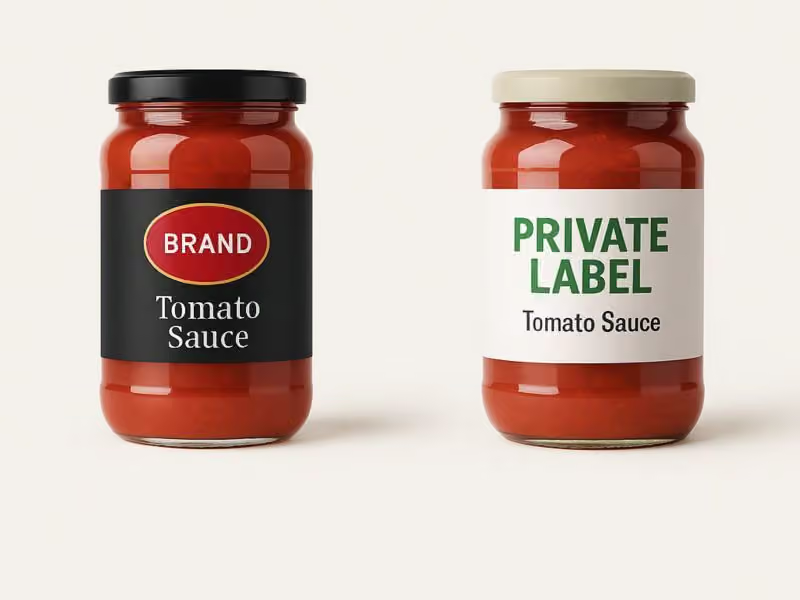
Private labeling is a manufacturing and retail model where a third-party factory produces a product, and you sell it under your custom brand name. The factory handles the raw materials, production, and assembly, while you retain total control over the branding, logo, packaging, and marketing presentation.
You see private labeling every time you walk into a grocery store or browse major online marketplaces. Retailers routinely contract with manufacturers to produce items like organic pasta, household cleaners, or paper towels, printing the store’s label on the package.
The $0 Secret To Launching Your Entire Online Empire
Why pay hundreds every month for separate software? Build funnels, send emails, and make sales with Systeme.io completely free.
Get Started For $0Free Forever • No Credit Card Needed • Beginner-Friendly
In the e-commerce sector, private labeling gives entrepreneurs the power to create independent brands in categories like skincare, workout gear, coffee, kitchen utensils, and clothing.
How Private Labeling Works Step-by-Step
Private labeling follows a structured production and retail lifecycle:
- Product Research: You research online marketplaces to discover existing products with steady customer demand and manageable competition.
- Supplier Sourcing: You reach out to manufacturers through supply directories or trade platforms to locate factories capable of producing the item.
- Sampling and Customization: You order sample units to evaluate quality, test durability, and collaborate with the manufacturer to apply your custom logo and unique packaging design.
- Bulk Ordering: You place an initial wholesale order, paying for a production run that typically ranges from 200 to 5,000 units based on the factory’s minimum order quantity.
- Fulfillment and Sales: You receive the inventory at your home, rent space in a warehouse, or send stock directly to a third-party logistics network like Amazon FBA before launching your marketing campaigns.
Advantages of Private Labeling
Building a private label brand offers several distinct business advantages:
- Building Brand Value: You create a standalone business asset. Because you own the brand name, custom packaging, and customer lists, your store can eventually be sold to investors or larger parent companies.
- Strong Profit Margins: Buying products in bulk directly from manufacturers lowers your unit cost significantly. Lower cost per unit gives you room for healthily sized profit margins.
- Reduced Direct Competition: Because your product features distinct branding, custom packaging, and unique bundled offers, competitors cannot copy your exact product listing.
- Full Quality Control: You test physical samples beforehand and establish clear quality standards with your factory partner before committing to large production runs.
Disadvantages of Private Labeling
Private labeling also comes with operational challenges that require careful planning:
- Upfront Capital Requirements: Ordering bulk inventory, custom packaging, and international shipping requires initial cash investment, usually starting between $1,500 and $5,000.
- Unsold Inventory Risk: If customer demand drops or your marketing efforts fall flat, you remain responsible for the physical stock stored in your warehouse.
- Longer Lead Times: Manufacturing custom items and shipping them across international trade routes can take anywhere from 30 to 90 days before items reach your inventory shelves.
What Is Dropshipping?
Dropshipping is an e-commerce fulfillment model where an online merchant does not store or hold the items it sells. Instead, when a customer places an order on your website, you purchase the item from a third-party supplier who packages and ships the product directly to the customer’s door.
When operating a dropshipping store, your primary role is marketing and customer relations. You design the website, list products, run ad campaigns, and address customer questions.
When a transaction occurs on e-commerce platforms like Shopify, the order details forward to your supplier. You pay the supplier their wholesale price, and you keep the remaining balance as gross profit.
How Dropshipping Works Step-by-Step
The dropshipping order flow operates through a streamlined chain of events:
- Store Creation: You build an e-commerce store and import product photos and descriptions from a dropshipping supplier’s online catalog.
- Customer Purchase: A shopper finds your site and buys a watch for $60.
- Order Forwarding: You transmit the buyer’s shipping address to your supplier and pay the negotiated wholesale cost of $25.
- Direct Shipping: The supplier picks, packs, and ships the watch directly to the customer’s residence.
- Profit Collection: You keep the $35 difference between the retail purchase price and the wholesale fulfillment cost, minus your advertising expenses and card processing fees.
Advantages of Dropshipping
Dropshipping remains popular among new online sellers due to its accessible structure:
- Minimal Startup Capital: You do not need thousands of dollars upfront to buy bulk inventory. You only purchase a product after a customer has paid for it on your site.
- Low Overhead and Risk: Without physical inventory commitments, you never worry about unsold stock taking up space or tying up your operational cash.
- Broad Product Testing: Adding new items to your store is simple. If a product does not generate sales, you can remove the listing instantly without financial loss.
- Location Flexibility: You can run a dropshipping store from anywhere in the world as long as you maintain a stable internet connection and open communication channels with suppliers.
Disadvantages of Dropshipping
While entry barrier costs are low, dropshipping presents specific operational drawbacks:
- Thinner Profit Margins: Purchasing items individually on demand costs significantly more per unit than buying in bulk, leaving smaller profit margins after ad spending.
- High Market Competition: Because dropshipping suppliers make their catalogs public, hundreds of other online stores may sell identical items using similar product photos.
- Limited Quality Control: You rely entirely on your supplier to pack items securely and ship them quickly. If they make a mistake, your store receives negative customer feedback.
- Branding Restrictions: Most dropshippers ship items in plain, generic boxes, making it difficult to establish strong brand recognition or customer loyalty.
Key Differences Between Private Labeling and Dropshipping
Understanding how these two models contrast across primary business metrics helps clarify which path fits your long-term plan.
Initial Capital Requirements
The required startup budget represents the primary structural division between these models. Private labeling requires capital up front for wholesale inventory orders, custom package design, sample freight, and brand registrations.
Dropshipping requires minimal startup capital. Your early funds focus almost entirely on domain registration, e-commerce platform hosting, and digital advertising budgets. Practical guides from the U.S. Small Business Administration highlight that managing cash flow carefulness is central to keeping low-inventory startups operational during early months.
Profit Margins and Pricing Strategy
Private labeling provides stronger control over pricing strategy. Buying directly from manufacturing facilities in high volumes gives you the lowest possible manufacturing costs per unit. Because your product features custom packaging and brand identity, customers cannot easily price-match your items against generic listings, allowing higher price points.
Dropshipping operates on narrow profit margins. The supplier charges higher individual unit rates to cover their fulfillment and handling risks. Because identical generic products sell across numerous online channels, price competition often pushes retail margins down.
Send, Spend & Hold Money Worldwide Without Hidden Fees
Transfer money internationally at the real exchange rate and hold 40+ currencies in one account.
Open a Wise AccountMid-market rate • Fast transfers • 40+ currencies
Branding and Long-Term Value Creation
Building long-term business equity requires distinct branding. Private labeling focuses on establishing brand equity, loyal repeat customers, and original packaging. A well-run private label store creates an asset that can be valued, audited, and sold to e-commerce investors.
Dropshipping focuses on short-term sales efficiency over brand equity. Because items ship in unbranded or supplier-default packaging, buyers rarely form an emotional connection with your store name, leading to low repeat purchase rates.
Supply Chain and Quality Assurance
Private labeling gives you oversight over product specifications. You test early samples, refine materials, and negotiate quality metrics directly with the factory floor. You can also send inventory to local warehouses to ensure customers receive reliable 2-day delivery.
Dropshipping transfers fulfillment reliance to third parties. If an overseas supplier faces shipping delays, inventory stockouts, or poor packaging habits, your store handles the customer service complaints without having direct physical access to the inventory.
Scalability and Daily Operations
Dropshipping scales easily on the fulfillment side because order processing falls on the supplier. However, scaling up ad campaigns often causes customer support tasks to spike when shipping delays or product defects occur across large order volumes.
Private labeling requires more effort during early manufacturing setup phases. Once you establish factory relationships and automated fulfillment logistics, scaling turns into a structured routine of reordering stock, refining ad performance, and launching complementary product lines.
How Modern Technology Shapes Both Models
Advancements in digital tools have changed how online sellers manage stores in both business models. Product research tools, automated customer service solutions, and inventory prediction software allow lean teams to handle high order volumes efficiently.
If you want to streamline operations, leveraging tools in technology and AI can help automate product description writing, optimize social ad campaigns, and analyze consumer demand trends before spending money on inventory.
For entrepreneurs looking to diversify their online income beyond physical merchandise, exploring content creation models like YouTube automation offers another structured avenue for generating digital revenue alongside e-commerce operations.
Decision Guide: Which Model Should You Choose?
Selecting the right model depends on your budget, risk tolerance, and skill set.
The $0 Secret To Launching Your Entire Online Empire
Why pay hundreds every month for separate software? Build funnels, send emails, and make sales with Systeme.io completely free.
Get Started For $0Free Forever • No Credit Card Needed • Beginner-Friendly
Choose Dropshipping If:
- You have less than $1,000 to launch your business.
- You want to learn e-commerce fundamentals like store design, copy writing, and digital ad management with zero stock risk.
- You prefer testing multiple trending product niches quickly to see what converts.
- You want a business model centered on marketing rather than physical inventory control.
Choose Private Labeling If:
- You have starting capital ranging from $1,500 to $5,000+ ready for inventory and marketing investments.
- You want to build a long-term brand with unique packaging and repeatable customer loyalty.
- You want higher profit margins on every individual sale.
- You are comfortable managing factory communications, sample testing, and stock reordering schedules.
Frequently Asked Questions
Can I transition from dropshipping to private labeling?
Yes. Many online sellers begin with dropshipping to identify winning products with steady consumer demand without buying bulk stock. Once a product sells consistently, the seller contacts manufacturers to order that item in bulk with custom branding, effectively shifting to a private label model.
Is private labeling legal?
Private labeling is fully legal and widely practiced across major retail, grocery, and online platforms. As long as your product design, brand name, and packaging do not infringe on existing active patents, trademarks, or copyrights, you can legally brand and sell items produced by third-party manufacturers.
How much money do I need to start a private label brand?
Most private label projects require between $1,500 and $5,000 to launch safely. This budget covers sample purchases, minimum order quantities (MOQs) from manufacturers, graphic design services for packaging, product listings, and initial advertising campaigns.
Is dropshipping still a viable business option today?
Dropshipping remains viable, but competition is higher than in previous years. Success requires professional storefront design, fast customer service response times, high-converting advertisement creative, and partnerships with reliable suppliers who offer fast local fulfillment.
Next Steps for Launching Your Online Store
Whether you decide to build a branded product line through private labeling or test market trends using dropshipping, success in modern e-commerce comes down to consistent market research, clear communication, and customer service.
Evaluate your current startup budget, choose the model that fits your risk comfort level, and begin researching suppliers to turn your business plans into action.
To learn more about our background and read similar business guides, explore our about page. If you have specific questions or ideas you want to discuss with us, reach out through our contact page.
Stay updated on modern business insights, viral trends, and practical guides by connecting with our social communities on Instagram, Facebook, and Twitter/X.
