
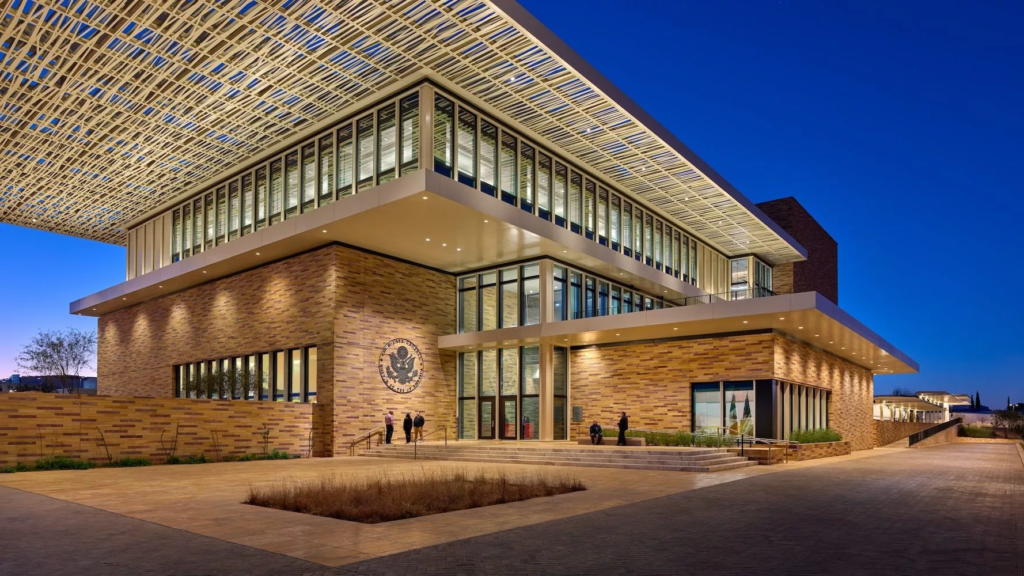
Effective August 1, 2026, the U.S. Department of State officially launched a major realignment of visa processing operations across Sub-Saharan Africa. Routine immigrant and nonimmigrant visa services have been shifted away from 25 U.S. diplomatic posts and consolidated into 20 designated regional hubs.
If you are planning to travel to the United States for study, business, tourism, or family reunification, this policy change directly affects how and where you apply for your visa. While the new structure changes where routine visa interviews take place, the U.S. government has clarified that embassies in non-hub countries are not shutting down.
Here is a complete breakdown of what is changing, which countries host the new regional hubs, how local embassy operations are affected, and what you need to do to prepare for your visa application.
Understanding the New Regional Hub System
Under the updated system, routine visa operations are no longer conducted at every U.S. embassy or consulate in Sub-Saharan Africa. Instead, the U.S. State Department has centralized routine visa interviews, application reviews, and adjudications within 20 specific diplomatic missions.
Washington officially describes this move as a strategic effort to improve operational efficiency, standardize vetting procedures, and allocate diplomatic resources more effectively. By concentrating experienced consular staff and advanced security infrastructure in fewer, larger hubs, the U.S. government aims to establish more uniform screening standards across the continent.
The $0 Secret To Launching Your Entire Online Empire
Why pay hundreds every month for separate software? Build funnels, send emails, and make sales with Systeme.io completely free.
Get Started For $0Free Forever • No Credit Card Needed • Beginner-Friendly
For applicants living in a country where routine visa processing has stopped, this means you can no longer schedule a standard visa interview at your local U.S. embassy. Instead, you must book your appointment and travel to the designated regional hub assigned to your country of residence or nationality.
You can review official updates directly through the U.S. Department of State visa portal to check the latest guidelines for your country.
The 20 Designated Regional Visa Hubs in Africa
The U.S. State Department selected 20 diplomatic posts across 19 African nations to handle all routine immigrant and nonimmigrant visa processing.
South Africa is the only country hosting two processing hubs (Cape Town and Johannesburg). In Nigeria, routine visa processing has been centralized at the U.S. Consulate General in Lagos, while routine processing at the embassy in Abuja has ended.
The full list of designated regional visa hubs includes:
- Abidjan, Côte d’Ivoire: Serving regional nonimmigrant and immigrant applicants in West Africa.
- Accra, Ghana: Handling routine nonimmigrant and immigrant cases.
- Addis Ababa, Ethiopia: Processing visa applications for East Africa.
- Cape Town, South Africa: Serving as a regional hub alongside Johannesburg.
- Dakar, Senegal: Handling routine visa services for francophone West Africa.
- Dar es Salaam, Tanzania: Serving as a primary East African processing center.
- Djibouti, Djibouti: Processing visa applications in the Horn of Africa.
- Johannesburg, South Africa: Serving as a major hub for Southern Africa.
- Kampala, Uganda: Handling routine immigrant and nonimmigrant processing.
- Kigali, Rwanda: Processing standard visa applications for Central and East Africa.
- Kinshasa, Democratic Republic of the Congo: Serving regional applicants in Central Africa.
- Lagos, Nigeria: Handling all routine U.S. visa processing for Nigeria.
- Lomé, Togo: Serving applicants in West Africa.
- Luanda, Angola: Processing routine applications in Southern Africa.
- Malabo, Equatorial Guinea: Handling regional visa processing.
- Monrovia, Liberia: Serving nonimmigrant and immigrant cases.
- Nairobi, Kenya: Major hub for East Africa, including Diversity Visa processing.
- Port Louis, Mauritius: Serving Indian Ocean island nations.
- Praia, Cabo Verde: Processing visa applications for Western island regions.
- Yaoundé, Cameroon: Handling routine visa processing for Central Africa.
Which Posts Have Stopped Routine Visa Processing?
Routine visa interviews and document adjudications have been discontinued at 25 U.S. embassies and consulates across the continent. If you reside in one of these locations, you must apply through your designated hub.
Routine visa operations have stopped at the following posts:
- Abuja, Nigeria (Applicants directed to Lagos)
- Antananarivo, Madagascar
- Asmara, Eritrea
- Bamako, Mali
- Banjul, The Gambia
- Brazzaville, Republic of the Congo
- Bujumbura, Burundi
- Conakry, Guinea
- Cotonou, Benin
- Durban, South Africa
- Freetown, Sierra Leone
- Gaborone, Botswana
- Harare, Zimbabwe
- Juba, South Sudan
- Libreville, Gabon
- Lilongwe, Malawi
- Lusaka, Zambia
- Maputo, Mozambique
- Maseru, Lesotho
- Mbabane, Eswatini
- N’Djamena, Chad
- Niamey, Niger
- Nouakchott, Mauritania
- Ouagadougou, Burkina Faso
- Windhoek, Namibia
Clarifying Embassy Operations: What Non-Hub Embassies Still Do
A major point of confusion among travelers is whether U.S. embassies in non-hub countries are shutting down entirely. The U.S. State Department has explicitly clarified that no embassies or consulates are closing.
Embassies in non-hub locations remain fully operational for diplomatic functions, foreign policy engagements, and essential services. These ongoing operations include:
1. American Citizen Services (ACS)
U.S. citizens living or traveling in non-hub countries will continue to receive full consular support. This includes passport renewals, consular reports of birth abroad, notary services, and emergency assistance.
2. Emergency and Diplomatic Visas
Diplomatic and official visa categories (such as A and G visas) continue to be handled through local diplomatic channels. In addition, rare, life-or-death humanitarian emergency nonimmigrant visas may still be coordinated locally on a case-by-case basis.
3. Bilateral and Political Relations
Local diplomatic missions continue their daily work managing bilateral agreements, trade partnerships, economic development projects, and security cooperation between the United States and host governments.
What This Shift Means for Different Types of Travelers
Centralizing visa operations creates practical changes for applicants across Africa. Knowing what to expect helps you plan effectively and avoid last-minute delays.
Student and Exchange Visas (F-1, M-1, J-1)
Prospective international students heading to U.S. colleges and universities must plan well ahead of their program start dates. Because you may need to travel across borders for your visa interview, booking an early appointment is critical.
If you are a student preparing for academic travel, keeping up with modern digital tools is essential. While getting ready for your academic journey, you can check out our technology and AI section to learn how digital innovation is transforming global education and remote productivity.
Send, Spend & Hold Money Worldwide Without Hidden Fees
Transfer money internationally at the real exchange rate and hold 40+ currencies in one account.
Open a Wise AccountMid-market rate • Fast transfers • 40+ currencies
Business Travelers and Working Professionals (B-1, H-1B, L-1)
Corporate executives, investors, and skilled professionals must now factor travel time into their business itineraries. Scheduling trips to regional hubs like Lagos, Johannesburg, or Nairobi requires booking flights and lodging in advance.
Many professionals are also exploring online income streams and content creation while traveling. If you want to explore digital business models while managing your schedules, read through our guide on the YouTube automation category for practical insights into modern online operations.
Tourists and Visitors (B-2)
Vacationers visiting family or traveling for medical care in the United States must account for additional travel costs. If your home country does not have a regional hub, your visa application budget must now include round-trip flights, local transit, hotel stays, and entry visas for the hub country.
Immigrant Visas and Family Reunification
Family-based green card applicants and Diversity Visa selectees in non-hub countries will have their case files routed directly to their designated regional immigrant visa center. Because immigrant visas require medical exams and document verification, applicants must ensure all paperwork is complete before traveling to avoid multiple trips.
How to Prepare for a Cross-Border Visa Application
If you live in a country without a regional hub, applying for a U.S. visa requires extra logistics. Follow these practical steps to manage your application smoothly:
Step 1: Confirm Your Designated Processing Post
Do not assume the closest geographical embassy is your assigned hub. The U.S. Department of State assigns specific hubs to specific countries. Always check official updates to confirm where your country’s applications are directed.
Step 2: Review Entry Requirements for the Hub Nation
If you must travel abroad for your interview, verify whether you need an entry visa, transit visa, or specific health documentation (such as a Yellow Fever vaccination certificate) for the country hosting the regional hub.
Step 3: Fill Out Your Application Form Online
Complete Form DS-160 for nonimmigrant visas or Form DS-260 for immigrant visas online. Make sure all information matches your passport details exactly. Select the designated regional hub as your processing location on the form.
Step 4: Pay Visa Fees and Schedule Your Interview
Create an account on the official visa scheduling portal assigned to your hub. Pay the required Machine Readable Visa (MRV) fee according to the hub’s payment instructions. Once payment is confirmed, choose an available appointment date.
Step 5: Gather and Organize Required Documents
Bring all required documents to your interview, including:
The $0 Secret To Launching Your Entire Online Empire
Why pay hundreds every month for separate software? Build funnels, send emails, and make sales with Systeme.io completely free.
Get Started For $0Free Forever • No Credit Card Needed • Beginner-Friendly
- A passport valid for at least six months beyond your intended stay.
- The DS-160 or DS-260 confirmation page.
- Appointment confirmation slip.
- Application fee payment receipt.
- Passport-sized photos meeting U.S. visa requirements.
- Supporting financial, employment, academic, or family documents.
Step 6: Plan Your Travel and Accommodation
Book flexible travel arrangements and hotel stays near the U.S. embassy or consulate in the hub city. Give yourself at least two to three days in the hub country to account for interview schedules and passport collection options.
Practical Tips to Avoid Delays and Extra Costs
Navigating the hub system requires proactive planning. Here are essential tips to help you save time and money:
- Apply Months in Advance: Regional hubs now handle higher applicant volumes, which can lead to longer waiting lists for interview slots. Start your application as early as allowed.
- Double-Check Document Accuracy: Missing documents can result in administrative processing under Section 221(g). Being placed on administrative hold means waiting longer in the hub city or making a second trip later.
- Understand Passport Return Options: Find out how the embassy returns approved visas. Some hubs offer courier delivery within the host country, while others allow direct pick-up at designated collection centers.
- Keep Digital Copies: Always keep clear digital scans of your application forms, receipts, appointment letters, and supporting papers on your phone or cloud storage.
Frequently Asked Questions (FAQs)
Does my existing valid U.S. visa remain valid?
Yes. The shift to regional hubs only applies to new visa applications and interviews. If you already have a valid U.S. visa in your passport, it remains completely valid for travel until its official expiration date.
Are U.S. embassies closing in non-hub countries?
No. Embassies in non-hub countries remain open to provide American Citizen Services, diplomatic engagements, and emergency consular support. Only routine visa processing has been moved to the hubs.
Can I pick any regional hub I want for my interview?
Generally, no. You are expected to schedule your visa interview at the processing hub designated specifically for your country of residence or nationality. Third-country national applications at non-assigned hubs may face delays or rejection unless specific exceptions apply.
What happens if I had an appointment scheduled before August 1, 2026?
Applicants who had existing appointments before the August 1 transition date were contacted directly by consular staff with instructions regarding their cases. If your appointment was affected, check your registered email account or log into the official visa portal to view updated instructions.
How long does visa processing take at regional hubs?
Processing times vary depending on the hub and the season. While centralizing operations aims to improve efficiency over time, increased applicant volume at primary hubs like Lagos, Accra, and Nairobi can lead to longer wait times during peak travel seasons.
Staying Ahead of Global Travel Changes
Navigating international travel requirements can feel overwhelming, but staying informed makes all the difference. Centralizing U.S. visa operations in Africa represents a major shift in global mobility, but with early preparation, proper documentation, and clear planning, you can successfully navigate your application process.
To learn more about our mission and stay updated on global news, head over to our about us page. If you have questions, feedback, or story suggestions, feel free to reach out directly through our contact page.
Join our online community to stay connected with breaking updates, trend breakdowns, and viral news across Africa and beyond. Follow us today on our official social channels:
- Connect with us on our Instagram page
- Like and follow our Facebook page
- Join the conversation on our X profile
