
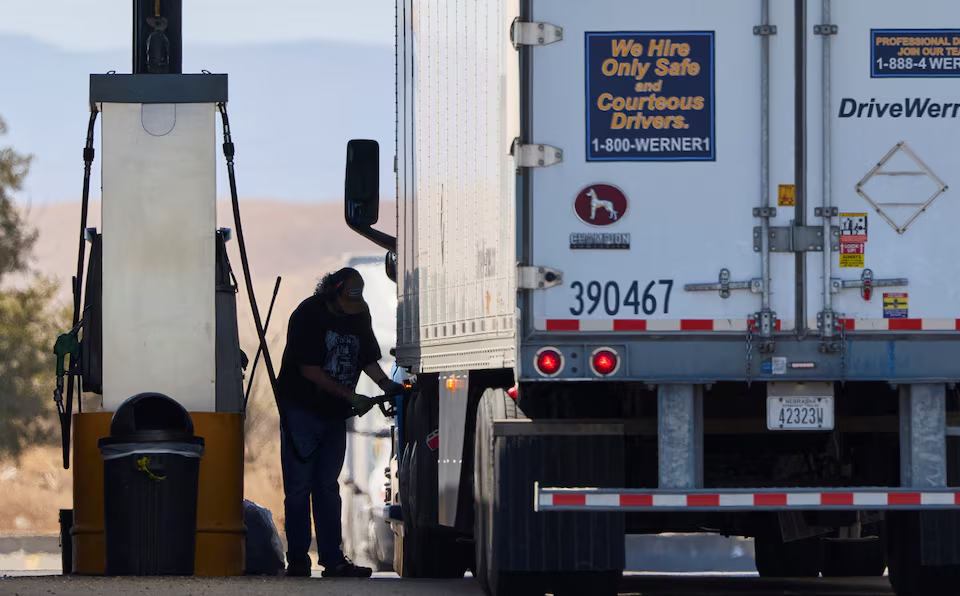
President Donald Trump is preparing a major directive aimed at tackling high fuel prices across the United States. According to three industry sources, the administration is planning to issue a presidential memorandum that directs government officials to use emergency federal powers to dramatically increase oil and fuel production.
At the center of this strategy is the Defense Production Act, a law originally created during the Cold War in 1950. By invoking this law, federal agencies can jumpstart domestic energy projects, direct funding toward critical refining operations, and clear away regulatory hurdles that have limited energy output.
Diesel fuel prices have climbed near record high levels, creating financial stress for truck drivers, farmers, shipping companies, and everyday consumers. With major elections approaching and global supply disruptions shaking up energy markets, reducing pain at the pump has become a top economic priority.
Here is an in-depth look at what this upcoming directive means, how the Defense Production Act works, why energy executives are weighing in, and how these changes could affect your wallet in the near future.
What Is Happening Right Now? The Big News Breakdown
Three industry sources familiar with White House discussions revealed that President Trump plans to issue a presidential directive within days. This directive will instruct department heads across the federal government to find immediate ways to control rising fuel prices, especially diesel.
The $0 Secret To Launching Your Entire Online Empire
Why pay hundreds every month for separate software? Build funnels, send emails, and make sales with Systeme.io completely free.
Get Started For $0Free Forever • No Credit Card Needed • Beginner-Friendly
The main goal is simple: get more oil and refined fuel into the market as quickly as possible. To achieve this, the directive will push officials to do two primary things. First, use federal power under the Defense Production Act to expand energy infrastructure. Second, find ways to bypass local and state regulations that currently slow down or block energy production.
The price of diesel fuel has been sitting at very high levels, putting direct pressure on shipping costs and driving up the price of goods in grocery stores. Trump has stated publicly that he expects gasoline prices to drop significantly down to around $1.85 to $1.95 per gallon, which is far below current national averages hovering above $4.00 a gallon.
This proposed action represents one of the most aggressive uses of federal executive power in the energy sector in recent years. Rather than waiting for slow market adjustments, the White House wants to force a faster response from federal agencies and private energy producers.
Decoding the Defense Production Act: How a Cold War Law Works
To understand why this decision is so important, it helps to understand what the Defense Production Act actually is. Passed by the U.S. Congress in 1950 during the Korean War, the Defense Production Act gives the President broad authority to manage domestic industries during national emergencies.
Under this law, the president can order private companies to prioritize government contracts for essential goods and critical supplies. It also allows the federal government to offer direct loans, loan guarantees, and financial backing to help American companies expand their manufacturing capacity.
In the past, presidents have used this law during wartime, major natural disasters, and health crises to ensure factories produced items like medical gear, steel, and military equipment. Applying this law to the domestic oil and gas sector is a clear signal that the White House views high fuel prices and energy supply shortages as a national security issue.
When applied to fuel production, the law allows the government to funnel direct financial assistance to energy companies. It also gives federal agencies the backing to streamline supply chains, ensuring equipment like drill rigs, steel pipes, and refining components get delivered where they are needed most without delay.
Why Diesel and Gas Prices Are Spiking Across the Country
Fuel prices do not rise in a vacuum. A combination of international events, supply disruptions, and refining capacity limits has created a perfect storm for high energy costs.
One major factor is ongoing conflict and geopolitical tension in key energy-producing regions, including conflict involving Iran. These global tensions create immediate risks for shipping lanes, leading to sudden price spikes on global crude markets. When crude oil prices jump overseas, local gas stations feel the impact within days.
Another critical issue is refining capacity. Crude oil pulled out of the ground cannot be poured directly into a truck or car tank. It must go through a refinery to be processed into diesel, gasoline, jet fuel, and heating oil. Over the past few years, several older refineries closed down or converted to alternative fuels, leaving less buffer room when global supply disruptions occur.
Because diesel is the primary fuel used by freight trains, commercial trucks, tractors, and cargo ships, high diesel prices carry a heavy ripple effect. Higher diesel prices mean higher delivery fees for every product you buy in a store, making inflation worse for everyday families.
The Plan to Bypass Local Rules and Red Tape
Beyond financial backing, one of the most talked-about parts of the planned presidential directive is the instruction to bypass local and state regulations.
In many states, energy projects face long delays due to local environmental reviews, state permitting processes, and lawsuits. Building a new pipeline, expanding an existing refinery, or drilling new wells can take years just to get through paperwork and legal approvals.
The White House wants federal officials to find legal pathways to fast-track these approvals. By invoking national security interests and emergency authorities, federal agencies may try to override state-level hurdles that hold up energy production.
Industry advocates argue that clearing away red tape is essential for increasing domestic energy independence. They point out that permitting reforms and relaxed restrictions on natural gas flaring would allow drillers to pump more oil almost immediately.
Send, Spend & Hold Money Worldwide Without Hidden Fees
Transfer money internationally at the real exchange rate and hold 40+ currencies in one account.
Open a Wise AccountMid-market rate • Fast transfers • 40+ currencies
Critics and local leaders, however, raise concerns that bypassing local rules could undermine environmental protections and ignore community input. Balancing local environmental standards with national energy needs remains one of the most controversial aspects of this initiative.
What Energy Executives Are Saying Behind Closed Doors
While the White House is pushing for big moves, executives inside the oil and gas industry have given very specific feedback on how federal support should be used.
During recent meetings with government officials, top refining executives explained that using Defense Production Act money to build brand-new refineries from scratch would not solve today’s problems. Constructing a modern oil refinery costs billions of dollars and takes many years to complete due to complex engineering and construction requirements.
Instead, industry leaders recommended that federal money be directed toward expanding existing refineries and making current plants more efficient. Upgrading operational facilities can yield extra fuel output much faster and at a far lower cost.
Industry representatives also emphasized that long-term policy clarity is what truly encourages companies to invest capital. They urged the administration to focus heavily on permitting reform and easing operational rules rather than imposing windfall taxes or temporary price fixes.
How This Move Impacts Your Daily Wallet and Small Businesses
Fuel prices touch nearly every corner of the economy. When diesel and gas prices stay high for an extended period, everyone feels the burn in their monthly budget.
Lower Shipping Costs for Everything
When diesel costs drop, shipping companies pay less to run their trucks across the country. Lower transport costs mean stores do not have to raise prices on food, clothing, household goods, and electronics just to cover delivery expenses.
Relief for Farmers and Agriculture
Farmers rely heavily on diesel fuel to power heavy machinery like tractors and harvesters. High fuel prices make growing food much more expensive. Reducing fuel expenses helps stabilize food prices for everyone.
Benefits for Independent Truckers
Independent truck drivers operate on very tight profit margins. High diesel prices directly eat into their earnings, making it difficult for small trucking businesses to stay afloat. A drop in fuel prices gives small operators immediate financial relief.
Cheaper Commutes and Travel
Lower gasoline prices mean more money stays in your pocket every time you fill up your vehicle for work or family trips. This extra budget freedom allows families to spend more on other daily needs.
The $0 Secret To Launching Your Entire Online Empire
Why pay hundreds every month for separate software? Build funnels, send emails, and make sales with Systeme.io completely free.
Get Started For $0Free Forever • No Credit Card Needed • Beginner-Friendly
The Political Clock: Why Timing Matters Right Now
The timing of this energy directive is closely tied to broader economic and political events. High inflation and expensive fuel are top issues for voters heading into congressional elections.
Elected officials understand that high gas prices create negative feelings among consumers. When people see high numbers at the pump every week, it drives concerns about the overall economy. Action taken now is designed to show voters that the administration is tackling cost-of-living issues aggressively.
In addition to domestic concerns, international governments are also taking emergency measures. Countries in Europe and Asia are releasing national emergency oil stocks and adjusting export rules to manage global supply shortages.
By using federal powers at home, the administration aims to position the United States as a more self-reliant energy producer that can handle global supply shocks without placing the burden on domestic consumers.
A Quick Overview of Key Takeaways
- The Primary Action: President Trump plans to issue a presidential directive using the Cold War-era Defense Production Act to boost U.S. oil and fuel output.
- The Key Target: High diesel fuel prices, which are driving up shipping costs and consumer inflation.
- The Strategy: Use federal loans and backing to expand existing refineries while bypassing local and state regulations that delay production.
- Industry Advice: Refining leaders advise focusing money on making current plants more efficient rather than building costly new refineries.
- Consumer Impact: Successful output increases could lower prices at the pump, cut shipping fees, and ease grocery store prices.
Frequently Asked Questions (FAQs)
What is the Defense Production Act and why is it being used?
The Defense Production Act is a 1950 law that gives the U.S. President emergency authority to direct domestic industries during national crises. It is being used now to help energy companies increase fuel production, secure necessary equipment faster, and lower high energy costs.
Will this move lower gas and diesel prices immediately?
While executive directives send strong signals to financial markets, physical changes in oil refining and drilling output take time. Initial price relief in futures markets can happen quickly, but significant drops at local gas pumps usually take several weeks as new supply moves through the supply chain.
Why are officials focusing so heavily on diesel instead of regular gas?
Diesel powers the commercial transport network, including freight trucks, trains, farming equipment, and cargo vessels. When diesel is expensive, the cost of moving all goods increases, directly driving up inflation on everyday food and merchandise.
Why not just build brand-new oil refineries in the U.S.?
Building new refineries costs billions of dollars and takes many years due to complex environmental and structural requirements. Energy executives told White House officials that upgrading and expanding existing facilities yields much faster output gains for less money.
How does bypassing local regulations work?
The federal government uses emergency authorities and national security justifications to simplify permitting steps, shorten review times, and clear away state-level legal obstacles that delay energy production.
An official White House announcement detailing specific orders under the Defense Production Act is expected in the coming days. As energy companies and federal agencies coordinate their next steps, market watchers will be paying close attention to fuel supply reports and regional price shifts.
If you have questions, feedback, or news tips you would like to share with us, feel free to reach out directly through our Contact Page.
Want to stay up to date with breaking news and trending stories? Follow our official social media pages for quick updates and community discussions:
- Follow us on Instagram
- Connect with us on Facebook
- Join the conversation on X (formerly Twitter)
