
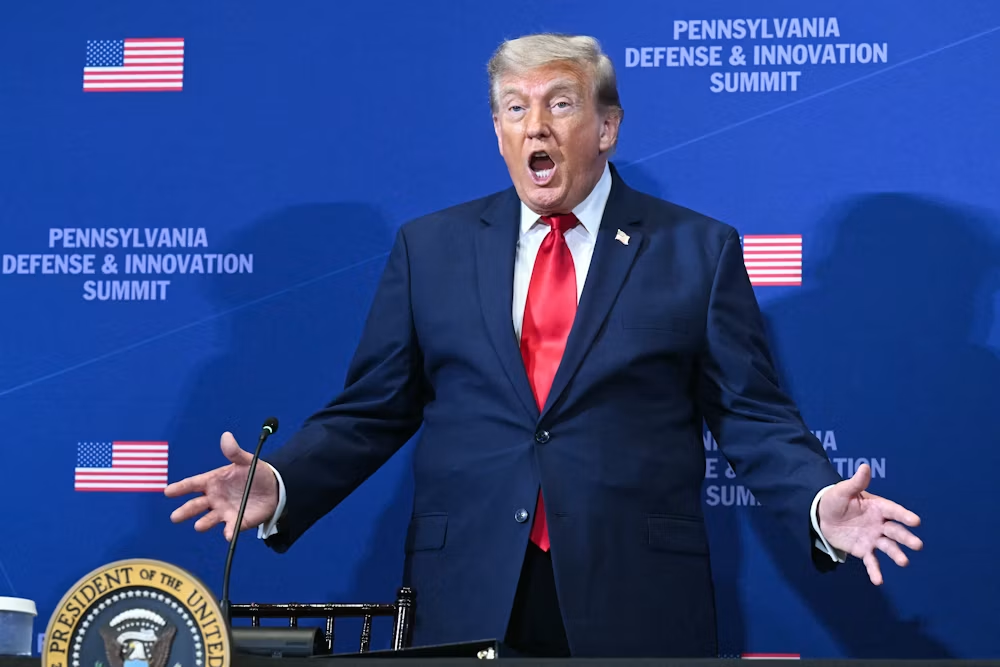
United States President Donald Trump announced what he describes as the biggest oil agreement in world history. Under this new deal, the United States has secured majority control over more than 65 billion barrels of proven oil reserves in Venezuela.
The agreement was negotiated by US Secretary of State Marco Rubio and Secretary of Defense Pete Hegseth, alongside Venezuela’s interim President Delcy Rodriguez and several private business partners.
According to official statements, the transaction gives the US government an effective 55% share in the oil produced by a newly formed private joint venture. This venture will operate 17 key oil fields across Venezuela under long-term concessions.
The announcement comes at a critical moment for global energy markets, following months of rising gas prices and military tensions in the Middle East. Here is a detailed breakdown of what the agreement entails, why it was made, and how it could affect fuel prices and global trade.
What Is Included in the 65 Billion Barrel Oil Deal?
The new agreement focuses on tapping into Venezuela’s massive underground crude reserves. While Venezuela holds over 303 billion barrels of total oil reserves—the largest in the world according to the U.S. Energy Information Administration—this specific deal grants majority control over 65 billion barrels of proven crude.
The $0 Secret To Launching Your Entire Online Empire
Why pay hundreds every month for separate software? Build funnels, send emails, and make sales with Systeme.io completely free.
Get Started For $0Free Forever • No Credit Card Needed • Beginner-Friendly
The structure of the deal relies heavily on public-private partnerships. Rather than the US government drilling for oil directly, a newly created private company will run operations on the ground.
The White House revealed key details regarding how the partnership will function:
- The United States secures an effective 55% stake in the oil output.
- The US government gains the right to purchase oil from the fields at production cost.
- The oil produced will be used to refill the US Strategic Petroleum Reserve and supply military needs.
- The new joint venture will hold 100-year concessions to develop and manage 17 Venezuelan oil fields.
US officials claim that this arrangement more than doubles American oil reserves without using direct taxpayer funds for the purchase.
The Background Behind the US-Venezuela Agreement
To understand how this agreement happened, it helps to look at the recent political shifts in Caracas. Early in the year, a US military operation led to the removal and capture of former Venezuelan President Nicolas Maduro. Maduro was brought to the US to face federal charges related to drug trafficking and narcoterrorism.
Following Maduro’s removal, Vice President Delcy Rodriguez stepped in as interim president. The US administration quickly opened diplomatic and economic discussions with her government.
For decades, Venezuela’s energy sector suffered from severe underinvestment, nationalization of foreign equipment, and heavy international sanctions. Former President Hugo Chavez nationalized many oil projects years ago, taking over assets that once belonged to American energy firms.
As a result of broken infrastructure, bad management, and political isolation, Venezuela’s oil production plummeted over the years. Even though the nation sits on 17% of the entire world’s crude oil, it was recently producing only about 1% of global output.
The new administration in Caracas sees this deal as an opportunity to invite foreign capital back into the country to fix its crumbling infrastructure.
Why the United States Needs Venezuelan Oil Right Now
The decision to push for a major oil deal in South America is closely tied to energy pressures facing the United States. Several key factors contributed to the timing of this announcement:
1. The Conflict in Iran and Shipping Disruptions
The ongoing war involving Iran reached its six-month mark, creating severe disruptions in global oil transportation. Tanker traffic through the Strait of Hormuz—a narrow waterway where nearly a fifth of the world’s oil usually passes—dropped significantly due to safety risks and military action. This bottleneck forced energy importers around the world to look for safer crude supplies closer to home.
2. Low Emergency Oil Reserves
Because of international supply shocks, the US has been releasing oil from its Strategic Petroleum Reserve to keep domestic energy markets stable. In early August, the US reserve dropped below 300 million barrels, marking a decline of over 100 million barrels in just eight months. Securing Venezuelan crude gives Washington a direct path to refill those depleted emergency stockpiles.
3. Rising Gasoline Prices
Higher crude costs globally have led to expensive prices at gas pumps across America. With voters concerned about the cost of living and inflation, the US administration wants to increase the total energy supply to push pump prices down over time.
For more coverage on how global supply chains and technological shifts are transforming major industries, check out our updates on Technology & AI.
What Venezuela Gains From the Deal
While the United States gets access to oil, the interim government of Venezuela expects substantial economic returns. Delcy Rodriguez publicly welcomed the deal, describing it as a turning point for her country’s economic recovery.
According to statements from Venezuelan officials, the deal is projected to deliver two main financial benefits:
Send, Spend & Hold Money Worldwide Without Hidden Fees
Transfer money internationally at the real exchange rate and hold 40+ currencies in one account.
Open a Wise AccountMid-market rate • Fast transfers • 40+ currencies
- Private Capital Inflow: Private energy companies are expected to invest more than $100 billion to rebuild oil fields, upgrade power grids, and construct new pipelines.
- Tax Revenues: The Venezuelan national treasury estimates it will collect over $209 billion in taxes from the crude production projects over time.
Venezuelan leaders hope these funds will help rebuild the national economy, raise wages for public workers, restore public utilities, and lower poverty levels across the country.
Challenges and Roadblocks Ahead
Even though the deal has been officially announced, energy experts note that turning 65 billion barrels of buried oil into gasoline at the pump will not happen overnight. Several obstacles could slow down progress.
Severely Damaged Infrastructure
Venezuela’s oil facilities have deteriorated for decades. Pumping stations, storage tanks, and export terminals need heavy repairs before output can increase meaningfully. It could take years of steady construction work to double or triple current output levels.
Processing Heavy Crude Oil
Much of the crude oil found in Venezuela’s Orinoco Belt is heavy and thick. It does not flow easily like lighter crude found in other parts of the world. Refining heavy crude requires specialized facilities and chemical diluents to thin out the oil so it can travel through pipelines. While many refineries on the US Gulf Coast are designed specifically to handle heavy Venezuelan crude, transporting it safely remains a complex task.
Legal and Constitutional Questions
Legal analysts have pointed out that Venezuelan law historically gives the state complete control over hydrocarbon extraction. Granting 100-year leases and majority control to a joint venture with foreign government participation could face legal challenges in Venezuelan courts.
Caution from Private Oil Companies
When US officials first encouraged American oil companies to invest in Venezuela earlier in the year, some executives expressed caution. Major energy corporations want strong legal guarantees that their investments will not be nationalized or seized in the future if political leadership changes again.
How Global Energy Changes Drive New Opportunities
Major geopolitical events like this oil deal ripple through every corner of the global economy. When energy costs shift, it changes how companies operate, how logistics networks are built, and how new business models emerge online.
For creators and entrepreneurs looking to navigate changing economic landscapes, staying informed on modern digital strategies is essential. Many online businesses rely on automated media production to report news quickly and build audiences. You can learn more about how content automation works by reading our detailed guides on YouTube Automation.
Frequently Asked Questions
Does the United States now own Venezuela’s oil reserves?
No, the US government does not own the country of Venezuela or its land. The agreement establishes a joint venture between private businesses and government entities to extract crude oil from 17 specific fields, giving the US an effective 55% share of the output and guaranteed access to buy oil at cost.
Will this oil deal lower gas prices right away?
Not immediately. While the announcement sent positive signals to global markets, expanding production in Venezuela requires rebuilding broken infrastructure and upgrading processing equipment. Experts estimate it will take time before significant volumes of new refined gasoline hit the consumer market.
The $0 Secret To Launching Your Entire Online Empire
Why pay hundreds every month for separate software? Build funnels, send emails, and make sales with Systeme.io completely free.
Get Started For $0Free Forever • No Credit Card Needed • Beginner-Friendly
Who negotiated this agreement?
The deal was negotiated primarily by US Secretary of State Marco Rubio and Defense Secretary Pete Hegseth on the American side, working directly with Venezuela’s interim President Delcy Rodriguez and private sector energy partners.
Why does Venezuela have so much oil but low production?
Venezuela holds an estimated 303 billion barrels of crude oil, making its reserves the largest on Earth. However, years of political instability, state nationalization of private equipment, lack of maintenance, and international sanctions left the nation’s energy infrastructure in poor condition, reducing output to a fraction of its potential.
How does the war in Iran relate to this deal?
The conflict in Iran disrupted shipping lanes in the Strait of Hormuz, cutting off a major portion of the world’s daily oil supply. This disruption forced the US to tap into its strategic reserves and seek alternative, stable crude sources closer to home.
This historic agreement between the United States and Venezuela marks one of the biggest shifts in international energy policy in decades. As private companies begin investing funds into updating Venezuela’s oil fields, observers around the world will be watching closely to see how quickly production rises and whether pump prices begin to cool down.
To learn more about our publication and our editorial standards, feel free to visit our About Us page. If you have questions, feedback, or news tips to share, you can reach out directly through our Contact Us page.
Stay connected with our latest news coverage and real-time updates across social media:
- Join the conversation on our Facebook page.
- Follow our latest posts on our Instagram page.
- Catch instant news alerts on our X channel.
