
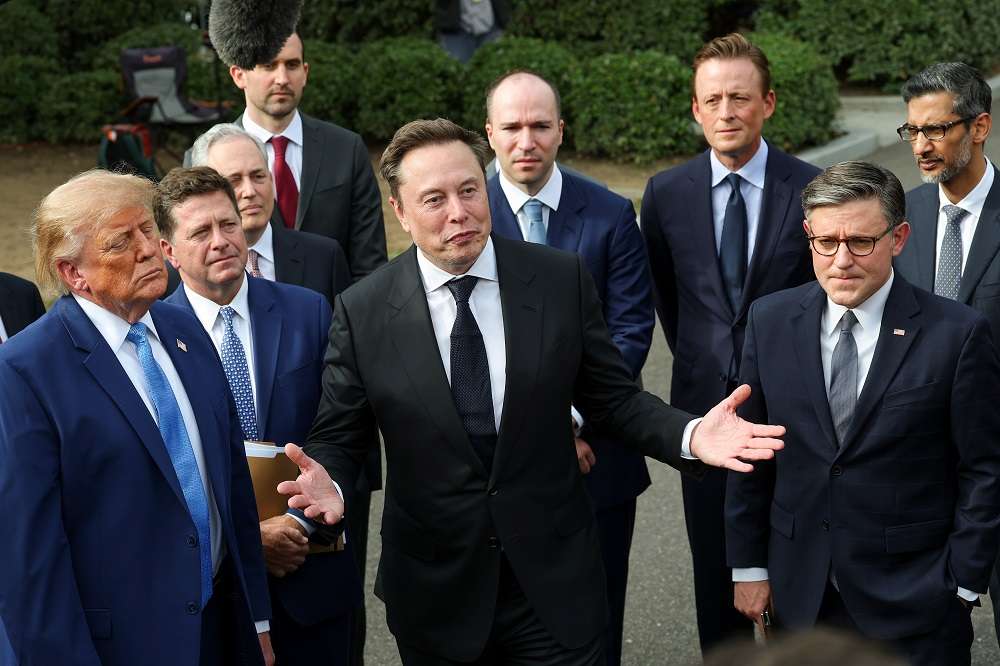
Elon Musk has a blunt message for anyone who thinks unlimited cash can buy an American election: he feels “pretty foolish” about how much money he spent on the 2026 United States midterm elections.
Speaking virtually at The New York Times DealBook Summit on Wednesday, November 18, 2026, the Tesla and SpaceX chief executive opened up about pouring nearly half a billion dollars into Republican campaigns that largely ended in defeat. According to reports from Al Jazeera and CBS News, Musk admitted that if he could turn back time, he would keep much more of his fortune in his own pocket.
“Probably, if I could rewind the clock, I would have spent less money,” Musk told journalist Andrew Ross Sorkin during the live interview.
For months leading up to the November 2026 vote, Musk acted as the biggest financial backer for the Republican Party. Yet when the ballots were counted, Democrats swept both chambers of Congress and pulled off major upsets in Musk’s own home state of Texas. Now, the world’s wealthiest person is stepping back, distancing himself from the MAGA movement, and admitting that voters cannot simply be won over with massive ad budgets.
What Did Elon Musk Say at the DealBook Summit?
At the 2026 DealBook Summit, Elon Musk stated that he felt foolish for spending hundreds of millions of dollars on the midterm elections without seeing meaningful results. He acknowledged that his massive political push failed and said the outcome proves American elections are not decided by money alone.
The $0 Secret To Launching Your Entire Online Empire
Why pay hundreds every month for separate software? Build funnels, send emails, and make sales with Systeme.io completely free.
Get Started For $0Free Forever • No Credit Card Needed • Beginner-Friendly
Anyone who watched Musk during the 2024 presidential race remembers a very confident political operator who jumped on rally stages and celebrated Donald Trump’s return to the White House. His tone during the November 2026 DealBook interview was noticeably calmer and much more reflective.
When asked directly about his record-breaking political donations, Musk did not try to spin the results as a hidden victory. Instead, he offered a rare public admission that his strategy did not work.
Breaking Down His Exact Words on Election Cash
Musk laid out several honest thoughts about why his spending spree fell flat:
- He admitted the effort failed: Musk openly told the audience that his political push “failed, by the way, obviously,” leaving no doubt about how he viewed the election night results.
- He questioned the power of money in politics: He explained that pouring nearly $500 million into political committees taught him a clear lesson, noting that “American elections are not just about money”.
- He said he was distracted by his companies: Musk pointed out that he did not spend much personal time managing the political campaigns because he was busy building rockets at SpaceX and running Tesla.
- He suggested things could have been worse: While calling his spending foolish, Musk still defended his allies slightly by saying Republican candidates might have lost by even larger margins without his financial support.
For everyday observers, watching a billionaire admit he wasted a fortune is not something you see every day. Most political donors quietly disappear after a tough election night, yet Musk chose to address the elephant in the room head-on.
How Much Money Did Elon Musk Actually Spend on the 2026 Midterms?
Elon Musk spent between $446 million and nearly $500 million during the 2026 midterm election cycle, making him the largest single-cycle non-candidate donor in modern United States political history. Federal Election Commission filings and news reports show this money flowed through multiple Republican-aligned political action committees across the country.
To put that number into perspective, half a billion dollars is enough money to fund several SpaceX rocket launches or buy thousands of electric vehicles. It also dwarfs the historical spending of other famous political mega-donors on both sides of the aisle.
According to analysis from The Guardian and TheWrap, Musk’s 2026 midterm cash was spread across several major battlegrounds:
- The Texas Senate Race: Musk donated $158 million to a Republican Senate super PAC that funneled matching funds into supporting Republican candidate Ken Paxton.
- Dozens of House Races: He financed roughly 40 Republican candidates running for seats in the U.S. House of Representatives.
- Key Senate Battlegrounds: Beyond Texas, Musk’s committees poured heavy money into competitive Senate races in states like Maine, Ohio, Michigan, and Alaska.
- Attack Advertisements: Much of the super PAC cash went toward television and digital attack ads targeting Democratic candidates on social and economic issues.
This spending came right on the heels of the 2024 presidential election, where Musk spent at least $250 million of his own money to help Donald Trump win a second term. Combined across just two election cycles, Musk has poured roughly three-quarters of a billion dollars into American politics.
Why Did Elon Musk’s Massive Political Bet Fail?
Elon Musk’s political bet failed because voters across the United States rejected Republican candidates in key races, handing Democrats control of both the House of Representatives and the Senate. Even in conservative-leaning states where Musk spent the most money, local voter concerns outweighed national television ads.
Money can buy endless commercials, billboards, and text messages, yet it cannot force people to vote a certain way when they step into the ballot box. In November 2026, Democrats flipped seven Senate seats—including races in Iowa, Kansas, Ohio, Maine, North Carolina, South Carolina, and Texas—while also winning a majority in the House.
According to Reuters data cited by The Washington Sun, only three of the roughly 40 Republican House candidates Musk financed actually won their elections. That is a success rate of less than ten percent for one of the most expensive political operations ever assembled.
Big Upsets in Texas Where Musk Lives and Works
The biggest sting for Musk happened right in his own backyard. Over the past few years, Musk moved his personal residence and major corporate headquarters for Tesla and SpaceX to Texas, while also planning a massive chipmaking venture in the state.
Keeping Texas firmly under Republican control was Musk’s top priority. Instead, Texas delivered two historic shocks on election night:
- Ken Paxton Lost the Senate Seat: Despite Musk backing him with over $150 million, Republican Ken Paxton lost the Texas Senate race to Democrat James Talarico. During his victory speech, Talarico framed the win as a classic David-versus-Goliath story, directly calling out Musk and Donald Trump.
- Greg Abbott Lost the Governor’s Mansion: In another major surprise, Democrat Gina Hinojosa defeated longtime Republican Governor Greg Abbott.
These losses meant that the state where Musk builds his rockets, cars, and factories suddenly shifted toward Democratic leadership at the state level.
Voters Pushed Back on Big Tech and Data Centers
Another major reason Musk’s spending backfired was growing public frustration with massive technology projects. Across several states in the 2026 midterms, voters used local ballots to push back against the rapid construction of giant artificial intelligence data centers, which require enormous amounts of electricity and water.
Send, Spend & Hold Money Worldwide Without Hidden Fees
Transfer money internationally at the real exchange rate and hold 40+ currencies in one account.
Open a Wise AccountMid-market rate • Fast transfers • 40+ currencies
In Texas, incoming Democratic Governor Gina Hinojosa campaigned on keeping a freeze on new data center construction across the state. When voters feel that big tech companies are raising their utility bills or taking up local resources, celebrity billionaire endorsements tend to hurt a candidate rather than help them.
Right after the election results came in earlier in November, Musk tried to laugh off the defeat on his social media platform X. “Guess my election-interfering space lasers didn’t work this time,” he joked to his followers, adding in another post that “data centers in space looking pretty appealing right now”.
From “Dark Gothic MAGA” to “I Am Not MAGA”
Alongside regretting his spending, Elon Musk used the DealBook Summit to distance himself from President Donald Trump’s political brand, declaring that he is “not MAGA”. He explained that he does not believe in blind loyalty to any single political party and sees both good and bad ideas on each side.
This statement raised plenty of eyebrows because Musk spent much of 2024 and early 2025 proudly embracing the Make America Great Again movement. He previously called himself “dark gothic MAGA” at rallies and frequently appeared in the Oval Office wearing hats that read “Trump was right about everything”.
To understand why Musk changed his tune in November 2026, it helps to look at his rocky political journey over the past two years:
- Leading DOGE in 2025: After Trump took office in early 2025, Musk served for 180 days as the head of the Department of Government Efficiency, known as DOGE, where he pushed for deep cuts to federal spending and government jobs.
- A Public Falling-Out with Trump: After stepping down from DOGE when its temporary mandate ended, Musk and Trump had a bitter public feud in June 2025. During that clash, Musk posted sharp attacks against the president on social media before the two men eventually patched things up.
- A Sudden Pivot After the Midterms: Once Democrats won Congress and the Texas governorship in November 2026, Musk quickly softened his political language.
At the DealBook Summit, Musk clarified what he meant by rejecting the MAGA label. “If that means sort of blind adherence to a set of policies by the Republican Party, then I certainly don’t have that,” he said.
Even more surprisingly, Musk praised incoming Texas Democratic Governor Gina Hinojosa, the very candidate who defeated his Republican ally Greg Abbott. Musk said Texas would be “fine” under her leadership, describing her as “quite moderate” and “not a far-left governor”. For a tech CEO with billions of dollars invested in Texas factories, staying on good terms with the incoming governor is clearly smart business.
How Are Politicians and Voters Reacting to Musk’s Regret?
Democrats have largely dismissed Elon Musk’s sudden shift toward moderation, warning that his companies and past government work will still face congressional investigations. Meanwhile, Republicans and political analysts point to the election results as proof that billionaire endorsements can alienate working-class voters.
When Democrats take control of the House and Senate in January 2027, they will gain the power to launch formal probes and issue subpoenas. Several lawmakers have already stated they want to examine Musk’s conduct while running DOGE in 2025, as well as the billions of dollars in federal contracts held by SpaceX.
Democratic Senator Ruben Gallego of Arizona reacted immediately on X after Musk claimed he was not MAGA. Gallego wrote a short, pointed reply: “You are still getting a subpoena”.
The $0 Secret To Launching Your Entire Online Empire
Why pay hundreds every month for separate software? Build funnels, send emails, and make sales with Systeme.io completely free.
Get Started For $0Free Forever • No Credit Card Needed • Beginner-Friendly
Musk addressed the possibility of Democratic investigations during his DealBook interview. Speaking calmly, he said, “Hopefully in this country, you still need to do an actual crime before you go to prison. Aspirationally, that should be how it works”.
On the Republican side, reactions to the midterm losses have been mixed. President Donald Trump suggested on his social media platform Truth Social that Republicans lost ground simply because his own name was not on the midterm ballot, arguing the party would have won in a landslide if he had been running.
What This Means for Big Money in Future Elections
The 2026 midterm results suggest that while billionaire donors can make elections more expensive, they cannot override voter dissatisfaction with economic issues or local policies. Corporate leaders are now rethinking how closely they align themselves with partisan political movements ahead of the 2028 presidential race.
For years, critics of campaign finance rules worried that the richest people in the world could simply buy whatever political outcome they wanted. Elon Musk tested that theory on a scale nobody had ever tried before, spending nearly $500 million in a single midterm cycle.
Yet the outcome offers a reassuring lesson about democracy:
- Ads cannot replace real trust: Voters still care more about their grocery bills, local jobs, energy costs, and community issues than flashy super PAC commercials.
- Mega-donors can become targets: When one billionaire dominates the headlines, opposing candidates can easily rally voters by running against billionaire influence, just as James Talarico did in Texas.
- Business and politics rarely mix cleanly: Tech executives who pick fierce partisan sides risk alienating half their customers and creating friction with whichever party wins the next election.
Musk’s decision to step back from aggressive political spending could cool down the billionaire arms race before 2028, or at least make other wealthy donors think twice before writing nine-figure checks.
Frequently Asked Questions About Elon Musk’s Midterm Spending
How much money did Elon Musk spend on the 2026 midterm elections?
Elon Musk spent between $446 million and nearly $500 million supporting Republican candidates during the 2026 U.S. midterm election cycle. According to The Guardian, this represents the largest amount of money ever spent in a single election cycle by someone who was not running for office themselves.
Why does Elon Musk say he feels foolish about his political donations?
Musk said he feels “pretty foolish” because he spent nearly half a billion dollars and saw very little return on his investment. Most of the candidates he funded lost their races, and Democrats won control of both the U.S. House and Senate.
Did the candidates Elon Musk funded win their elections?
Most of them lost. Out of roughly 40 Republican House candidates Musk supported, only three won their seats. In his home state of Texas, his top Senate pick Ken Paxton lost to Democrat James Talarico, and Republican Governor Greg Abbott lost to Democrat Gina Hinojosa.
Is Elon Musk still part of the MAGA movement?
No, Musk stated at the November 2026 DealBook Summit that he is “not MAGA”. He explained that he does not blindly follow every policy of the Republican Party and believes both Democrats and Republicans have positive and negative points.
Could Elon Musk face investigations from the new Democratic Congress?
Yes, Democratic lawmakers have indicated they plan to investigate Musk’s 2025 leadership of the Department of Government Efficiency (DOGE) and examine federal contracts awarded to his companies once they take control of Congress in January 2027.
Elon Musk’s candid admission at the DealBook Summit closes one of the most expensive chapters in American political history. Watching the world’s richest person realize that half a billion dollars cannot guarantee a single Senate seat is a powerful reminder that voters still hold the final say at the ballot box.
