
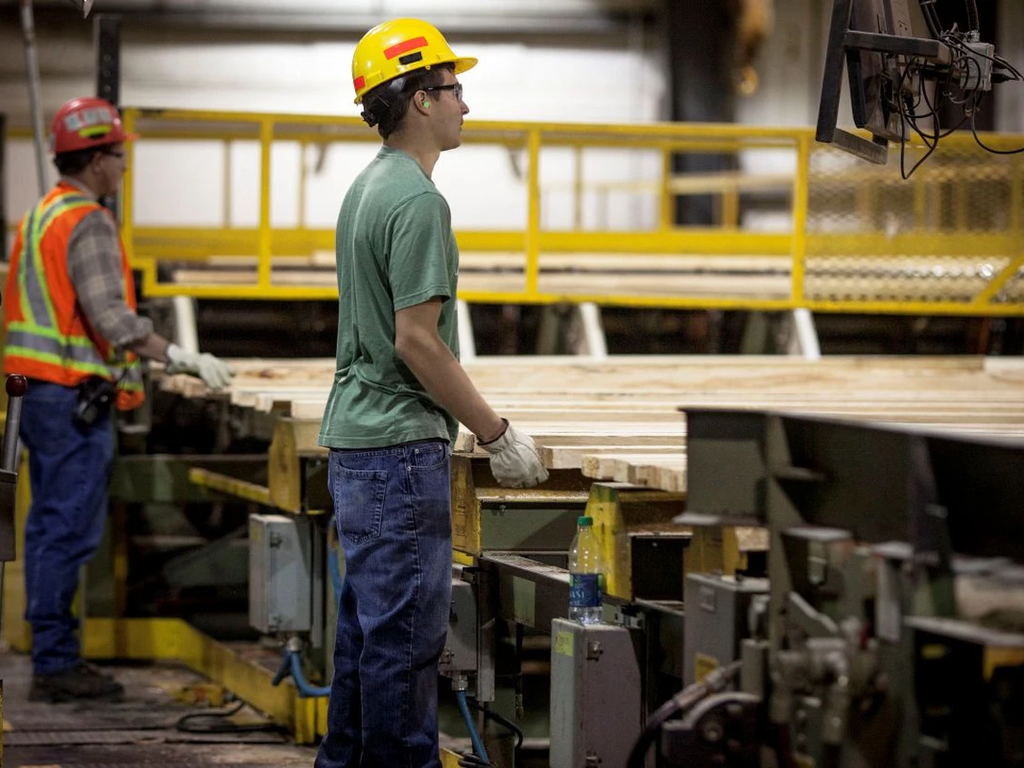
A major trade fight between Canada and the United States has erupted again, and the financial fallout is landing directly on the lumber yards, construction sites, and family budgets of North America. The United States Department of Commerce has officially adjusted its trade penalties on Canadian softwood lumber, pushing total import taxes to an eye-watering 34.75%.
Leaders in Ontario did not hold back their frustration. Provincial ministers released a joint statement calling the move an unjustified and punitive attack that harms workers in Canadian forestry towns while driving up housing costs for everyday American families.
Industry leaders across Canada agree. From the dense pine forests of Northern Ontario to the sawmills of British Columbia, forestry professionals are warning that an import tax approaching 35% threatens jobs, slows down house construction, and adds thousands of dollars to the cost of standard renovation projects.
Understanding how this border dispute escalated, what the math looks like behind the tax hike, and why both Canadian sawmill workers and American home builders feel the pinch is essential to navigating the latest chapter of North America’s longest-running trade argument.
The Breakdown: How Lumber Taxes Reached Nearly 35%
Trade penalties sound complicated on paper, but the total tax number is a simple stack of three separate government fees. When Canadian lumber moves across the border into the United States, it now faces a combined duty and tariff rate of 34.75%.
The $0 Secret To Launching Your Entire Online Empire
Why pay hundreds every month for separate software? Build funnels, send emails, and make sales with Systeme.io completely free.
Get Started For $0Free Forever • No Credit Card Needed • Beginner-Friendly
The U.S. Department of Commerce finalized these figures through its ongoing administrative review process, combining existing trade remedies with broader cross-border import measures.
The first piece of the puzzle is the countervailing duty. The American government set this rate at 14.11%. American trade officials claim that Canadian provincial governments subsidize their logging companies by charging artificially low fees to harvest timber on public land. The countervailing duty is intended to balance out that alleged financial advantage.
The second piece is the anti-dumping duty. This rate is set at 10.64%. Under American trade laws, “dumping” occurs when a foreign business sells its goods inside the United States below fair market value or below the production cost. Together, the countervailing and anti-dumping duties create a combined trade remedy rate of 24.75%.
The third piece comes from broader national trade measures. When paired with the active 10% Section 232 tariffs applied to various allied imports, the final bill on Canadian wood hits roughly 35%.
Every time a lumber distributor or home construction firm in the United States buys 100,000 dollars worth of Canadian two-by-fours, nearly 35,000 dollars is added to the bill at the border. That extra cost does not disappear into thin air. It ripples down through the supply chain until it hits the final consumer.
Ontario Strikes Back: Cabinet Ministers Speak Out
The reaction from Ontario provincial leadership was swift and blunt. Three key cabinet ministers—Mike Harris, Minister of Natural Resources; Kevin Holland, Associate Minister of Forestry and Forest Products; and Vic Fedeli, Minister of Economic Development, Job Creation and Trade—issued a united statement condemning the decision.
The ministers emphasized that the forestry sector is not just another industry in Ontario. It forms the financial heartbeat of dozens of northern and rural communities. In many towns, the sawmill, the logging trucks, and the wood-processing facilities provide the vast majority of private-sector paychecks.
The official statement from Queen’s Park made clear that Ontario will not simply accept these tariffs quietly. The ministers argued that slapping massive border taxes on Canadian wood during an ongoing continental housing shortage makes life harder for people on both sides of the border.
Provincial officials pointed out that the tariffs do not just punish the companies cutting the wood. They also punish American businesses that manufacture equipment, provide transport, and sell parts to Canadian mills. The economic ties connecting the Ontario timber industry and American manufacturing run deep, and a tax wall damages both sides.
You can read the full statement directly through the official Ontario Newsroom release.
Why the U.S. and Canada Keep Fighting Over Trees
This cross-border dispute is not new. The disagreement over softwood lumber between Canada and the United States has been flaring up and cooling down for more than 40 years.
To understand why this argument never seems to die, look at how trees are owned and harvested in both countries.
In the United States, most timberland is privately owned. Private landowners, timber investment firms, and real estate trusts buy land, plant trees, and sell the rights to cut down those trees through competitive auctions on the open market. Market supply and demand dictate what a logger pays for timber.
In Canada, the vast majority of forests are public land, known legally as Crown land. The provincial governments own the forests on behalf of the public. Provincial natural resource departments grant forest companies long-term licenses to harvest trees in designated areas. In exchange, the companies pay the government an administrative fee called a “stumpage rate”.
The American timber lobby argues that Canadian provinces set stumpage rates too low, acting as an unfair government subsidy that makes Canadian lumber cheaper than American wood. Canadian lumber producers reject this claim. They counter that their rates reflect strict reforestation requirements, government-mandated road construction in remote regions, and long-term sustainability rules that private American timber owners do not face.
Send, Spend & Hold Money Worldwide Without Hidden Fees
Transfer money internationally at the real exchange rate and hold 40+ currencies in one account.
Open a Wise AccountMid-market rate • Fast transfers • 40+ currencies
Every time the dispute reaches international trade courts—including panels under NAFTA, CUSMA, and the World Trade Organization—Canada routinely wins rulings declaring that its forestry management does not constitute an illegal subsidy. However, under American trade rules, the Department of Commerce conducts periodic reviews and continues applying duties anyway, keeping the legal battles rolling year after year.
National Canadian Reaction: Industry Leaders Sound the Alarm
Ontario is not fighting this battle alone. Forestry leaders across Canada have voiced deep disappointment over the latest tax rate.
Kim Haakstad, interim president of the BC Lumber Trade Council, noted that Canadian lumber producers continue to face unjustified trade barriers at a time when the sector is already wrestling with higher operational costs. She pointed out that American consumers are the ones being hit hardest by these trade barriers, because the extra taxes inflate home prices and punish builders who need high-quality Canadian timber.
Major media outlets, including CTV News, have reported that lumber wholesalers across North America are feeling the squeeze. Many wholesalers are caught between declining buyer demand caused by higher interest rates and soaring import costs driven by border tariffs.
The Ontario Forest Industries Association (OFIA) echoed these warnings. When tariffs spike to 35%, Canadian sawmills face impossible choices. They must either absorb the tax and operate at a steep loss, or raise their prices and risk losing deals to domestic suppliers or overseas competitors.
When profit margins evaporate, mills cut production shifts, temporarily shut down operations, or lay off workers.
The Hidden Twist: Why American Buyers Pay the Tab
A common misconception about import tariffs is that the exporting country pays the fee. Many people assume that when the American government slaps a 35% tax on Canadian wood, the Canadian treasury or the Canadian mill writes a check to Washington.
That is not how tariffs work.
The tax is collected by American customs officers at the point of entry. The American company importing the wood pays the 35% tax out of pocket. To stay profitable, that importer marks up the price before selling the wood to lumber yards, contractors, and building suppliers.
Softwood lumber—such as spruce, pine, and fir—is the primary material used to frame houses across North America. More than 90% of single-family homes built in the United States rely on wood framing. Because American domestic forests cannot produce enough timber to meet total construction demand, American home builders depend on Canada for roughly a quarter of their supply.
The $0 Secret To Launching Your Entire Online Empire
Why pay hundreds every month for separate software? Build funnels, send emails, and make sales with Systeme.io completely free.
Get Started For $0Free Forever • No Credit Card Needed • Beginner-Friendly
When the tax on that supply jumps to 35%, builders face immediate price shocks. The National Association of Home Builders has warned for years that lumber tariffs act as a direct tax on homeownership. Adding thousands of dollars to framing lumber increases the final sale price of a newly constructed home, pushing prospective buyers out of the market during an already painful housing affordability crisis.
The Human Cost in Northern Forestry Towns
Behind the trade legalities and decimal points are real people living in northern towns where forestry is the lifeblood of the community.
In northern Ontario communities like Hearst, Kapuskasing, Thunder Bay, and Kenora, the local sawmill is often the biggest employer in town. A steady forestry sector means reliable wages for sawmill workers, loggers, machine operators, and transport drivers.
When lumber duties jump toward 35%, the entire local ecosystem feels the tremor. A sawmill that cuts from three shifts down to two shifts means lost overtime and smaller paychecks for dozens of local families. Those workers spend less money at local grocery stores, mechanics, and diners.
Trucking companies that haul logs from cut blocks to mills see their schedules slashed. Equipment suppliers that service massive harvesters and debarking machines receive fewer repair orders.
The uncertainty created by annual tariff reviews also prevents companies from investing in modern upgrades, clean technology, and long-term hiring.
Canada’s Strategy: How Governments Are Responding
Canadian officials are not simply waiting for trade relations to improve on their own. Federal and provincial authorities are using a mix of legal defense and economic support to shield forestry communities from the worst impacts of the tariffs.
Legal and Trade Appeals
Canada regularly challenges American lumber duties before international trade panels. Under the dispute resolution mechanisms established in the Canada-United States-Mexico Agreement (CUSMA), Canada has requested independent panels to review American duty calculations.
These legal fights take time, often stretching over months or years, but Canadian officials point out that past rulings have consistently found American duties to be calculated unfairly.
Ontario’s Forestry Roadmap
The Ontario government launched its 10-year strategy known as the Roadmap to Protecting Ontario’s Forest Sector. This plan aims to make Ontario mills more resilient by modernizing production and finding new ways to use harvested wood.
By funding initiatives like the Forest Biomass Program and supporting advanced wood construction—such as mass timber used in large commercial buildings—the province wants to create steady domestic demand so mills rely less on export markets.
Exploring New Markets
Canadian trade representatives are also working to expand wood exports to overseas markets in Europe, Asia, and Latin America. While shipping lumber across oceans carries higher transport costs than driving a flatbed across the American border, diversifying buyers prevents Canadian suppliers from being held hostage by single-market trade disputes.
What This Means for Everyday Renovators and Builders
For anyone planning a home project, home extension, or large renovation, cross-border tariff news is not just an abstract political issue. It directly affects what you pay at the local home improvement store.
Here are practical, honest strategies to keep your budget safe during lumber price swings:
1. Lock In Material Estimates Quickly
Lumber yards adjust their retail board prices frequently based on wholesale trends. If a contractor hands you an estimate for a deck or framing project, check how long that material price is valid. In volatile markets, quotes may only be guaranteed for 7 to 14 days. If the numbers fit your budget, lock them in early.
2. Compare Alternative Materials
When wood framing becomes more expensive, alternative building methods look much more appealing. Composite decking, insulated concrete forms (ICF), and light-gauge steel framing can sometimes offer predictable pricing without the wild seasonal swings common in the timber market.
3. Check for Domestic Lumber Options
Ask your supplier where their lumber is sourced. If you are building inside Canada, sourcing wood from local sawmills rather than buying back processed American-finished goods can save money and keep your investment inside regional communities.
4. Build Flexibility into Your Renovation Timeline
Lumber prices often spike around trade announcements and seasonal building rushes, then soften during colder months. If your project is not urgent, waiting until the winter construction slowdown can yield noticeable savings on standard dimensional lumber.
Frequently Asked Questions About the 35% Lumber Tariffs
What is Canadian softwood lumber?
Softwood lumber comes from coniferous trees such as spruce, pine, fir, and cedar. It is lighter, easier to cut, and structurally suited for framing walls, floors, and roofs in residential housing construction.
Why did the total tax hit nearly 35%?
The final 34.75% rate combines three separate taxes: an administrative countervailing duty of 14.11%, an anti-dumping duty of 10.64%, and active 10% Section 232 import tariffs. Together, they create a heavy import penalty for Canadian wood entering the United States.
Who actually pays this tariff?
American companies that import the lumber pay the duty directly to U.S. customs at the border. Importers pass these added costs to wholesalers, building suppliers, contractors, and finally to homebuyers and renovators in the form of higher prices.
Why does the United States place tariffs on Canadian wood?
American timber associations claim that Canadian loggers receive an unfair advantage because provincial governments set the price of cutting timber on public Crown land rather than allowing a free auction market. The U.S. government applies duties to offset what it views as a subsidy.
Why does Canada say the duties are unfair?
Canada argues that provincial stumpage systems accurately reflect true forest management costs, mandatory reforestation, and remote operational challenges. Past international trade panels through NAFTA and the WTO have repeatedly agreed with Canada that its system does not violate fair trade laws.
Will this tariff increase the cost of building a house?
Yes. Softwood lumber is essential for framing residential homes. Independent industry groups estimate that severe tariffs add thousands of dollars to the construction cost of a standard single-family home in the United States.
How does this affect forestry workers in Ontario?
Higher import duties make Canadian lumber more expensive for American buyers, leading to cancelled orders, reduced mill shifts, and temporary layoffs in communities that rely on forestry for their local economy.
The Road Ahead for North American Trade
The battle over softwood lumber shows that even the closest trade partners can get stuck in long-standing disputes. Pushing tariffs to nearly 35% delivers a painful blow to mill communities across Northern Ontario and British Columbia, while making homeownership more expensive for families in the United States.
Both sides need a lasting, negotiated agreement rather than another round of legal battles and sudden border penalties. Until fair trade policies take hold, consumers, builders, and forest workers will continue carrying the weight of the trade war.
We want to hear your perspective on this cross-border showdown. If you work in construction, run a local sawmill, or are trying to budget for a home build, reach out to us through our Contact Page and let us know how lumber price swings are affecting your plans.
