
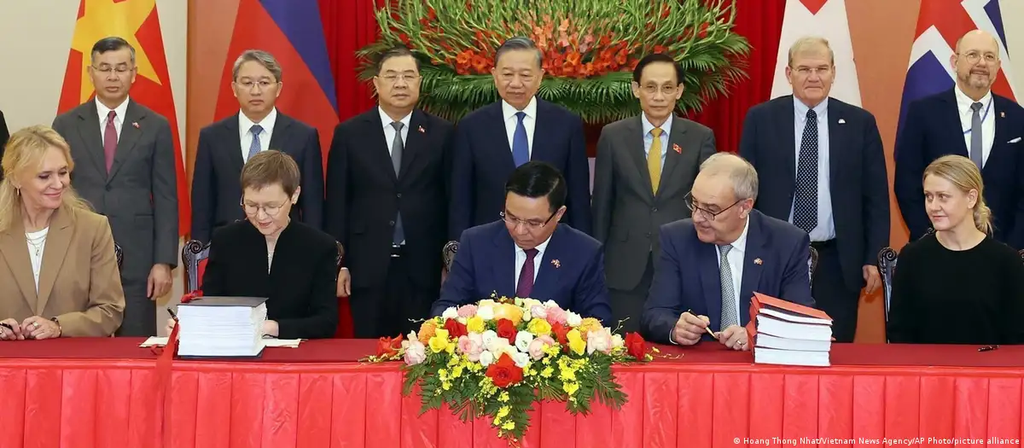
Vietnam has officially signed a landmark free trade agreement with four European powerhouses: Switzerland, Norway, Iceland, and Liechtenstein. The official signing ceremony took place in Hanoi, with top leaders from all five governments putting pen to paper on a partnership that will reshape supply chains from the fjords of Scandinavia to the busy factories of Southeast Asia.
This is not just another boring diplomatic photo opportunity. Bilateral trade between Vietnam and these four nations already sits at nearly 5 billion euros annually. By wiping out tariffs and cutting red tape, this agreement opens up direct access to some of the richest consumer markets in the Western world, while giving European businesses an open gateway to Southeast Asia’s fastest-growing economy.
The timing could not be more critical. With global trade tensions rising and sudden international tariff hikes rattling multinational corporations, countries are rushing to find reliable partners. Vietnam and its new European partners are making a bold statement: keeping markets open and predictable is the smartest way to survive economic storms.
Who Are the “European Four” Behind the Deal?
When people hear about a major trade deal with Europe, they usually assume the European Union (EU) is running the show. That is not the case here.
The four nations signing this pact belong to the European Free Trade Association (EFTA). Formed back in 1960, EFTA consists of four independent European nations that chose not to join the EU political bloc, yet boast some of the highest standards of living, strongest currencies, and most advanced industries on the planet.
The $0 Secret To Launching Your Entire Online Empire
Why pay hundreds every month for separate software? Build funnels, send emails, and make sales with Systeme.io completely free.
Get Started For $0Free Forever • No Credit Card Needed • Beginner-Friendly
Each member brings something distinct and powerful to the table:
1. Switzerland
Known across the globe for precision manufacturing, world-class pharmaceuticals, banking, and luxury timepieces, Switzerland is an economic juggernaut. Swiss companies need steady access to Asian manufacturing networks and hungry consumer markets.
2. Norway
Norway is an energy and seafood giant. If you enjoy fresh salmon or mackerel at a sushi bar or local restaurant, there is a massive chance it originated in Norwegian waters. Before this deal, Norway faced import taxes of up to 15% when selling its fish into Vietnam.
3. Iceland
Iceland is a global leader in geothermal energy, green technology, sustainable fishing, and cold-chain logistics. It brings high-tech equipment and specialized expertise to modern industrial setups.
4. Liechtenstein
Liechtenstein may look tiny on a map, but it is an industrial titan per capita. The country specializes in high-precision tools, dental equipment, and specialized construction hardware that major assembly plants rely on every single day.
Together, these four countries represent immense purchasing power. Their citizens earn top-tier incomes, and their corporations design the specialized machinery that powers modern manufacturing.
Why Did It Take 14 Years to Get Across the Finish Line?
Negotiating a free trade pact is rarely quick, but this one took an extraordinary amount of patience. Talks first started all the way back in 2012.
Fourteen years is a lifetime in global commerce. Think about how much the world changed between 2012 and 2026. Smartphones took over daily life, international supply chains fractured during global health lockdowns, and geopolitical rivalries reshuffled world trade routes. So, why did it take nearly a decade and a half to reach an agreement?
Protecting Sensitive Local Farmers
Agriculture is always the toughest nut to crack in any trade negotiation. Swiss and Norwegian farmers operate under strict national protections and receive substantial government subsidies to keep small rural communities thriving. Opening up farm products to foreign competition is politically sensitive. Negotiators spent years debating which items would see zero taxes, which ones would face gradual reductions, and which staples would remain protected.
Stringent Environmental and Labor Standards
EFTA nations hold some of the strictest environmental and workplace regulations in the world. They insisted that any long-term trade deal include firm rules on sustainable development, worker protections, and responsible sourcing. Vietnam had to demonstrate that its manufacturing boom would align with responsible, modern labor standards and environmental commitments.
Complex Rules on Intellectual Property
From Swiss medical patents to specialized engineering blueprints, European partners demanded ironclad protection for their intellectual property. Establishing clear legal remedies and customs protocols that both sides agreed on required dozens of grueling negotiation rounds across Hanoi, Geneva, and Oslo.
Both sides officially restarted talks with urgency last year. By July, the major terms were locked down, setting the stage for Sunday’s formal signing in Hanoi. As reported by The Brussels Times, the pact reflects a direct response to global market volatility, turning years of deadlock into a landmark treaty.
What Vietnam Actually Gains From the Agreement
Vietnam is no longer just a regional producer of basic garments and raw commodities. Over the past decade, it transformed itself into a premier electronics and manufacturing hub for the entire world. Companies like Samsung, Apple suppliers, and leading sportswear brands run massive assembly lines across the country.
Even so, relying too heavily on only one or two massive export destinations can leave an economy vulnerable. This new pact delivers three critical advantages for Vietnam:
1. Breaking Free From Single-Market Dependency
When big global players engage in trade wars or raise border tariffs overnight, countries caught in the middle can suffer heavy collateral damage. By opening up preferred, duty-free access to Switzerland, Norway, Iceland, and Liechtenstein, Vietnam diversifies its customer base. If sales slow down in one corner of the globe, Vietnamese producers can lean on lucrative European buyers to fill the gap.
Send, Spend & Hold Money Worldwide Without Hidden Fees
Transfer money internationally at the real exchange rate and hold 40+ currencies in one account.
Open a Wise AccountMid-market rate • Fast transfers • 40+ currencies
2. Moving Up the Value Ladder
Vietnam does not want to assemble cheap plastic trinkets forever. The country wants to build high-end computers, precision medical devices, and clean energy components. To do that, Vietnamese factories need high-grade tools, specialized industrial chemicals, and sophisticated machinery. Under this deal, importing advanced European equipment becomes significantly cheaper and faster, allowing local plants to upgrade their technical output without breaking the bank.
3. A Massive Boost for Vietnamese Exports
Local exporters of textiles, shoes, coffee, wooden furniture, and electronics will see customs fees drop steadily. For seafood exporters selling shrimp and pangasius fish, clearing customs in high-income European nations at lower tax rates means higher profit margins and more jobs for workers in coastal provinces.
What the European Four Win in Return
Trade agreements only work when both sides walk away with major wins. The four EFTA nations are not signing this out of goodwill; they are securing tangible commercial advantages in a fast-growing economic region.
According to coverage in the Kuwait Times, top leaders including Vietnam’s President To Lam, Swiss President Guy Parmelin, and Liechtenstein’s Prime Minister Brigitte Haas gathered in person to finalize these mutual commercial commitments.
Fresh Access to 100 Million Customers
Vietnam has a young, ambitious, and increasingly prosperous population of roughly 100 million people. Consumers are eager for premium imported goods, ranging from quality Swiss chocolates and watches to high-standard pharmaceuticals and luxury personal care items. European brands now have direct, preferential access to store shelves across Hanoi, Ho Chi Minh City, and Da Nang.
Cheaper Seafood for Southeast Asia’s Booming Dining Scene
Norway has been eyeing the Vietnamese market for years. Vietnam is already an international culinary hotspot, and its appetite for fresh salmon and cold-water fish has grown exponentially. As detailed by European Interest, wiping out the 15% tariff on Norwegian salmon makes high-grade fish more affordable for local restaurants, supermarkets, and food processors.
Lower Factory Costs for European Brands
Many European companies produce components across Asia. By lowering trade barriers with Vietnam, European firms can base operations or source parts from Vietnamese factories with fewer regulatory hurdles, reducing their overhead costs and safeguarding their supply chains.
The Tariff Shock of 2026: Why Timing Was Everything
You cannot understand this deal without looking at what is happening around the world right now. Over the past year, international trade has faced major disruptions. Tariff threats, changing customs rules, and protectionist rhetoric from major powers have left factory managers and trade ministers scrambling for shelter.
When major powers raise walls, mid-sized and export-reliant economies feel the squeeze first. They cannot afford to sit around and wait for trade spats between Washington, Beijing, or Brussels to resolve themselves.
This agreement is a prime example of proactive economic self-defense. By building clear, rules-based trade bridges with each other, Vietnam and the EFTA countries create a safety cushion. If one trade lane hits turbulence, goods can flow smoothly through another.
The $0 Secret To Launching Your Entire Online Empire
Why pay hundreds every month for separate software? Build funnels, send emails, and make sales with Systeme.io completely free.
Get Started For $0Free Forever • No Credit Card Needed • Beginner-Friendly
It sends an unmistakable signal to global investors: if you build factories in Vietnam, your goods will have reliable, preferential access to deep-pocketed buyers in Europe, backed by international treaties that cannot be cancelled on a political whim.
How This Impacts Everyday People
It is easy to get lost in talk about bilateral pacts, tariff codes, and diplomatic declarations. But how does this deal actually touch the life of an everyday citizen, whether they live in Oslo, Zurich, or Ho Chi Minh City?
1. What It Means for Consumers
- Lower Prices on Everyday Electronics and Apparel: In Switzerland and Norway, where basic living costs are notoriously high, eliminating duties on imported Vietnamese clothing, shoes, and gadgets will help keep retail prices in check.
- More Affordable European Imports in Asia: For shoppers in Vietnam, high-grade Swiss baby formula, certified vitamins, European skin-care products, and premium imported seafood will become noticeably cheaper as tariffs phase down.
- Higher Quality Standards: Because Vietnamese suppliers must satisfy rigorous EFTA quality controls, local domestic products often improve in overall quality, safety, and packaging across the board.
2. What It Means for Factory Workers and Farmers
- Job Stability: Lowering export barriers brings steady order volumes to Vietnamese garment mills, electronics assembly lines, and seafood packaging plants.
- Better Wages Over Time: As factories transition from basic low-wage assembly to operating advanced Swiss machinery, workers gain technical skills that command higher wages.
3. What It Means for Small Business Owners
- Smoother Customs Clearance: A trade treaty standardizes paperwork. Small business owners who previously struggled with confusing import rules will find it much simpler to ship products back and forth without unexpected delays at the border.
4 Big Takeaways for the Global Economy
Looking at the broader global picture, this agreement highlights four major shifts in how business gets done today:
- Trade Bilateralism Is Alive and Well: While big multilateral talks at the World Trade Organization often move at a glacial pace, focused bilateral and regional deals continue to get results.
- Vietnam Is Cementing Its Status as an Economic Hub: Having already signed free trade agreements with the European Union, the United Kingdom, Japan, and members of the CPTPP, adding EFTA turns Vietnam into one of the most commercially connected manufacturing bases on Earth.
- Non-EU Europe Carves Its Own Path: Switzerland, Norway, Iceland, and Liechtenstein continue to prove that countries outside the EU can negotiate high-impact international trade pacts tailored directly to their own commercial strengths.
- Supply Chain Diversification Is No Longer Optional: Relying on single-country suppliers or single-country buyers is too risky in today’s unpredictable economic climate. Smart businesses and smart nations spread their bets.
Frequently Asked Questions (FAQs)
What four European countries signed the trade deal with Vietnam?
The agreement was signed between Vietnam and the four member states of the European Free Trade Association (EFTA): Switzerland, Norway, Iceland, and Liechtenstein.
Is this the same as the EU-Vietnam Free Trade Agreement?
No. The European Union has 27 member states, and Vietnam already signed an EU trade deal (EVFTA) that took effect in 2020. This new agreement is specifically with the EFTA nations, which are European countries that operate outside the EU political structure.
How much trade currently exists between Vietnam and these four countries?
Bilateral trade between Vietnam and the four EFTA member countries reached approximately 4.8 billion euros (roughly 5.4 billion US dollars) over the past year, with major room to grow now that duties are dropping.
When will the tariff cuts take effect?
The agreement was formally signed in Hanoi on Sunday, October 18, 2026. Before the tariff reductions roll out, the legislatures of each respective country must ratify the treaty. Once ratified, the scheduled duty reductions will begin rolling out in agreed phases.
Why did negotiations take nearly 14 years?
Negotiations began in 2012 and required extensive discussions over protected agricultural markets in Europe, strict environmental rules, intellectual property protection, and labor regulations before both sides reached common ground.
What are the main products being traded?
Vietnam primarily exports footwear, textiles, consumer electronics, machinery, and agricultural goods to the EFTA countries. In exchange, the EFTA nations export high-precision industrial machinery, pharmaceuticals, specialized chemicals, and premium seafood like salmon and mackerel to Vietnam.
The signing of the Vietnam-EFTA free trade agreement marks a major win for pragmatic economic policy. While tariff headlines and trade disputes dominate international news, Vietnam and its four European partners chose a different path: opening borders, cutting tariffs, and guaranteeing market stability for their industries.
For consumers looking for better prices, businesses seeking new markets, and workers building long-term careers, this agreement brings welcome breathing room in an unpredictable global landscape. As the deal moves through legislative ratification and heads toward full implementation, it stands as proof that patient diplomacy and open commerce can still deliver historic results.
