
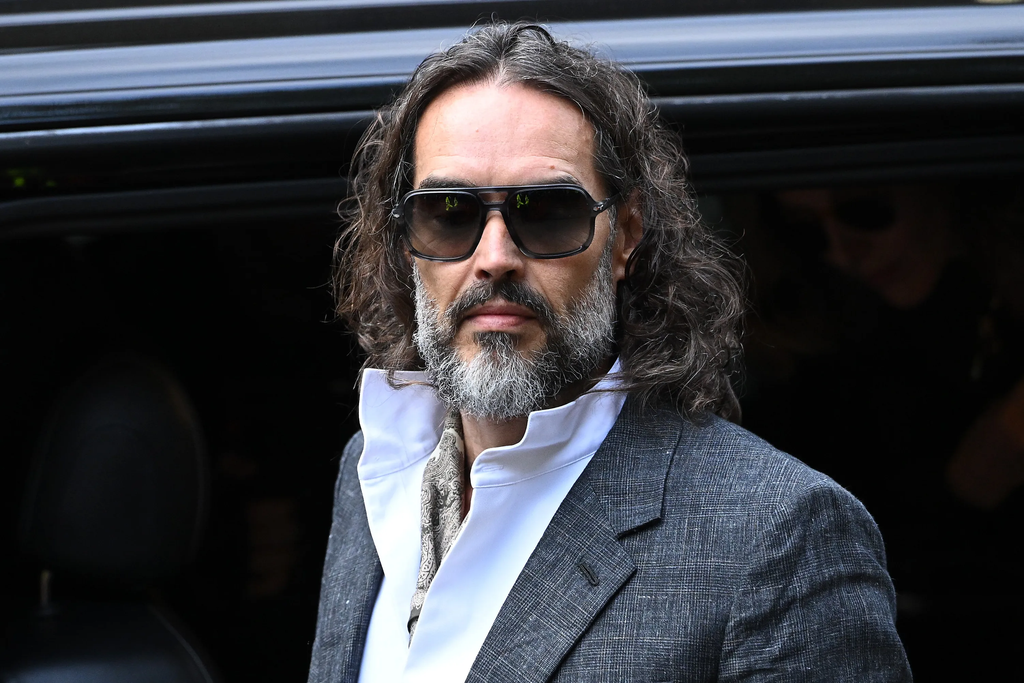
Actor and comedian Russell Brand has been sentenced to 10 years and six months behind bars. The ruling took place at Southwark Crown Court in London, concluding a high-profile criminal trial that examined allegations spanning back to the height of his fame in British radio and television.
The judge handed down the decision following a four-week trial. A jury of eight men and four women found Brand guilty of one count of rape and three counts of sexual assault against four different women. He was acquitted of two other rape charges and one count of attempted indecent assault involving two other accusers.
Brand, now 51, was immediately remanded to custody and taken from the dock to continue serving his sentence at HMP Wandsworth.
Inside the Courtroom: How the Sentence Was Handed Down
The sentencing took place before Justice Joel Bennathan. The judge did not hold back when describing the comedian’s past actions and attitude during his rise to international fame in the mid-2000s.
Justice Bennathan directly addressed Brand during the eight-page ruling, stating:
The $0 Secret To Launching Your Entire Online Empire
Why pay hundreds every month for separate software? Build funnels, send emails, and make sales with Systeme.io completely free.
Get Started For $0Free Forever • No Credit Card Needed • Beginner-Friendly
“About 20 years ago, Russell Brand, you were becoming famous. You were clever — and in many people’s eyes, funny and charismatic. You had also become a sexual predator.”
The judge emphasized that Brand operated with a belief that celebrity status allowed him to behave without regard for the boundaries and decency expected of anyone else. Justice Bennathan highlighted Brand’s “casual and arrogant disregard” for women who said no, as well as the deliberate lies he told while testifying on the stand.
Brand stood quietly in the dock as the sentence was announced. Observers noted that he showed little outward emotion during the rebuke, turning toward his wife, Laura Gallacher, to mouth the words “we’ll be OK” before being led downstairs by security officers.
Breakdown of the Prison Term and Charges
The final sentence is a combination of consecutive and concurrent terms for the four separate convictions.
- The Rape Charge: The judge imposed a 9-year prison sentence specifically for the rape conviction. Under UK sentencing guidelines, this type of offense carries a baseline category-one term of 10 to 15 years, which the judge adjusted based on statutory factors.
- The Sexual Assault Charges: Brand was handed additional sentences of 18 months, nine months, and eight months for the three sexual assault convictions. Part of these terms runs consecutively, bringing the aggregate total to exactly 10 years and six months.
- Parole Eligibility: Under standard UK criminal justice terms for serious sexual offenses of this length, Brand must serve at least two-thirds of his full sentence behind bars before being considered for parole. This means he will spend a minimum of seven years in prison.
- Sex Offender Register: In addition to physical custody, Brand has been placed on the UK Sex Offenders Register for the rest of his life.
What the Victims Said in Their Impact Statements
Before the judge finalized his ruling, impact statements from the victims were submitted and read aloud. The women involved in the trial were granted lifetime anonymity under UK law. None of them knew one another prior to coming forward with their testimonies.
The rape conviction stemmed from an incident at Brand’s London residence involving a fan he met at a recorded event. She explained how initial consensual contact turned into non-consensual violation, followed by Brand ordering her out of his home. In her statement, she recounted the lingering psychological toll, explaining how the assault caused profound self-doubt, anxiety, and years of feeling stripped of basic self-respect.
The three sexual assault convictions involved women working in media, production, and radio environments between 2004 and 2009. One worker described being grabbed, forcefully kissed, and laughed at in a hallway at Capital Radio. Another victim noted that an informal complaint raised at Channel 4 decades ago was brushed aside by managers during an era when Brand’s disruptive public antics were encouraged as edgy entertainment.
In her victim impact summary, one of the women wrote that Brand exhibited no remorse for his conduct, adding that she hoped the legal system would guarantee he could never harm anyone again.
How Brand Responded During the Trial
Throughout the trial proceedings, Brand consistently denied all criminal accusations.
Taking the stand in his defense, Brand acknowledged that he led an excessively promiscuous life during the 2000s, admitting that he had personal struggles with sex and drug addiction. However, he adamantly maintained that all intimate interactions with each of the women were strictly consensual.
His legal team argued that allegations dating back nearly twenty years suffered from memory gaps and shifting accounts. Despite these arguments, the jury deliberated and returned guilty verdicts on four of the seven counts. Following the verdict, Brand was denied bail and held at Wandsworth prison pending the final sentencing.
How the Public and Online Media Responded
Brand’s legal troubles mark one of the most drastic shifts in public perception in recent entertainment history. Over the last decade, he pivoted from Hollywood comedies and late-night shows to running independent digital media channels focused on alternative politics, wellness, and institutional critique.
When news of the 10.5-year sentence broke, reactions quickly swept across platforms like The Guardian and broadcast networks around the globe. Many people pointed out that the trial serves as a reckoning for how high-profile broadcast networks and production houses historically shielded bankable talent from accountability.
Supporters from his online streaming audience expressed disbelief, while advocacy organizations praised the victims for their persistence throughout a grueling multi-year legal process.
Frequently Asked Questions
What was Russell Brand found guilty of?
Russell Brand was convicted of one count of rape and three counts of sexual assault involving four women. The incidents took place between 2004 and 2009.
Send, Spend & Hold Money Worldwide Without Hidden Fees
Transfer money internationally at the real exchange rate and hold 40+ currencies in one account.
Open a Wise AccountMid-market rate • Fast transfers • 40+ currencies
How long will Russell Brand actually spend in prison?
Under UK law, Brand must serve at least two-thirds of his 10-year and six-month sentence before he becomes eligible to apply for release on licence. That equates to a minimum of seven full years in physical custody.
Was he cleared of any charges?
Yes. The jury acquitted Brand of two counts of rape and one count of attempted indecent assault regarding claims brought by two other women.
What happens after his release?
Once released, Brand will spend the remainder of his term under supervised license conditions, which can include curfews, travel restrictions, and electronic tagging. In addition, he must remain on the sex offender register for life.
This verdict concludes a lengthy investigation that began after investigative reporters published joint accounts detailing his conduct across multiple entertainment settings. For further inquiries or breaking developments, visit our contact page or connect through social channels on Facebook, Instagram, and X.
To see full broadcast coverage and courtroom details as the verdict was delivered, check out the Channel 4 News sentencing report. This report offers a direct view of the courtroom reactions, legal reactions, and official statements delivered right after Justice Bennathan passed down the ten-and-a-half-year prison sentence.
