
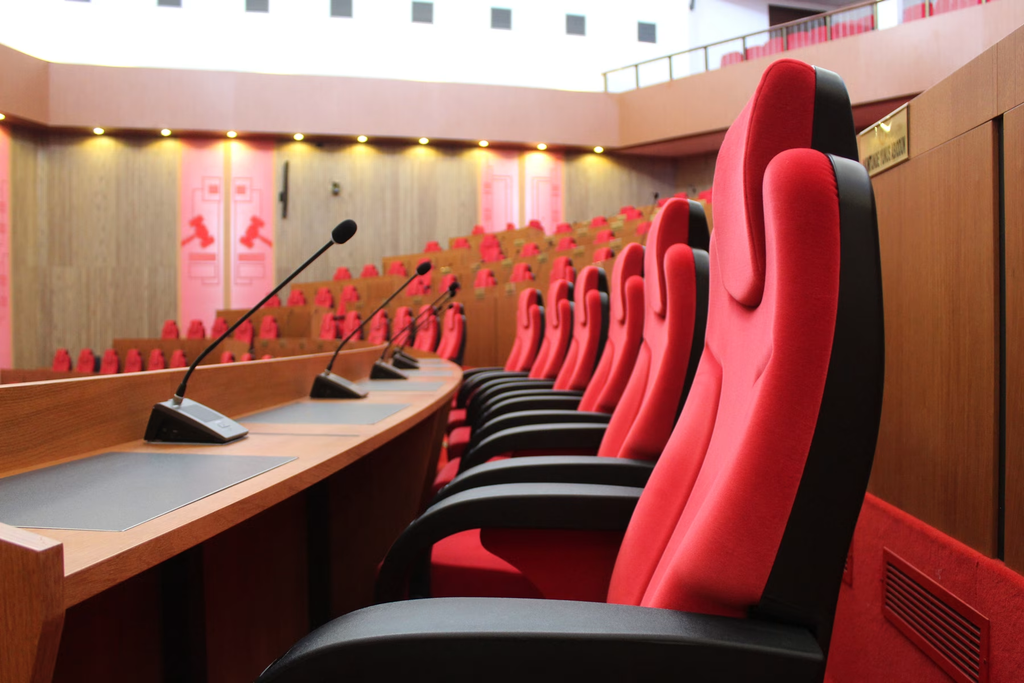
Opposition political leaders in Nigeria gathered at the Shehu Musa Yar’Adua Centre in Abuja under the banner of the G100 coalition. The goal of the meeting was to build a united front against the ruling All Progressives Congress ahead of the 2027 general elections.
However, instead of showing a united team, the summit brought old political rivalries back to light. Deep disagreements over who should step down and who should emerge as the consensus presidential candidate have created fresh tension across the political landscape.
The meeting brought together key leaders from major opposition groups, including the African Democratic Congress, Peoples Democratic Party, Social Democratic Party, National Democratic Congress, Allied Peoples Movement, and Peoples Redemption Party.
While everyone agrees that running separately in the past ruined their chances, nobody seems ready to surrender their personal political ambition. The main question echoing through the halls of Abuja is simple: can these political heavyweights actually drop their egos to choose a single leader, or will history repeat itself?
What Is the G100 Summit All About?
The Core Vision Behind the Coalition
The G100 coalition started as an independent movement of opposition figures, civil society leaders, and political strategists who realized that a divided opposition cannot win a national election in Nigeria. Organized under the theme of creating a framework for opposition cooperation and coordination, the coalition aims to establish clear rules for how parties can work together.
The $0 Secret To Launching Your Entire Online Empire
Why pay hundreds every month for separate software? Build funnels, send emails, and make sales with Systeme.io completely free.
Get Started For $0Free Forever • No Credit Card Needed • Beginner-Friendly
Led by political figures such as Salihu Mohammed Lukman, the group argues that when opposition parties fight each other, they make it easy for the ruling party to retain power. The coalition wants to move away from late-night political deals and build an institutional framework that keeps every party engaged.
Who Is Sitting at the Table?
The summit attracted wide representation from across the political spectrum. Leaders from the House of Representatives Minority Caucus joined party chairmen and presidential hopefuls to discuss potential merger options and electoral pacts.
Big names associated with the broader movement include former Vice President Atiku Abubakar, former Anambra State Governor Peter Obi, former Kano State Governor Rabiu Kwankwaso, and various state leaders. Their presence or indirect involvement underscores how important the 2027 conversation has already become, even years before voters head to the polling booths.
The Big Stumbling Block: The Consensus Candidate Argument
Why Picking One Leader Is Extremely Hard
Agreements on paper sound easy until it comes down to choosing one person to fly the flag. At the center of the current tension is the debate over how a consensus candidate should be selected. Some party insiders argue that the summit should focus strictly on election integrity, joint polling observers, and legal challenges against electoral malpractice before discussing candidates.
Other factions within the coalition believe that without agreeing on a single presidential ticket early, the entire alliance will collapse when primary season begins. Publicly, spokespersons for parties like the African Democratic Congress have stated that the summit was not set up to force any candidate to drop out. Yet, behind closed doors, key stakeholders are already calculating who has the largest voter base and who should take the back seat.
Clash of Political Heavyweights
The political math in Nigeria is heavily driven by regional voting strength and personal popularity. Candidates who built massive followings during previous election cycles are reluctant to step aside for others.
For example, supporters of different prominent contenders feel their candidate has earned the right to lead the coalition. When one faction suggests that an elder statesman should take the ticket, younger political movements push back, demanding fresh leadership. This clash of expectations creates immediate friction every time the word consensus is brought to the table.
Internal Drama and Split Threats
Conflicting Messages from Party Leadership
Even as the G100 leadership promotes unity, individual political parties are struggling with their own internal disputes. Some party executives have openly distanced themselves from statements made by former leaders regarding automatic consensus candidates.
At the same time, smaller political groups are facing legal battles over party lists and internal candidate replacements, adding extra confusion to the alliance talks. When political parties cannot maintain internal order within their own ranks, convincing voters that they can run a smooth multi-party coalition becomes a steep hill to climb.
How the Ruling APC Views the Summit
The ruling All Progressives Congress has not stayed silent regarding these opposition talks. APC officials have publicly dismissed the G100 summit as an exercise in futility. Ruling party spokespersons argue that the coalition will naturally fall apart once the time comes to select a single candidate.
They point out that personal ambitions always overtake alliance promises in Nigerian politics. Political commentators noted on reporting from The Guardian Nigeria that the ruling party views competing opposition ambitions as its greatest advantage heading into the 2027 cycle.
Lessons From History: Why the 2023 Shadow Still Lingers
Split Votes Hand Wins to Incumbents
To understand why the G100 summit is so urgent, one must look back at recent political history. In previous elections, the opposition vote was split among several strong contenders. While the combined votes of the opposition candidates outnumbered the winning party’s total in many areas, the division allowed the ruling party to secure victory.
Political analysts frequently emphasize that an opposition divided into three or four separate camps cannot defeat an incumbent party with deep resources and nationwide party machinery. The G100 initiative was formed specifically to prevent this exact mistake from happening again.
The Challenge of Building a Unified Platform
Creating a political coalition is about more than combining voting numbers. It requires agreeing on economic policies, governance structures, and power-sharing formulas.
When different parties have vastly different ideas on how to run the economy, manage security, or handle state resources, forming a joint platform takes months of grueling negotiation. Without a unified ideological framework, any coalition built purely on the goal of winning an election risks breaking down soon after taking power.
Send, Spend & Hold Money Worldwide Without Hidden Fees
Transfer money internationally at the real exchange rate and hold 40+ currencies in one account.
Open a Wise AccountMid-market rate • Fast transfers • 40+ currencies
What Comes Next Before the 2027 Elections?
Specialized Working Groups and Ongoing Consultations
The G100 convener, Salihu Lukman, confirmed that the summit is just the first step in a long process. The coalition plans to set up specialized working groups focused on legal strategy, joint communication, grassroots mobilization, and policy alignment.
These working groups will spend the coming months meeting with stakeholders across all six geopolitical zones. Their main job is to draft formal agreements that clearly define how parties will cooperate, both before and during the 2027 general elections.
What Everyday Citizens Should Watch For
For everyday citizens following the political news, the coming months will show whether the opposition is serious about unity or just putting on a political show. Key signs to watch include:
- Whether party leaders stop attacking each other in public media appearances.
- How joint working groups handle candidate selection rules without causing party breakaways.
- Whether smaller parties get equal respect at the negotiation table.
- How candidate selection balances regional political expectations with popular appeal.
Navigating Political Media and Digital Trends
In modern political campaigns, getting the message out is just as important as the political negotiations happening in closed rooms. Opposition parties and political analysts are relying more than ever on modern digital platforms to share their stories and shape public opinion.
Understanding how information spreads online helps voters filter out political noise and focus on verified facts. If you want to dive deeper into how digital platforms operate behind the scenes, you can explore insights on technology and AI to see how modern algorithms drive content discovery. Similarly, political strategists and content creators frequently utilize automated media distribution models, including strategies like YouTube automation, to amplify key political messages to millions of viewers in real time.
Staying informed means checking multiple reliable news sources and understanding the digital tools that shape public discussions every day.
Frequently Asked Questions
What is the G100 Summit?
The G100 Summit is a political gathering organized by an opposition coalition in Nigeria to discuss frameworks for party cooperation, joint campaign strategies, and potential alliances ahead of the 2027 general elections.
Did the G100 Summit pick a consensus candidate for 2027?
No, the summit did not declare a consensus presidential candidate. Organizers clarified that the primary focus of the initial meeting was to build institutional structures and negotiation frameworks rather than picking a single candidate right away.
Which political parties attended the Abuja summit?
The summit brought together leaders and representatives from several opposition groups, including the African Democratic Congress, Peoples Democratic Party, Social Democratic Party, National Democratic Congress, Allied Peoples Movement, and Peoples Redemption Party.
Why is choosing a consensus candidate so difficult for the opposition?
Picking a single candidate is challenging because multiple political leaders have strong regional support bases, deep financial backings, and personal presidential ambitions. Convincing major candidates to step down for a rival requires immense trust and clear power-sharing agreements.
The $0 Secret To Launching Your Entire Online Empire
Why pay hundreds every month for separate software? Build funnels, send emails, and make sales with Systeme.io completely free.
Get Started For $0Free Forever • No Credit Card Needed • Beginner-Friendly
How does the ruling APC feel about the G100 coalition?
The ruling All Progressives Congress has dismissed the coalition initiative, predicting that conflicting presidential ambitions will eventually cause the opposition alliance to break apart before the 2027 polls.
What are the next steps for the G100 group?
The coalition intends to establish specialized working groups to work on policy harmonization, election monitoring frameworks, and ongoing negotiations among party leaders over the next few months.
Political alliances in Nigeria have always been fast-moving and full of surprises. While the G100 summit shows a clear willingness among opposition leaders to sit down and talk, turning those conversations into a solid electoral force will require real compromise from everyone involved.
As 2027 approaches, every political move matters. To get more background on how we track major stories, feel free to learn more about us or contact our team directly with your feedback and ideas. You can also stay connected with live updates and join ongoing community conversations across our official social channels on Facebook, Instagram, and X (Twitter).
