
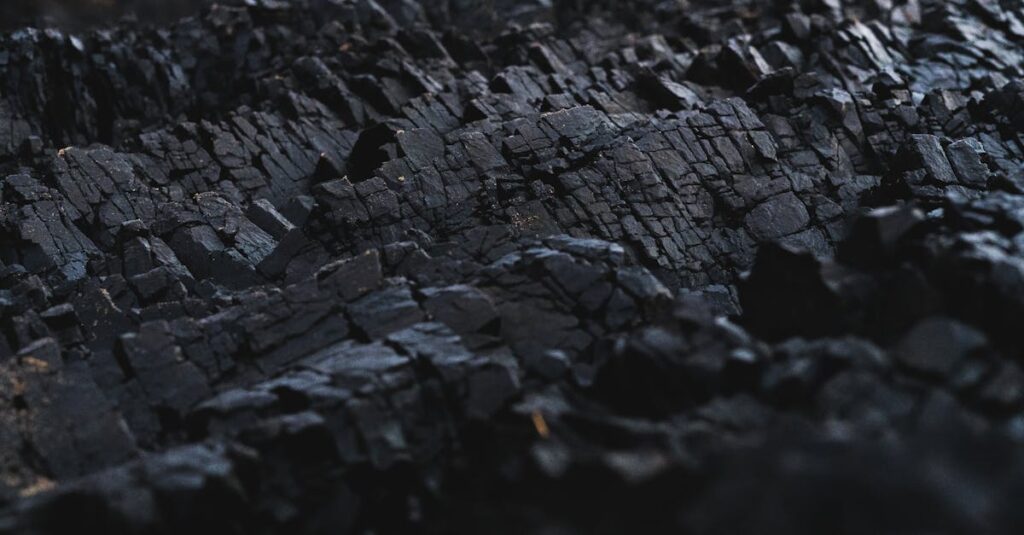
Does Nigeria have coal deposits? The short answer is yes, it does. And it has quite a lot too.
I see this question come up a lot in online forums and casual conversations. People are often surprised to learn that Nigeria’s coal reserves are among the largest in Africa. For a country so closely tied to oil, its rich history with another major energy source often goes unnoticed.
This post will give you a clear, direct look at Nigeria’s coal industry. You’ll learn about its history, what’s happening with it right now, and the big plans for what comes next.
Nigeria holds an estimated 2.8 billion metric tons of coal reserves . Reports also show deposits could be at least 2 billion tons or as high as 2.7 billion tons, with proven reserves of over 650 million tons . Whatever the exact number, the country has a massive, largely untapped energy resource sitting right beneath its feet.
A brief history: From coal city to crude oil
To really understand where Nigeria’s coal industry stands, you need a quick history lesson.
Coal was first discovered in 1909 by a British mining engineer named Albert Kitson at the Udi Ridge in Enugu . By 1916, the Ogbete Mine was in full operation, producing over 24,000 metric tons of coal in its first year . This discovery put Enugu on the map, earning it the nickname “Coal City.” The city grew into a major industrial and political hub .
For decades, coal was king. It powered trains, generated electricity, and fueled industrial growth. The Nigerian Coal Corporation (NCC), established in 1950, held a monopoly on all coal mining, processing, and sales until 1999 . Production hit a peak of 790,030 metric tons before it started to slowly decline.
Then, oil was discovered. The discovery of crude oil in the 1950s pulled away investment, attention, and policy support . The Nigerian Railway Corporation started replacing coal-burning trains with diesel engines. The Electricity Corporation of Nigeria began converting its power plants away from coal . The industry was pushed to the sidelines, but the coal never disappeared.
What is happening today
The coal industry in Nigeria is quietly making a comeback.
In the second quarter of 2025, coal mining grew by 57.7 percent . It was the fastest-growing sector in Nigeria during that period. This growth came after the government started pushing for diversification away from oil and renewed its focus on solid minerals . Domestic energy shortages also played a part, forcing manufacturers to look for alternative fuel sources for their boilers and backup generators .
It’s not just about mining for export anymore. The government is serious about using Nigeria’s own coal to solve its electricity problems.
Where can you find these deposits
You’ll find the most significant coal deposits in the Anambra Basin, in the south-eastern part of the country . Several states are sitting on significant amounts:
Enugu State – The old “Coal City” still leads the way. It has high-quality bituminous coal deposits that have been mined for over a century .
Kogi State – Holds coal deposits in regions like Okobo, Ogboyaga, and Okaba. Estimated reserves at Okaba alone are around 250 million tons .
Benue State – Coal can be found in areas like Otukpo and Gboko .
Other coal-bearing states include Ebonyi, Gombe, Nasarawa, Anambra, Edo, Ondo, and Plateau .
Chances are, if you live in or around these areas, you might not be far from a coal deposit without even knowing it.
The unique advantage of Nigerian coal
One thing makes Nigerian coal particularly valuable: its quality. The coal found in Enugu has less than 0.5 percent sulphur content . For coal, that is incredibly low. High-sulphur coal releases dangerous emissions when burned, but Enugu’s coal is among the cleaner options you can find. It is high-quality bituminous coal, which means it burns efficiently and can be used for coke production in iron and steel industries .
Powering the future
Right now, there are some very real plans to move beyond just mining and start generating massive amounts of electricity from Nigeria’s coal.
Enugu State Governor Peter Mbah has announced a plan to generate 1,000 megawatts of electricity from coal . This is not just talk. The government has already completed wide-ranging geological exploration across the state, including geospatial mapping and geochemical investigations .
Other states are also moving forward. The Edo State Government has granted licenses to Chinese firms to begin extracting coal in the state and using it to generate electricity . There is also a long-term proposed 1,200 MW coal-fired plant in Kogi State that would source its fuel from mines right there in the state .
Frequently asked questions about coal in Nigeria
How long will Nigeria’s coal reserves last?
At current production levels and with existing estimates, Nigeria’s coal reserves could last for many decades, possibly over 100 years. Some older assessments suggested up to 300 years of mineable coal remains . But the federal government is focusing on diversifying energy sources, not just extracting coal quickly. The goal is to use this resource as part of a balanced energy mix.
Can individuals invest in Nigeria’s coal mining sector?
Yes, but the process is strictly regulated. The federal government has been shutting down illegal mining sites and cracking down on speculators who hold licences without developing them . Serious investors need to apply for mining licences through the Ministry of Solid Minerals Development. The process is becoming more transparent, with satellite surveillance and mining marshals now being deployed to enforce regulations . For entrepreneurs, opportunities might exist not in mining itself but in related services like coal transportation, equipment leasing, or local distribution.
What are the environmental risks of using coal?
Coal has a reputation for being dirty. And honestly, that reputation is earned in many parts of the world. However, Nigeria has an advantage. Its low-sulphur coal produces far less harmful sulphur dioxide emissions . The government is also aiming to deploy technology that makes burning coal cleaner, similar to methods used in other parts of the world . The risk is not zero, but modern methods can reduce the damage significantly. Proper regulation will be the deciding factor.
Why did Nigeria stop using coal in the first place?
The discovery of crude oil. Nigeria found oil and basically put all its eggs in that basket. Coal lost its biggest customers, and the industry was neglected for decades. Civil wars, management problems, and a lack of investment in modern equipment also played a role .
Where is the Nigerian Coal Corporation now?
The NCC still exists, but its monopoly is long gone. It operates on a much smaller scale than it once did. However, the government is now planning to repeal the Nigerian Coal Corporation Act and replace it with a new Nigeria Coal Development Commission . This new body would be designed to modernise and revitalise the coal industry and attract private investment.
The bottom line
Nigeria not only has coal deposits but also some of the most significant reserves in Africa. The difference now, compared to 20 years ago, is that the country has a plan to use them.
After decades of neglect, the industry is showing real signs of life. The recent growth numbers, the plans for 1,000 MW power plants, and the government crackdown on illegal mining all point in one direction: coal is back on the table. The focus now is on using this resource to solve the electricity crisis that has held back development for so long.
The challenge ahead will be balancing economic growth with environmental responsibility. But the coal is there, it is high quality, and for the first time in a long time, people are serious about digging it up.
What do you think? Is coal the right solution for Nigeria’s energy problems, or should the country focus entirely on renewable sources like solar and hydro? Drop a comment below.
