
Have you ever felt like the internet is getting a little weird lately? If you have, you are definitely not alone. It turns out that a massive chunk of the activity happening online isn’t even coming from real people anymore.
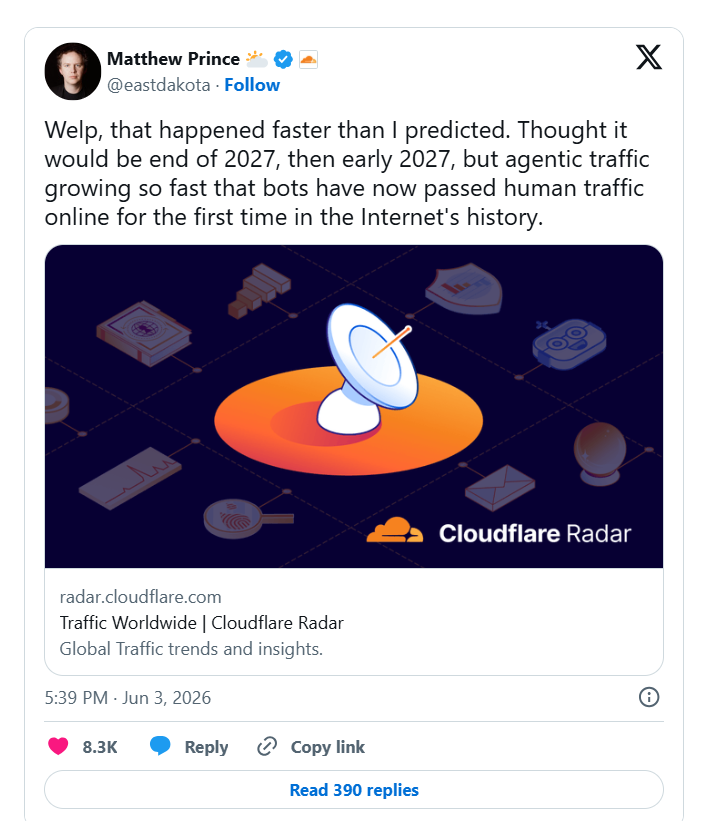
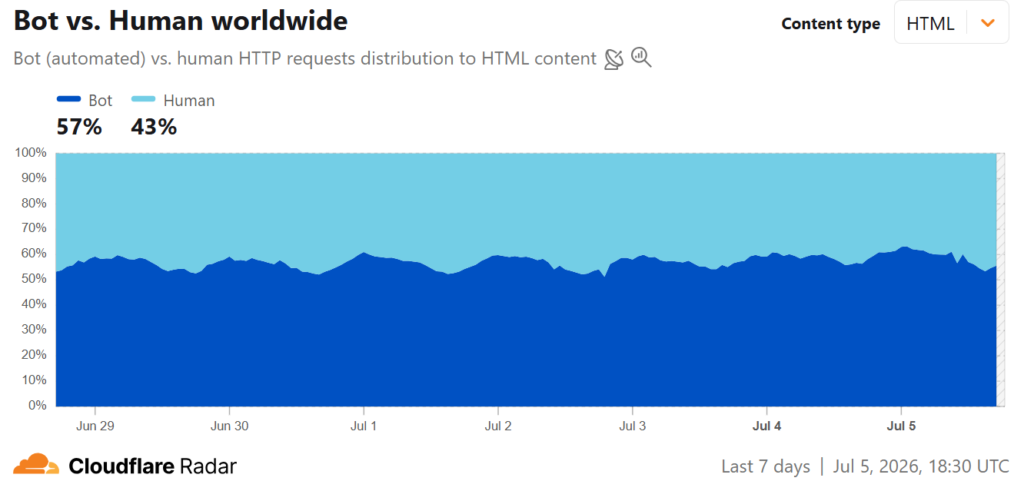
The CEO of Cloudflare, Matthew Prince, recently dropped a pretty wild statistic that should make everyone pause. According to him, bot traffic has officially overtaken human traffic on the internet.
Yes, you read that right. More than half of the clicks, views, and data moving across the web are driven by automated software programs rather than human beings sitting behind screens.
This is a massive shift in how the digital world works. Let’s break down exactly what this means, why it is happening right now, and how it impacts your daily scrolling.
What Exactly Does “Bot Traffic” Mean?
To understand how we got here, we need to clear up what a bot actually is. When many people hear the word “bot,” they immediately think of something negative. They picture hackers trying to steal passwords or fake accounts spreading spam on social media.
The $0 Secret To Launching Your Entire Online Empire
Why pay hundreds every month for separate software? Build funnels, send emails, and make sales with Systeme.io completely free.
Get Started For $0Free Forever • No Credit Card Needed • Beginner-Friendly
While those bad bots absolutely exist, the reality is much bigger. A bot is simply any software application that runs automated tasks over the internet. They do things much faster than a human ever could.
In fact, the internet needs bots to function properly. Without them, your favorite search engines wouldn’t work, and websites would be much harder to navigate. But now that they make up the majority of web traffic, the balance of the internet is changing.
The Good, the Bad, and the Ugly of Automation
Not all bots are created equal. To really get a grasp on why the internet is suddenly flooded with automated traffic, we have to look at the different types of bots running around the digital space.
The Good Bots We Need
Good bots are the quiet helpers of the internet. They do the heavy lifting behind the scenes to keep things running smoothly.
- Search Engine Crawlers: Google and Bing use bots to constantly scan the entire internet. These bots read websites, index the information, and make sure that when you search for something, you actually find relevant results.
- Copyright Monitors: These programs check platforms like YouTube or Twitch to ensure people aren’t using copyrighted material without permission.
- Data Scrapers for Research: Academic institutions and market researchers use automated tools to gather public data for helpful studies.
The Bad Bots Causing Problems
On the flip side, there is a massive wave of malicious bots that make the internet a frustrating place for everyday users and business owners.
- Credential Stuffers: These bots take lists of leaked usernames and passwords and try them on hundreds of different websites at lightning speed, hoping to break into accounts.
- Scalpers: If you have ever tried to buy concert tickets or a new gaming console the second they went on sale, only to find them sold out in three seconds, you have dealt with scalping bots. They buy up high-demand items instantly so resellers can flip them for a profit.
- Spam Bots: These are the accounts that flood comment sections with links to sketchy websites or try to manipulate trending topics on social media.
Why Have Bots Suddenly Overtaken Humans?
The internet has had bots for decades, so why are they taking over right now? The answer comes down to technology getting cheaper and much smarter.
The Rise of Artificial Intelligence
The sudden boom in artificial intelligence has given bots a massive upgrade. In the past, bots were relatively simple. They followed basic scripts and were easy for security systems to spot.
Today, AI-powered bots can mimic human behavior incredibly well. They can move a mouse cursor randomly, pause before clicking a link, and even bypass simple security checks. This makes them much harder to block, allowing them to roam the web freely and in much higher numbers.
The AI Training Boom
Another huge reason for the spike in traffic is that tech companies are hungry for data. To train large language models, companies use automated scrapers to read millions of web pages. These AI bots are constantly vacuuming up text, images, and code from every corner of the public web. This constant scraping adds an incredible amount of traffic to website servers.
How This Hidden Shift Affects Your Daily Life
It might seem like this is just a technical issue for web developers and IT experts to worry about. However, the fact that bots outnumber humans changes the internet for all of us in very real ways.
Frustrating Security Hurdles
Have you noticed that you are proving you are a human more often than ever before? Those annoying puzzles where you have to click on all the traffic lights, crosswalks, or bicycles are called CAPTCHAs. Because bots are getting smarter and more numerous, websites are forced to make these tests harder and more frequent. It slows down your browsing experience just because a website is trying to protect itself from automated spam.
Higher Costs for Businesses
Running a website costs money based on how much data is used. When millions of bots visit a website, they consume server bandwidth. Small businesses and independent creators end up paying higher web hosting bills just to serve data to robots that have zero intention of ever buying a product or reading an article. Eventually, these rising costs get passed down to consumers.
Skewed Online Data
Advertisers pay for space on the internet based on how many people see their ads. If more than half of web traffic is automated, it means a lot of advertising money is being wasted on views from bots rather than real human eyes. This messes with business analytics, making it incredibly difficult for companies to know if their online growth is real or just an illusion caused by automated traffic.
What is Cloudflare Doing About It?
As a company that sits between millions of websites and the rest of the internet, Cloudflare has a front-row seat to this digital transformation. They protect websites from cyber attacks and help speed up load times.
Because they manage a massive percentage of all web traffic, Cloudflare is actively working on ways to manage this bot revolution. The goal isn’t necessarily to block every single bot, because as we mentioned, some bots are necessary. Instead, the focus is on creating smarter systems that can tell the difference between a helpful search engine crawler, a real human being, and a malicious script looking to cause trouble.
Send, Spend & Hold Money Worldwide Without Hidden Fees
Transfer money internationally at the real exchange rate and hold 40+ currencies in one account.
Open a Wise AccountMid-market rate • Fast transfers • 40+ currencies
The company is moving away from making humans solve annoying visual puzzles and moving toward invisible security checks. These checks look at how a browser behaves behind the scenes to verify humanity without interrupting the user.
The Future of a Bot-Dominated Web
Looking ahead, the internet is likely to become even more automated. We are moving toward a web where humans might just be the minority audience.
Some experts predict that we will eventually use our own personal bots to browse the web for us. Imagine telling an AI assistant to find the best deal on a pair of shoes, flights, or a hotel. Your personal bot would go out, interact with website bots, negotiate prices, and bring the information back to you.
While that sounds convenient, it also means the internet will need to be redesigned to handle machine-to-machine communication rather than just human-to-screen communication.
Frequently Asked Questions
Are all internet bots illegal or bad?
No, not at all. Many bots are completely harmless and necessary for the internet to function. Search engines like Google use bots to find and index web pages so you can search for them. Other bots check website performance or help run customer service chat windows.
How can I tell if I am interacting with a bot online?
On social media, bots often have usernames with random strings of numbers, lack a real profile picture, and post at an impossibly fast rate. They also tend to repeat the exact same phrases across different comment sections. On websites, if a response is instant and feels highly repetitive, you are likely dealing with automation.
Can websites block all bots?
Websites can block a lot of bot traffic, but blocking all of them is almost impossible. If a website blocks every bot, it might accidentally block Google, which means the website would disappear from search results. It is a constant balancing act between keeping the bad bots out and letting the good ones in.
Do bots steal my personal information?
Some malicious bots are designed to scan the internet for unsecured databases or attempt to guess passwords to steal data. However, standard bots used for search engines or data scraping generally only look at public information that anyone can see on a website.
Will CAPTCHAs ever go away?
The traditional CAPTCHAs that require you to click on images or type distorted text are slowly fading away. They are being replaced by invisible verification systems that analyze user behavior to prove you are human without making you solve a puzzle.
Conclusion
The internet is changing rapidly, and the revelation from Cloudflare’s CEO is proof that the digital landscape looks very different under the hood than it does on the surface. While it might feel a little strange to know that we share our online spaces with more software programs than real people, it is simply the next step in the evolution of technology.
The $0 Secret To Launching Your Entire Online Empire
Why pay hundreds every month for separate software? Build funnels, send emails, and make sales with Systeme.io completely free.
Get Started For $0Free Forever • No Credit Card Needed • Beginner-Friendly
As long as cybersecurity companies keep developing smarter ways to manage this traffic, the internet will remain usable for the rest of us. The next time you are forced to click on a series of traffic lights to log into a website, just remember: you are doing your part to keep the human side of the web alive.
