
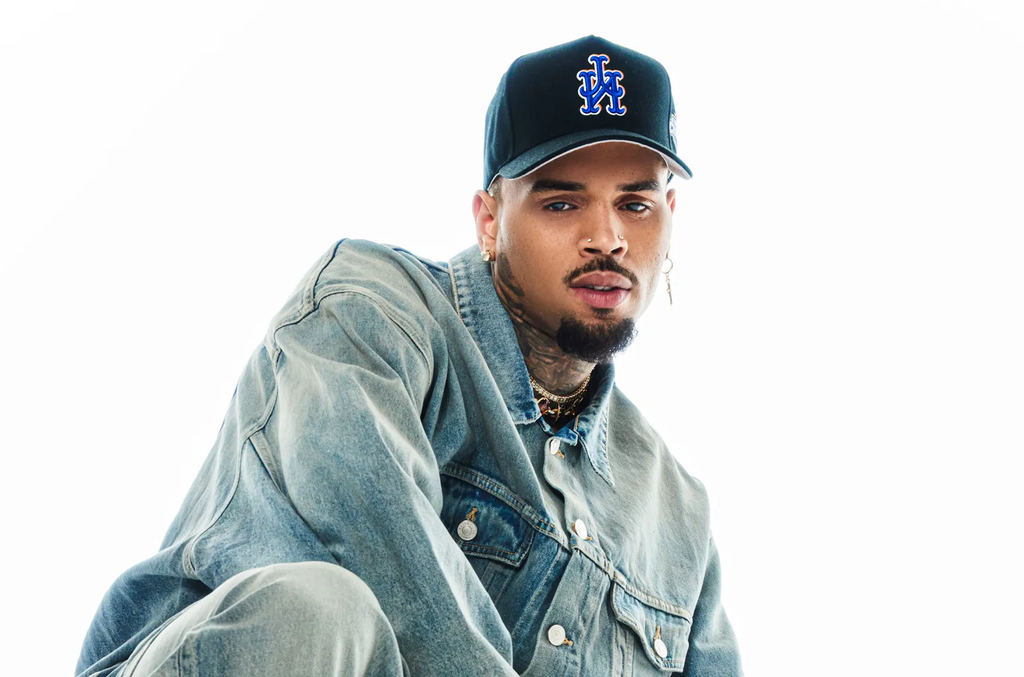
Chris Brown has officially avoided prison time in the United Kingdom following a high-profile legal battle over a violent confrontation at an exclusive London nightclub.
On Monday, October 26, 2026, the 37-year-old American R&B star appeared before Southwark Crown Court in London. A judge sentenced him to eight months in prison, but suspended the term for 12 months.
This ruling means Brown will not spend a single day behind bars as long as he stays out of legal trouble over the next year.
The sentencing follows a February 2023 brawl where Brown struck music producer Abraham Diaw in the head with a heavy glass tequila bottle on a crowded dance floor. The Crown Prosecution Service originally labeled the incident a vicious and unprovoked attack.
The decision has triggered intense discussion across social media, legal circles, and the music community. Many people are asking how an artist with a well-documented history of violent offenses walked away without serving immediate custodial time.
The $0 Secret To Launching Your Entire Online Empire
Why pay hundreds every month for separate software? Build funnels, send emails, and make sales with Systeme.io completely free.
Get Started For $0Free Forever • No Credit Card Needed • Beginner-Friendly
Here is the complete breakdown of the nightclub incident, the courtroom arguments, what the judge said, and what this ruling means for Brown’s career going forward.
The Nightclub Brawl: What Happened Inside Tape London?
The incident occurred during the early morning hours of February 19, 2023. Brown was visiting London while traveling for his international concert tour. That night, the singer and his entourage spent the evening at Tape London, a private members club and celebrity hotspot located in Hanover Square within the Mayfair district.
Around 3:00 AM, tensions flared on the venue’s dance floor. According to evidence presented by prosecutor Heidi Stonecliffe KC, Brown crossed paths with Abraham Diaw, a music producer who had known the singer for years.
CCTV footage played in open court captured the entire clash, which lasted roughly 20 seconds.
Prosecution footage showed Brown moving purposefully across the room toward Diaw. Brown was holding a heavy, square-shaped bottle of Don Julio 1942 tequila.
Without direct warning, Brown raised the bottle and hit Diaw twice over the left side of his head. As Diaw recoiled and tried to retreat, Brown struck him two more times, with the bottle connecting against his shoulder.
The confrontation quickly grew chaotic. Brown’s friend and co-defendant, 44-year-old vocal coach and musician Omololu Akinlolu—known professionally as HoodyBaby—stepped in and wrapped Diaw in a tight bear hug.
Diaw was pulled down to the ground. While on the floor, Diaw was punched repeatedly and kicked as bystanders and private security rushed into the scrum to pull Brown away.
Diaw was later taken to St Mary’s Hospital in Paddington. Medical staff treated him for serious head lacerations and knee injuries caused by the fall and subsequent kicks.
While the physical altercation was brief, security video left no doubt about who started the physical violence. The prosecutor noted that watching the footage makes it clear that Brown moved first.
Discussions surrounding late-night entertainment and safety in high-end venues have grown across the British capital in recent times, as explored in this look at crime and safety in London.
Evading Immediate Arrest and the 2025 Manchester Airport Drama
Following the brawl at Tape, Brown and his crew did not stick around to answer questions from the Metropolitan Police. They left the venue, and Brown quickly departed the country to continue his scheduled performances abroad.
British authorities launched a formal investigation, reviewed security tapes, and interviewed club staff and witnesses. Warrants were subsequently issued for the arrest of both Brown and Akinlolu.
For more than two years, the case remained in legal limbo because Brown was outside British jurisdiction.
That changed abruptly in May 2025. Brown flew into northern England ahead of scheduled live performances in the UK. Officers from Greater Manchester Police tracked Brown to his luxury hotel in Manchester and arrested him on the outstanding warrant.
Send, Spend & Hold Money Worldwide Without Hidden Fees
Transfer money internationally at the real exchange rate and hold 40+ currencies in one account.
Open a Wise AccountMid-market rate • Fast transfers • 40+ currencies
The sudden arrest threatened to throw his multi-city stadium schedule into disarray. Many international musicians face major booking hurdles when navigating overseas legal boundaries, an issue that stands in contrast to smoother international runs like Burna Boy’s record-setting London stadium concerts.
Brown appeared before a magistrate and secured bail after posting an eye-watering security bond of 5 million pounds (approximately $6.7 million).
That massive financial backing allowed him to keep his passport temporarily, travel out of the country, and complete his international stadium tour across North America and Europe while his legal team worked behind closed doors.
The Strategic Plea Deal: Why the Charges Were Reduced
When the Crown Prosecution Service first filed papers, the charges against Brown were grave. He originally faced allegations of assault, attempting to cause grievous bodily harm (GBH), and possession of an offensive weapon—specifically the tequila bottle.
A conviction on attempted grievous bodily harm with a weapon in a British court can easily lead to multiple years of mandatory, immediate imprisonment.
However, defense attorneys negotiated with prosecutors ahead of trial. On July 24, 2026, Brown appeared at Southwark Crown Court and formally pleaded guilty to a single count of affray. His co-defendant, Akinlolu, also entered a guilty plea to the exact same charge.
In exchange for their guilty pleas, prosecutors agreed to drop the far more severe charges of attempted GBH and possession of an offensive weapon.
Under English law, affray is defined under Section 3 of the Public Order Act 1986. It involves using or threatening unlawful violence toward another person in a manner that would cause a reasonable bystander present at the scene to fear for their personal safety.
While affray is still a serious criminal offense carrying a maximum penalty of up to three years in prison, it gives sentencing judges wider discretion to consider non-custodial options or suspended sentences.
This tactical plea changed the game for Brown. By admitting guilt to affray, he took responsibility for creating public disorder rather than facing a specialized assault charge that carries heavier mandatory minimums.
The $0 Secret To Launching Your Entire Online Empire
Why pay hundreds every month for separate software? Build funnels, send emails, and make sales with Systeme.io completely free.
Get Started For $0Free Forever • No Credit Card Needed • Beginner-Friendly
Inside the Courtroom: Defense Arguments and Brown’s Apology
During Monday’s sentencing hearing, Southwark Crown Court was packed with reporters, curious onlookers, and members of Brown’s legal defense team.
Brown sat quietly in the dock, dressed soberly and staring down toward the floor for large portions of the proceedings.
His lead defense barrister, Sallie Bennett-Jenkins KC, spoke at length to emphasize mitigating factors. She did not attempt to pretend the fight was justified, openly describing it to the judge as an “ugly and unattractive incident”.
She emphasized that the entire clash lasted barely twenty seconds from start to finish.
Bennett-Jenkins stated that Brown wanted to convey a sincere apology to everyone who was at Tape nightclub that evening. She explained that Brown recognized the distress and chaos the sudden outbreak of violence had caused to patrons and hospitality workers in the venue.
She argued that an immediate prison sentence would be unnecessary and disproportionate. She pointed out that Brown had pleaded guilty at an early stage, which saved court time, spared witnesses from testifying on the stand, and avoided a drawn-out public trial.
She also stressed that Brown had stayed out of serious criminal trouble in recent years and maintained productive employment as a world-famous entertainer supporting large teams of employees and dependents.
What Judge Tony Baumgartner Said in His Ruling
When Judge Tony Baumgartner delivered his final verdict, he made it clear that he viewed the bottle attack as reckless and dangerous behavior.
The judge looked directly at Brown and issued a stern warning about fame and accountability.
“I take account of your employment and long-established career in music,” Judge Baumgartner told the court. “Your fame, commercial success and professional standing do not entitle you to special treatment. The law applies equally to everyone”.
The judge pointed out that smashing a glass bottle against someone’s head carries extreme risks.
“The repeated use of a glass bottle in that way, especially aimed at the head, was plainly dangerous,” Judge Baumgartner said. “It carried the risk of delivering a more serious injury than was ultimately sustained”.
Despite that harsh assessment, the judge decided that an immediate custodial sentence was not necessary under British sentencing guidelines.
Judge Baumgartner cited three primary reasons:
- Brown’s formal guilty plea, which entitled him to statutory sentence reductions.
- The short duration of the physical conflict.
- The fact that, although Brown has past convictions, he had managed to avoid serious criminal convictions in recent years.
The judge handed Brown an eight-month prison term, but ordered it suspended for 12 months.
His co-defendant, Akinlolu, received a four-month prison term, also suspended for 12 months.
Both men stood quietly as the sentences were read before walking out of the courthouse as free men.
The broader debate about high-profile figures facing justice in Britain is a recurring topic, mirroring public reactions seen in cases like the legal troubles surrounding Russell Brand.
How Does a Suspended Prison Sentence Work in the UK?
Many people hear the words “eight months in prison” and assume an offender is heading straight to a jail cell. In the British legal system, a suspended sentence functions very differently.
When a judge hands down a suspended sentence, the prison term is placed on pause.
The convicted individual does not enter prison custody. Instead, they re-enter the community under a set of strict court-ordered rules for an operational period—in Brown’s case, 12 months.
If Brown stays out of trouble, obeys all court conditions, and commits no new criminal offenses anywhere in the UK during those 12 months, the eight-month prison sentence will expire without him ever serving time.
However, if he commits any criminal offense during this one-year period, he can be brought right back before Judge Baumgartner.
In that situation, British law allows the judge to activate the original eight-month prison sentence and send the offender directly to jail, on top of whatever new punishment is handed down for the latest offense.
Suspended sentences are frequently used in the UK for sentences under two years, particularly where the court determines there is a realistic prospect of rehabilitation and where the offender does not pose a constant, active danger to the public.
The decision also comes amid ongoing national scrutiny over the state of Britain’s corrections system, as detailed in our coverage of the controversial UK prison release wave.
Public Reaction: Outrage, Relief, and the Celebrity Justice Debate
The moment news of the ruling broke, social media platforms and comment sections erupted.
A large portion of the public expressed disbelief that hitting someone multiple times over the head with a glass bottle resulted in zero time in custody.
Critics quickly drew comparisons between Brown’s sentence and the punishments given to ordinary citizens. Many questioned whether regular clubgoers would have received a suspended sentence after being caught on camera hitting someone with a bottle.
On forums like Reddit and X, legal commentators pointed out that while suspended sentences for first-time affray convictions are common, Brown’s history makes the leniency feel frustrating to victims’ advocates.
At the same time, Brown’s dedicated fanbase celebrated the verdict. Supporters flooded online spaces with messages of relief, pointing out that the singer accepted accountability, issued an apology, and paid heavy legal costs to resolve the matter.
His supporters argued that because the victim’s injuries were non-fatal and treated quickly, the judge arrived at the correct, balanced conclusion.
A Look Back at Chris Brown’s Career and Legal History
To understand why this London sentencing has generated such widespread media attention, you have to look at Chris Brown’s long career and his complicated history with the justice system.
Brown burst onto the global music scene in 2005 as a 16-year-old prodigy from Tappahannock, Virginia. His breakout debut single “Run It!” topped the charts worldwide and cemented him as one of the most gifted dancers and vocalists of his generation.
Over the past two decades, he has achieved immense commercial success. He picked up his first Grammy Award in 2011 for Best R&B Album with F.A.M.E., followed by a second Grammy win in the same category for 11:11 (Deluxe). He has sold tens of millions of records and maintained one of the most loyal fanbases in modern pop culture.
Yet alongside that musical acclaim, Brown’s life has been punctuated by severe legal issues:
- 2009 Domestic Assault Conviction: In February 2009, Brown assaulted his then-girlfriend, superstar Rihanna, inside a car ahead of the Grammy Awards. He pleaded guilty to felony assault, was sentenced to five years of probation, and completed community labor and domestic violence counseling. That incident permanently altered the trajectory of his public image.
- Washington, D.C. Altercation (2013): Brown was arrested and charged with misdemeanor assault following an argument outside a hotel, leading to a brief stay in a court-ordered rehab facility and temporary jail time for probation violations.
- Paris Investigation (2019): French police detained Brown for questioning in Paris following an allegation of sexual assault. He was released without charge and filed a defamation lawsuit in response.
- Various Civil Lawsuits: Over the years, Brown has faced several personal injury lawsuits stemming from nightclub altercations involving members of his security detail and entourage.
Because of this extensive history, every fresh altercation involving Brown is placed under an intense media microscope.
For years, British authorities refused to grant Brown entry visas because of his criminal past. When he was finally allowed back into the UK for large-scale tours, expectations were high that he would stay out of trouble.
The February 2023 clash at Tape showed how quickly things could spiral out of control.
What Does This Ruling Mean for Chris Brown’s Future Tours?
With this legal chapter closed, the immediate threat of Brown being sent to a British prison is gone.
However, the conviction leaves behind practical consequences that could affect his business operations:
- Strict Travel and Visa Restrictions: The UK Home Office maintains strict guidelines regarding entry for foreign nationals with criminal convictions. Even with a suspended sentence, an affray conviction remains on Brown’s international criminal record. Future visa applications to visit or perform in the UK, Australia, Canada, and New Zealand may face heavy administrative scrutiny.
- One-Year Good Behavior Mandate: Brown cannot afford a single legal misstep in the UK over the next 12 months. Any altercation or incident could trigger the immediate activation of his eight-month prison term.
- Civil Liability: While the criminal prosecution at Southwark Crown Court has concluded, Abraham Diaw retains the right to pursue civil claims for medical expenses, trauma, and personal injury damages.
Frequently Asked Questions
Did Chris Brown go to jail for the London nightclub attack?
No. While Chris Brown was sentenced to eight months in prison, the judge suspended the term for 12 months. As long as Brown does not commit another crime during this one-year period, he will not serve any time in jail.
What is affray under UK law?
Affray is a public order offense under Section 3 of the Public Order Act 1986. It occurs when an individual uses or threatens unlawful violence toward someone else in a way that causes a reasonable bystander to fear for their personal safety. It carries a maximum sentence of three years in prison.
Why was Chris Brown’s sentence suspended?
Judge Tony Baumgartner suspended the sentence due to several mitigating circumstances. These included Brown’s prompt guilty plea, the brief 20-second duration of the incident, his public apology, and his lack of recent criminal convictions.
Who was the victim in the incident?
The victim was Abraham Diaw, a music producer and former friend of Chris Brown. Diaw suffered head and knee injuries during the altercation and received treatment at St Mary’s Hospital.
What happened to Chris Brown’s co-defendant?
Omololu Akinlolu, also known as musician and vocal coach HoodyBaby, pleaded guilty to the same charge of affray. He was sentenced to four months in prison, also suspended for 12 months.
Can Chris Brown still perform and tour internationally?
Yes, Brown is legally free to tour. However, because an affray conviction is now on his criminal record, he may face extra screening or visa hurdles when applying for performance permits in certain countries with strict border rules.
The resolution of Chris Brown’s London court case closes a chapter that could have brought his international touring to a dead halt. By avoiding immediate prison time, the R&B superstar has secured his freedom, but the court’s strict warnings mean all eyes will remain locked on his conduct over the coming year.
