
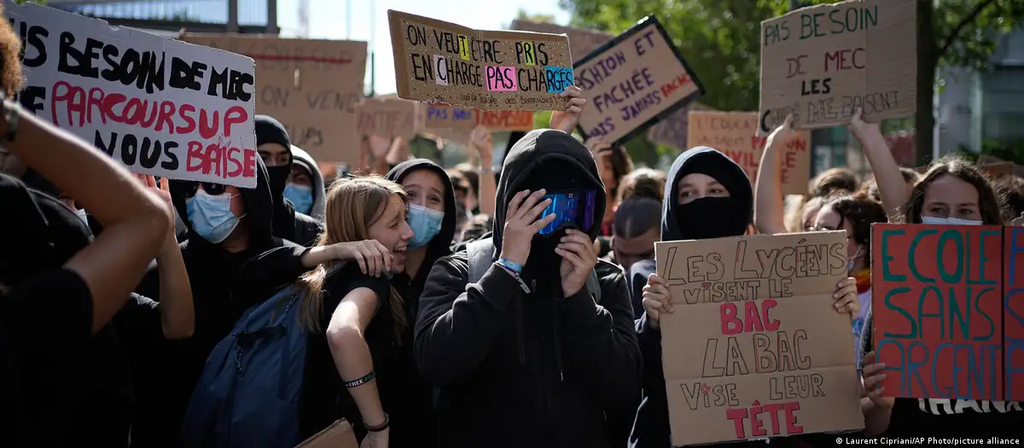
Plumes of black smoke rose into the night sky across major French cities as more than half a million people filled the streets in an explosive nationwide uprising. What began as peaceful demonstrations over the weekend quickly turned into chaotic clashes, leaving government buildings in flames, shopfronts shattered, and more than 1,000 people in police handcuffs.
From the grand avenues of Paris to regional hubs like Marseille, Lyon, and Limoges, the scale of public outrage caught authorities off guard. Historic landmarks were attacked, emergency sirens rang out for hours, and riot police fired continuous rounds of tear gas into dense crowds.
The unrest represents the largest wave of social tension France has experienced in years. While government officials point to destructive rioters and call for immediate order, hundreds of thousands of everyday citizens insist they have been pushed to a breaking point by surging grocery bills, unaffordable energy, crumbling public services, and overcrowded classrooms.
How High School Grievances Sparked a National Firestorm
To understand how half a million people ended up marching through tear gas, you have to look back at where the movement actually started: French classrooms.
Over the past few months, teenagers and high school students organized small, scattered walkouts across the country. Their complaints were straightforward and practical. Public schools have faced severe budget cuts, leaving classrooms packed with too many students and far too few teachers. Aging school buildings have struggled with basic maintenance issues, including dampness, mold, and poor insulation that makes classrooms unbearable during summer heatwaves.
The $0 Secret To Launching Your Entire Online Empire
Why pay hundreds every month for separate software? Build funnels, send emails, and make sales with Systeme.io completely free.
Get Started For $0Free Forever • No Credit Card Needed • Beginner-Friendly
Students took to the streets demanding reduced class sizes, better funding for education staff, safer facilities, and an end to aggressive policing tactics during youth rallies.
Education Minister Édouard Geffray held several rounds of talks with student leaders. However, those meetings produced few firm commitments and failed to slow down the momentum. When early rallies were met with tear gas, batons, and mass detentions, public sympathy shifted quickly.
Parents, university students, and labor organizations stepped in to support the teens. Within weeks, what began as student dissatisfaction turned into a nationwide coalition demanding sweeping changes from the state.
The Boiling Point: Rising Costs and Broken Household Budgets
The student protests acted as a match, but the fuel had been piling up in French homes for months.
Families across France have been dealing with relentless inflation. Grocery store receipts have climbed steadily, fuel prices have surged at the pump, and home electricity bills have hit record levels. For millions of working-class families and young workers on entry-level wages, basic survival has become an uphill battle.
Public dissatisfaction deepened as social programs faced budget pressure. Hospitals, public transit networks, and neighborhood administrative offices have reported chronic understaffing. Many French workers feel their taxes remain high while the quality of public support continues to decline.
Major labor groups, including the prominent General Confederation of Labour (CGT), stepped up to organize official strikes alongside the student demonstrations. Union leaders demanded immediate government interventions, including:
- Capping the prices of essential pantry foods, petrol, and home heating
- Raising the national minimum wage and standard pensions to match inflation
- Halting public sector budget reductions and hiring more teachers and healthcare workers
- Protecting state-backed pensions and social safety nets from future cuts
When the weekend arrived, the combination of furious students, stressed parents, trade unionists, and local workers created an overwhelming turnout in city after city.
What Happened on the Ground Across France
Interior Minister Laurent Nuñez confirmed that around 550,000 demonstrators took part in weekend rallies nationwide, while union leaders estimated the total turnout exceeded 800,000. By Saturday evening, tension had boiled over into open confrontation in multiple regions.
The Devastating Fire in Limoges
The most shocking destruction took place in the central city of Limoges. Protesters had gathered near the city’s historic 143-year-old town hall. Eyewitnesses reported that masked individuals first set a parked police car on fire. The flames spread quickly to the building after windows were smashed.
Local prefect Maurice Barate later explained that the landmark was largely destroyed, with the roof collapsing through internal floors and two-thirds of the exterior ruined. Fire crews spent hours battling the inferno as horrified municipal workers and local residents watched in tears.
Street Clashes in Paris
In the French capital, thousands converged around Place de la République. While the march remained calm for much of the afternoon, small groups dressed in protective black gear clashed with barricades as night fell.
Protesters built makeshift street barricades from construction debris, setting rubbish bins on fire to block advancing police vans. Officers deployed tear gas canisters and stun grenades to disperse the crowds. Several commercial storefronts, including specialty food retailers and bank branches, had their windows broken and interiors ransacked before riot squads secured the area.
Unrest in Marseille and Lyon
Southern France witnessed similar scenes. In Marseille, demonstrators forced their way into administrative offices, covering walls with protest slogans and clashing with security officers.
In Lyon, fires were set at a local tourist bureau, and major transit routes were shut down due to burning debris on tram tracks. Across the country, French Prime Minister Sébastien Lecornu reported that security forces arrested more than 1,200 individuals over the course of the weekend.
Send, Spend & Hold Money Worldwide Without Hidden Fees
Transfer money internationally at the real exchange rate and hold 40+ currencies in one account.
Open a Wise AccountMid-market rate • Fast transfers • 40+ currencies
Peaceful Protesters vs. Violent Escalation: Two Competing Realities
As news channels broadcast footage of burning buildings and shattered windows, a heated debate erupted over who was responsible for the violence.
Authorities and police representatives condemned the destruction, accusing coordinated extremist groups of hijacking legitimate demonstrations to cause mayhem. Official statements emphasized that burning public buildings and attacking officers hurts the entire community, distracting from genuine political discussion.
At the same time, many demonstrators and civil liberties groups argue that police aggression triggered the chaos. Witnesses reported that peaceful marchers, including young teenagers and families, were showered with tear gas early in the day, trapping innocent people and driving crowds into panic.
Jean-Luc Mélenchon, leader of the left-wing La France Insoumise party, took to social media to highlight that the vast majority of citizens behaved responsibly. He noted that while news broadcasts replay dramatic images of fire, hundreds of thousands of people marched quietly through dozens of towns to demand fair living conditions. You can follow official updates directly on the French Ministry of the Interior portal for detailed statements on public safety measures.
Could the Unrest Spread Beyond France?
The pressures fueling French protests are not unique to France. Across the European continent, families are grappling with wage stagnation, housing shortages, and stubborn inflation.
During the same weekend, solidarity demonstrations and cost-of-living rallies broke out in neighboring countries:
- Belgium: Student organizations and trade unions held rallies in Brussels, pointing to rising energy tariffs and limited youth job prospects.
- Italy and Portugal: Marchers gathered in central plazas to highlight low starting wages and the surging cost of rental accommodation.
- Albania: Crowds took to the streets in Tirana to protest government corruption, limited education resources, and steep food prices.
International reporting from newsrooms like Reuters Europe and BFMTV suggests that European leaders are watching France closely. When a major economy experiences widespread civil unrest, neighboring governments often face similar public pressure.
The Road Ahead for France’s Government
The French administration faces difficult choices in the coming days. The current wave of anger has united two influential groups that governments find hard to ignore: youth movements and organized labor.
If the government relies solely on police crackdowns and mass arrests, it risks driving even more moderate citizens into the streets. Over 400 secondary schools are already scheduled for rolling closures and student strikes, and union leadership has hinted at extended transport walkouts if their financial demands are ignored.
Meeting those demands, however, will require tough economic compromises. Increasing public sector budgets, subsidizing food and energy, and boosting minimum wages would require billions of euros at a time when national debt is already heavily scrutinized.
The $0 Secret To Launching Your Entire Online Empire
Why pay hundreds every month for separate software? Build funnels, send emails, and make sales with Systeme.io completely free.
Get Started For $0Free Forever • No Credit Card Needed • Beginner-Friendly
Prime Minister Sébastien Lecornu and his cabinet must decide whether to make meaningful concessions on public services and wages or prepare for weeks of renewed street protests.
Frequently Asked Questions
What caused the protests in France to turn violent?
The unrest began as peaceful student walkouts over underfunded schools, teacher shortages, and poor classroom conditions. It quickly merged with a larger public backlash against rising food prices, high energy bills, and deteriorating public services. Violent clashes erupted after heavy-handed police crackdowns collided with masked groups who targeted government property.
How many people were arrested during the demonstrations?
French authorities confirmed that more than 1,000 people were detained nationwide over the weekend, with Prime Minister Sébastien Lecornu later putting the total arrests at around 1,200.
Which historic building was destroyed?
The 143-year-old town hall in Limoges suffered catastrophic damage after masked protesters set a vehicle on fire and entered the building. The roof collapsed through multiple floors, and local officials reported that much of the landmark was lost.
Were the demonstrations limited to Paris?
No. While major clashes took place in Paris around Place de la République, massive marches and property damage occurred in several regional cities, including Marseille, Lyon, Limoges, and Nice. Over half a million people marched across dozens of towns and cities.
What are the main demands of the protesters?
Demonstrators want immediate price caps on basic foods and energy, higher wages and pensions to keep up with inflation, more funding and teachers for public schools, better building conditions, and an end to police violence against youth.
Is it safe to travel to France during the unrest?
Travel is still possible, but visitors should stay alert. Transport services can face sudden interruptions due to strike action, and city centers where protests are announced can become chaotic quickly. Travelers should monitor local news, avoid large gatherings, and plan alternative routes around major city squares.
The coming days will test France’s leadership like few moments in recent history. With half a million people already taking to the streets and thousands more ready to join future strikes, the situation remains fluid and unpredictable.
What do you think about the escalating situation in France? Should the government give in to the protesters’ economic demands, or will these demonstrations fade out?
