
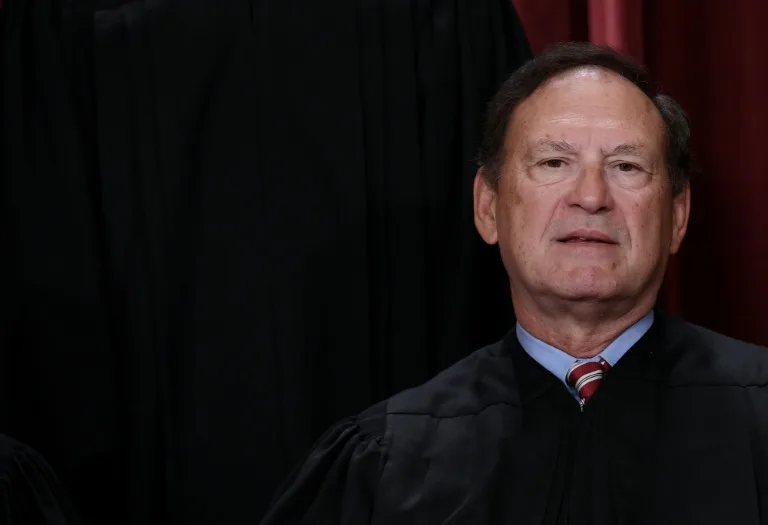
US Supreme Court Justice Samuel Alito has made a sudden move that caught almost everyone in Washington off guard. He officially stepped aside from one of the biggest climate change court cases in American history. The decision came in a short court letter right before the justices were set to hear oral arguments on October 5.
When a Supreme Court justice steps aside, lawyers call it recusal. It simply means the judge steps out of the room and lets the remaining justices make the call without them. For months, legal watchdogs and environmental groups asked Alito to sit this one out because of his personal investments in fossil fuel companies. At first, he refused. Now, his unexpected about-face changes the entire balance of power in a legal battle that could cost big oil companies billions of dollars.
Here is the story behind why Alito stepped down, what this climate lawsuit is really about, and why energy executives are worried about what happens next.
What Is the Huge Climate Lawsuit About?
To understand why this decision matters so much, you have to look at where the legal fight started. The case is known as Suncor Energy v. Boulder County. Local officials in Boulder County, Colorado, filed a lawsuit against two giant energy producers: Suncor Energy and ExxonMobil.
The local government in Colorado claims that these companies knew for decades that burning fossil fuels would cause global temperatures to rise. They argue that emissions from these products contributed to local disasters, including intense wildfires, severe heatwaves, and costly water shortages. Because of these climate impacts, local communities had to spend taxpayer money to repair roads, protect infrastructure, and prevent future disasters.
The $0 Secret To Launching Your Entire Online Empire
Why pay hundreds every month for separate software? Build funnels, send emails, and make sales with Systeme.io completely free.
Get Started For $0Free Forever • No Credit Card Needed • Beginner-Friendly
Boulder County is not asking the court to ban oil drilling. Instead, they are demanding financial compensation. They want these energy corporations to pay their fair share of the cleanup and protection costs.
The oil companies tried everything to stop the lawsuit from going forward in local state courts. Their lawyers argued that a local county judge cannot handle global environmental issues. They insisted that climate change should only be managed by federal laws like the Clean Air Act or through action by Congress.
However, the Colorado Supreme Court ruled against the oil companies. The state court decided that local governments have every right to use state laws to seek money for damage done to their property. That lost battle forced Suncor and ExxonMobil to appeal directly to the US Supreme Court in hopes of getting the case thrown out. You can read more about the original court filings on CBS News.
Why Did Justice Samuel Alito Change His Mind?
For a long time, it looked like Justice Alito was going to participate in the ruling. Back in May, after critics pointed out his ties to the energy industry, Alito issued a public statement through a court spokeswoman. He said he did not own direct stock in Suncor Energy or ExxonMobil, so there was no legal requirement for him to step down.
So, what changed between May and late September?
The answer comes down to mounting public pressure and deeper looks into his personal financial records. Under the official code of conduct for federal judges, a justice is required to step down whenever a reasonable observer might doubt their fairness or impartiality.
Even though Alito did not hold shares in ExxonMobil or Suncor, his official financial disclosures revealed that he held stock in other major fossil fuel companies, including ConocoPhillips and Phillips 66. A recent report by the judicial watchdog group Court Accountability pointed out that Alito earned hundreds of thousands of dollars from oil and gas extractions over his years on the court.
Critics argued that any ruling by the Supreme Court in favor of Boulder County would set a standard that harms the entire oil industry. If ExxonMobil has to pay billions for climate damages, ConocoPhillips could be next. Therefore, Alito’s personal investments in the fossil fuel sector could gain or lose value based directly on how he voted in this case.
On top of the stock holdings, news reports raised questions about Alito’s personal ties to wealthy investors linked to the energy industry. Reports published by investigative reporters highlighted private luxury flights Alito accepted years ago from hedge fund managers who had financial stakes in Suncor Energy.
With the Supreme Court under heavy public scrutiny regarding ethical rules, Alito decided to yield to the pressure. A short letter sent from the clerk of the court notified lawyers that Alito would no longer participate in the dispute. You can view the full report on this sudden announcement at Courthouse News.
The Money and Stock Holdings Behind the Controversy
To understand why stock ownership creates such a big problem for judges, it helps to look at how conflict-of-interest rules work in American courts.
Federal law states that if a judge owns even a single share of stock in a company that is directly involved in a lawsuit before them, they must automatically disqualify themselves. There is no minimum dollar amount. Whether you own $10 worth of stock or $100,000 worth, you cannot judge that company’s case.
When a judge owns stock in a rival company in the very same market, things get trickier. Technically, the rule focuses on direct parties in the lawsuit. But in a case like Suncor v. Boulder, the decision will impact the entire fossil fuel business model in the United States.
If the Supreme Court decides that local cities can sue oil corporations under state laws, energy stocks across the board could see their values fall. On the other hand, if the court protects energy companies from state lawsuits, oil stocks would likely jump in value.
This is not the first time Alito faced this exact problem. Earlier in the year, Alito stepped away from an oil dispute known as Chevron USA Inc. v. Plaquemines Parish. In that situation, he recused himself right before oral arguments because he owned shares in ConocoPhillips. Environmental groups used that decision as proof that he should follow the same rule for the Suncor case.
Send, Spend & Hold Money Worldwide Without Hidden Fees
Transfer money internationally at the real exchange rate and hold 40+ currencies in one account.
Open a Wise AccountMid-market rate • Fast transfers • 40+ currencies
Why Big Oil Is Panicking About a 4-4 Tie
Now that Alito is sitting on the sidelines, the mathematics of the Supreme Court look very different.
Normally, the Supreme Court has 9 justices. Six of those justices were appointed by Republican presidents, giving conservatives a solid 6-3 majority. In climate and corporate cases, conservative majorities generally favor business interests and federal limits over state-level lawsuits.
Without Alito, only 8 justices will vote on the case: 5 conservatives and 3 liberals. That small change creates a major problem for Suncor and ExxonMobil.
If all three liberal justices vote in favor of Boulder County, they only need one conservative justice to join them to create a 4-4 tie.
Under Supreme Court rules, when an 8-justice panel ties 4-4, there is no majority decision. When that happens, the ruling of the lower court automatically stands!
Remember, the lower court in this case is the Colorado Supreme Court, which ruled that Boulder County CAN move forward with its lawsuit against the oil companies!
So, if the Supreme Court ties 4-4:
- The Colorado decision remains active.
- ExxonMobil and Suncor lose their attempt to block the trial.
- The lawsuit goes back down to a local Colorado state court for trial.
- Local juries will get to examine internal company documents and decide on financial penalties.
A tie vote does not create a national precedent, but it delivers a massive victory to local communities trying to take energy companies to trial. You can follow detailed coverage of these court dynamics on Ground News.
The Domino Effect on Other Climate Lawsuits
The Suncor case is not happening in a bubble. It is actually the front line of a huge legal movement taking place across the country.
Right now, more than 30 similar lawsuits are sitting in courtrooms across America. States like California, Rhode Island, and Hawaii, along with major cities like Baltimore, Honolulu, and Chicago, have all filed similar claims against big oil companies.
The $0 Secret To Launching Your Entire Online Empire
Why pay hundreds every month for separate software? Build funnels, send emails, and make sales with Systeme.io completely free.
Get Started For $0Free Forever • No Credit Card Needed • Beginner-Friendly
Every single one of these lawsuits relies on the exact same legal strategy:
- Use state laws regarding public nuisance, consumer protection, and property damage.
- File the cases in state courts where local juries decide the outcome.
- Require fossil fuel corporations to pay for local climate adaptation projects, like sea walls, flood barriers, and emergency responses.
Oil corporations are terrified of state courtrooms. They know that local juries in places hit by wildfires or sea level rise might be sympathetic to local governments. That is why energy companies have spent years trying to move every single case into federal court, where they believe the rules are far more favorable to big business.
If the Supreme Court fails to protect Suncor and ExxonMobil because of a 4-4 tie, green light signals will flash for all 30 other lawsuits. Trial courts from California to Maryland could start demanding internal emails, research records, and financial documents from major energy executives.
The Bigger Picture: Supreme Court Ethics Under Scrutiny
Alito’s recusal also highlights the ongoing national conversation about how the Supreme Court regulates itself.
Unlike lower federal judges, who must follow strict statutory ethics rules and oversight boards, Supreme Court justices operated for decades with almost no formal ethics oversight. Public criticism over high-value trips, luxury vacations, and stock trades led the court to adopt its first official Code of Conduct.
However, critics point out that the Supreme Court’s code lacks an enforcement mechanism. There is no independent prosecutor or ethics officer who can order a justice to step down. Each justice ultimately decides for themselves whether their own impartiality can be questioned.
When justices voluntarily step aside following public pressure, it shows that public transparency matters. Public scrutiny from court watchdogs and news organizations played a direct role in pushing Alito to reconsider his position.
The move brings more transparency to how justices handle potential financial conflicts, especially when high-stakes environmental cases arrive on their desks.
Frequently Asked Questions (FAQs)
What does it mean when a Supreme Court justice recuses themselves?
Recusal happens when a judge steps aside and chooses not to participate in hearing or deciding a specific legal case. This usually happens when the judge has personal, financial, or prior legal connections that could make them biased or appear unfair to the public.
Why was Justice Samuel Alito asked to step down from this climate case?
Alito faced pressure to step down because he holds financial investments in major fossil fuel companies, including ConocoPhillips and Phillips 66. Critics pointed out that a ruling favoring energy companies would financially benefit his personal portfolio, creating a clear conflict of interest.
Who are the main parties involved in this climate lawsuit?
The lawsuit was filed by local government officials from Boulder County and the City of Boulder in Colorado. The defendants are two major energy producers: Suncor Energy and ExxonMobil.
What happens if the Supreme Court ends up with a 4-4 tie?
If the 8 remaining justices split 4-4, the higher court cannot issue a binding federal precedent. Instead, the ruling from the lower court remains in effect. In this case, the Colorado Supreme Court’s decision allowing the local climate lawsuit to proceed to trial would stand.
Why do oil companies prefer federal court over state court?
Oil companies prefer federal court because federal laws traditionally regulate interstate air pollution and national energy policy. State courts allow local juries to evaluate state property damage and consumer protection laws, which makes energy companies far more vulnerable to huge financial payouts.
Will this decision affect other climate lawsuits across the US?
Yes. There are more than 30 similar lawsuits filed by cities and states across the country. If Boulder County wins the right to take oil companies to trial in state court, it sets a pathway for those other lawsuits to move forward as well.
Looking Ahead
Justice Samuel Alito’s decision to step aside from this historic climate battle marks a huge turning point in the fight between local communities and energy giants. With oral arguments scheduled for October 5, all eyes will be on the remaining 8 justices to see how they handle one of the most consequential corporate liability questions of our time.
Whether the court rules in favor of energy producers or leaves the door open for local trials through a tie vote, the outcome will reshape how America handles climate damage claims for years to come.
To learn more about what we do, visit our About Page or feel free to reach out directly through our Contact Page.
Stay connected with us for the latest updates across our social channels on Instagram, Facebook, and X (Twitter).
