
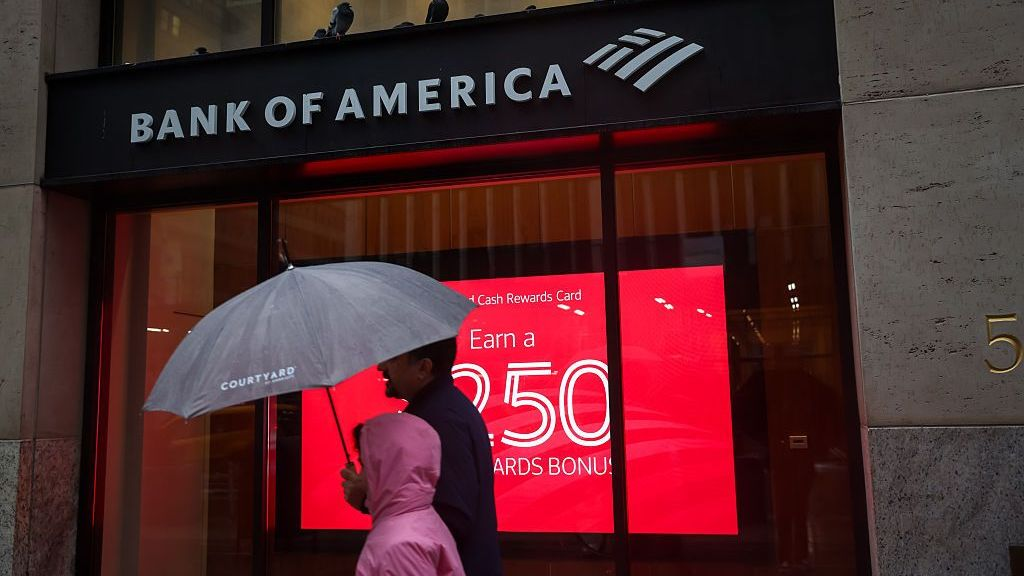
The second-largest bank in the United States just received one of the biggest regulatory punishments in American financial history. The U.S. Department of the Treasury has officially hit Bank of America with more than $1.21 billion in total fines. The charges point directly to widespread failures in stopping money laundering and multiple breaches of federal sanctions laws.
Federal investigators found that the bank allowed billions of dollars in suspicious transactions to move through its accounts for years without properly reporting them. Even worse, over $1 billion of that cash was connected to serious national security threats, including international drug cartels, Chinese money laundering organizations, and blacklisted foreign regimes.
Bank of America admitted that it willfully violated the Bank Secrecy Act, a bedrock federal law created more than fifty years ago to keep dirty money out of the legitimate financial system. The action marks the third-largest penalty ever handed down by the Treasury Department. It sends a loud, clear message across the entire banking sector that even the biggest financial giants are not above the law.
What Just Happened? The $1.2 Billion Penalty Explained
Federal authorities did not hold back when announcing this historic enforcement action. The massive $1.21 billion penalty is the result of a coordinated investigation carried out by multiple branches of the federal government working together.
The Financial Crimes Enforcement Network (FinCEN), which serves as the primary financial intelligence unit of the Treasury, assessed the central $1.2 billion penalty. FinCEN determined that Bank of America repeatedly failed to establish and maintain an effective anti-money laundering program capable of tracking high-risk transactions.
The $0 Secret To Launching Your Entire Online Empire
Why pay hundreds every month for separate software? Build funnels, send emails, and make sales with Systeme.io completely free.
Get Started For $0Free Forever • No Credit Card Needed • Beginner-Friendly
As part of the overall settlement, the Office of the Comptroller of the Currency (OCC) assessed a $750 million civil penalty against the bank. That $750 million fine is the largest penalty the OCC has ever issued in its history. Because federal agencies coordinated their actions, Bank of America gets credit for the OCC fine toward its total $1.2 billion FinCEN payment rather than paying both amounts on top of each other.
In addition to the FinCEN and OCC penalties, the Office of Foreign Assets Control (OFAC) announced an $11.6 million settlement with Bank of America. This separate penalty resolved 475 apparent violations of federal sanctions programs that restrict business with adversarial nations and sanctioned individuals.
What Did Bank of America Do Wrong?
Every commercial bank in the United States is legally required to watch for suspicious financial movements. When an account suddenly moves huge amounts of unexplained cash or routes money through known tax havens, the bank must flag the transaction and file a Suspicious Activity Report (SAR) with the federal government.
Federal regulators revealed that Bank of America failed to timely report more than $5 billion in suspicious transactions.
The bank’s monitoring systems contained glaring blind spots that let illicit money slip through undetected. Critical alerts were delayed, backlogged, or missed entirely. In plain English, the bank left its digital doors wide open while dangerous international networks moved dirty money right under the noses of internal compliance staff.
The Treasury noted that more than $1 billion of this unreported activity directly involved high-priority illicit finance risks. These were not minor clerical errors or harmless delays. They involved funds tied to organized criminal syndicates operating along the southwest border of the United States and sophisticated money laundering rings operating out of China.
The Sanctions Violations: Russia, Iran, and Global Terrorism
The $11.6 million penalty from OFAC highlights an equally troubling issue: how Bank of America handled federal sanctions.
Economic sanctions are legal restrictions that ban American businesses and financial institutions from doing business with certain countries, companies, and individuals. They are designed to isolate bad actors and prevent them from using American dollars to fund armed conflicts or illegal trade. When global tensions flare, such as when the government uses sanctions against foreign targets, banks are expected to enforce those barriers without exception.
According to OFAC, Bank of America processed 475 transactions that appeared to breach several active sanctions programs. These included transactions connected to:
- Sanctioned entities and individuals in Iran
- Blacklisted financial networks in Russia
- International narcotics trafficking rings
- Specially designated global terrorist groups
These transactions should have been automatically caught and frozen by the bank’s screening software. Instead, they were cleared and processed. The failure showed that the bank’s internal checks were not strong enough to catch payments tied to sanctioned groups.
How Drug Cartels and Chinese Money Laundering Networks Used the Bank
One of the most alarming revelations in the Treasury’s report is how international criminal rings exploited Bank of America’s systems. Regulators explicitly called out trade-based money laundering along the southwest border and professional Chinese money laundering organizations.
To understand how this works, consider how drug cartels handle cash. When cartels sell illegal narcotics in American cities, they end up with mountain piles of paper dollar bills. Getting that cash out of the country or into normal business accounts without raising alarms is difficult.
To solve this, cartels work with specialized broker networks. These brokers take the street cash in the United States and use it to buy goods or fund local businesses. At the same time, mirror payments of equal value are made in another currency in China or Mexico.
These networks rely heavily on normal bank accounts to move small deposits, pay fake supplier invoices, and wire funds across state lines. A properly run bank monitors these patterns. Red flags include accounts with no obvious business purpose receiving sudden surges of wire transfers, or businesses in border towns moving sums far larger than their local trade justifies.
Bank of America failed to catch these obvious signs in time. By failing to report over $1 billion of this activity, the bank accidentally helped these criminal enterprises wash dirty money clean and feed it back into the global economy.
Send, Spend & Hold Money Worldwide Without Hidden Fees
Transfer money internationally at the real exchange rate and hold 40+ currencies in one account.
Open a Wise AccountMid-market rate • Fast transfers • 40+ currencies
What Treasury Officials and Bank of America Had to Say
Treasury Secretary Scott Bessent issued a stern statement following the announcement of the penalties, making it clear that big banks will be held accountable when they drop the ball on national security.
Bessent pointed out that financial institutions serve as the front line of defense in protecting economic and national security. He noted that when a financial institution of Bank of America’s scale fails to meet its compliance obligations, the fallout does not stay within its own walls. Instead, it exposes the entire American financial system to dangerous criminal exploitation.
For its part, Bank of America did not try to deny the allegations. The bank officially admitted that it willfully violated the Bank Secrecy Act and agreed to the multi-billion-dollar penalty terms.
In an official public response, Bank of America acknowledged the gravity of the situation:
“Financial crime compliance is serious, and we are responsible for getting it right. We have invested billions of dollars in technology and dedicated thousands of employees to combat financial crime, and our team is far along with and committed to completing the work required to address the issues raised by our regulators.”
Along with paying the fine, the bank committed to sweeping internal reforms. These include comprehensive employee retraining, independent testing of its compliance software, outside audits, and closer ongoing cooperation with federal regulators.
Where Does This Rank Among the Biggest Banking Fines in History?
A fine of $1.2 billion is a massive sum of money, even for a financial giant that manages trillions of dollars in assets. This penalty officially ranks as the third-largest penalty ever issued by the U.S. Treasury Department.
To put this penalty in perspective, here is how the top three Treasury enforcement actions compare:
- Binance (2023) – Approximately $4.3 Billion: The world’s largest cryptocurrency exchange reached a historic settlement with the U.S. government after admitting to anti-money laundering violations and failing to register as a money services business.
- TD Bank (2024) – Approximately $3 Billion: The Canadian banking giant was hit with severe penalties after federal prosecutors found its anti-money laundering program was so weak that drug cartels openly used teller windows to deposit bags of cash.
- Bank of America (2026) – $1.21 Billion: The current action penalizes America’s second-largest bank for systemic failures to monitor national security risks and hundreds of sanctions breaches.
This enforcement action demonstrates that federal regulators are no longer issuing polite warning letters. Whether dealing with digital asset platforms or traditional Wall Street giants, regulatory agencies are demanding strict compliance.
Why Anti-Money Laundering Laws Matter to Regular People
It is easy to look at a billion-dollar fine and assume it only matters to corporate lawyers and Wall Street traders. The reality is that anti-money laundering laws protect everyone.
The $0 Secret To Launching Your Entire Online Empire
Why pay hundreds every month for separate software? Build funnels, send emails, and make sales with Systeme.io completely free.
Get Started For $0Free Forever • No Credit Card Needed • Beginner-Friendly
When dirty money enters the legitimate economy, it creates real damage in everyday communities. Drug cartels use clean cash to buy up local real estate, drive up neighborhood housing costs, and fund criminal activities. Corrupt foreign officials use major banks to stash stolen public funds abroad while citizens back home suffer from underfunded schools and broken infrastructure.
Banks are granted federal charters to operate. In exchange for that privilege, they are required to act as watchful guardians of the payment rails. When banks ignore red flags or underfund their compliance teams to save money, they make it easier for illegal enterprises to thrive.
Ensuring that banks obey federal oversight is just as important as monitoring how Federal Reserve decisions affect everyday money or watching shifts in national Treasury yields. A stable, clean financial system protects the value of honest paychecks.
What Does This Mean for Everyday Bank of America Customers?
If you have a checking account, a savings account, or a mortgage with Bank of America, you might wonder if this news affects your wallet. Here is what everyday customers need to know:
1. Your Money Is Safe
The $1.2 billion fine is paid directly out of the bank’s corporate capital reserves. It does not touch customer deposits. Everyday deposits remain fully insured up to $250,000 per depositor by the Federal Deposit Insurance Corporation (FDIC). Bank of America holds more than $3 trillion in assets, meaning this fine will not threaten the bank’s solvency or day-to-day operations.
2. Expect Stricter Account Checks
In the coming months, customers may notice that the bank asks for more verification when sending wires, opening accounts, or making large cash deposits. If an unusual transaction hits your account, the fraud detection department might temporarily hold it while verifying your identity. While this can feel inconvenient, it is a direct consequence of the bank tightening its security filters.
3. Customer Fees and Interest Rates
While Bank of America will absorb this fine on its balance sheet, major banks often look for ways to recover operational costs. Watching your monthly statement for changes in maintenance fees, wire transfer costs, or account minimums is always smart personal financial hygiene. Knowing how everyday banking services compare across institutions helps you decide whether your current bank is still serving your needs.
The Broader Impact on Wall Street and Global Banking
This enforcement action will trigger ripple effects across the entire financial world. Bank compliance officers across the country are already reviewing their own systems to make sure they do not end up in the government’s crosshairs next.
First, banks will likely accelerate their spending on artificial intelligence and automated transaction monitoring software. Human compliance teams cannot manually review billions of transactions per day. Banks must deploy sophisticated tools that can spot strange patterns in milliseconds.
Second, international banking relationships will become tighter. Big American banks often serve as correspondent banks for smaller lenders around the world. In places like West Africa, where institutions track massive local dividend payouts and rapid economic shifts, foreign banks rely heavily on smooth connections with American institutions. When a bank like Bank of America gets fined over cross-border transfers, it often cuts ties with higher-risk international regions to protect itself. This process, known as de-risking, can make cross-border trade harder for legitimate foreign businesses.
Third, the penalty will catch the attention of institutional investors. While large banks generate tens of billions in profit every quarter, multi-billion-dollar penalties eat into corporate earnings. Shareholder groups will demand answers from executive leadership about how these monitoring lapses were allowed to continue for so long.
A Wake-Up Call for Corporate Compliance
For years, critics have argued that financial penalties are treated by big banks as merely the cost of doing business. A bank makes tens of billions in revenue, pays a fine when caught doing something wrong, and moves on without making fundamental changes.
The Treasury Department’s recent enforcement streak suggests that regulators are trying to change that dynamic. By combining record-setting fines with public admissions of willful wrongdoing, federal authorities are raising the stakes for corporate boards.
When a bank admits to willful violations of the Bank Secrecy Act, it exposes itself to reputational damage and stricter regulatory oversight. The OCC, FinCEN, and OFAC will have independent monitors reviewing Bank of America’s internal systems for years to come. Every piece of software, every training program, and every suspicious transaction queue will face intense scrutiny.
Frequently Asked Questions (FAQs)
What was Bank of America fined for?
Bank of America was fined more than $1.21 billion by the U.S. Treasury Department for failing to maintain effective anti-money laundering controls and repeatedly violating federal sanctions programs. The bank failed to report over $5 billion in suspicious transactions, with more than $1 billion tied to national security risks such as Mexican cartel networks and Chinese money laundering rings.
Did Bank of America admit to breaking the law?
Yes. As part of the settlement agreement, Bank of America formally admitted that it willfully violated the Bank Secrecy Act, which requires financial institutions to monitor, detect, and report suspicious transactions to federal law enforcement.
Is customer money at Bank of America safe?
Yes. Customer deposits are completely separate from corporate fines. Your checking, savings, and certificate of deposit accounts remain protected by FDIC insurance up to the standard limit of $250,000 per depositor. The fine is paid out of the bank’s own corporate capital.
Which government agencies were involved in the penalty?
The penalty involved three primary Treasury agencies: the Financial Crimes Enforcement Network (FinCEN), which assessed the primary $1.2 billion penalty; the Office of the Comptroller of the Currency (OCC), which issued a record $750 million civil penalty credited toward the total; and the Office of Foreign Assets Control (OFAC), which reached an $11.6 million settlement for sanctions violations.
What are the 475 sanctions violations mentioned in the case?
The sanctions violations involved 475 transactions that Bank of America processed involving individuals, companies, or countries that are legally blacklisted by the United States. These included targets in Iran and Russia, as well as designated foreign narcotics traffickers and global terrorist organizations.
How does this fine compare to previous penalties?
This fine is the third-largest penalty ever imposed by the U.S. Treasury Department. It trails only the $4.3 billion settlement with cryptocurrency exchange Binance in 2023 and the $3 billion settlement with Canada’s TD Bank in 2024.
Will regular customers experience any changes?
Everyday banking will continue as normal, but customers may experience more verification steps when sending large wire transfers, transferring funds internationally, or opening new accounts. These extra security steps happen as the bank strengthens its identity checks and fraud prevention software.
The massive $1.2 billion enforcement action against Bank of America reminds everyone that running a global financial institution comes with immense responsibility. When a major bank fails to monitor the flow of money, the consequences reach far beyond corporate headquarters and touch national security, global diplomacy, and the safety of everyday communities. With federal regulators signaling zero tolerance for compliance failures, the entire financial sector will have to rethink how it polices its own backyard.
