
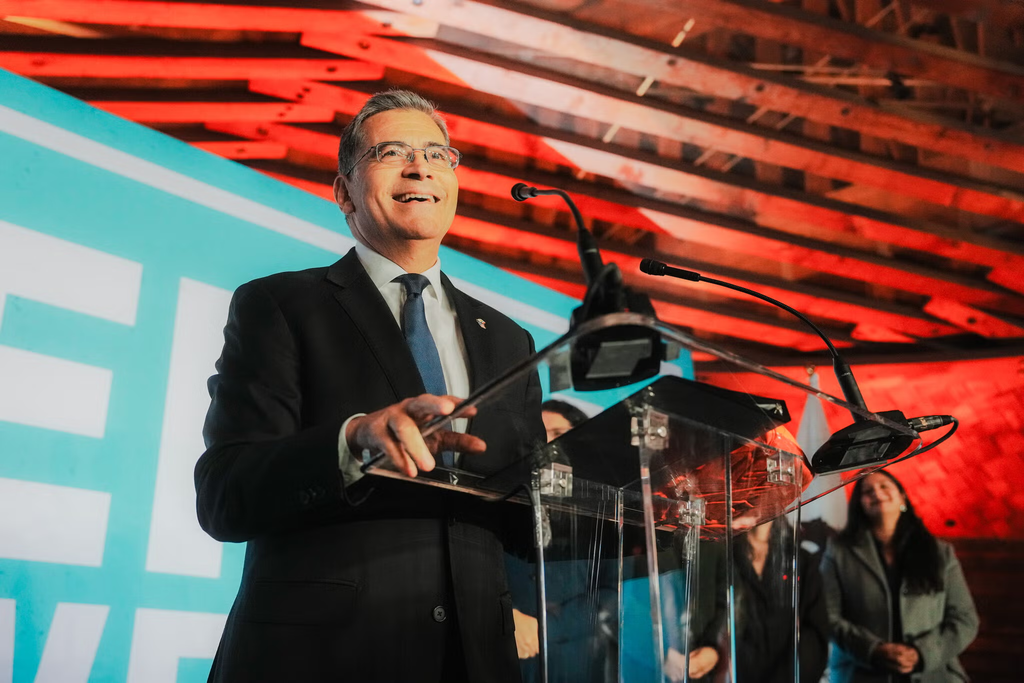
California voters have made their choice, electing Democrat Xavier Becerra as the next governor of the Golden State. In a decisive general election, the former federal health chief and state attorney general defeated Republican challenger Steve Hilton by a wide margin.
The victory marks a turning point in state politics. While California is home to more than fifteen million Latino residents—making up roughly forty percent of the total population—the state has not had a Latino governor in more than a century and a half. When Becerra takes the oath of office in Sacramento, he will become the first Latino elected governor in California history, and the first person of Latino heritage to lead the state executive branch since Romualdo Pacheco briefly filled a vacancy back in 1875.
His victory keeps the governor’s office firmly in Democratic hands as Gavin Newsom prepares to step down at the end of his second term. With national politics growing increasingly tense, California once again positions itself as a powerhouse of opposition to conservative policies emerging from Washington.
A Historic Milestone Over 150 Years in the Making
To understand why this election matters so deeply to millions of Californians, you have to look at the history books. California has a rich, deep Mexican and Spanish heritage that predates its statehood. Yet, representation at the very top of state government has lagged behind demographic realities for generations.
The only other Latino governor in California history was Romualdo Pacheco. Pacheco was not elected to the post by voters; he was the lieutenant governor who stepped into the role for nine months in 1875 after Governor Newton Booth left early to join the United States Senate. Ever since then, every single governor to hold the office has been non-Latino.
The $0 Secret To Launching Your Entire Online Empire
Why pay hundreds every month for separate software? Build funnels, send emails, and make sales with Systeme.io completely free.
Get Started For $0Free Forever • No Credit Card Needed • Beginner-Friendly
Becerra’s election closes that gap. For community leaders, immigrant families, and grassroots organizers across the state, seeing the son of immigrant farmworkers ascend to the highest seat in state government represents the fulfillment of decades of tireless civic engagement.
California has long prided itself on being a multicultural capital, but this election solidifies that identity in practical terms. It sends a message across the country about who holds political voice and voting power in the largest state in the nation.
Who Is Xavier Becerra? From Humble Roots to the Governor’s Mansion
Becerra often speaks about his life story in straightforward, practical terms. He was born in Sacramento in 1958. His mother immigrated to the United States from Jalisco, Mexico, and his father was born in Sacramento before being raised in Tijuana and returning to the U.S. as a young laborer.
Becerra grew up in a tiny one-room apartment with his parents and three sisters. His father worked physically demanding jobs in construction and agriculture, while his mother worked as a clerical assistant. He watched his parents work long hours without complaint, instilling in him a belief in hard work, public service, and practical community support.
He became the first in his family to graduate from college, earning both his undergraduate degree in economics and his law degree from Stanford University. That educational foundation launched a career that spanned state legislative work, more than two decades in the federal government, and leadership roles across California’s legal system.
A Career Built on Law and Policy
Becerra’s rise in public service did not happen overnight:
- State Assembly: He first entered elected office in 1990, representing the 59th district in the California State Assembly.
- United States Congress: In 1992, he won election to the U.S. House of Representatives. He served twenty-four years in Washington, eventually rising to become the Chairman of the House Democratic Caucus and a senior member of the powerful House Ways and Means Committee.
- California Attorney General: In 2017, then-Governor Jerry Brown appointed Becerra to fill the attorney general seat vacated by Kamala Harris. Becerra was subsequently elected to a full four-year term by voters in 2018. During his tenure, he filed over one hundred legal challenges against federal executive orders, defending California rules on clean air, consumer privacy, reproductive rights, and immigration safeguards.
- Cabinet Secretary: In 2021, President Joe Biden nominated Becerra to lead the U.S. Department of Health and Human Services (HHS). As HHS Secretary, Becerra oversaw Medicare, Medicaid, the Affordable Care Act, and federal pandemic response measures, managing an annual federal budget exceeding a trillion dollars.
This combination of state legislative experience, congressional mastery, legal courtroom battles, and massive executive management gave Becerra a unique resume when he decided to enter the gubernatorial contest.
How the 2026 Race Was Won
The road to the California governor’s mansion was far from guaranteed. In fact, early in the campaign cycle, political observers considered Becerra an underdog.
California uses a “top-two” primary system where all candidates appear on the same ballot regardless of political party, and only the top two vote-getters advance to November. The primary field was packed with prominent figures, including progressive billionaire Tom Steyer, high-profile legislators, and energetic local leaders.
For months, Becerra’s campaign registered in single digits. Several party insiders worried that having too many Democratic candidates would split the vote, potentially creating an opening for two conservative candidates to advance. Some even quietly suggested that Becerra should step aside to clear the lane.
Becerra stayed in the race. He focused on building direct relationships with labor unions, Latino civic organizations, and local community organizers. When competitor campaigns stumbled and primary dynamics shifted, Becerra surged forward, claiming the top spot on the general election ballot alongside Republican candidate Steve Hilton.
The General Election Showdown: Becerra vs. Hilton
The race between Xavier Becerra and Steve Hilton presented voters with two starkly different visions for California.
Steve Hilton, an author, commentator, and former political strategist, ran an aggressive campaign focused on economic discontent. Hilton blamed long-standing Democratic leadership for high fuel prices, regulatory burdens, and business departures. He campaigned on promises to slash state taxes, cut government regulations, and reform public spending.
Becerra took a measured, calm approach. Rather than matching Hilton’s fiery rhetoric, Becerra presented himself as an experienced, steady administrator. He described himself on the trail as a “pragmatic progressive”—someone who wants to make sure state government actually works cleanly and delivers practical help to working families.
When the ballots were counted according to preliminary official returns from The Associated Press, Becerra won handily, capturing over 64 percent of the vote. The decisive win proved that California’s broad coalition of urban, suburban, and minority voters remains solidly aligned with steady Democratic leadership.
Send, Spend & Hold Money Worldwide Without Hidden Fees
Transfer money internationally at the real exchange rate and hold 40+ currencies in one account.
Open a Wise AccountMid-market rate • Fast transfers • 40+ currencies
The Big Issues Facing Governor Becerra
Winning an election is hard work, but governing California is a massive undertaking. The state boasts the fifth-largest economy in the world, yet it faces complex challenges that touch the daily lives of nearly forty million people.
Becerra will take office without the luxury of an easy honeymoon period. Voters expect real, visible solutions to persistent daily problems. Here are the central issues awaiting his attention in Sacramento.
1. The Skyrocketing Cost of Living and Housing
The number one issue on voters’ minds across California is everyday affordability. Basic necessities, from groceries and gasoline to child care, carry steep prices.
Housing remains the core economic pain point. A massive majority of families find homeownership completely out of reach. In fact, reports reveal that you need to make $228,000 just to buy an average home in California and 81 percent of us cannot. Renters face equally heavy pressures, often spending more than half their monthly income just to keep a roof over their heads.
During his campaign, Becerra promised to cut through red tape to speed up affordable housing construction and streamline environmental review processes that have delayed residential developments for years. Turning those promises into real homes will be one of his hardest tests.
2. Wildfires, Energy Bills, and Climate Disasters
Climate change is not a theoretical debate in California; it is a seasonal reality that impacts every community. Devastating wildfires, extreme heatwaves, and sudden winter floodings have strained local infrastructure and displaced entire neighborhoods.
The state’s utility landscape has also faced immense pressure. Between climbing electrical rates and disputes over grid stability, wildfire liability has become a political battleground. In recent years, public anger flared after Gavin Newsom blamed outside groups following lost wildfire liability battles.
Homeowners across California are seeing their home insurance premiums double or find their policies canceled altogether as major insurance carriers retreat from fire-prone zones. Becerra has called this standoff an unacceptable burden on consumers, signaling that his administration will push for structural reforms to stabilize the home insurance market and keep utility bills fair for ordinary households.
3. Healthcare Access and Supporting Vulnerable Residents
Healthcare is Becerra’s primary area of expertise. Having spent four years leading the nation’s health department, he brings deep knowledge of how state and federal healthcare dollars interact.
California has been a national pioneer in expanding Medi-Cal coverage to all income-eligible residents regardless of legal documentation status. Becerra has affirmed his commitment to protecting that universal safety net, stressing that when every worker can access basic preventative care, hospitals run better and public health outcomes improve for the entire community.
The $0 Secret To Launching Your Entire Online Empire
Why pay hundreds every month for separate software? Build funnels, send emails, and make sales with Systeme.io completely free.
Get Started For $0Free Forever • No Credit Card Needed • Beginner-Friendly
Protecting those programs requires vigilant budget oversight, especially as federal spending fights loom in Washington and economic trends shift state tax receipts.
4. Silicon Valley, Tech Regulation, and Artificial Intelligence
California is the undisputed global hub for artificial intelligence, software innovation, and digital media. Keeping that economic engine humming while protecting regular people is a delicate tightrope.
Sacramento lawmakers have been active in introducing technology legislation. The state gained international attention when California Governor Gavin Newsom signed landmark AI safety laws backed by OpenAI and Anthropic.
Becerra will now oversee how those landmark safety laws, transparency guidelines, and data-center energy standards are implemented. Tech leaders want sensible room to innovate, while workers and consumer advocates want clear protections against algorithmic bias, copyright theft, and sudden job displacement. Becerra’s background as a seasoned regulator will shape how California balances Silicon Valley’s growth with public safety.
5. Clashes with Washington and Defending State Laws
California has often served as the nation’s primary counterweight to conservative federal initiatives. State leaders have repeatedly passed protective statutes, notably when California blocked federal measures and signed significant election laws right before the midterms.
With national discussions focusing heavily on federal immigration enforcement, civil rights rollbacks, and limits on legal immigration, Becerra’s previous experience as California’s attorney general will be a major asset. As public debate grows around why moving to America is getting harder for legal immigrants, California’s governor will play a pivotal role in safeguarding civil rights, protecting local communities, and maintaining state sovereignty against federal overreach.
What the Election Signals for the Democratic Party
Beyond California’s borders, Becerra’s decisive victory offers valuable political lessons for the Democratic Party nationwide.
In recent campaign cycles, political analysts observed shifting voting patterns among working-class voters and young men across the country. In some states, conservative candidates made noticeable inroads with Hispanic communities.
Becerra’s campaign demonstrated how to keep diverse coalitions united. By concentrating on practical issues like road funding, healthcare delivery, clean drinking water, and dependable public schools, he avoided abstract culture debates and focused on bread-and-butter governance.
This victory also shifts the long-term national political spotlight. Gavin Newsom has consistently attracted national attention, sparking widespread speculation about future presidential runs. That conversation gained fresh momentum after Gavin Newsom stated he would not run for president if Kamala Harris enters the race. Now, with Becerra at the helm of the country’s largest state government, he instantly enters the national conversation as one of the most prominent Hispanic executives in American history.
Frequently Asked Questions
Who won the 2026 California governor election?
Democrat Xavier Becerra won the 2026 California gubernatorial election, defeating Republican candidate Steve Hilton with more than 64 percent of the vote according to preliminary election counts.
Why is Xavier Becerra’s victory historically significant?
Xavier Becerra is the first Latino elected governor of California. While Romualdo Pacheco served as governor for nine months in 1875 after succeeding from the lieutenant governor position, California had never before elected a Latino governor at the ballot box.
What positions has Xavier Becerra held before becoming governor?
Becerra has had an extensive career in public service. He served as a California State Assemblyman, spent twenty-four years as a member of the U.S. House of Representatives, served four years as California’s Attorney General, and served as the U.S. Secretary of Health and Human Services in President Joe Biden’s cabinet.
When will Xavier Becerra take office as California’s governor?
Becerra will officially take the oath of office in January 2027, succeeding Governor Gavin Newsom, who completes his second and final term.
What are the main issues facing Becerra’s incoming administration?
The incoming administration faces pressing issues including high housing costs, rising living expenses, wildfire risks, homeowners insurance cancellations, tech and AI safety rules, and defending California policies against federal challenges.
California’s choice in Xavier Becerra signals an appetite for experienced, pragmatic leadership during unpredictable times. As the state confronts expensive housing, climate threats, and rapid technological changes, the newly elected governor will carry the hopes of millions who want a government that delivers real results. His journey from a humble childhood to the historic seat in Sacramento shows just how far California has traveled—and how much work lies ahead.
