
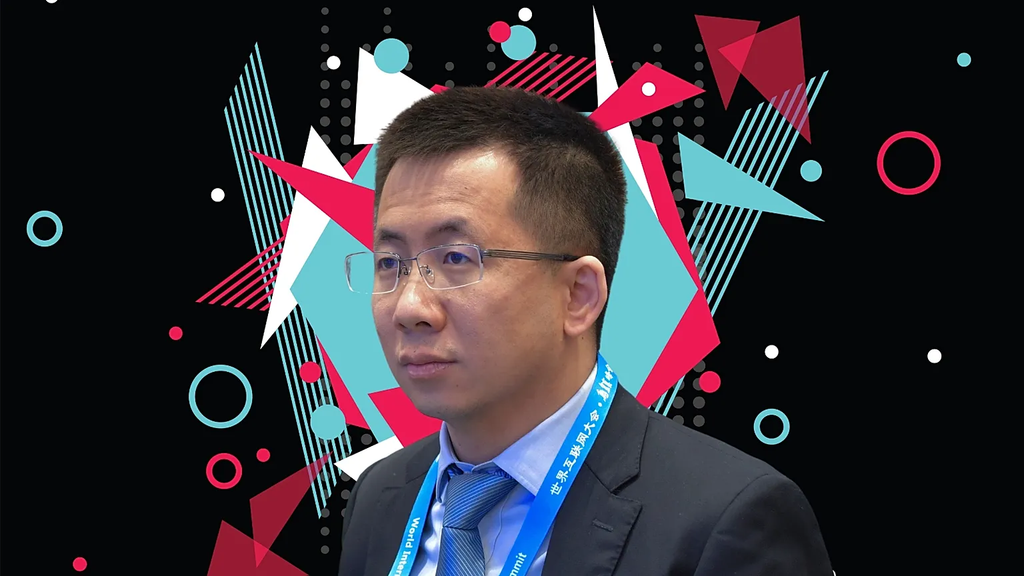
Zhang Yiming has just pulled off one of the most stunning wealth rebounds in modern business history. The 43-year-old software engineer, who stepped down from running ByteDance on a daily basis because he disliked office small talk and socializing, has officially reclaimed the title of China’s richest person.
According to the Hurun China Rich List, Zhang’s personal fortune climbed by an eye-popping 43% over the past twelve months, touching $99.7 billion. Other global wealth trackers, including the Bloomberg Billionaires Index, already place his valuation past the $100 billion benchmark. That makes his net worth the largest single fortune ever recorded at the top of the Hurun index since rankings began decades ago.
Most people associate Zhang Yiming solely with TikTok, the viral video app that conquered teen culture and transformed modern marketing across the globe. Yet the engine behind his latest billions is not simply dance trends or viral challenges. The real power move fueling ByteDance right now is an aggressive, all-out push into artificial intelligence. While Western tech giants pour hundreds of billions into generative models, ByteDance has quietly built an AI ecosystem that is capturing hundreds of millions of everyday users and printing billions in fresh cash.
Here is how a soft-spoken programmer walked away from corporate meetings, doubled down on cutting-edge machine learning, and built an empire that reshaped global tech.
The Comeback: How Zhang Yiming Took Back the Crown
To understand how big this comeback really is, you have to look at the numbers. Just a year ago, the top spot on China’s wealth leaderboard belonged to Zhong Shanshan, the low-key tycoon behind the ubiquitous red-capped Nongfu Spring bottled water empire. Zhong held that crown for several consecutive years as traditional consumer businesses held steady while technology companies faced strict regulatory crackdowns and turbulent markets.
The $0 Secret To Launching Your Entire Online Empire
Why pay hundreds every month for separate software? Build funnels, send emails, and make sales with Systeme.io completely free.
Get Started For $0Free Forever • No Credit Card Needed • Beginner-Friendly
The ground shifted dramatically over the past year. Zhong’s fortune fell by roughly 23% to $61 billion, following heightened price competition and slowing consumer demand across China. Meanwhile, electric vehicle battery titan Robin Zeng, who chairs CATL, settled into third place with a still-impressive $57.3 billion.
Zhang Yiming zoomed past both of them. His wealth surge of nearly $30 billion in a single year demonstrates that the era of wealth creation through real estate and standard consumer goods is fading fast in Asia. The new money belongs entirely to advanced computation, machine learning, and automated digital ecosystems.
Hurun reported that China now boasts 1,176 US-dollar billionaires, which is 176 more than the United States. At the very summit of that crowd sits Zhang Yiming, holding a historic, near-$100 billion fortune built almost entirely on lines of code.
Inside ByteDance’s Silent AI Takeover
When tech fans talk about artificial intelligence, conversation usually turns to American players like OpenAI, Google, Microsoft, and Anthropic. Many people overlook how deeply ByteDance was built on AI from day one.
ByteDance was never just a social media company. From its very first product, a news aggregation app called Jinri Toutiao launched in 2012, Zhang Yiming refused to hire traditional editorial staff. Instead, he relied completely on algorithms to study user behavior, analyze what people read, and feed them hyper-personalized content within milliseconds. That same machine-learning philosophy became the secret weapon behind TikTok and its Chinese sister app, Douyin.
Over the past two years, ByteDance kicked that engine into overdrive by investing billions in generative AI. The crown jewel of this effort is Doubao, a family of large language models and a consumer AI assistant that took China by storm.
Doubao is currently the most popular consumer AI application in China, surpassing older rivals from search giant Baidu and social media leader Tencent. People use Doubao for everything from drafting business emails and doing school homework to generating images, writing code, and organizing schedules. If you look at how everyday habits powered by artificial intelligence are transforming our daily routines, Doubao is living proof of that shift on a massive scale.
ByteDance didn’t stop at consumer chatbots. The company invested heavily in backend compute infrastructure. Industry reports estimate that ByteDance poured over $20 billion into AI infrastructure, enterprise cloud clusters, and high-performance computing hardware. While Western regions debate energy limits—such as the recent push where big tech faced pushback over data centers—ByteDance has moved fast to lock down computing power across Asia and global cloud hubs.
The company also introduced Smart+ and Symphony Automation, specialized AI advertising tools that automatically write ad copy, design marketing videos, and adjust auction bids in real time. Marketers testing these systems reported a 54% jump in ad conversions alongside a 27% drop in advertising costs. In simple terms: businesses spend more money on ByteDance platforms because ByteDance’s AI makes their ads work better.
How TikTok Turned Social Scrolling into a Money Machine
You cannot discuss Zhang Yiming’s climb to the top without looking at how ByteDance turned casual video scrolling into a commercial powerhouse. In 2025, ByteDance generated an estimated $186 billion in total revenue, marking a 20% increase year-over-year. For the first time, international revenue generated outside of China accounted for over 30% of that total, proving that the company’s global expansion is working.
A major portion of that growth comes from TikTok Shop. Instead of making users leave the app to buy items they see on their screens, TikTok baked an entire shopping mall directly into the video feed. In the United States alone, TikTok Shop processed over $9 billion in gross merchandise value, with sales skyrocketing well over 100% year-over-year.
This setup created an entire economy for creators and brands. Today, everyday users are finding out how to earn money on TikTok without showing your face by building automated niche channels and curating products. At the same time, brands partner with online creators through sponsored content and paid influencer deals to drive instant purchases. Everyday shoppers also cash in by creating simple review videos, proving how easy it is to make money online as a UGC content creator.
ByteDance takes a small cut of every purchase, every paid promotion, and every virtual coin sent to live streamers. When you combine high-margin ad fees with millions of daily e-commerce transactions, you get a financial machine that generates billions in quarterly cash flow. Even as the platform introduced changes—such as when TikTok rolled out voice memos, live polls, and photo dumps—the core objective stayed the same: keep users glued to the screen and make shopping effortless.
The Reluctant Billionaire: Who Is Zhang Yiming?
Who is the man behind this $100 billion fortune? If you picture a flamboyant tech billionaire who loves private jets, stadium keynotes, and fiery social media rants, Zhang Yiming is the exact opposite.
Zhang was born in 1983 in Longyan, a city in China’s southeastern Fujian province. His parents worked as local civil servants. Growing up, Zhang was quiet, methodical, and fascinated by how complex systems operated. In 2001, he enrolled at Nankai University in Tianjin, initially studying microelectronics before switching his major to software engineering. It was during his college days that he met his future wife and spent long nights writing code.
Send, Spend & Hold Money Worldwide Without Hidden Fees
Transfer money internationally at the real exchange rate and hold 40+ currencies in one account.
Open a Wise AccountMid-market rate • Fast transfers • 40+ currencies
After graduating in 2005, Zhang joined a travel booking startup named Kuxun as its fifth employee and first dedicated engineer. He rose to technical director in just a year. In 2008, he accepted an engineering position at Microsoft. He found the corporate bureaucracy suffocating. He famously remarked that big corporate life involved endless paperwork, corporate politics, and very little creative building.
He walked away from Microsoft after just a few months. He tried his hand at a Twitter clone named Fanfou, which shut down due to regulatory issues. He then founded a real estate search engine named 99fang. By 2012, Zhang noticed a major trend that legacy tech bosses missed: people were moving from desktop computers to smartphones, but nobody knew how to find interesting content on a tiny mobile screen.
He gathered a small group of engineers in a rented four-bedroom apartment in Beijing, set up folding tables, and founded ByteDance.
Zhang possessed an unusual management philosophy. He treated his company like an algorithm. He studied organizational psychology, eliminated rigid corporate titles, and encouraged employees to test hundreds of small ideas at the same time. If an app failed, ByteDance killed it immediately. If an app showed high user retention, the company poured millions into scaling it. That test-and-learn machine gave birth to Douyin in 2016 and TikTok in 2017.
By 2021, at the peak of ByteDance’s explosive global expansion, Zhang made a move that stunned the tech world: he stepped down as Chief Executive Officer at just 38 years old.
In a deeply personal letter to his employees, Zhang wrote that he lacked the social skills required of an ideal manager. He admitted that he was not very social, disliked managing day-to-day personnel issues, and felt drained by back-to-back corporate meetings. He explained that his true strength was daydreaming, reading, surfing the web, analyzing long-term market trends, and thinking about where technology would head ten years down the road.
He handed the CEO reins over to his college roommate and co-founder, Liang Rubo, and moved quietly to Singapore. That decision freed Zhang to focus completely on long-range technological bets—chief among them, artificial intelligence. Today, that choice has paid off beyond anyone’s wildest expectations.
How AI is Flipping China’s Wealth Leaderboard
Zhang Yiming’s return to the top spot is not an isolated event. It reflects a total reshaping of who gets rich in the global economy.
For decades, the highest ranks of Asian wealth were dominated by real estate developers who borrowed billions to construct apartment towers and commercial malls. Those property fortunes have collapsed under the weight of debt and falling housing values. Traditional manufacturing and retail have also struggled with tighter profit margins and conservative consumer spending.
The Hurun Rich List demonstrates that modern fortunes now belong almost exclusively to founders building automated intelligence, advanced chips, and green technology:
The $0 Secret To Launching Your Entire Online Empire
Why pay hundreds every month for separate software? Build funnels, send emails, and make sales with Systeme.io completely free.
Get Started For $0Free Forever • No Credit Card Needed • Beginner-Friendly
- Liang Wenfeng, the visionary founder behind rising artificial intelligence research lab DeepSeek, charged straight into seventh place on the national wealth list.
- Chen Tianshi, the chairman of AI semiconductor firm Cambricon Technologies, broke into the top ten as demand for domestic machine-learning chips soared.
- Robin Zeng, founder of battery maker CATL, locked down third place with $57.3 billion by powering the global electric vehicle revolution.
The message from the market is loud and clear: investors and consumers are rewarding businesses that build high-efficiency software, automated tools, and advanced physical hardware. Zhang Yiming sits at the intersection of all three. ByteDance creates the algorithms, operates the AI software, and buys the high-end server chips to keep the loop spinning.
Navigating Scrutiny, Politics, and Bans
Zhang Yiming’s path to $100 billion has not been smooth sailing. Running a tech company with deep roots in Beijing while operating the most popular teen app in Western countries has placed ByteDance in the crosshairs of intense geopolitical tension.
In the United States, lawmakers spent years debating national security concerns and passing legislation intended to force a sale of TikTok’s American operations or face an outright ban. To protect its massive market, ByteDance structured a dedicated American joint venture covering local data storage, algorithm safety, and content moderation.
Regulatory scrutiny is not limited to Washington. Regulators in Europe, the United Kingdom, and Southeast Asia have repeatedly questioned data privacy and child safety standards on the platform. Readers will recall how TikTok faced a massive $100 million fine over teen safety, forcing major adjustments to user privacy settings and feed mechanics.
Despite aggressive political pushback and constant legal threats, ByteDance’s user base kept expanding. Today, TikTok counts more than 170 million active users in the United States and over a billion monthly users globally. The platform has become so deeply embedded in youth culture, retail sales, and digital advertising that replacing it has proven virtually impossible for competitors.
The Everyday Lessons Behind Zhang Yiming’s Rise
While very few people will ever run a $400 billion tech empire, the ideas that helped Zhang Yiming build his fortune offer practical takeaways for anyone working in business, content creation, or modern digital careers:
1. Build Around What People Actually Do, Not What They Say
When Zhang built his earliest recommendation engines, critics argued that people wanted high-brow, curated news. Zhang looked at actual user data and saw that people wanted quick, entertaining, and highly relevant updates. He designed systems based on honest human behavior rather than idealistic assumptions.
2. Recognize When You Are Not the Right Manager
Stepping down as CEO at age 38 took immense self-awareness. Many founders cling to executive titles long after the company outgrows their day-to-day management style. By admitting that he hated social obligations and back-to-back meetings, Zhang handed daily operations to partners who enjoyed executive management. That freed him to focus on big-picture technology trends that made him tens of billions richer.
3. Treat Failure as Cheap Information
ByteDance launches dozens of experimental apps and features every single year. Most fail quietly and disappear within months. Instead of mourning failed projects, Zhang’s teams treat every failed experiment as valuable training data that strengthens the next attempt.
4. Lean Heavily Into Automation
ByteDance does not waste human labor on repetitive tasks that software can handle faster. From ad generation to video recommendation and customer support, machine learning handles the heavy lifting. Adopting AI tools early allows small teams to produce the output of massive corporations.
Frequently Asked Questions (FAQs)
Who is Zhang Yiming?
Zhang Yiming is a Chinese software engineer and internet entrepreneur who founded ByteDance in 2012. ByteDance is the global parent company behind TikTok, its Chinese counterpart Douyin, the news aggregator Toutiao, and the AI assistant Doubao.
How much is Zhang Yiming worth in 2026?
According to the October 2026 Hurun China Rich List, Zhang Yiming’s net worth reached $99.7 billion, representing a 43% gain over the previous year. Other international financial trackers, such as Bloomberg, estimate his fortune at roughly $105 billion.
Why did Zhang Yiming regain the title of China’s richest person?
Zhang reclaimed the top spot due to ByteDance’s explosive expansion into artificial intelligence, rapid revenue growth from TikTok Shop, and strong advertising performance across its global apps. At the same time, previous frontrunner Zhong Shanshan saw his bottled water wealth decline due to consumer price competition.
Is Zhang Yiming still the CEO of ByteDance?
No. Zhang stepped down as CEO of ByteDance in late 2021. He handed operational control to co-founder Liang Rubo so he could step away from day-to-day corporate meetings and focus on long-term strategy, research, and emerging technologies.
What is Doubao, and why does it matter?
Doubao is ByteDance’s flagship family of artificial intelligence models and conversational chatbot. It has grown into the most widely used consumer AI application in China, giving ByteDance a dominant position in the race against regional rivals like Baidu and Alibaba.
Does ByteDance make money outside of TikTok?
Yes. ByteDance earns substantial revenue from Douyin (the Chinese version of TikTok), Toutiao, enterprise cloud services, live-stream digital gifts, and AI business software. However, international revenue from TikTok and TikTok Shop now accounts for more than 30% of ByteDance’s total annual sales.
What Zhang Yiming’s AI Comeback Means for the Rest of Us
Zhang Yiming’s return to the peak of global wealth proves that the artificial intelligence wave is no longer an experimental theory. It is actively crowning the world’s next generation of centibillionaires and transforming every corner of commerce, media, and technology.
By stepping out of the public eye, ignoring corporate distractions, and directing ByteDance’s massive cash reserves straight into generative algorithms and computing hardware, Zhang turned a short-video empire into an AI giant. For creators, entrepreneurs, and everyday tech users, the takeaway is clear: the future belongs to those who understand how to harness automated tools rather than fight them.
