
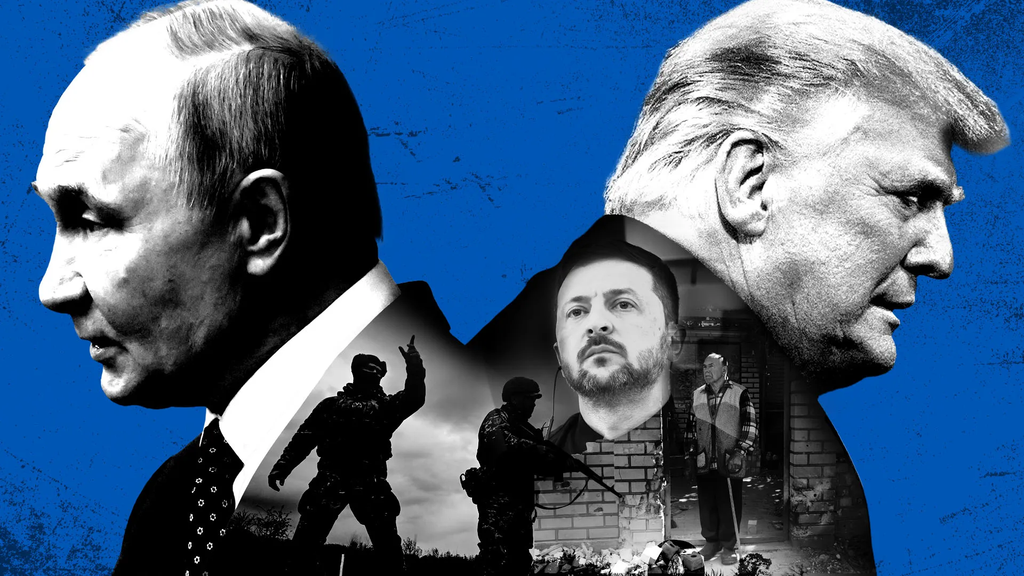
U.S. President Donald Trump caught the world off guard on Sunday when he declared that Russia and Ukraine had agreed to an immediate energy ceasefire. Posting on his Truth Social platform, Trump stated in bold capital letters that both nations had reached a deal to stop attacks on energy infrastructure, adding a stern warning for both sides not to break it.
The announcement sent shockwaves through international diplomatic circles, global market trading rooms, and newsrooms across the globe. However, as details began to emerge from Kyiv and Moscow, it quickly became clear that this sudden declaration was far more complicated than a simple social media post implied.
While Trump presented the truce as a done deal, Ukrainian President Volodymyr Zelenskyy admitted that the announcement was news to him. At the same time, the Kremlin offered no immediate confirmation that any such deal had been signed or agreed upon. The situation has left world leaders, energy analysts, and everyday observers wondering whether a true diplomatic breakthrough has occurred or if this is another instance of high-stakes foreign policy by social media post.
The Social Media Post That Surprised the World
Donald Trump’s statement was brief, direct, and delivered with his trademark intensity. He declared that an energy ceasefire between Russia and Ukraine was taking effect immediately, claiming that both countries had agreed to halt strikes against energy targets. He capped off the message with a simple directive: “Do not break it!”
Despite the massive scope of what an energy ceasefire would mean for the multi-year conflict, the initial statement contained no specific details, framework agreements, or signatures. It did not outline how such a ceasefire would be monitored, who would enforce compliance, or what consequences either nation would face if a strike occurred.
The $0 Secret To Launching Your Entire Online Empire
Why pay hundreds every month for separate software? Build funnels, send emails, and make sales with Systeme.io completely free.
Get Started For $0Free Forever • No Credit Card Needed • Beginner-Friendly
The sudden post came shortly after diplomatic efforts had been building across multiple capitals. U.S. representatives have been holding high-level discussions in Eastern Europe, including past meetings where Trump envoys headed to Kyiv for high-stakes peace talks following direct dialogue with top Russian officials. Similar efforts were seen when U.S. envoys arrived in Moscow for high-stakes Ukraine peace talks, showing that Washington has been actively seeking leverage to bring both sides to a standstill.
Even so, the timing of Sunday’s statement caught top government officials on both sides of the war completely by surprise.
Zelenskyy Responds: “News to Me” But Ukraine Is Open to It
When reporters reached out to Ukrainian officials for confirmation, President Volodymyr Zelenskyy provided a candid response. Speaking to journalists shortly after the social media declaration went viral, Zelenskyy admitted that Trump’s announcement of an active energy truce was news to him.
However, Zelenskyy was quick to clarify Ukraine’s official stance on energy strikes. He made it clear that Ukraine has always been willing to stop targeting Russian oil refineries and energy infrastructure, provided that Russia stops bombing Ukraine’s power grids, transformer stations, and heating plants.
Taking to social media platform X, Zelenskyy confirmed that he discussed the energy ceasefire idea with Trump and emphasized that Ukraine supports stopping attacks on energy infrastructure. He noted that the key factor is whether Russia will actually agree to and respect the truce. Zelenskyy added that Ukraine is awaiting full details from the American team on how the proposed truce is expected to function on the ground.
This response highlights a long-standing point of tension. For months, Ukraine has targeted Russian fuel depots and refineries to choke off military fuel supplies and strain Moscow’s export revenues. Meanwhile, Russian forces have regularly launched massive missile and drone strikes aimed at destroying Ukraine’s electricity supply, leaving millions of civilians without light and heat during cold winter months.
The diplomatic friction surrounding these developments comes at a delicate time. Public statements from Washington have often pressed Kyiv to make concessions, such as when Russia accused Europe of blocking Ukraine peace talks as Trump called on Zelenskyy to settle with Putin. Zelenskyy’s cautious reaction reflects a desire to protect Ukrainian infrastructure while ensuring that any agreement is mutual and verifiable.
The View from Moscow: Silence and Strategic Silence
While Ukraine publicly reacted to the statement within hours, official responses from Moscow were far more muted. The Kremlin did not immediately confirm or deny that an agreement had been finalized.
Russian President Vladimir Putin and his foreign policy team have historically kept their tactical decisions close to the chest. Over recent weeks, Russian officials have indicated that peace negotiations remain complex and that no immediate commitments had been locked down regarding a broader cessation of hostilities.
Moscow’s military strategy in Ukraine has relied heavily on targeting critical infrastructure to strain Ukrainian endurance. At the same time, long-range Ukrainian drone strikes inside Russian territory have inflicted real damage on domestic refineries and fuel storage facilities. Events like Ukraine’s massive Moscow drone attack that shattered Russia’s high-stakes election weekend proved that Kyiv retains significant deep-strike capabilities.
Because of these mutual vulnerabilities, a halt on energy infrastructure attacks would offer operational relief to both sides. However, without official confirmation from the Kremlin or a published text outlining the boundaries of the ceasefire, diplomats remain cautious about declaring the truce operational.
Why Energy Infrastructure Has Become the Core Battlefield
To understand why an energy ceasefire is so critical, one must look at how energy dictates modern economic survival and battlefield logistics.
In Ukraine, the power grid is a lifeline for civilian heating, water systems, medical facilities, and defense manufacturing. Repeated missile waves targeting power transformers have repeatedly forced local utility companies to enact emergency blackouts. On the very day of Trump’s announcement, Ukraine’s major private energy provider, DTEK, was forced to implement emergency power outages across Kyiv following fresh bombardment.
On the Russian side, oil and gas exports form the financial engine of the war economy. Ukrainian strikes on Russian oil facilities have temporarily taken major refineries offline, reduced domestic fuel refining capacity, and impacted regional fuel availability.
The global impact of this back-and-forth targeting extends far beyond Eastern Europe. Strikes on energy hubs push up international crude prices, destabilize shipping routes, and contribute to inflationary pressures around the world. When energy markets shake, ordinary citizens everywhere feel the pinch at the gas station and in their monthly utility bills.
Send, Spend & Hold Money Worldwide Without Hidden Fees
Transfer money internationally at the real exchange rate and hold 40+ currencies in one account.
Open a Wise AccountMid-market rate • Fast transfers • 40+ currencies
Fuel Prices and Domestic Politics in Washington
The announcement of an energy truce cannot be separated from domestic economic pressure inside the United States. Fuel prices have remained a major political headache for the White House, especially with midterm elections approaching.
Rising prices at gas pumps and high diesel costs directly drive up shipping rates and grocery prices. In response to public pressure over transportation costs, the U.S. administration has taken dramatic steps to manage domestic supplies. Recently, Trump unleashed a massive executive order to drop diesel prices in a direct attempt to ease financial burdens on trucking and agriculture. In another controversial policy shift, Trump unlocked off-road red diesel for U.S. highways to boost highway fuel volume and lower retail costs.
The White House has also expressed public frustration with Ukrainian strikes on Russian fuel facilities, arguing that disruptions in global oil supplies drive up consumer fuel prices in North America and Europe. Donald Trump has publicly criticized these strikes, suggesting they complicate diplomatic efforts and aggravate global inflation.
With political campaigns heating up, the administration faces immense pressure to show economic results. Party strategists have noted that domestic anxiety over living costs plays a massive role in voter sentiment, explaining why Republicans are panicking about Donald Trump heading into the midterm elections. As economic and foreign policy challenges accumulate, reports show that Senate Republicans panic as Trump controversies stack up ahead of midterm elections.
Securing a visible drop in energy market volatility through a declared energy ceasefire aligns directly with Washington’s goal of bringing down fuel costs before voters head to the polls.
Global Energy Volatility and Market Reactions
Global fuel markets are uniquely sensitive to conflict in key oil-producing regions. Any threat to crude supplies or refinery throughput triggers fast spikes in market prices.
Beyond Eastern Europe, ongoing friction across the Middle East and crucial maritime trade corridors has kept global energy supplies on edge. Energy analysts have repeatedly warned that the margin of safety in world fuel distribution is dangerously thin. Concerns deepened after the world oil supply reached the brink as the Aramco chief issued a scarily thin supply warning.
When infrastructure in both Russia and key transit zones faces simultaneous threats, refined products like diesel and heating oil become scarce quickly. Reports on how global oil crises escalate as attacks hit the Strait of Hormuz and Saudi pipelines demonstrate how interconnected these energy shocks are.
If an energy ceasefire between Ukraine and Russia holds, it could stabilize global refining capacity and prevent further supply shocks. But if the announcement proves premature, traders fear another sudden surge in global fuel prices.
How International Allies Are Navigating the Announcement
U.S. allies in Europe and North America have reacted to the announcement with a mixture of hope and caution. Leaders across NATO have consistently urged for verified diplomatic measures rather than verbal declarations.
The $0 Secret To Launching Your Entire Online Empire
Why pay hundreds every month for separate software? Build funnels, send emails, and make sales with Systeme.io completely free.
Get Started For $0Free Forever • No Credit Card Needed • Beginner-Friendly
President Zelenskyy held phone calls on Sunday with several international leaders to discuss the situation, including Canadian Prime Minister Mark Carney, Finnish President Alexander Stubb, and NATO Secretary-General Mark Rutte. European partners have repeatedly stressed that any ceasefire must include formal mechanisms to prevent sudden surprise attacks.
Allied nations have continued to deepen their long-term security partnerships with Ukraine despite shifting diplomatic signals from Washington. For instance, Canada and Ukraine signed a historic 100-year deal providing millions of drones and air defense support. This alliance underscores that Western partners are preparing for long-term security commitments regardless of short-term diplomatic statements.
European governments are also concerned about the precedent set by informal announcements. If a claimed ceasefire breaks down within hours, it can lead to immediate military escalation and deeper distrust between negotiating parties.
The Challenges of Enforcing an Energy Ceasefire
Even if both Moscow and Kyiv agree to the spirit of an energy ceasefire, defining and enforcing it presents enormous practical hurdles.
First, there is the question of definition. What exactly counts as energy infrastructure? While power plants, electric substations, and major crude oil refineries clearly qualify, other targets sit in gray areas. Pumping stations that supply military bases, fuel transport trains, and dual-use storage tanks could easily lead to disputes over whether a strike violated the agreement.
Second, verification requires independent monitoring. Without ground observers or radar tracking systems agreed upon by both sides, any explosion near a power facility will immediately trigger accusation and counter-accusation.
Finally, there is the issue of trust. After years of intense conflict, neither side is inclined to give the benefit of the doubt. If a drone strays off course or a local air defense interception causes secondary damage to a power line, the ceasefire could collapse overnight.
Public Reaction and Media Speculation
As news of Trump’s declaration spread across major news networks and social media feeds, political commentators offered sharply contrasting views.
Supporters of the administration praised the announcement as a bold piece of decisive diplomacy, arguing that public declarations put immediate pressure on both combatants to halt destructive strikes. They argue that by setting a clear boundary, Washington forces both Moscow and Kyiv to publicly state their intentions.
Critics, however, contend that announcing an agreement before both parties have formally signed off undermines serious diplomacy. They argue that premature announcements risk confusing the public, creating false expectations in financial markets, and putting friendly leaders like Zelenskyy in an awkward position.
Regardless of political perspective, the announcement has dominated headlines, showing once again how quickly a single post from the U.S. president can reshape the global news cycle.
Frequently Asked Questions (FAQs)
What did Donald Trump claim about Russia and Ukraine?
Donald Trump announced on Truth Social that Russia and Ukraine had agreed to an immediate “energy ceasefire” to halt strikes on energy infrastructure, instructing both parties not to break the agreement.
Did Ukraine confirm the energy ceasefire?
Ukrainian President Volodymyr Zelenskyy stated that the announcement was “news to him,” but confirmed that Ukraine supports stopping attacks on energy infrastructure if Russia agrees to do the same.
Has Russia officially confirmed the agreement?
No. As of the time of writing, the Kremlin has not issued an official confirmation or released details verifying that a formal energy truce has been signed.
Why is an energy ceasefire important?
Attacks on energy infrastructure cause severe electricity blackouts in Ukraine and disrupt oil refining capacity in Russia. A ceasefire would protect civilian power supplies and help stabilize global fuel prices.
How does this affect gas and diesel prices?
Strikes on energy facilities reduce the global supply of refined fuel, driving up prices at the pump. Halting these attacks could help reduce market volatility and stabilize transportation fuel costs.
What happens if the ceasefire is broken?
Without formal diplomatic terms, monitoring bodies, or signed agreements, any strike on power or fuel targets could immediately reignite attacks from both sides without formal legal recourse.
Trump’s announcement of an immediate energy ceasefire between Russia and Ukraine has opened a dramatic new chapter in the ongoing conflict. While the declaration offers a glimpse of what a potential truce on critical infrastructure could look like, the lack of immediate confirmation from Moscow and Zelenskyy’s surprised reaction show that formal peace efforts remain complex and fragile.
Whether this announcement leads to a lasting pause in energy strikes or turns out to be a temporary diplomatic flashpoint, one thing is clear: energy remains at the absolute center of global politics, economics, and security.
Got thoughts, questions, or feedback on this story? Reach out directly on the Contact Us Page! For daily updates, trending stories, and breaking news coverage, follow the conversation across social media on Instagram, Facebook, and Twitter/X.
