
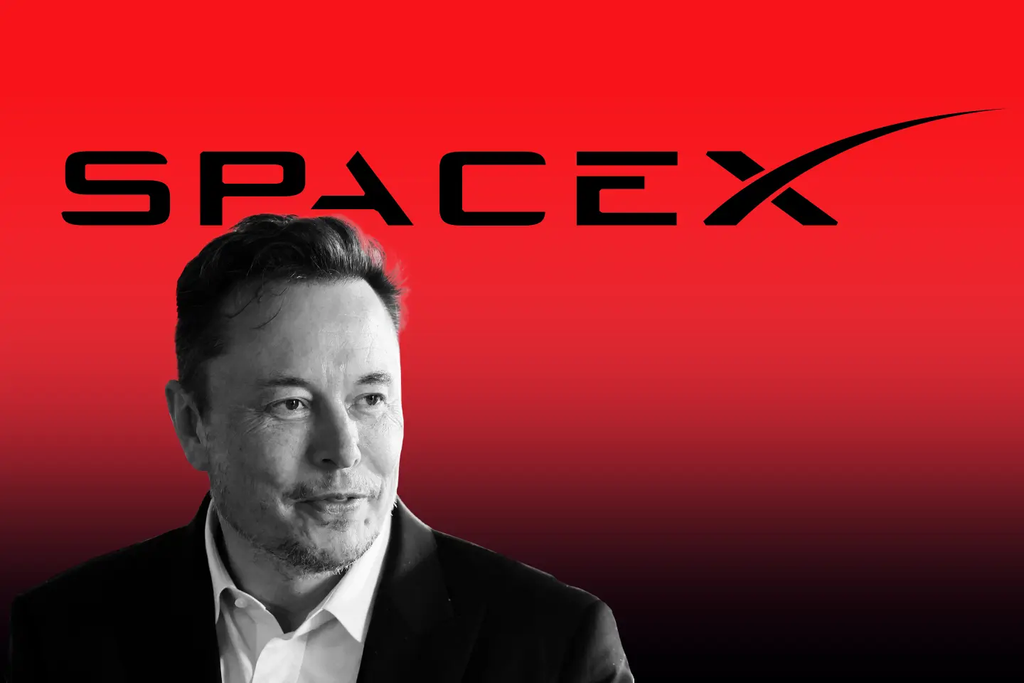
SpaceX is making one of the biggest bets in technology history. Elon Musk is leading a massive effort to raise $40 billion in debt financing to buy artificial intelligence chips from Nvidia. This deal is not just about building faster computers on Earth. It is about placing powerful supercomputers into orbit and changing how humans explore the universe.
The funding round is being organized by private equity giant Apollo Global Management alongside top international financial institutions. The goal is simple yet radical: secure hundreds of thousands of Nvidia high-performance graphics processing units (GPUs) to build the ultimate space-based AI ecosystem.
While most people think of SpaceX as a rocket company, this move proves that it is rapidly evolving into an AI computing powerhouse. The massive influx of high-performance chips will power everything from satellite communications to deep space missions. It signals a new era where artificial intelligence and space travel become completely inseparable.
The $40 Billion Move That Shocked the Tech World
Raising $40 billion to buy computer hardware is an enormous number. To put it into perspective, $40 billion is larger than the entire annual budget of most government space agencies. It is also one of the largest corporate debt deals ever created specifically for tech infrastructure.
SpaceX is partnering with investment giant Apollo Global Management to arrange this massive debt package. According to financial reports covered by The Business Times, the deal allows SpaceX to borrow the funds required to purchase Nvidia latest microprocessors, including the GB200 and GB300 Superchips.
The $0 Secret To Launching Your Entire Online Empire
Why pay hundreds every month for separate software? Build funnels, send emails, and make sales with Systeme.io completely free.
Get Started For $0Free Forever • No Credit Card Needed • Beginner-Friendly
Nvidia dominates the market for AI hardware, making its chips the most sought-after products in the modern economy. By committing tens of billions of dollars directly to Nvidia, SpaceX ensures it gets priority access to the fastest chips on the planet.
Reports indicate that SpaceX plans to build massive data centers packed with these chips. Elon Musk previously mentioned expanding the Colossus supercomputer project, and this new supply of chips will take those processing capabilities to unprecedented levels.
Financial analysts noted that this transaction represents a major shift in how tech expansion is funded. Instead of relying solely on stock sales or cash reserves, tech giants are using massive credit markets to fund AI infrastructure.
Why SpaceX Needs Millions of Supercomputing Chips
People often ask why a company that launches rockets needs so many AI processors. The answer lies in the sheer scale of SpaceX operations, starting with its Starlink satellite constellation.
Starlink currently operates thousands of satellites in low Earth orbit, beaming high-speed internet across the globe. Managing a massive fleet of satellites requires instant decision-making. AI chips allow satellites to track space debris, adjust orbits automatically, and manage network traffic without relying on instructions from Earth control rooms.
Sending raw data from space down to Earth ground stations takes time and consumes massive bandwidth. By placing AI processing chips directly in orbit or in specialized ground stations, SpaceX can process huge amounts of data in real time right where it is collected.
SpaceX is also developing fully autonomous spacecraft systems. Future missions to the Moon and Mars cannot rely on real-time human control because radio signals take up to 20 minutes to travel between Earth and Mars. Spacecraft must think for themselves during landing, surface navigation, and resource gathering.
Furthermore, Elon Musk artificial intelligence venture, xAI, works closely with SpaceX. The massive compute power generated by these $40 billion worth of Nvidia chips will train large language models and neural networks that serve both companies.
How Orbital AI Will Change Space Exploration Forever
Artificial intelligence in orbit will transform how humans interact with space. Traditional space missions rely heavily on supercomputers located on Earth, but distance creates lag. When exploring distant worlds, lag can cause catastrophic failures.
With advanced Nvidia chips integrated into space operations, spacecraft will be able to analyze surface conditions, detect hazards, and execute precision landings on alien terrain in milliseconds. This independence is essential for building human settlements on Mars.
Orbital AI data centers will also revolutionize Earth observation. Satellites equipped with AI chips can scan the Earth surface in real time to detect forest fires, predict severe storms, track crop health, and monitor rising ocean levels instantly.
Instead of transmitting raw gigabytes of imagery back to Earth ground stations for processing, AI chips on board satellites can analyze the photos instantly and send only critical alerts down to emergency responders on the ground.
Another massive benefit is space collision avoidance. Space is becoming increasingly crowded with defunct satellite parts and debris. Supercomputers powered by Nvidia processors can calculate millions of potential orbital trajectories simultaneously, enabling satellites to dodge debris autonomously.
The Massive Financial Loop Between SpaceX and Nvidia
This $40 billion deal exposes an interesting web of financial relationships in Silicon Valley and Wall Street. It shows how tech giants are pooling resources to drive the AI boom forward.
Nvidia holds a valuable investment stake in SpaceX, while SpaceX relies heavily on Nvidia chips to build its infrastructure. At the same time, major investment firms help structure debt platforms to lend SpaceX the cash to buy those chips.
Send, Spend & Hold Money Worldwide Without Hidden Fees
Transfer money internationally at the real exchange rate and hold 40+ currencies in one account.
Open a Wise AccountMid-market rate • Fast transfers • 40+ currencies
As detailed in financial reporting by Livemint, this setup creates a powerful cycle. Nvidia sells billions of dollars worth of chips, SpaceX receives top-tier computing power, and lenders collect interest on the debt.
However, some market analysts urge caution regarding the rapid expansion of corporate debt in the AI sector. Hundreds of billions of dollars in credit are being pumped into data centers and hardware across the tech industry.
Unlike equity investments, debt must be repaid on strict schedules regardless of revenue outcomes. SpaceX will need to ensure that its AI-driven services, including Starlink and space defense contracts, generate enough cash flow to service this substantial debt burden.
What This Means for Everyday Life on Earth
While $40 billion spent on space hardware sounds distant from everyday life, the benefits will touch people around the globe in practical ways.
Starlink internet users will likely see significant improvements in speed, reliability, and latency. As AI chips manage global network routing on the fly, internet service in remote villages, maritime routes, and airborne flights will become much faster and more stable.
Disaster response teams will gain access to real-time satellite intelligence during hurricanes, earthquakes, and floods. Fast data processing means emergency workers can locate survivors and evaluate damage within minutes rather than days.
Global climate tracking will also become far more accurate. High-powered computing clusters allow scientists to build precise digital models of Earth’s atmosphere and oceans, helping communities prepare for extreme weather events.
Finally, the technology developed to keep supercomputing hardware cool and functional in extreme environments like space will eventually trickle down into everyday consumer electronics, solar power systems, and battery storage.
The Battle for AI Supremacy in Space
SpaceX is not the only player looking to dominate the intersection of artificial intelligence and space technology. Rival companies and government space agencies are racing to build their own orbital computing systems.
Major defense contractors and international space agencies realize that whoever controls high-speed computing in orbit will control the future of satellite intelligence, navigation, and defense.
The $0 Secret To Launching Your Entire Online Empire
Why pay hundreds every month for separate software? Build funnels, send emails, and make sales with Systeme.io completely free.
Get Started For $0Free Forever • No Credit Card Needed • Beginner-Friendly
By making a massive $40 billion commitment right now, Elon Musk is attempting to secure a dominant market lead before competitors can catch up. Securing Nvidia hardware early ensures that SpaceX stays miles ahead in total compute capacity.
This move also establishes SpaceX as a major infrastructure provider for other space companies. In the future, smaller satellite companies may rent computing power from SpaceX orbital networks rather than launching their own hardware.
Overcoming the Technical Challenges of Space Computing
Deploying massive arrays of AI chips presents severe engineering challenges, especially when operating in space or near-vacuum environments.
Nvidia high-end chips generate an enormous amount of heat. On Earth, data centers use massive liquid cooling systems and air conditioning units to keep chips from melting. In space, there is no air to carry heat away, making thermal management exceptionally difficult.
SpaceX engineers must design advanced radiative cooling systems that push excess heat out into the cold vacuum of space using specialized liquid loops and radiator panels.
Radiation is another major obstacle. Cosmic rays and solar flares can flip bits in electronic memory and destroy delicate silicon circuits. SpaceX must radiation-shield these Nvidia chips or run redundant software checks to prevent computational errors.
Solving these mechanical and electrical challenges requires massive financial investment, which helps explain why SpaceX is raising such a vast sum of money.
The Bigger Picture for Global AI Infrastructure
The move by SpaceX is part of a much broader global push toward massive AI infrastructure spending. Tech companies around the world are pouring hundreds of billions of dollars into data centers, power grids, and specialized processing hardware.
What makes SpaceX effort unique is its ability to blend ground computing with space systems. While traditional tech companies build data centers near power plants on Earth, SpaceX is thinking about how computing extends into low Earth orbit and beyond.
As energy demands for AI data centers grow on Earth, offloading certain processing tasks to solar-powered space satellites could eventually become a viable alternative. Elon Musk $40 billion bet is the first major step toward that futuristic reality.
Furthermore, having such a vast network of computing power gives SpaceX an advantage in autonomous robotics. Whether it is managing autonomous starships or coordinating ground equipment on lunar landing pads, fast processing speed is the key to success.
Frequently Asked Questions (FAQs)
Why is SpaceX spending $40 billion on Nvidia chips?
SpaceX is buying Nvidia chips to build high-performance data centers for its Starlink satellite network, autonomous spacecraft navigation, and deep space exploration projects. The compute power will also support AI initiatives linked with xAI.
Is SpaceX buying these chips using cash or debt?
SpaceX is arranging a debt financing package led by private equity firm Apollo Global Management. The company is borrowing the money from banks and institutional investors to fund the hardware acquisition.
How will AI chips help Starlink internet?
AI chips allow Starlink satellites to calculate optimal routing paths in real time, avoid orbital debris, and manage global network traffic, leading to faster internet speeds and lower latency for users worldwide.
Can Nvidia chips survive in space?
Standard Nvidia chips require specialized radiation shielding and custom cooling systems to operate safely in space. SpaceX is engineering custom hardware enclosures to protect the chips from cosmic radiation and heat.
Will this hardware help SpaceX reach Mars?
Yes. Autonomous landing, real-time trajectory adjustments, and surface exploration on Mars require on-board AI computing because radio signals between Earth and Mars take up to 20 minutes to travel.
What Comes Next for Elon Musk’s Space Empire
Elon Musk $40 billion investment in Nvidia processors marks a turning point for both the space industry and the artificial intelligence market. By combining rocket engineering with state-of-the-art supercomputing, SpaceX is laying the foundation for autonomous space exploration and next-generation global communications.
As this massive funding deal closes, all eyes will be on how quickly SpaceX can deploy this compute power into its existing constellation and future missions. The convergence of space travel and artificial intelligence is no longer a distant fantasy—it is happening right now.
To stay updated on the latest trending tech stories, space breakthroughs, and global news, check out our about us page to learn more about what we do. If you have thoughts or news tips to share, feel free to drop a message on our contact page.
You can also follow the conversation and catch real-time updates across our social channels on Instagram, Facebook, and X (formerly Twitter).
