
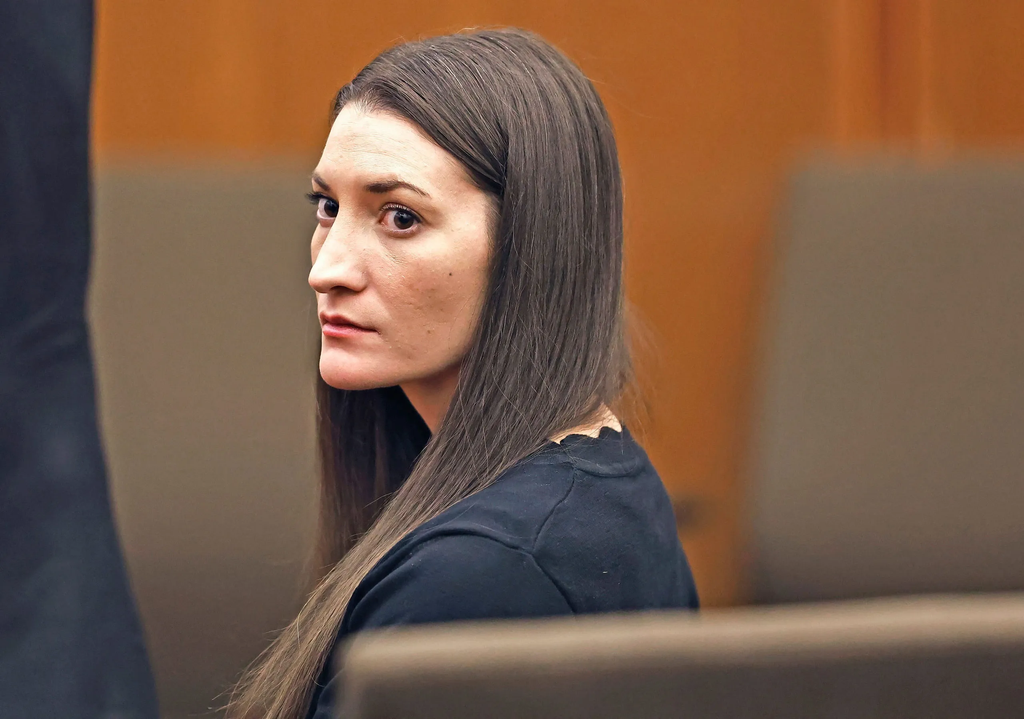
A Massachusetts judge has officially rejected a legal bid to clear Lindsay Clancy of murder charges. Plymouth Superior Court Judge William Sullivan handed down a written order denying a defense motion that asked him to find Clancy not guilty due to a lack of evidence. The ruling arrives less than a month after her seven-week murder trial ended in a dramatic mistrial because the jury could not reach a unanimous decision.
This latest court decision means the 36-year-old former labor and delivery nurse still faces first-degree murder charges in the deaths of her three young children. Defense attorney Kevin Reddington had argued that prosecutors failed to prove Clancy was responsible for the killings. However, Judge Sullivan ruled that the state presented enough physical and circumstantial evidence for a rational jury to make that determination.
The legal fight is far from over. With a single holdout juror preventing an acquittal during the first trial, the case has sparked intense debate over mental health, postpartum psychosis, and how the justice system handles severe mental illness. Here is a full breakdown of the judge’s ruling, the events that brought the case to court, and what lies ahead for Lindsay Clancy.
The Tragic Backstory Behind the High-Profile Case
To understand the weight of this legal decision, it is essential to look back at the heartbreaking event that shocked the country in early 2023. On the evening of January 24, 2023, emergency responders were called to a suburban home in Duxbury, Massachusetts.
Inside the home, police discovered three young children strangled in the basement: five-year-old Cora, three-year-old Dawson, and eight-month-old Callan. All three children died from their injuries.
The $0 Secret To Launching Your Entire Online Empire
Why pay hundreds every month for separate software? Build funnels, send emails, and make sales with Systeme.io completely free.
Get Started For $0Free Forever • No Credit Card Needed • Beginner-Friendly
The tragedy unfolded within a brief 25-minute window while Clancy’s husband, Patrick Clancy, had stepped out to pick up takeout food for the family. When Patrick returned, he found his wife missing from the main living area.
Lindsay Clancy had cut her wrists and neck before jumping from a second-story window of the home in an attempt to end her own life. She survived the fall but suffered severe spinal injuries that left her permanently paralyzed from the waist down.
Following the event, details emerged regarding Clancy’s mental health struggles leading up to that day. As a mother of three and a healthcare professional, she had been seeking help for severe anxiety, postpartum depression, and postpartum psychosis. Her legal team maintained that she was in the middle of a massive psychotic episode when the tragedy occurred.
The Seven-Week Trial and the Dramatic Mistrial
The high-profile murder trial began earlier this summer in Plymouth Superior Court and lasted for seven emotional weeks. The court heard testimony from medical experts, family members, first responders, and mental health professionals.
The prosecution argued that Clancy planned the killings intentionally. They pointed to her sending her husband out on an errand as proof of premeditation and argued that she knew what she was doing. Prosecutors charged her with first-degree murder, a crime that carries a mandatory sentence of life in prison without the possibility of parole.
On the other hand, the defense built its case around an insanity plea. Her defense lawyer presented evidence showing that Clancy was suffering from severe postpartum psychosis, experiencing command hallucinations and delusions that detached her from reality. Under Massachusetts law, a person is not criminally responsible if a mental disease prevents them from understanding the wrongfulness of their conduct or controlling their actions.
Deliberations were long and grueling. The jury deliberated for seven days over 36 hours. Reports revealed that the jury was deadlocked at 11 to 1 in favor of finding Clancy not guilty by reason of insanity. A single holdout juror refused to agree with the majority, preventing the jury from reaching a unanimous verdict.
On September 4, 2026, Judge Sullivan officially declared a mistrial. In legal terms, a mistrial is neither a finding of guilt nor an acquittal. It simply leaves the case unresolved, resetting the charges back to where they started before the trial began.
For a broader look at how judges handle complex evidence and procedural challenges in major criminal cases, read about this recent military judge decision in a high-profile federal case.
The Defense Strategy: Asking the Judge for an Acquittal
Following the mistrial, Lindsay Clancy’s defense team made a bold move to prevent a second trial altogether. Defense attorney Kevin Reddington filed a formal motion for a required finding of not guilty.
In court, Reddington argued that prosecutors had failed to present sufficient evidence that Clancy was responsible for the deaths of her children. He claimed that the state had not established probable cause and argued that the evidence was too weak to allow a conviction to stand.
“They just immediately assumed that this woman was guilty,” Reddington told the court during oral arguments. He emphasized that the prosecution failed to provide direct proof linking her to the intentional killing of the children beyond reasonable doubt.
Prosecution attorneys pushed back aggressively against the defense motion, calling the argument “laughable.” Prosecutor Shanan Buckingham pointed out that the trial record was filled with extensive physical evidence, witness testimony, and forensic data collected from the crime scene. She noted that the defense had never previously contested that Clancy committed the physical acts, focusing instead on her mental state at the time.
This legal maneuvering reflects common courtroom tactics seen in major criminal trials across the country. You can compare this strategy to other high-stakes court proceedings, such as the Utah court ruling in a high-profile murder case or the recent aquittal in a Los Angeles murder trial.
Why Judge Sullivan Denied the Not Guilty Motion
On October 1, 2026, Judge William Sullivan issued his written order denying the defense request to acquit Clancy.
Send, Spend & Hold Money Worldwide Without Hidden Fees
Transfer money internationally at the real exchange rate and hold 40+ currencies in one account.
Open a Wise AccountMid-market rate • Fast transfers • 40+ currencies
In his decision, Judge Sullivan explained that the legal threshold for granting a required finding of not guilty is extremely high. Under court rules, a judge can only step in and clear a defendant if no reasonable jury could possibly find them guilty based on the evidence presented.
“There was evidence introduced, both physical and circumstantial, that would permit a rational trier of fact to find beyond a reasonable doubt the elements of the charge of murder,” Judge Sullivan wrote in his ruling.
By issuing this denial, the judge made it clear that deciding guilt or innocence belongs to a jury, not the bench. Because the state presented enough evidence to build a plausible legal case, the trial record stands, and the prosecution retains the legal right to pursue a second trial.
The decision was covered widely by major news outlets, including reports from PBS NewsHour and CBC News, which highlighted how rare it is for a judge to overturn charges following a deadlocked jury.
What Happens Next in the Lindsay Clancy Case?
With the motion for an acquittal denied, attention turns to what the future holds for the case. Several key steps and decisions will shape the coming months.
1. Additional Pending Motions
The defense team has filed other motions that remain pending before the court. These include a motion to dismiss the charges based on double jeopardy arguments and a motion requesting an investigation into the conduct of the single holdout juror from the first trial. Judge Sullivan is scheduled to hear arguments on these remaining matters at the next court hearing on November 2, 2026.
2. The Prosecution’s Choice
Plymouth County District Attorney Timothy Cruz and his team face a big decision. Prosecutors must choose whether to retry Clancy on the original first-degree murder charges, reduce the charges, offer a plea agreement, or drop the case entirely. Given the intense public interest and the seriousness of the charges, legal experts believe a retrial or a structured resolution remains the most likely path.
3. Scheduling a Second Trial
If the prosecution proceeds with a retrial, setting a court date will take time. Defense attorney Kevin Reddington informed the court that due to his existing caseload and trial commitments, he would not be available for a second trial until at least June 2027.
Maternal Mental Health and the National Conversation
Beyond the courtroom drama, the Lindsay Clancy case has brought postpartum mental health to the forefront of national discussion. Postpartum psychosis is a severe, rare mental health condition that affects approximately 1 to 2 out of every 1,000 mothers after childbirth. It can cause sudden onset hallucinations, delusions, paranoia, and severe mood swings.
Medical experts emphasize that postpartum psychosis is a psychiatric emergency that requires immediate medical intervention. Unlike typical postpartum baby blues or depression, psychosis distorts a person’s perception of reality, often making it impossible for them to process their actions rationally.
The $0 Secret To Launching Your Entire Online Empire
Why pay hundreds every month for separate software? Build funnels, send emails, and make sales with Systeme.io completely free.
Get Started For $0Free Forever • No Credit Card Needed • Beginner-Friendly
The case has highlighted the urgent need for better maternal mental health screening, earlier intervention, and greater public awareness. Many advocates hope that increased conversation will help mothers and families recognize warning signs before tragedy strikes.
For those interested in general health tools and digital wellness guidance, read about how technology is evolving to support wellness via modern digital health tools and features.
Frequently Asked Questions
Why did the judge refuse to declare Lindsay Clancy not guilty?
Judge William Sullivan ruled that prosecutors provided sufficient physical and circumstantial evidence during the trial. Under the law, if a rational jury could look at the evidence and potentially find the defendant guilty, a judge cannot step in to issue an acquittal.
What was the jury vote before the mistrial was declared?
The jury was deadlocked 11 to 1 in favor of finding Clancy not guilty by reason of insanity. Because one holdout juror refused to agree, the jury could not reach the required unanimous verdict, leading to a mistrial on September 4, 2026.
Will Lindsay Clancy face a second trial for murder?
It is very likely. The prosecution retains the legal right to retry her on first-degree murder charges. The court will address scheduling and pending motions during the next status hearing in November 2026, though a new trial may not begin until mid-2027.
What is the difference between a mistrial and an acquittal?
An acquittal means a jury or judge has officially found a defendant not guilty, ending the case and preventing retrial. A mistrial means the trial ended without a valid verdict, usually due to a deadlocked jury or procedural error. A mistrial does not clear the defendant, and charges remain active.
When is Lindsay Clancy’s next court date?
The next status hearing is scheduled for November 2, 2026. At this hearing, the judge will consider remaining defense motions and discuss timelines for potential future proceedings.
Staying updated on major legal developments and national news helps keep you informed on stories that shape public discourse. For more insightful updates, visit our About Page to learn more about our coverage or get in touch through our Contact Page.
You can also follow the conversation and connect on social media:
- Follow on Instagram
- Connect on Facebook
- Join the discussion on X (formerly Twitter)
