
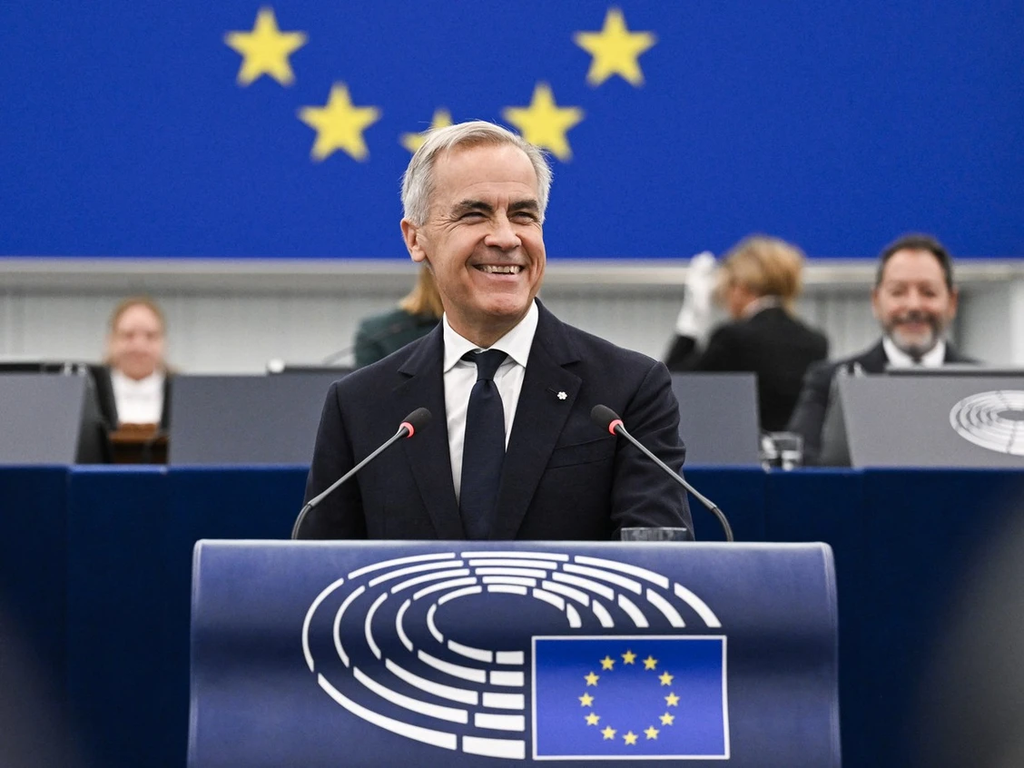
Donald Trump’s administration just dropped another massive trade bombshell, and this time the target is America’s closest neighbor. Washington is now openly threatening to hit Canada with the exact same heavy tariffs it imposes on the European Union.
This sudden escalation happened because Canadian Prime Minister Mark Carney decided to look across the Atlantic Ocean for new trade partners. When the European Union offered Canada a special “associate member” spot, Carney welcomed the deal with open arms.
Now, the US government claims the old rules are completely dead. US officials are warning that if Canada wants to act like a European nation, Washington will start treating Canada just like Europe when it comes to taxes and trade.
How Did We Get Into This Trade War?
For decades, the United States and Canada enjoyed one of the closest and most peaceful trade relationships on Earth. The two nations share a border that stretches over 5,000 miles. Millions of jobs on both sides depend on goods moving back and forth without extra taxes or endless paperwork.
Trucks cross the border every day carrying everything from crude oil and aluminum to auto parts and fresh food. It was a smooth system that helped keep prices low for families in both countries.
The $0 Secret To Launching Your Entire Online Empire
Why pay hundreds every month for separate software? Build funnels, send emails, and make sales with Systeme.io completely free.
Get Started For $0Free Forever • No Credit Card Needed • Beginner-Friendly
Things started to break down when Washington began slapping fresh tariffs on Canadian exports. The US government argued that the trade balance was unfair and demanded major concessions from Ottawa.
Canada felt backed into a corner. Facing high taxes on its products and unpredictable demands from its southern neighbor, Canadian leaders realized that relying almost entirely on the US was becoming too risky.
The European Pivot: Canada Looks Across the Atlantic
In mid-September, European Commission President Ursula von der Leyen made an unprecedented announcement. She formally invited Canada to become the European Union’s very first “associate member”.
This offer was a huge milestone. It opened the door for Canada to build deep economic ties, share industrial technology, and trade far more easily with 27 European countries.
Mark Carney did not hesitate. He traveled to Europe and delivered a speech to the European Parliament, backing the idea of deep cooperation. He explained that democracies need to stick together and build stronger supply chains during uncertain times.
To Canadian leaders, looking for new buyers in Europe was just common sense. It was a way to protect their economy so one single country could not bully them.
To Donald Trump, however, Canada’s move felt like a betrayal. He publicly called the idea of Canada joining hands with Europe “laughable” and warned that any attempt to bypass the US would lead to swift punishment.
Washington Hits Back: Pete Hoekstra’s Big Warning
The situation took a turn for the worse when Pete Hoekstra, the US Ambassador to Canada, spoke out about the conflict. In a candid interview, Hoekstra warned that preliminary trade talks between the US and Canada were no longer valid.
Hoekstra explained that too much had changed in just three weeks because of Canada’s decision to embrace Europe. He stated that Washington might stop treating Canada as a privileged border partner altogether.
Instead, the US could simply fold Canada into the same tariff system used for European exports. Under that arrangement, Canadian products could face a tariff ceiling of around 15% or higher across several major industries.
The message from Washington was clear: if Canada chooses to align its economy with Europe, it will have to pay European-style prices to enter the American market.
What Is a Tariff and How Does It Affect You?
Trade news can sometimes sound complicated, but the core idea behind a tariff is very simple.
A tariff is just a tax that a government places on items brought in from another country. Many people assume that the country sending the product pays the tax, but that is not how it works in practice.
When the US government puts a 15% tariff on Canadian goods, the American business importing those goods must pay that extra 15% tax to the US government.
To cover that extra cost, the American business raises the price of the item. As a result, regular shoppers end up paying more money at the store.
Send, Spend & Hold Money Worldwide Without Hidden Fees
Transfer money internationally at the real exchange rate and hold 40+ currencies in one account.
Open a Wise AccountMid-market rate • Fast transfers • 40+ currencies
At the same time, Canadian manufacturers lose business because their products become too expensive for American buyers. In the end, families on both sides of the border end up losing money.
Is the CUSMA Trade Deal Dead?
The Canada-United States-Mexico Agreement (CUSMA) was designed to protect free trade across North America. It took years to negotiate and was meant to give businesses in all three countries long-term rules they could count on.
However, Prime Minister Mark Carney recently made headlines across top news outlets like The Guardian when he remarked that the US seems to sign trade deals “with a pencil.” His comment pointed out that Ottawa feels Washington breaks or changes trade agreements whenever it wants.
Legal experts note that Washington cannot legally tear up CUSMA and dump Canada into a European tariff group overnight. CUSMA is a formal treaty that requires a specific process to change or cancel.
Even so, governments have ways around trade rules. By using national security arguments, executive orders, or border delays, Washington can cause serious economic pain long before any court or international tribunal steps in to stop it.
The Everyday Impact on Gas, Groceries, and Cars
If this trade spat turns into a full-scale economic war, ordinary people will feel the burn quickly in their everyday lives.
Energy and Fuel Costs
The United States imports huge amounts of crude oil, natural gas, and hydro electricity from Canada to keep power grids running and gas stations stocked. If Washington slaps heavy tariffs on Canadian energy, utility bills and pump prices across the US could jump.
Automobiles and Transportation
The automotive industry relies heavily on cross-border supply chains. A single car part might cross the US-Canada border six or seven times while being assembled. If tariffs are charged at every step, the final price of a new car will skyrocket for buyers in both countries.
Food and Groceries
Canada exports massive quantities of wheat, beef, pork, and fertilizer to the US, while American farmers ship fresh fruit and vegetables north. Added taxes on these items will push grocery bills higher at a time when families are already struggling with inflation.
Can Canada Really Survive Without America?
It is easy to see why Canada wants to make new friends in Europe, but walking away from the American market is not easy.
The $0 Secret To Launching Your Entire Online Empire
Why pay hundreds every month for separate software? Build funnels, send emails, and make sales with Systeme.io completely free.
Get Started For $0Free Forever • No Credit Card Needed • Beginner-Friendly
Right now, roughly 75% of all Canadian exports go directly to the United States. No other country in the world can easily buy that volume of goods from Canada.
Shipping lumber, steel, or oil across the Atlantic Ocean to Europe takes more time and costs far more money than driving it across the land border into Michigan or New York.
Still, Carney and his government believe that staying completely dependent on an unpredictable partner is far more dangerous in the long run. By building stronger ties with the European Union, Canada hopes to create a safety net so its economy is not at the mercy of shifting political winds in Washington.
What Washington Is Saying Behind Closed Doors
Inside the US government, opinion on these new tariffs is split.
Supporters argue that Canada has taken advantage of free trade access for too long while shielding its own domestic industries like dairy and lumber. They believe that threatening heavy tariffs is the only way to force Canada to make concessions.
On the other side, many economists and business groups are raising red flags. They point out that punishing Canada hurts American factories that rely on cheap Canadian raw materials.
Reports from outlets like CTV News highlight that many US business leaders are urging the government to cool down the rhetoric and return to honest negotiations before permanent damage is done to the North American economy.
The Geopolitical Big Picture
This fight is not just about taxes on wood or car parts. It is about how the world is dividing into new political alliances.
For decades, North America operated as a single, united economic block. Now, Canada is actively looking to build deeper ties with Europe, while Washington is focusing heavily on protecting its domestic market.
European leaders are eager to welcome Canada into their circle. They see Canada as a reliable source of clean energy, minerals, and high-tech innovation.
If Canada successfully builds an economic bridge to Europe, it could inspire other nations to diversify their trade away from the US as well. That possibility is exactly why Washington is reacting so aggressively to Carney’s European pivot.
What Lies Ahead for Both Nations?
We are approaching a critical moment in US-Canada relations.
Will Donald Trump actually enforce 15% tariffs on Canadian goods, or is this another high-stakes bluff to force Ottawa back to the negotiating table?
Trump has a long history of using extreme threats during trade talks to gain maximum leverage. However, Mark Carney has made it clear that Canada will not be pushed around easily.
If neither side backs down, both countries could enter a prolonged economic standoff. That would mean higher prices for shoppers, slower job growth, and a rocky future for businesses across North America.
Frequently Asked Questions (FAQs)
Why is the US threatening Canada with EU-style tariffs?
Washington is unhappy that Canadian Prime Minister Mark Carney accepted an offer from the European Union to explore “associate member” status. US officials argue that if Canada aligns its economy with Europe, it should face the same tariff rules as European nations.
What is an EU “associate member” status?
Associate membership allows a non-European country to cooperate closely with the European Union on trade, science, and policy without becoming a full member of the EU. It gives Canada better access to European markets while letting it keep its own independent government.
How will these tariffs affect everyday prices?
Tariffs act as a tax on imported items. If tariffs are placed on Canadian goods, US businesses importing energy, lumber, or food will pass those costs onto consumers through higher prices at the store and gas pump.
Can Donald Trump legally cancel CUSMA?
Canceling CUSMA requires formal legal steps and approval processes under the treaty’s terms. While the President cannot simply delete the agreement instantly, the administration can use executive powers and trade policies to impose taxes and create trade barriers.
Is Canada planning to stop trading with the US?
No. The US remains Canada’s largest trading partner by far. Canada is simply trying to expand its trade with Europe so it does not rely entirely on the US market for its economic survival.
Staying informed about international trade and global news helps you understand where the world is heading and how it impacts your wallet. Whether it is breaking political updates or economic shifts, getting the full story gives you a clear picture of what lies ahead.
To learn more about our mission and stay updated on the biggest viral stories around the world, visit our About Us page or reach out directly through our Contact page.
You can also follow the conversation and get daily updates by joining our official community on Instagram, connecting with us on Facebook, and following our latest updates on X (Twitter).
