
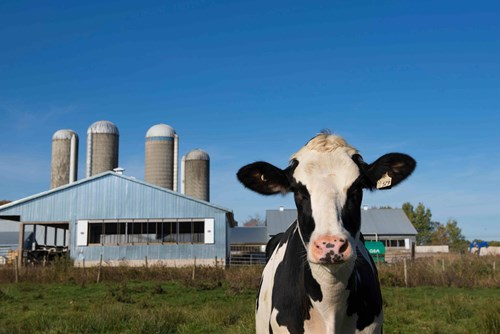
A massive trade war has erupted along the world’s longest undefended border, and fresh milk is right in the center of the crossfire. Canadian dairy farmers are facing an unprecedented crisis after United States President Donald Trump imposed a staggering 50 percent tariff on Canadian goods worth $20 billion, including dairy exports.
Cross-border sales of Canadian milk, cream, and dairy byproducts have come to an abrupt halt. Across provinces like British Columbia and Ontario, processing facilities are scaling back orders because American buyers can no longer afford the steep price hikes triggered by the import tax.
Farmers are stuck holding millions of liters of highly perishable milk that cannot easily be sold somewhere else overnight. Without a quick solution between Washington and Ottawa, agricultural experts warn that family farms could face severe financial losses, forced milk dumping, and long-term instability.
Here is an in-depth breakdown of what triggered this sudden dairy conflict, how it directly impacts family farms on both sides of the border, and what it means for everyday consumers.
The Perishable Panic: Why Milk Cannot Wait for Politics
To understand why this tariff hit Canadian dairy producers so hard, it helps to look at how a dairy farm actually operates. Unlike factories that build cars or make electronics, dairy cows produce fresh milk every single day, morning and night. You cannot push a pause button on a herd of cows, nor can you store raw milk in a warehouse for months while politicians negotiate trade deals.
The $0 Secret To Launching Your Entire Online Empire
Why pay hundreds every month for separate software? Build funnels, send emails, and make sales with Systeme.io completely free.
Get Started For $0Free Forever • No Credit Card Needed • Beginner-Friendly
Dairy farming operates on a strict, fast-paced schedule. Milk is collected from farms daily, tested, transported to regional processors, packaged, or converted into items like cheese, butter, yogurt, and whey powder.
The Ripple Effect from Processors to Barns
When a dairy processor loses its export market in the United States, it immediately reduces its order volume from local farms. The processor simply does not have the capacity or demand to handle the excess raw milk.
When processing plants stop taking excess milk, farmers are left with only two choices: find another buyer instantly, or pour the unsold milk down the drain.
Casey Pruim, a dairy farmer who runs a herd of 330 cows in Abbotsford, British Columbia, explained that milk is uniquely vulnerable to trade shocks. Processors can cancel or reduce orders in a matter of hours, but farmers cannot change their herd’s production speed overnight. If processors cut back because American buyers are priced out, local farmers take the full financial blow.
Behind the Border Clash: Supply Management vs Open Markets
Why did the US target Canadian dairy in the first place? The dispute centers around a long-standing Canadian agricultural policy called “supply management.”
For decades, Canada has regulated its domestic dairy, egg, and poultry markets. The government controls how much milk farms produce using quotas, sets stable prices to protect local farmers, and places high tariffs on dairy imports that exceed set quotas. This system keeps Canadian dairy prices steady and protects local family farms from being overwhelmed by massive foreign competitors.
The Argument from Washington
President Trump and US agricultural groups have argued that Canada’s supply management rules create an unfair playing field. Trump posted on Truth Social that Canada was treating American farmers unfairly and using high tariffs to block US dairy products.
However, trade statistics paint a far more balanced picture. Under the United States-Mexico-Canada Agreement (USMCA), American dairy companies already gained expanded access to Canadian store shelves.
In fact, the United States runs a massive trade surplus with Canada when it comes to dairy. In 2025, Canada exported around $308.7 million CAD ($220.7 million USD) in dairy products to the US, while importing a massive $1.355 billion CAD ($968.5 million USD) worth of American dairy products.
Even with that huge surplus in America’s favor, Washington insisted that Canada drop its protective barriers, leading directly to the 50 percent tariff penalty.
Canada Strikes Back: Retaliatory Tariffs Turn Dispute Into Full Trade War
Canada did not stand idly by after the 50 percent tariffs went into effect. The Canadian government responded with its own set of retaliatory tariffs targeting $20 billion worth of American goods.
Canada placed a matching 50 percent tariff on US imports of milk, cream, and whey products, alongside a 25 percent tariff on various American cheeses.
This retaliatory move turned a localized dispute into an all-out trade war across the border, leaving businesses on both sides scrambling to cope with rising costs and lost orders.
American Small Businesses Feel the Pinch
The cross-border trade fight is hurting American small businesses just as much as Canadian ones. For example, artisanal cheesemakers in Vermont located just miles from the Canadian border reported immediate order cancellations from wholesale buyers in Canada.
Canadian stores and restaurants, reacting both to retaliatory tariffs and growing consumer frustration over trade rhetoric, began canceling pre-orders for American specialty cheeses.
Send, Spend & Hold Money Worldwide Without Hidden Fees
Transfer money internationally at the real exchange rate and hold 40+ currencies in one account.
Open a Wise AccountMid-market rate • Fast transfers • 40+ currencies
At the same time, rising energy costs and border friction have created what business owners call a “thousand small cuts,” making operations far more expensive for small-scale agricultural producers on both sides of the divide.
The Human Cost: Real Farmers Facing Uncharted Waters
The human cost of this economic dispute is felt directly on rural farmsteads. Dairy farming requires huge upfront investments in land, feeding equipment, automated milking parlors, and livestock care. Farms operate on modest profit margins, leaving little room to absorb sudden 50 percent cost swings.
David Wiens, President of the Dairy Farmers of Canada, publicly stated that these tariffs are completely unwarranted and cause direct harm to supply chains in both nations.
Dylan Kruger, Director of Public Affairs at BC Dairy, noted that massive uncertainty now hangs over the entire agricultural sector. Because the trade shock happened so fast, industry leaders are still trying to figure out if excess milk can be redirected to other domestic products or international buyers before farm finances collapse.
Why Finding New Markets Is Not Easy
Some observers suggest that Canadian producers should simply sell their excess milk products to countries in Europe or Asia. While that sounds simple in theory, global trade does not work like a local garage sale.
Bryan Yu, Chief Economist at Central 1 Credit Union, pointed out that producers cannot adjust to a 50 percent tariff overnight. International health certifications, shipping logistics for refrigerated goods, long-term supply contracts, and foreign trade regulations take months or years to establish.
Canadian farmers do not have months of cushion; they have fresh milk in their tanks right now. Losing their primary neighbor market overnight creates immediate financial strain that cannot be quickly offset elsewhere.
How Smart Tech and Automation Can Help Farmers Navigate Economic Shocks
When economic crises hit traditional industries like agriculture, technology and modern automation become vital tools for survival. Dairy farming has evolved into one of the most high-tech sectors in modern food production, relying heavily on data analytics, automated feeding machines, and precision supply chain tracking.
Farms using advanced technology can track individual cow yield, adjust feed blends on the fly, and optimize milking schedules to manage total output more efficiently. During a trade shock, having real-time data allows farm managers to adjust operations quickly, lowering operating overhead while keeping animal welfare high.
Beyond the farm gate, smart supply chain automation plays a big role in helping producers pivot. Digital logistics platforms can match sudden local milk surpluses with processing plants that produce shelf-stable items like powdered milk, butter, or specialty canned products.
The $0 Secret To Launching Your Entire Online Empire
Why pay hundreds every month for separate software? Build funnels, send emails, and make sales with Systeme.io completely free.
Get Started For $0Free Forever • No Credit Card Needed • Beginner-Friendly
If you are curious about how modern tech solutions and digital systems are transforming traditional industries, take a look at our Technology and AI section for deeper insights into how automation is shaping the global economy.
Similarly, small business owners and creators looking to build resilient online revenue streams during uncertain economic times can explore strategic guides on YouTube Automation to learn how automated content systems work.
What Comes Next for Grocery Prices and Border Commerce?
As the trade standoff continues, consumers on both sides of the border are asking one major question: how will this affect grocery bills?
In the short term, Canadian consumers might see stable or slightly lower prices on certain domestic dairy products if local processors attempt to clear out excess milk stock within the country. However, if the trade war drags on and forces smaller farms out of business, domestic production capacity could shrink, leading to higher prices down the line.
For American shoppers, retaliatory tariffs on imported cheeses and specialty dairy ingredients mean higher prices on imported specialty items. Furthermore, because American cheese makers and dairy processors lose out on sales to Canada, overall market friction increases costs across the board.
Trade negotiators from both nations face growing pressure from agricultural groups to reach a sensible compromise before long-term structural damage occurs. Until a deal is struck, farmers remain on high alert, doing everything possible to protect their herds and livelihoods.
Frequently Asked Questions (FAQs)
What caused the recent trade conflict between US and Canadian dairy?
The conflict began when US President Donald Trump placed a 50 percent tariff on $20 billion in Canadian goods, including dairy. The US administration claimed Canada’s supply management system and protective tariffs hurt American dairy exporters. Canada responded with retaliatory tariffs on US goods.
What is Canada’s supply management system?
Supply management is a national policy that controls the production volume of dairy, eggs, and poultry in Canada. It uses quotas to match supply with domestic demand, sets minimum prices to support farm incomes, and applies steep tariffs on imports above set limits to protect local producers.
Why can’t Canadian farmers just store their excess milk?
Raw milk is highly perishable and must be processed within days of milking. Farms cannot pause milk production or store raw liquid milk indefinitely. If processing plants cut back orders due to lost export markets, farmers face milk dumping if alternative buyers cannot be found right away.
Did Canada retaliate against US tariffs?
Yes, Canada announced retaliatory tariffs on $20 billion worth of American products, effective September 8. This included a 50 percent tariff on US milk, cream, and whey, plus a 25 percent tariff on various American cheeses entering Canada.
How does this trade war affect everyday consumers?
Shoppers could see price shifts on imported dairy items and packaged goods that rely on cross-border dairy ingredients. While domestic milk supplies remain steady, long-term trade tension threatens farm stability and increases overall supply chain costs.
The ongoing standoff between Washington and Ottawa highlights just how closely connected modern agriculture and international trade really are. When high-level trade policy changes overnight, the impact flows straight down to local farm communities, local businesses, and everyday grocery shoppers.
To learn more about our mission to bring you clear, honest coverage of major news and global developments, visit our About Us page. Have thoughts or feedback on this story? Feel free to reach out directly through our Contact Us page.
Stay connected with our community and get real-time updates by following us on social media:
- Check out our official updates on Instagram.
- Join the community conversation on Facebook.
- Follow our real-time trade updates and breaking news coverage on X (Twitter).
