
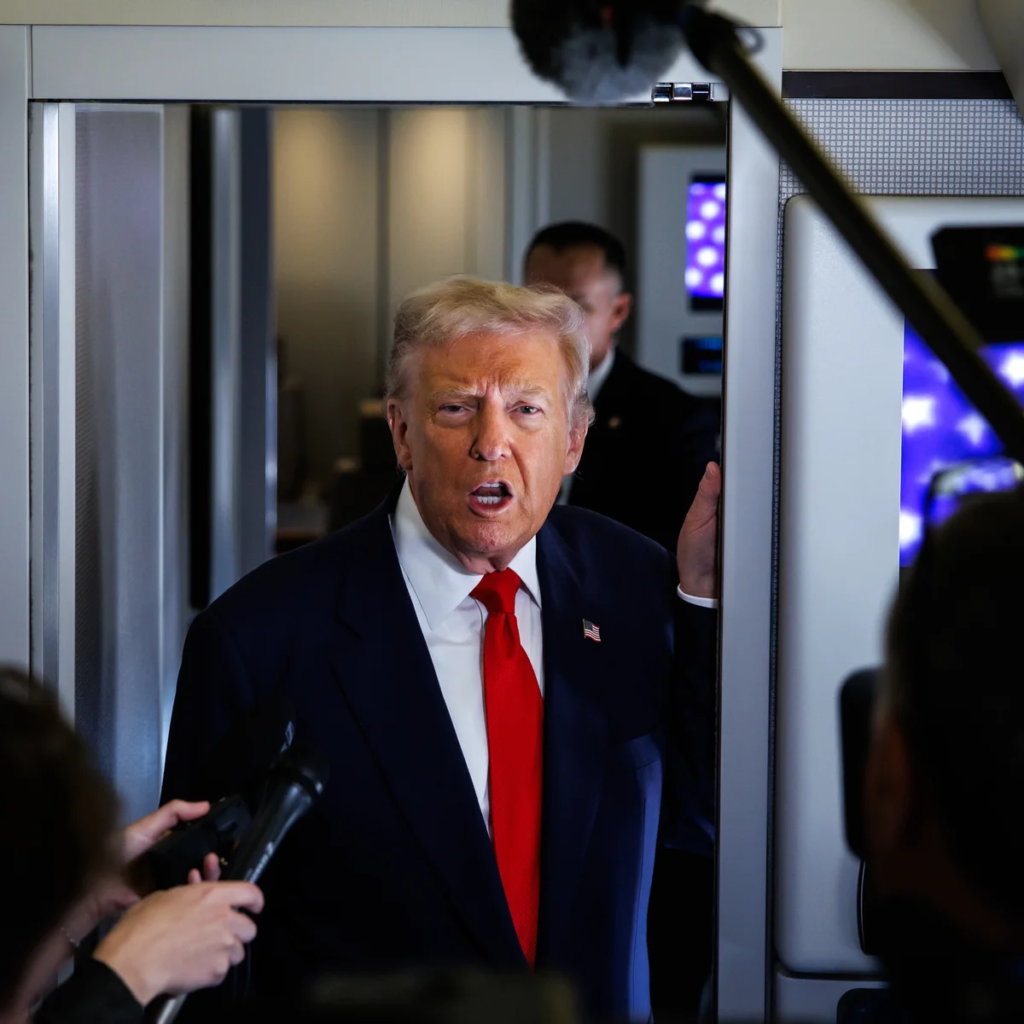
President Donald Trump sent shockwaves through the political world after officially announcing a ban on three major news organizations from the White House. Effective immediately, reporters from CNN, MS NOW, and Politico are barred from stepping inside presidential spaces.
The dramatic decision was delivered directly through a post on Truth Social. Trump accused the news outlets of repeatedly publishing what he called fake news, fiction, and lies regarding his administration and the country as a whole. He also warned that more news outlets could face similar bans in the near future if their reporting does not change.
This sudden move marks one of the most direct legal and political clashes between the White House and the press corps in modern American history. It immediately sparked a massive debate across the nation about government accountability, freedom of speech, and the constitutional limits of executive power.
What Just Happened at the White House?
The announcement came without prior warning from the press secretary’s office. Trump made his position clear in a series of fiery public statements, expressing deep frustration over how his second-term policies and international decisions have been covered.
He stated that media organizations shouldn’t be allowed to write fiction while covering the President of the United States. According to the administration, the ban targets outlets that consistently produce coverage the President considers unfair or inaccurate.
The $0 Secret To Launching Your Entire Online Empire
Why pay hundreds every month for separate software? Build funnels, send emails, and make sales with Systeme.io completely free.
Get Started For $0Free Forever • No Credit Card Needed • Beginner-Friendly
The three targeted outlets are among the most prominent news organizations in Washington:
- CNN: A major global news network that has covered presidential administrations for decades.
- MS NOW: The freshly rebranded cable news network formerly known as MSNBC, known for its intense analytical coverage of White House policies.
- Politico: A digital political news outlet widely read by lawmakers, staffers, and political insiders across Capitol Hill.
Reporters from these networks arrived at White House security checkpoints only to discover that their access credentials had been revoked or restricted. The decision leaves dozens of journalists locked out of routine press briefings, press conferences, and presidential events.
What Triggered This Sudden Media Ban?
While the President did not cite a single specific news report as the sole cause for the ban, tensions between the administration and these three major news outlets have been rising for months.
Journalists from CNN, MS NOW, and Politico have been reporting heavily on high-stakes foreign policy moves, including diplomatic talks overseas. Outlets like CNN and Politico recently published detailed reports analyzing international negotiations, such as Trump envoys heading to Kyiv for peace talks.
At the same time, domestic political reporting has caused friction. News organizations have been scrutinizing economic changes, regulatory shifts, and local political pushback, including stories like Texas Republicans turning against massive data centers.
When coverage focuses heavily on political friction or policy disagreements, the administration often argues that the press is ignoring positive achievements. The White House maintains that barring these outlets is a necessary step to stop the spread of what it considers misleading information.
On the other hand, media executives argue that aggressive questioning and critical reporting are essential parts of keeping the public informed. They stress that scrutinizing government decisions is standard political journalism, not personal hostility.
Has a President Ever Banned the Press Before?
Clashes between American presidents and the journalists who cover them are not new. History is filled with moments where White House leaders grew angry over critical headlines and tried to push back against the press core.
Presidents like Lyndon B. Johnson and Richard Nixon famously railed against news reports during their terms. Nixon even compiled private lists of political opponents and journalists he felt were treating his administration unfairly. However, formal bans revoking press credentials across entire news corporations have almost always run into major legal roadblocks.
In 2018, during his first term in office, Trump tried to revoke the White House press pass of CNN reporter Jim Acosta following a heated exchange during a televised press conference. CNN filed an immediate lawsuit, and a federal judge ruled that the White House had violated due process rights, ordering the administration to restore Acosta’s credentials.
More recently, in 2025, the administration limited access for the Associated Press after the news agency refused to update its internal style guide to match a presidential preference regarding geographic names. That dispute also led to ongoing federal court proceedings over First Amendment access rights.
Legal scholars point out that historical precedents like Sherrill v. Knight established clear rules decades ago. Those court rulings determined that White House press credentials represent a public right of access that cannot be denied arbitrarily or based on an outlet’s political viewpoint.
The First Amendment and the Coming Legal Battle
Media organizations and constitutional lawyers are already preparing to challenge the ban in federal court. The legal core of the case centers on the First Amendment of the U.S. Constitution, which protects both free speech and freedom of the press.
Legal experts explain that while the White House can control security and room capacity, it cannot legally deny press credentials based on whether it likes or dislikes a news organization’s coverage. Doing so is known in constitutional law as viewpoint discrimination.
When a government entity grants access to the press, it generally must apply equal rules to all recognized news organizations. If one outlet is allowed inside while another is kicked out simply because of its editorial stance, courts typically view that as an unlawful attempt to silence speech.
Send, Spend & Hold Money Worldwide Without Hidden Fees
Transfer money internationally at the real exchange rate and hold 40+ currencies in one account.
Open a Wise AccountMid-market rate • Fast transfers • 40+ currencies
Press freedom groups, including the White House Correspondents’ Association and PEN America, have issued strong statements warning that banning journalists sets a dangerous precedent. They argue that if any president can choose which reporters are allowed to ask questions, the public loses its primary window into how decisions are made.
The White House legal team, however, is expected to argue that executive access is a privilege rather than an unlimited right. They may contend that the President has the authority to decide who receives special access to presidential workspaces.
How Are Journalists and Outlets Responding?
Despite being blocked from the physical brief room, CNN, MS NOW, and Politico have made it clear that their news gathering will not stop. Journalists do not rely solely on White House press passes to cover the government.
Reporters are adapting quickly by using alternative methods to gather information and track policy developments:
- Congressional Reporting: Covering public hearings, speeches, and statements from lawmakers on Capitol Hill.
- Public Documents and Official Records: Reviewing official executive orders, agency filings, and court documents.
- Direct Sources: Speaking directly with government officials, policy advisors, and independent analysts outside official briefing rooms.
- Digital and Broadcast Media: Monitoring public broadcasts, official social media feeds, and press releases.
News managers at the affected outlets reiterated their commitment to independent journalism. They stressed that their job is to report facts accurately and hold power accountable, regardless of political pressure or restricted physical access.
How Media and News Coverage Are Changing
This latest conflict highlights how much the media landscape has changed in recent years. Traditional TV networks and print newspapers no longer hold a total monopoly on political news distribution.
With traditional press channels facing new hurdles, millions of news consumers are turning to alternative digital spaces. Readers are increasingly finding analysis through independent newsletters, digital creator platforms, and specialized tech channels.
For example, many creators and journalists now use modern distribution models like Substack to earn money and share newsletters directly with their audiences without needing approval from big media companies.
Artificial intelligence and automated platforms are also changing how information moves around the globe. Many digital readers rely on automated content tools and algorithmic feeds to stay updated on breaking events. To explore how technology is transforming modern media, you can read more in our technology and AI section.
Similarly, video content creators are using automated video channels to break down current events for global audiences. Learn more about how digital video creation works in our YouTube automation guide.
The $0 Secret To Launching Your Entire Online Empire
Why pay hundreds every month for separate software? Build funnels, send emails, and make sales with Systeme.io completely free.
Get Started For $0Free Forever • No Credit Card Needed • Beginner-Friendly
As political reporting shifts further into the digital age, traditional access bans may have a very different impact than they did decades ago. Information now flows through dozens of online channels simultaneously, making it nearly impossible to block news from reaching the public.
Frequently Asked Questions
Which news outlets did Trump ban from the White House?
President Donald Trump banned CNN, MS NOW (formerly MSNBC), and Politico from White House press spaces, revoking their immediate physical access to presidential press briefings.
Why were CNN, MS NOW, and Politico banned?
Trump posted on Truth Social that the outlets were publishing fake news, fiction, and lies about his administration. He argued that media companies should not be allowed to report inaccurate coverage while covering the President.
Is it legal for the President to ban news outlets from the White House?
Constitutional scholars and press freedom groups argue that selective bans based on news coverage violate the First Amendment. Previous court cases, such as rulings involving CNN in 2018, established that press passes cannot be denied based on viewpoint discrimination.
Will these news outlets still be able to cover the President?
Yes. While reporters from CNN, MS NOW, and Politico cannot physically enter the White House briefing room, they continue to cover the administration through Capitol Hill reporting, public statements, official records, and independent sources.
Could more news outlets be banned in the future?
In his social media announcement, Trump explicitly stated that other news outlets could face similar restrictions if their coverage continues to displease the administration.
This ongoing clash between the White House and major press organizations marks a pivotal moment for political journalism in America. As emergency legal filings move through federal courts over the coming days, the decision will test the boundaries between executive power and constitutional protections for a free press.
To learn more about our team and how we cover trending global news, check out our about page. If you have thoughts on this story or want to submit news tips, feel free to reach out through our contact page.
Stay connected with our community and get real-time news updates by following us on social media:
- Follow us on Instagram
- Connect with us on Facebook
- Join the conversation on X (formerly Twitter)
