
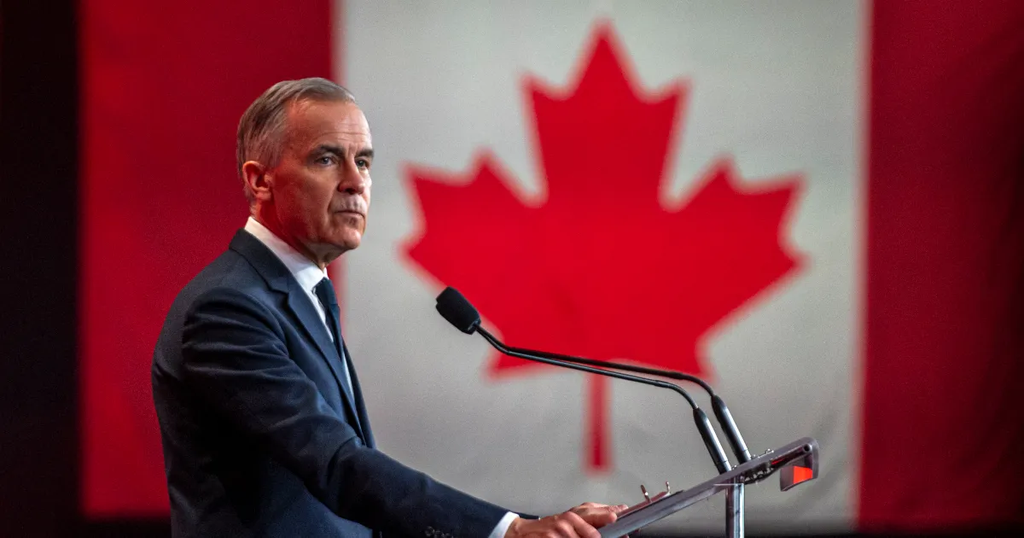
Canada and the United States have reached a dramatic turning point in their economic relationship. After months of escalating tariffs and heated negotiations, official trade talks between Ottawa and Washington have completely collapsed. The rift has pushed Canadian leaders to pursue an unprecedented shift in global diplomacy.
Prime Minister Mark Carney has proposed an extraordinary plan for Canada to seek associate member status in the European Union. This bold idea would link Canada’s economy directly to Europe’s massive 21-trillion-dollar market while creating a shield against American import barriers.
For generations, Canada relied on the United States as its top economic partner. Now, facing steep tariffs on core exports like steel, aluminum, and automobiles, Canadian officials are working around the clock to build alternative trade networks across the Atlantic.
Here is a full breakdown of how trade negotiations failed, what associate status in the European Union would actually look like, and how this shift could alter the global economy.
The Breaking Point: How U.S.-Canada Trade Negotiations Collapsed
The economic fallout between Washington and Ottawa did not happen overnight. Tensions began building when the U.S. administration imposed initial 25 percent tariffs on Canadian imports, citing national security concerns and border enforcement issues.
Build Funnels, Email Lists & Sell Online With One Free Tool
Create funnels, send emails, and sell online using Systeme.io without paying for multiple tools.
Create Free AccountFree forever • No credit card • Beginner-friendly
Canada responded with matching tariffs on American goods. While both sides attempted to pause and negotiate a resolution, talks repeatedly broke down over key industrial sectors. The dispute escalated dramatically when the U.S. raised tariffs to 50 percent on Canadian steel, aluminum, cars, and auto components.
The final breakdown occurred during late-stage talks involving U.S. Commerce Secretary Howard Lutnick and Canadian trade representatives. Negotiators could not find common ground on border policy, trade balance formulas, and manufacturing protections.
With the trade war threatening Canadian industries, leaders in Ottawa realized that relying almost exclusively on the U.S. market left the national economy vulnerable to sudden political shifts. That realization sparked urgent conversations with European leaders.
What Is EU Associate Member Status?
The European Union is known for having strict criteria for full membership. Joining normally requires geographic presence in Europe, complete adoption of EU laws, and acceptance of shared governance institutions.
However, Prime Minister Mark Carney has spent months holding private discussions with leaders across France, Germany, Italy, and Scandinavian nations to explore a unique partnership model. The goal is to establish associate membership—an extraordinary status that gives Canada deep access to the EU single market without full integration into the political union.
If approved, this arrangement would allow 41 million Canadian citizens and thousands of domestic businesses to trade seamlessly with 27 European nations. It would create preferential tariffs, standardized trade rules, and streamlined export pathways across the Atlantic.
While the EU rarely shows flexibility on structural membership, European officials have reportedly shown openness to the proposal. Both sides recognize the strategic value of forming a strong united front against global economic pressures.
Key Pillars of the Proposed Canada-EU Integration
This prospective alliance covers far more than basic import and export rules. Reports indicate that Canadian and European teams are working on deep integration across four primary sectors.
1. Energy Realignment and Critical Minerals
Canada holds vast reserves of natural gas, crude oil, and critical minerals essential for modern technology. Historically, much of this energy flowed south into the United States.
Under the new proposal, Canada plans to reroute natural gas exports toward European ports, helping Europe secure reliable energy while reducing Canada’s reliance on U.S. transit pipelines. Additionally, Canada’s deposits of lithium, nickel, and cobalt would feed directly into Europe’s green technology and vehicle manufacturing sectors.
2. Defense and Security Cooperation
With global security challenges mounting, Canada and the EU are eyeing tighter defense links alongside standard NATO commitments. The proposed deal includes joint military procurement, shared intelligence operations, and coordinated defense manufacturing.
This security pillar aims to ensure that both regions maintain strong military readiness and resilient supply chains for defense equipment.
3. Digital Infrastructure and AI Innovation
Building a modern transcontinental alliance requires heavy investment in communication networks. Plans under consideration involve laying new transatlantic undersea cables to directly connect Canadian data hubs with European servers.
The two regions also intend to fund joint data centers, satellite communications networks, and shared research into artificial intelligence. Readers looking to explore how digital shifts and smart tools are transforming global markets can check out our coverage on technology and AI updates to see how automation is changing modern business models.
4. Media, Automation, and Content Distribution
As digital trade grows, creators and digital platforms stand to gain from unified cross-border rules. Shared regulatory frameworks make it easier for media companies and online entrepreneurs to distribute content without facing conflicting regional rules.
For creators using platforms for automated video distribution, understanding these shifts is crucial. You can learn more about growing digital workflows by exploring our guide on YouTube automation strategy.
Major Obstacles Standing in the Way
While the idea of associate membership is groundbreaking, turning it into reality requires overcoming major economic and legal hurdles.
- EU Budget Contributions: Full and partner members of the EU must contribute financial payments to the shared bloc budget. Canada would likely need to pay billions into European funds to access market privileges.
- Relinquishing Sovereignty: Participating in the EU single market means accepting European product rules, labor standards, and environmental regulations. Canadian lawmakers will have to decide how much domestic regulatory authority they are willing to yield.
- Geographic Reality: Transporting physical goods across the Atlantic Ocean takes more time and money than moving goods across a land border. Canadian exporters will need to adapt logistics networks to stay competitive.
- Political Resistance: Lawmakers in both Canada and European capitals may push back against unprecedented treaty structures, leading to long parliamentary debates.
How This Shift Impacts Businesses and Everyday Citizens
If Ottawa successfully secures associate status with Europe, the real-world effects will reach beyond government offices into daily life.
For Canadian Exporters and Workers
Canadian factories and farms that suffered under U.S. tariffs could find major relief. Direct access to European buyers opens new revenue channels for steel manufacturers, auto parts suppliers, and agricultural producers. However, industries that depend on quick U.S. trucking routes will face higher shipping costs as supply lines shift toward ocean freight.
For European Consumers and Industries
European manufacturers gain steady access to Canadian raw materials without political tariff risks. European energy companies also secure long-term natural gas contracts, helping stabilize energy costs across the continent.
For North American Trade Dynamics
A formal Canada-EU alliance fundamentally alters North American economic balance. For decades, the U.S., Canada, and Mexico functioned as an integrated trade zone. If Canada turns to Europe for long-term growth, cross-border supply chains built over fifty years will undergo permanent restructuring.
What Happens Next?
Diplomatic teams from both sides are finalizing documents ahead of planned meetings. Official announcements regarding a strategic Canada-EU alliance on trade, defense, and technology are expected soon.
While a full associate membership treaty will take time to draft, ratify, and implement, the initial alliance agreement signals that Canada is ready to chart a new path on the global stage.
Frequently Asked Questions (FAQs)
Is Canada officially joining the European Union as a full member state?
No, Canada is not applying to become a full member of the EU. The country is seeking an associate or extraordinary member status. This status provides economic and trade access to the EU single market without full political integration into the European governing body.
Why did trade negotiations between the U.S. and Canada collapse?
Negotiations collapsed after the U.S. raised tariffs to 50 percent on Canadian steel, aluminum, cars, and auto parts. Talks led by U.S. Commerce Secretary Howard Lutnick failed to resolve disputes over tariffs, border policies, and industrial protections.
Can a non-European country gain associate status in the EU?
While the EU traditionally grants membership only to European nations, the treaty framework allows for custom strategic partnerships. Given the scale of Canada’s economy and shared democratic values, European leaders are open to creating a legal format for this partnership.
What industries stand to benefit most from this EU partnership?
The primary sectors that stand to benefit include natural gas and energy, critical minerals, defense manufacturing, digital tech infrastructure, and agricultural exports.
Build Funnels, Email Lists & Sell Online With One Free Tool
Create funnels, send emails, and sell online using Systeme.io without paying for multiple tools.
Create Free AccountFree forever • No credit card • Beginner-friendly
Where can I learn more about the team behind these insights?
You can discover our story and mission on our about page or get in touch directly through our official contact page.
Conclusion
The breakdown of trade negotiations between Canada and the United States marks a historic turning point in international relations. By turning to Europe for associate status, Canada is demonstrating that it is prepared to rewrite its economic playbook to protect its national interest.
As negotiations progress toward formal announcements, businesses and consumers around the world will be watching closely to see how this transatlantic partnership takes shape.
To stay updated on breaking news, tech trends, and global economy stories, follow the conversation on our official social channels:
- Connect with us on Instagram
- Join our community on Facebook
- Follow live updates on X (formerly Twitter)
