
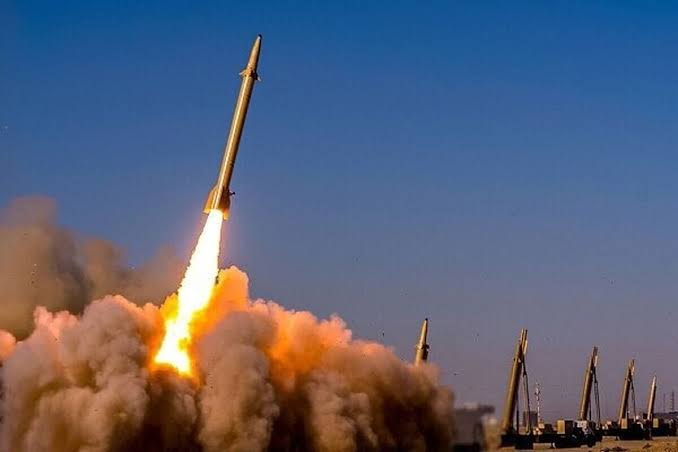
Military tensions in the Middle East have taken a drastic turn following a major confrontation at sea. The United States military launched targeted strikes against three Iranian crude oil tankers. This aggressive action was a direct response to Iranian forces firing ballistic missiles at two U.S. Navy warships patrolling international waters.
While the American warships managed to avoid taking any damage and no sailors were injured, Washington chose not to let the attack go unanswered. Instead of engaging only military targets on land, American forces struck Iran’s maritime economy. By taking out three oil vessels, the U.S. military aimed straight at the financial pipeline that keeps Iran’s armed operations running.
This event represents one of the most direct military hits on commercial oil shipping in recent memory. It sends a clear message about how far the conflict could spread if attacks on international shipping lanes continue.
What Triggered the U.S. Military Strike?
The immediate catalyst for this operation was an unprovoked missile attack aimed directly at American naval assets. U.S. Central Command confirmed that Iranian forces launched several ballistic missiles toward a U.S. Navy aircraft carrier and a guided-missile destroyer.
The Missile Attack on U.S. Warships
The American ships were performing routine security patrols in key maritime channels. Without warning, the Islamic Revolutionary Guard Corps fired multiple missiles targeted at the fleet.
The $0 Secret To Launching Your Entire Online Empire
Why pay hundreds every month for separate software? Build funnels, send emails, and make sales with Systeme.io completely free.
Get Started For $0Free Forever • No Credit Card Needed • Beginner-Friendly
Thanks to early warning systems and advanced defensive maneuvers, the U.S. ships intercepted or evaded all incoming fire. Not a single missile hit its mark, and no U.S. personnel suffered injuries. However, attempting to sink or damage major American warships crossed a critical line for military leadership in Washington.
The Response Strategy from Washington
Instead of firing back at missile launch pads on the mainland, U.S. defense officials selected a strategy designed to hurt Iran economically. The objective was simple: show Tehran that attacking American military personnel carries an instant, high financial penalty.
Military planners identified three key crude oil carriers tied directly to state-backed shipping operations. Within hours of the initial missile salvo, American forces moved into position and launched precision strikes against all three vessels.
Detailed Breakdown of the Three Struck Iranian Oil Tankers
The U.S. military operation was swift and hit targets spread across different areas in the region. Each vessel targeted played a role in moving crude oil out of Iran.
The M/T Downy
The first vessel hit was the M/T Downy. American forces targeted this tanker off the coast of Kharg Island. Kharg Island is famous for housing Iran’s primary oil export terminal, where a huge portion of the country’s crude is loaded onto ships.
The strikes left the M/T Downy permanently disabled. The ship can no longer move under its own power or transport oil products, effectively removing it from service.
The M/T Stark 1
The second vessel hit was the M/T Stark 1. This ship was positioned near Jask, a port city in southern Iran close to the strategic Strait of Hormuz.
U.S. strikes hit the ship’s key operating systems, rendering it permanently disabled. Disabling ships near Jask sends a powerful signal, as this area is heavily monitored by Iranian military forces.
The M/T Kylo (Also Known as Noxen)
The third vessel, an unladen crude carrier named the M/T Kylo (also operating under the name Noxen), met an even more destructive fate. It was sailing through the Gulf of Oman when U.S. forces caught up with it.
Because the ship was not carrying crude oil at the time, military planners focused on completely destroying the vessel. Before firing, American forces directed the ship’s crew to abandon the vessel safely. Once the crew cleared out, U.S. munitions hit multiple critical structural points, sinking or completely ruining the tanker.
Understanding Iran’s “Shadow Fleet” and Why It Matters
To understand why the United States targeted these specific ships, you have to look at how international oil sales work under heavy sanctions. Iran faces strict trade limits imposed by western nations, making normal oil exports difficult.
What is a Shadow Fleet?
To get around trade restrictions, Iran relies on a massive network of covert ships often referred to as a “shadow fleet” or “ghost fleet”. These tankers frequently change their registered names, turn off their tracking transponders, and transfer oil between ships in the middle of the ocean.
These tactics help disguise where the oil came from, allowing buyers on the global black market to purchase cheap crude. Over the years, this network has grown into a multibillion-dollar operation.
Funding Military Operations Through Oil
Money generated by this shadow fleet does not just go into general government accounts. U.S. officials repeatedly point out that these clandestine oil sales directly fund the Islamic Revolutionary Guard Corps (IRGC).
The IRGC uses these funds to purchase weaponry, build ballistic missiles, and offer financial support to regional proxy groups across the Middle East. By taking out the ships moving this oil, the U.S. hopes to cut off the money supply at its source.
Send, Spend & Hold Money Worldwide Without Hidden Fees
Transfer money internationally at the real exchange rate and hold 40+ currencies in one account.
Open a Wise AccountMid-market rate • Fast transfers • 40+ currencies
The Economic Strategy Behind the Military Action
Admiral Brad Cooper, commander of U.S. Central Command, made the military’s intentions clear in a public statement following the strikes. He stated:
“Let the message to the IRGC be clear: If you shoot at two of our ships, we will impose an even higher economic cost—taking out three of yours.”
He added that the U.S. military will not hesitate to protect its forces and will destroy Iran’s exposed oil fleet if attacks continue. This approach shifts the conflict from purely defensive maneuvers to active economic punishment.
The Broader Context of US-Iran Escalation
This confrontation did not happen in a vacuum. Relations between Washington and Tehran have been strained for decades, but recent months have seen tensions rise to dangerous levels in maritime choke points.
Tensions in the Strait of Hormuz
The Strait of Hormuz is one of the most critical sea passages on Earth. Roughly one-fifth of the world’s daily oil consumption passes through this narrow stretch of water.
When conflicts break out near the strait, global energy markets react almost instantly. Iran has repeatedly threatened to close the strait or disrupt international commercial traffic whenever political pressures mounted. The U.S. Navy maintains a strong presence in these waters specifically to keep shipping lanes open and protect commercial traffic.
Impact on Global Oil Prices
News of military strikes against oil tankers usually drives energy prices up quickly. Oil traders panic over potential supply shortages, rising shipping insurance costs, and blocked delivery routes.
When tankers are destroyed, insurance companies raise rates for any vessel traveling near the Persian Gulf or Gulf of Oman. Higher shipping costs eventually trickle down to everyday consumers, showing up as higher gas prices at the pump and increased costs for everyday goods.
How Technology and Modern Warfare Shape these Clashes
Modern military action relies heavily on advanced tech, automated systems, and real-time intelligence gathering. Understanding how these systems work gives us a better view of how battles are fought today.
Defense Systems on Navy Warships
Avoiding high-speed ballistic missiles requires sophisticated defensive technology. Modern destroyers and aircraft carriers use automated radar systems capable of tracking dozens of incoming threats at the same time.
The $0 Secret To Launching Your Entire Online Empire
Why pay hundreds every month for separate software? Build funnels, send emails, and make sales with Systeme.io completely free.
Get Started For $0Free Forever • No Credit Card Needed • Beginner-Friendly
These systems calculate trajectory, speed, and point of origin within milliseconds. Defensive interceptors are then launched automatically or with operator confirmation to destroy incoming missiles before they can hit the ship. Without these high-tech defenses, the outcome of Iran’s missile attack could have been far more tragic.
For people who love staying updated on cutting-edge software, military hardware, and modern digital tools, exploring the latest updates in our Technology & AI section offers plenty of useful insights.
Digital Media and Real-Time Coverage
In the past, military news took days or weeks to reach the public. Today, satellite video footage, official military broadcasts, and social media updates share information within minutes.
Content creators around the world use automation tools to curate news, synthesize information, and build engaging video breakdowns for global audiences. If you are interested in how modern online platforms deliver news efficiently, check out our resources on YouTube Automation tools and strategies to see how creators stay ahead of major breaking stories.
Global Reactions and Political Fallout
The news of U.S. strikes against Iranian tankers caused immediate reactions across the international community. World leaders and foreign policy analysts are closely watching every move to see if the situation can be contained.
Official Statements from Iran
Iranian state media quickly confirmed that explosions were heard near coastal regions like Bandar Abbas and Sirik. Officials in Tehran condemned the U.S. action, labeling the destruction of commercial ships as an act of aggression.
Iranian military commanders warned that they reserve the right to respond decisively to any attack on their maritime interests. Statements published on social media platforms stressed that Iran would not allow foreign forces to dictate terms in the Strait of Hormuz.
Responses from International Allies and Regional Neighbors
Neighboring Gulf countries expressed deep concern over rising hostilities in their backyard. Countries like Qatar, Bahrain, and the United Arab Emirates rely heavily on stable sea lanes for their trade and economic survival. Attacks on commercial shipping raise security risks for everyone operating in the Gulf.
International news organizations like Reuters and major defense publications continue to monitor regional troop movements, satellite imagery, and diplomatic channels as both nations weigh their next steps.
What Lies Ahead for Maritime Security?
The decision to target oil tankers introduces a dangerous new element to regional security. While the military objective was to hit Iran financially, it also sets up a potential cycle of tit-for-tat attacks.
If Iranian forces attempt another attack on U.S. ships or commercial traffic, the U.S. military has promised further action against the rest of Iran’s oil fleet. On the other hand, if Iran steps back, diplomatic channels might find room to operate, though trust between the two countries remains extremely low.
Naval escorts for commercial shipping vessels could become standard procedure once again, similar to operations during historical maritime conflicts in the region. Commercial shipping companies are already re-routing some vessels and taking extra precautions when passing through high-risk areas.
Connecting with Our Community
Staying informed about global politics, breaking security updates, and major economic shifts is essential. We work hard to present facts simply, clearly, and without fluff so you always know what is happening around the globe.
To learn more about our team, our mission, and how we bring you reliable stories every day, read through our About Us story page. If you have feedback, news tips, or questions about our content, feel free to reach out directly through our Contact page.
You can also join the conversation and receive live updates directly on your favorite social platforms:
- Follow our latest photos and stories on Instagram.
- Join our growing community on Facebook.
- Read real-time updates and quick news summaries on X (formerly Twitter).
Frequently Asked Questions (FAQs)
Why did the U.S. military target oil tankers instead of military land bases?
The U.S. military wanted to impose a direct economic penalty on Iran without necessarily starting a wider ground war. By disabling tankers used to move unsanctioned crude oil, American forces directly target the funding sources of the IRGC while keeping strikes focused on maritime assets.
Were there any casualties during the U.S. strikes on the oil tankers?
No casualties were reported among American personnel or the tanker crews. For the destroyed ship, the M/T Kylo, American forces explicitly directed the crew to abandon the ship before launching strikes to ensure no lives were lost.
How did U.S. Navy warships manage to avoid the Iranian ballistic missiles?
Modern U.S. Navy destroyers and aircraft carriers use automated air defense systems, advanced radar technology, and countermeasure interceptors. These systems can detect incoming high-speed missiles miles away and track or destroy them long before they make contact.
What is Iran’s “shadow fleet” and why is it important?
The shadow fleet is a collection of oil tankers that operate under covert conditions—often switching names, disabling tracking devices, or using foreign flags to hide their origins. Iran uses these ships to bypass international sanctions and sell oil, generating billions of dollars to fund state activities and military operations.
Will this incident cause gas prices to increase globally?
Military conflicts near key trade waterways like the Strait of Hormuz frequently cause crude oil prices to fluctuate. Higher insurance costs for shipping and potential supply fears can lead to short-term price increases at gas stations worldwide.
The situation across Middle Eastern waterways remains fluid and unpredictable. By striking three Iranian oil tankers in response to missile attacks on its warships, the U.S. military made a firm statement about maritime security and economic deterrence. As both nations evaluate their next choices, international traders, military analysts, and everyday observers will be watching closely to see if calm can be restored to these essential global trade routes.
