
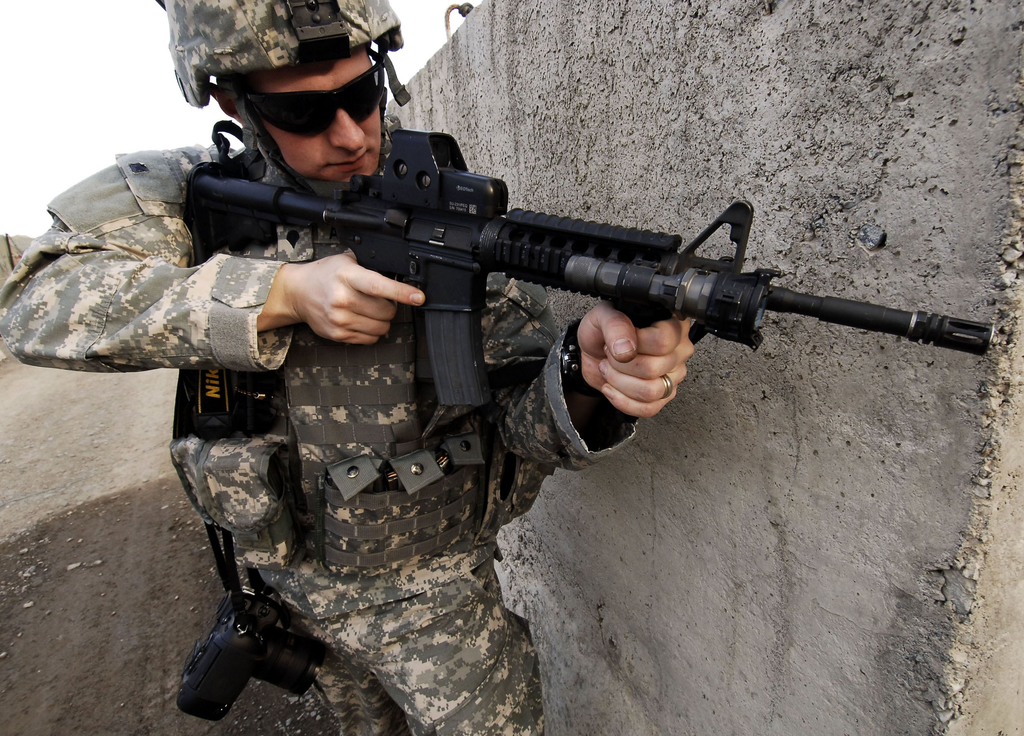
A sudden military exchange between the United States and Iran has broken a month of relative calm in the Middle East. On Sunday, American military forces carried out targeted air strikes against Iranian military installations near the Strait of Hormuz. Hours later, Iran responded by firing missiles and launching attack drones at targets across the region.
This exchange represents the first direct military clash between the two nations since late July. For several weeks, both sides appeared to step back from direct combat, shifting their focus toward economic pressure and quiet diplomatic talks. However, renewed violence on Larak Island and retaliatory strikes across the region have put global energy markets and international security back on high alert.
The sudden turn of events raises urgent questions about maritime safety in one of the most vital waterways on Earth. With oil prices reacting immediately and regional air defense systems active, understanding what triggered this new round of attacks is crucial for grasping where the conflict is headed next.
The Strike on Larak Island: What Sparked the New Clash
The latest round of hostilities began when US forces identified Iranian military activity on Larak Island. Located inside the narrow Strait of Hormuz, the small island holds high strategic importance for monitoring maritime traffic. According to official statements from U.S. Central Command (CENTCOM), surveillance teams spotted forces belonging to the Islamic Revolutionary Guard Corps (IRGC) preparing to deploy rockets designed to carry sea mines into international waters.
American military leaders stated that the immediate threat to commercial shipping left them with little choice but to act. US aircraft targeted two rocket launcher positions on the island, destroying the equipment before any mines could be placed into the water. Navy Captain Tim Hawkins confirmed that the strike was a focused effort to keep critical trade routes safe for civilian mariners.
The $0 Secret To Launching Your Entire Online Empire
Why pay hundreds every month for separate software? Build funnels, send emails, and make sales with Systeme.io completely free.
Get Started For $0Free Forever • No Credit Card Needed • Beginner-Friendly
Reports from inside Iran confirmed that heavy explosions were heard across Larak Island shortly after the strike occurred. The IRGC acknowledged that several of its personnel were killed or injured during the raid. Iranian state media quickly condemned the action, calling the targeted bombing an act of aggression and a major strategic error by Washington.
The placement of sea mines in the Strait of Hormuz has long been a major concern for international naval forces. Because roughly 20 percent of the world’s daily oil supply passes through this narrow stretch of water, any attempt to block or hazard the route triggers fast responses from international coalitions. US naval crews had spent the previous weeks clearing existing mine threats from shipping lanes, making this new launch preparation a direct challenge to those efforts.
Iran Retaliates: Missile and Drone Attacks Across the Region
Iran did not wait long to answer the strike on Larak Island. Within hours, the IRGC launched a series of ballistic missiles and attack drones targeting positions used by American forces in the region. The retaliatory offensive marked a sharp increase in tension compared to the quiet weeks of August.
Primary targets of the Iranian counterattack included air facilities in Jordan where American military personnel and equipment are based. Defense systems in Jordan went into immediate action, intercepting incoming missiles over the kingdom’s airspace. Local authorities reported that the projectiles were neutralized before causing major damage to civilian or military infrastructure.
At the same time, Iranian regular army units launched attack drones toward Al Minhad Air Base located in the United Arab Emirates. Regional air defense teams tracked the incoming drones as military sites across the Gulf entered high readiness. The IRGC claimed that these combined strikes proved their ability to respond quickly to external military actions.
In addition to launching strikes on military bases, Iranian forces reported that commercial vessels near the strait encountered new hazards. IRGC commanders stated that a commercial tanker struck naval mines south of the waterway following the American attack. International maritime security agencies verified that a projectile hit a vessel near Oman, though detailed reports on total damage remain under review.
Why the Month-Long Lull Suddenly Broke Down
To understand why this attack happened now, it helps to look at events over the past several weeks. After heavy fighting throughout the summer, the end of July brought a noticeable pause in direct military strikes. Both Washington and Tehran seemed to step back from daily kinetic combat, leading many observers to hope that quiet diplomatic channels might take over.
During August, the US government focused primarily on economic measures rather than air strikes. Officials in Washington repeatedly mentioned plans for enhanced sanctions aimed at cutting off remaining financial channels for Iran’s government. The goal was to place severe financial pressure on Tehran without consuming high-value military munitions or risking a wider regional war.
Behind the scenes, regional mediators worked hard to build momentum for peace. Countries like Oman and Qatar were actively hosting talks aimed at reopening the Strait of Hormuz to normal commercial traffic. For a brief period, it appeared that economic leverage and back-channel discussions might create space for a formal navigation agreement.
However, deep mistrust between both sides prevented real progress. While diplomatic talks were taking place in Oman, Iranian military units continued building up defensive and offensive positions along their coastline. When US surveillance detected new minelaying operations on Larak Island, Washington decided that relying solely on economic sanctions was no longer enough to protect shipping lanes.
Global Markets React: Oil Prices and Shipping Risks Surge
The direct clash between American and Iranian forces sent immediate shockwaves through global financial markets. Energy traders had grown accustomed to the quiet weeks of August, leading to relatively stable oil prices. That sense of stability vanished quickly as news of the air strikes broke.
Crude oil benchmark prices jumped significantly within hours of the reported strikes. Brent crude surged past $90 a barrel, reflecting deep concern that the conflict could once again halt oil shipments from Middle Eastern exporters. West Texas Intermediate crude experienced a similar sudden rise as traders factored in the risk of long-term shipping disruptions.
Shipping companies are now facing tough choices about whether to send vessels through the Strait of Hormuz. Even before this weekend’s strikes, commercial ship traffic through the waterway was down to a small fraction of its normal daily volume. Major maritime insurers have raised rates for cargo ships traveling in the region, making transport far more expensive for global logistics operators.
Higher shipping costs and rising oil prices usually lead to higher expenses for everyday consumers around the world. From fuel pumps to grocery store shelves, energy disruptions in the Persian Gulf have a way of touching daily life across distant countries. If the waterway remains dangerous for an extended period, economic pressure will likely ripple through global supply chains for months to come.
How Modern Technology Shapes Today’s Geopolitical Headlines
Modern conflicts are no longer fought only on the ground or at sea. Today, information and digital technology play massive roles in how military events unfold and how the public learns about them. The latest confrontation between the US and Iran provides a clear example of how digital media and modern tools shape public understanding.
Send, Spend & Hold Money Worldwide Without Hidden Fees
Transfer money internationally at the real exchange rate and hold 40+ currencies in one account.
Open a Wise AccountMid-market rate • Fast transfers • 40+ currencies
Immediately following the strikes, social media platforms became the main ground for claims, counterclaims, and strategic messaging. Political leaders and military agencies used official social accounts to broadcast their viewpoints in real time. For instance, American leadership shared posts featuring digital imagery and video depicting military targets, highlighting the role that visual media plays in modern political messaging.
Understanding how digital news spreads has become essential for anyone trying to stay informed. Many content creators and news channels leverage tools like YouTube automation to curate fast-breaking updates and educational explainers as major global events unfold. At the same time, breakthroughs covered in our technology AI category highlight how artificial intelligence is being used for satellite monitoring, real-time news analysis, and verifying online information.
As technology continues to evolve, keeping track of major geopolitical events requires sorting through massive amounts of online information. The speed at which news travels today means that reliable reporting is more important than ever.
The Diplomatic Standoff: Is Peace Still Possible?
With direct military actions resuming, the future of diplomatic negotiations looks increasingly uncertain. Regional mediators who spent weeks building trust now face a much harder path toward bringing both parties back to the table.
Statements from official channels indicate that formal negotiations between Washington and Tehran are currently frozen. American officials maintain that strong military deterrence is necessary to stop aggressive actions in international waters. On the other hand, Iranian officials insist that foreign military forces must stop operations in the region before any lasting agreements can be reached.
Diplomats from Oman and Qatar continue to work behind closed doors, hoping to prevent the situation from expanding into a wider regional conflict. Their main focus remains on establishing safe passage for commercial shipping in the Strait of Hormuz. If commercial traffic can be safely restored, it might provide a starting point for broader stability talks.
However, the margin for error is extremely small. With military units on high alert and defensive assets positioned along key naval choke points, even a minor misunderstanding could trigger another major round of strikes.
Frequently Asked Questions
What caused the recent military escalation between the US and Iran?
The escalation began when US forces spotted Iranian military personnel on Larak Island preparing to launch rockets equipped with sea mines into the Strait of Hormuz. The US executed targeted strikes to eliminate the launchers, prompting Iran to retaliate with missile and drone attacks against US bases in Jordan and the UAE.
Why is the Strait of Hormuz so important for global trade?
The Strait of Hormuz is a narrow maritime passage connecting the Persian Gulf to the open ocean. Approximately 20 percent of the world’s petroleum supply travels through this single waterway each day. Any disruption or conflict in the strait threatens global energy supplies and causes instant spikes in world oil prices.
How long had it been since the last direct US strike on Iranian forces?
Before the action on Larak Island, the last confirmed exchange of strikes between American and Iranian forces occurred on July 29. That created a gap of roughly one month where both countries relied primarily on economic sanctions and diplomatic maneuvering.
The $0 Secret To Launching Your Entire Online Empire
Why pay hundreds every month for separate software? Build funnels, send emails, and make sales with Systeme.io completely free.
Get Started For $0Free Forever • No Credit Card Needed • Beginner-Friendly
Are diplomatic talks still happening between the two nations?
While direct negotiations between Washington and Tehran are currently frozen, regional mediators like Oman and Qatar are continuing back-channel diplomatic efforts. These talks center around securing maritime traffic and avoiding further military escalation in international waters.
Looking Ahead
The resumption of military strikes between the US and Iran marks a serious setback for regional peace efforts. While both sides have shown periods of restraint over the past month, the situation in the Strait of Hormuz remains unpredictable. As long as vital trade routes remain threatened, the potential for further military action stays high.
Staying informed about these fast-moving global events helps us better understand the world around us. You can read more about our background on our about page or get in touch with our team directly through our contact page.
To join the conversation and receive real-time updates on breaking news and global trends, feel free to connect with us on our social channels on Instagram, Facebook, and Twitter.
