
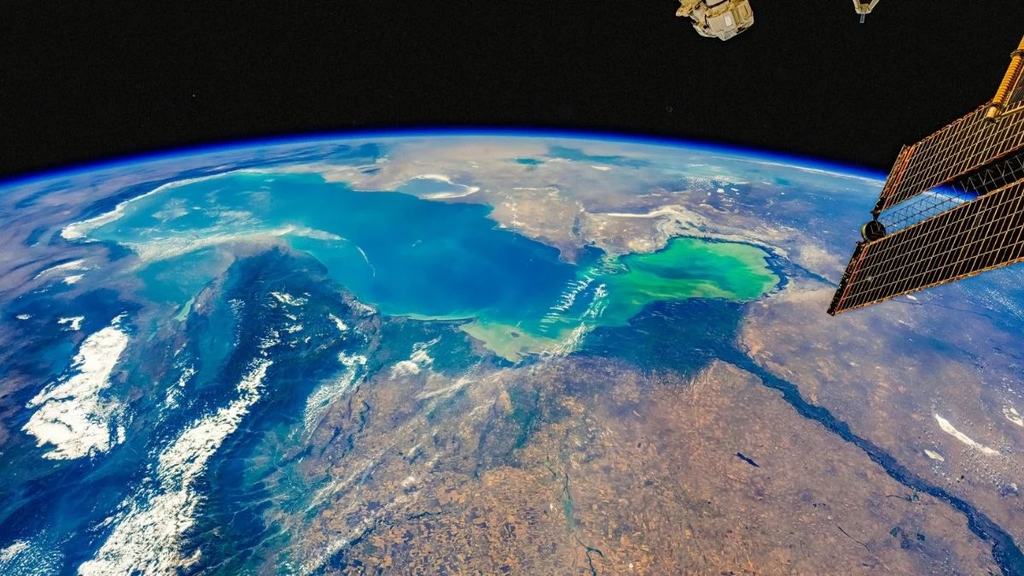
Scientists have made a startling discovery about our planet’s climate system: the long-standing natural connection between the Pacific Ocean and the Indian Ocean has broken down.
For hundreds of years, these two massive bodies of water communicated through atmospheric winds, sharing climate signals that shaped weather patterns across half the globe. New research shows that human-driven global warming has interrupted that conversation, creating an unprecedented shift in global climate behavior.
This climate partnership has helped meteorologists predict seasonal weather, rainfall, and drought for decades. When conditions changed in the tropical Pacific, predictable changes followed in the Indian Ocean shortly after. Now, that reliable link is no longer operating the way it used to.
The disruption carries serious real-world consequences. Billions of people living across Asia, Africa, and Australia rely on seasonal weather predictions for agriculture, water safety, and disaster planning. Understanding why these oceans are behaving differently is essential for preparing for the future of our climate.
A Broken Connection Between Two Ocean Giants
The ocean system covers more than seventy percent of Earth’s surface, and its major basins do not exist in isolation. Air currents moving high in the sky act as invisible bridges, carrying heat and moisture from one ocean to another.
The $0 Secret To Launching Your Entire Online Empire
Why pay hundreds every month for separate software? Build funnels, send emails, and make sales with Systeme.io completely free.
Get Started For $0Free Forever • No Credit Card Needed • Beginner-Friendly
A landmark study published in the peer-reviewed journal Nature Communications highlights how global warming is changing those invisible bridges. Researchers discovered that the historical bond linking atmospheric patterns over the tropical Pacific to sea surface temperatures in the Indian Ocean has reversed over recent decades.
What the New Ocean Study Revealed
The research team was led by scientists at the Woods Hole Oceanographic Institution (WHOI), a world leader in ocean research. By combining satellite records, modern ocean measurements, and computer simulations, the team traced how ocean interactions have evolved.
They found that since the mid-twentieth century, the tropical Indian Ocean has warmed at a steady pace of about 0.1 degrees Celsius per decade. At the same time, wind systems across the tropical Pacific strengthened in unexpected ways. Instead of moving together as they did historically, the two oceans began acting independently.
Dr. Caroline Ummenhofer, a senior climate scientist at WHOI and co-author of the study, noted that human emissions are now overpowering the Pacific Ocean’s natural influence on the Indian Ocean. Greenhouse gas pollution has altered the temperature contrast between the two basins, breaking a cycle that remained stable for centuries.
How the Pacific and Indian Oceans Talked for Centuries
To fully understand why this breakdown is alarming, it helps to look at how the ocean partnership functioned in the past.
For centuries, the tropical Pacific and Indian Oceans shared a synchronized dance. When surface waters in the central and eastern Pacific grew warmer or cooler during natural climate cycles, atmospheric pressure shifts moved across the Indo-Pacific region. These air shifts influenced surface temperatures and evaporation rates in the Indian Ocean.
The Hidden Messages Inside Tree Rings and Coral
Modern instrumental climate tracking only goes back about one hundred years. To look deeper into history, researchers examined natural climate archives, often called paleoclimate proxies.
These proxies include ancient coral skeletons, growth rings inside long-lived trees, and stalagmites formed inside underground caves. Coral skeletons record chemical details about past ocean temperatures and salinity. Tree rings reflect yearly moisture levels, while cave formations preserve records of historical rainfall.
By analyzing these natural archives from 1631 through 1990, scientists reconstructed nearly four hundred years of climate history. The data showed a consistent pattern: throughout most of the last four centuries, the Pacific and Indian ocean systems moved together predictable and in harmony.
How the Pacific Walker Circulation Works
The main engine behind this long-distance ocean relationship is a massive system of moving air known as the Pacific Walker circulation.
Under normal conditions, trade winds blow warm surface water westward across the tropical Pacific toward Indonesia and northern Australia. Warm air rises over the western Pacific, travels eastward high up in the atmosphere, and sinks over the eastern Pacific near South America.
This continuous atmospheric loop acts as a giant conveyor belt for heat and moisture. As the loop shifts, it pushes weather changes into neighboring ocean basins, including the tropical Indian Ocean. When the Walker circulation sped up or slowed down in past centuries, the Indian Ocean responded in predictable ways.
Why Volcanoes Couldn’t Do What Human Warming Is Doing Now
The four-hundred-year historical record was not completely without interruptions. Researchers discovered one notable period between 1810 and 1850 when the link between the two oceans weakened.
The 19th-Century Volcanic Disruption
During the early nineteenth century, several massive volcanic eruptions occurred around the world, including the famous eruption of Mount Tambora in 1815.
Volcanic eruptions throw huge clouds of ash and sulfur-based gases high into the stratosphere. These tiny aerosol particles act like a sunshade, reflecting sunlight back into space and cooling Earth’s surface temporarily.
Send, Spend & Hold Money Worldwide Without Hidden Fees
Transfer money internationally at the real exchange rate and hold 40+ currencies in one account.
Open a Wise AccountMid-market rate • Fast transfers • 40+ currencies
Because volcanic cooling affects different regions unequally, it disrupted normal atmospheric wind patterns and briefly broke the link between the Pacific and Indian Oceans. Once the volcanic aerosols settled out of the sky over a few decades, ocean currents and air patterns returned to their synchronized state.
How Today’s Breakdown Is Completely Different
While nineteenth-century volcanoes caused a short-term disturbance, today’s breakdown is fundamentally different.
The current shift is not caused by temporary natural events like volcanic dust. Instead, it is driven by continuous human greenhouse gas emissions from burning fossil fuels, deforestation, and industrial activity.
When researchers compared the modern period from 1945 to 2025 with eight-decade periods across the past thousand years, the modern shift fell completely outside historical norms. Today’s ocean warming is persistent and accelerating, meaning the connection between these ocean giants may remain broken as long as global temperatures continue to rise.
What This Broken Link Means for Weather on Land
Oceans store massive amounts of thermal energy, acting as the global heat engine that drives regional weather systems. When ocean basin connections break down, weather patterns on land undergo major changes.
Extreme Monsoons and Floods in Asia
The Indian Ocean plays a central role in controlling the South Asian monsoon, which brings essential rainfall to countries like India, Pakistan, Bangladesh, and Thailand. Millions of farmers depend on these rains to grow crops and feed their communities.
In past decades, predictable conditions in the Pacific allowed forecasters to warn farmers months in advance about whether monsoon rains would be light or heavy. With the historical connection broken, monsoon behavior has become far more erratic. Some regions now face unseasonal cloudbursts and deadly flooding, while neighboring areas suffer sudden dry spells.
Changing Rainfall Patterns in Africa and Australia
The impact extends far beyond Asia. East African countries rely on climate signals across the Indian Ocean to anticipate seasonal rainfall. Shifts in Indian Ocean temperatures can cause severe droughts in one year and intense flooding in the next.
In Australia, the interaction between the Pacific and Indian oceans directly influences wildfire risks and agricultural water supplies. When ocean conditions move out of sync, dry spells can last longer than expected, creating ideal conditions for bushfires and heatwaves.
Why Predicting the Weather Just Got Much Harder
One of the biggest concerns highlighted by climate scientists is the loss of predictability.
The $0 Secret To Launching Your Entire Online Empire
Why pay hundreds every month for separate software? Build funnels, send emails, and make sales with Systeme.io completely free.
Get Started For $0Free Forever • No Credit Card Needed • Beginner-Friendly
Breaking the Models Weather Forecasts Rely On
Computer models used by meteorologists rely on historical data to forecast future weather. These models assume that ocean systems will interact the same way they have for centuries.
When a fundamental climate link breaks, existing prediction models lose accuracy. Seasonal forecasts that once gave governments, emergency teams, and water management agencies early warnings are becoming less reliable. Scientists must now rewrite climate equations to account for an ocean system that no longer follows traditional rules.
Using Modern Technology and AI to Track Ocean Shifts
To replace old climate assumptions, oceanographers are turning to advanced technologies. Autonomous underwater floats, satellite radar imagery, and artificial intelligence machine-learning tools are helping scientists track real-time changes in sea surface temperature and atmospheric pressure.
AI algorithms can process vast amounts of oceanographic data, detecting subtle shifts in weather patterns faster than traditional methods. If you want to explore how artificial intelligence is transforming modern science and business tools, check out our latest articles in the technology and AI section.
How News Outlets and Online Creators Share Climate Stories
As climate events become more complex, getting clear and accurate information to the public is vital.
Informing the Public in the Digital Era
Scientific studies published in technical journals can be hard for everyday readers to understand. Digital news platforms and content creators play a crucial role in breaking down dense scientific topics into clear stories that matter to everyday life.
Video creators use automated digital workflows and storytelling tools to reach millions of viewers on video platforms, explaining environmental issues with engaging visual content. To learn more about modern digital media creation tools, explore our guides on YouTube automation updates.
What Can Be Done to Protect Our Planet’s Climate Balance
While the breakdown of this ocean connection presents a serious challenge, understanding the problem is the first step toward building solutions.
Cutting Greenhouse Gas Emissions
The primary driver behind changing ocean relationships is the rapid accumulation of heat-trapping gases in Earth’s atmosphere. Transitioning from fossil fuels to clean, renewable energy sources like solar, wind, and geothermal power helps reduce the warming pressure placed on ocean waters.
Global climate agreements focused on cutting emissions remain essential for preventing further disruption to global ocean currents and atmospheric cycles.
Protecting Coastal Communities
Because ocean dynamics are shifting, coastal cities and agricultural regions must adapt to unpredictable weather patterns. According to reports from United Nations Climate Change, investing in resilient infrastructure, sea walls, early flood warnings, and sustainable water management systems can protect vulnerable communities.
Protecting marine ecosystems such as mangroves and coral reefs also builds natural defenses against rising seas and storm surges.
Frequently Asked Questions (FAQs)
Which two oceans are losing their connection?
The connection is breaking between the tropical Pacific Ocean and the tropical Indian Ocean. Atmospheric wind systems that used to carry climate signals predictably between them are no longer operating in harmony.
Why is global warming breaking this link?
Human greenhouse gas emissions have caused the tropical Indian Ocean to warm consistently by about 0.1 degrees Celsius per decade since the 1950s. This rapid warming, combined with shifts in Pacific wind patterns, has altered the natural temperature balance between the two ocean basins.
Has this ocean link ever broken down before?
Yes, paleoclimate proxy data from coral reefs, tree rings, and stalagmites showed a temporary disruption between 1810 and 1850. However, that historical breakdown was caused by temporary atmospheric cooling from volcanic eruptions. Today’s breakdown is unique because it is driven by continuous human-caused global warming.
How does this affect weather forecasts?
Meteorologists have long relied on stable ocean relationships to predict seasonal weather patterns. Because the Pacific and Indian oceans are no longer acting together as expected, standard climate prediction models are becoming less accurate, making extreme weather harder to forecast.
What can people do to help address ocean warming?
Individuals can support policies that reduce carbon emissions, adopt energy-efficient practices, support marine conservation efforts, and stay informed about climate science. Spreading accurate, easy-to-understand environmental information helps build community support for clean energy solutions.
Final Thoughts on Our Changing Oceans
The discovery that global warming is breaking the historical link between the Pacific and Indian oceans serves as a reminder of how interconnected Earth’s climate truly is. When human activity alters one part of the natural environment, the effects ripple across ocean basins, atmospheric winds, and weather patterns worldwide. Staying informed through reliable climate research and technological innovations helps communities adapt to these evolving environmental challenges.
To learn more about our team and our mission to share trending science, culture, and business news, visit our About page or reach out directly through our contact page. You can also join our growing online community and stay connected with our latest updates across social media on our official Instagram page, our Facebook page, and our X (formerly Twitter) feed.
