
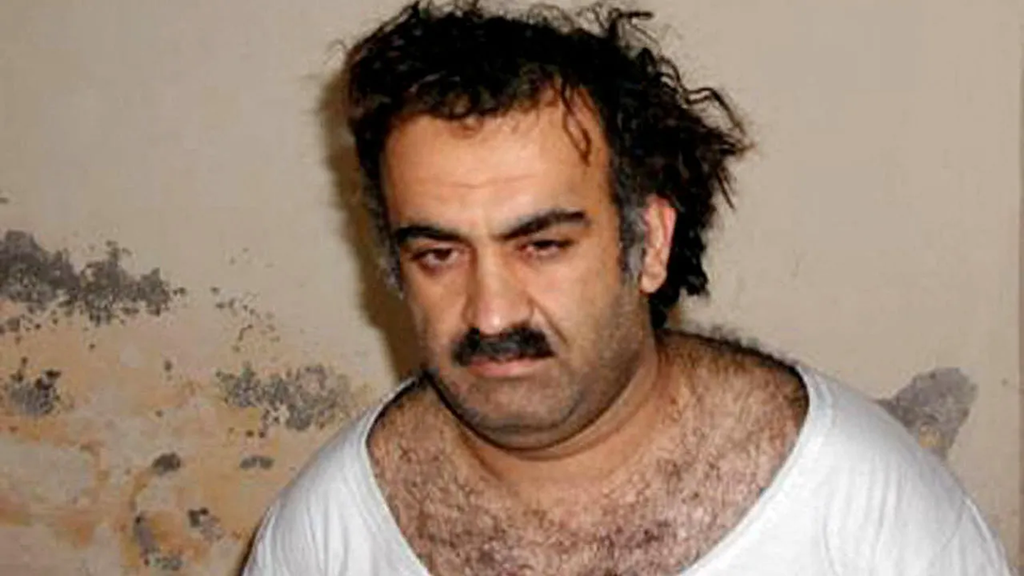
A U.S. military judge has tossed out key confessions made by Khalid Sheikh Mohammed, the alleged mastermind behind the September 11, 2001 terrorist attacks. The decision marks one of the biggest legal setbacks for prosecutors in the decades-long attempt to bring the accused plotters to trial.
Military judge Lieutenant Colonel Michael Schrama ruled that statements Mohammed gave to FBI agents at Guantanamo Bay in 2007 were not voluntary. Because the statements were obtained after years of severe physical and psychological abuse in secret CIA custody, the judge declared them inadmissible in court.
This major ruling comes as the military court prepares for a trial that has been delayed for over two decades. With a trial start date now pushed all the way to June 2028, the decision leaves prosecutors searching for alternative strategies while victims’ families face yet another prolonged wait for answers.
The Breaking News: A Major Blow to the 9/11 Prosecution
The military commission at Guantanamo Bay, Cuba, delivered a stunning update in the prosecution of the men accused of planning the worst terrorist attack on American soil. Lieutenant Colonel Michael Schrama issued a confidential order suppressing four days of interrogation answers provided by Khalid Sheikh Mohammed in January 2007.
For years, federal prosecutors relied on these 2007 FBI interviews as central evidence. They believed these sessions were clean because they were conducted by federal agents rather than CIA operatives. The prosecution argued that Mohammed spoke willingly after being transferred out of secret overseas prisons.
The $0 Secret To Launching Your Entire Online Empire
Why pay hundreds every month for separate software? Build funnels, send emails, and make sales with Systeme.io completely free.
Get Started For $0Free Forever • No Credit Card Needed • Beginner-Friendly
Judge Schrama disagreed with that argument entirely. He found that the government failed to prove Mohammed made those statements freely. By throwing out the confessions, the judge removed a pillar of the government’s case, forcing military lawyers to reconsider how they will prove Mohammed’s direct role in the attacks during a full trial.
Why the Judge Suppressed the 2007 Confessions
The Shadow of CIA Black Sites and Waterboarding
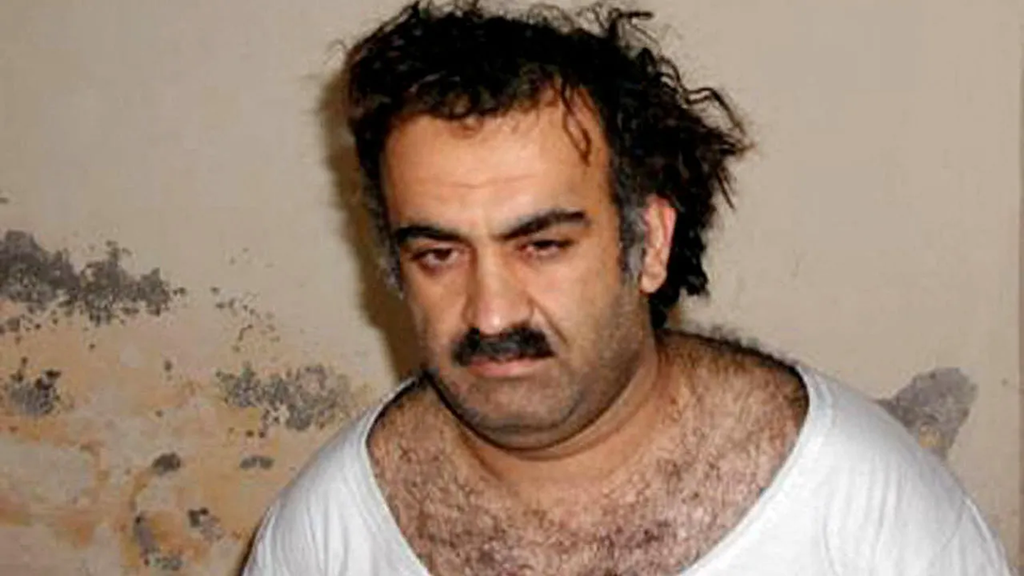
To understand why the judge threw out these statements, you have to look back to March 2003, when Khalid Sheikh Mohammed was captured in Rawalpindi, Pakistan. Following his arrest, he was placed into the CIA’s high-value detainee program and taken to undisclosed locations around the world known as black sites.
During his three years in CIA detention, Mohammed was subjected to extreme interrogation methods. According to official government reports and congressional investigations, these methods included:
- Waterboarding: Interrogators subjected Mohammed to simulated drowning 183 times.
- Sleep Deprivation: He was kept awake for days at a time, often forced to stand in painful stress positions.
- Isolation and Temperature Extremes: He was kept in total darkness, exposed to freezing temperatures, and deprived of normal human contact.
- Physical Abuse: Interrogators used forced standing, wall-slapping, and intense psychological pressure to break his resistance.
In 2006, President George W. Bush ordered Mohammed and several other high-value detainees transferred from secret CIA prisons to the military detention center at Guantanamo Bay, Cuba.
The Clean Team Strategy Fails in Court
Knowing that statements produced under torture cannot be used in a U.S. court of law, the federal government created what it called clean teams. These were FBI agents and military investigators who had no involvement in the CIA’s harsh interrogations.
In early 2007, an FBI team arrived at Guantanamo Bay to interview Mohammed. The goal was simple: get Mohammed to repeat his previous statements in a calm, non-coercive setting so the government could use the fresh answers as evidence in a military trial.
Retired FBI agent Frank Pellegrino, who conducted those 2007 interviews, stated that he explicitly informed Mohammed he was not required to answer questions. Pellegrino believed Mohammed spoke openly and proudly about his role in planning the attacks.
However, Judge Schrama ruled that the FBI’s clean team approach could not erase the trauma of the preceding years. The judge cited an unbroken continuation of CIA psychological conditioning and severe coercion. He explained that Mohammed still lived under the fear that refusing to cooperate with American authorities would send him back to secret CIA torture chambers.
Furthermore, the judge highlighted that the FBI agents did not properly issue standard legal protections, such as reminding Mohammed of his right to remain silent or providing him access to a defense lawyer before questioning began. Because of these factors, the court ruled that the statements were legally involuntary and cannot be heard by a jury.
Two Decades of Legal Delays: How We Got Here
The 9/11 trial has become one of the most prolonged and complicated legal proceedings in modern American history. For families who lost loved ones on September 11, 2001, the system has felt like an endless loop of procedural delays, changing judges, and constitutional disputes.
The Creation of the Military Commissions
After the 2001 attacks, the U.S. government established military commissions at Guantanamo Bay to try foreign suspects accused of terrorism. The idea was to create a court system tailored to war crimes, separate from standard civilian federal courts.
However, this system quickly became bogged down in complex legal challenges:
- Constitutional Rights: Defense attorneys argued that military commissions denied defendants basic constitutional protections guaranteed in civilian courts.
- Classified Material: Massive amounts of evidence were locked behind top-secret security clearances, slowing down simple discovery motions for years.
- Turnover in Leadership: Over the last two decades, multiple military judges, defense teams, and prosecutors have taken over and left the case, forcing new officials to review millions of pages of documents from scratch.
The Revoked 2024 Plea Agreements
The case took another dramatic turn in mid-2024. Defense attorneys and military prosecutors reached a formal plea bargain for Khalid Sheikh Mohammed and two co-defendants, Walid bin Attash and Mustafa al-Hawsawi.
Under the terms of that agreement:
- The defendants agreed to plead guilty to all charges related to the 9/11 attacks.
- In exchange, the prosecution agreed to remove the death penalty, ensuring the defendants would spend the rest of their lives in prison without the possibility of parole.
- The defendants agreed to submit written answers to questions submitted by the families of 9/11 victims regarding the planning and execution of the plot.
The announcement of the plea deal triggered immediate public debate and pushback. Many victims’ family members argued that removing capital punishment denied justice for the nearly 3,000 people killed.
Send, Spend & Hold Money Worldwide Without Hidden Fees
Transfer money internationally at the real exchange rate and hold 40+ currencies in one account.
Open a Wise AccountMid-market rate • Fast transfers • 40+ currencies
Following the public outcry, U.S. Defense Secretary Lloyd Austin stepped in and overrode the military official who oversaw the agreement, revoking the plea deals. That decision put the death penalty back on the table, but it also restarted the trial preparations, leading directly to the evidentiary battles that resulted in Friday’s suppression ruling.
The Long Road Ahead: A Trial Date Set for June 2028
Earlier in the same week that he threw out the confessions, Judge Schrama set an official trial date for June 5, 2028.
Military prosecutors had requested an earlier start date of January 2027. However, Judge Schrama rejected that request, explaining that starting in 2027 would not leave enough time for defense attorneys and prosecutors to resolve all pending evidentiary motions.
Setting the trial for mid-2028 means:
- The trial will take place nearly 27 years after the events of September 11, 2001.
- Khalid Sheikh Mohammed, who was captured in 2003, will have spent a quarter of a century in custody before his trial even begins.
- Key witnesses, investigators, and family members of victims continue to age, raising concerns about witness availability and memory accuracy during formal testimony.
The prosecution team led by Rear Admiral Aaron C. Rugh is currently reviewing the judge’s ruling to decide whether to file an appeal. If the government decides to appeal the order to a higher military court, the proceedings could face even further delays beyond 2028.
The Impact on Victims’ Families
The news of the thrown-out confession and another delayed trial hits families of 9/11 victims hard. For over two decades, thousands of parents, spouses, and children who lost loved ones in New York, Arlington, and Shanksville have followed every twist in the legal system.
Reactions among family members remain deeply split:
- Seeking Finality: Some family members favored the 2024 plea agreement because it guaranteed life imprisonment without endless appeals. They wanted answers to unanswered questions about how the attacks were funded and organized before elderly relatives passed away.
- Insisting on Capital Punishment: Other family members firmly believe that the individuals responsible for plotting the deaths of thousands should face the maximum penalty available under American law, regardless of how long the legal process takes.
The suppression of the 2007 confessions reopens painful questions about how national security policies implemented decades ago continue to impact the search for legal resolution today.
Legal Precedents and the Future of Military Commissions
Legal scholars and human rights advocates view Judge Schrama’s decision as a defining moment for the Guantanamo Bay military commission system.
From a legal standpoint, the ruling reinforces a foundational principle of the U.S. legal system: evidence gathered through torture or systemic coercion cannot be cleansed simply by bringing in a new team of interrogators years later.
The $0 Secret To Launching Your Entire Online Empire
Why pay hundreds every month for separate software? Build funnels, send emails, and make sales with Systeme.io completely free.
Get Started For $0Free Forever • No Credit Card Needed • Beginner-Friendly
While this ruling presents clear hurdles for the prosecution, prosecutors still have access to substantial physical evidence, communications logs, witness testimony, and documents seized during raids in the early 2000s. The core challenge for military prosecutors will be proving Mohammed’s responsibility using evidence that is completely untainted by CIA interrogation programs.
Frequently Asked Questions (FAQs)
Who is Khalid Sheikh Mohammed?
Khalid Sheikh Mohammed is an Pakistani citizen and senior figure in al-Qaeda who is widely described as the chief architect of the September 11, 2001 terrorist attacks. He was captured in Pakistan in March 2003 and has been held in U.S. custody ever since.
Why did the military judge throw out his confession?
Lieutenant Colonel Michael Schrama ruled that Mohammed’s 2007 statements to FBI agents were not given voluntarily. The judge cited the lingering psychological impact of earlier CIA waterboarding and abuse, as well as the failure of FBI agents to inform Mohammed of his right to remain silent or speak with an attorney.
Does this ruling mean Khalid Sheikh Mohammed will be released?
No. Khalid Sheikh Mohammed will remain in high-security custody at the U.S. naval base in Guantanamo Bay, Cuba. The ruling only means that prosecutors cannot present his 2007 FBI interrogation answers as evidence in front of a jury during his trial.
When is the 9/11 trial scheduled to begin?
The trial for Khalid Sheikh Mohammed and his three co-defendants is currently set to begin on June 5, 2028. However, ongoing appeals or pretrial legal arguments could potentially alter that schedule.
What happened to the plea deal that was offered in 2024?
In 2024, Mohammed and two co-defendants agreed to plead guilty in exchange for life sentences rather than the death penalty. After public criticism from some victims’ families, Defense Secretary Lloyd Austin revoked the agreements, putting the death penalty back into play.
Can military prosecutors appeal this ruling?
Yes. Government prosecutors can choose to appeal Judge Schrama’s ruling to a military appellate court. They are currently reviewing the order to decide whether an appeal is appropriate.
Staying Informed on Major Legal and Global News
The ruling in the 9/11 case is a major development in an ongoing story that has spanned decades. As military prosecutors evaluate their options and prepare for a potential trial in 2028, the case highlights how history, military policy, and the rule of law intersect in complex ways.
Understanding breaking news requires clear information broken down in plain terms. If you want to learn more about our mission and how we bring you clear, straightforward coverage on global developments, check out our about page. If you have thoughts, feedback, or news tips you would like to share directly with our team, feel free to drop us a note through our contact page.
Beyond major courtroom updates, technological changes continue to transform how information moves around the globe. If you are interested in modern digital trends and content creation strategies, explore our articles on YouTube automation. For insights into modern tools, digital systems, and artificial intelligence, take a look through our dedicated guides on technology and AI.
To keep up with stories as they happen and join the conversation online, connect with us across our official social media channels:
- Follow us on Instagram for daily updates and story highlights.
- Join our community on Facebook to comment and share your views.
- Catch the latest commentary and breaking news alerts on X (formerly Twitter).
We will continue to monitor updates in the Guantanamo Bay proceedings as prosecutors decide whether to appeal this recent decision. Stay connected to keep up with news that matters to you.
