
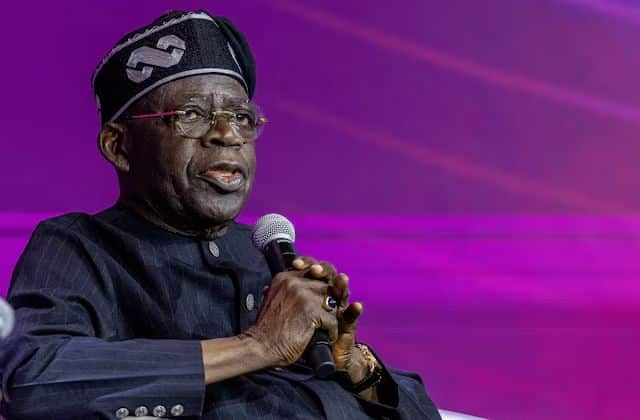
President Bola Ahmed Tinubu has issued a clear call to millions of Nigerians living across the globe: it is time to move beyond sending monthly allowance money and start buying real, productive stakes in the nation’s economy.
Speaking through his Chief of Staff, Femi Gbajabiamila, at the Nigeria Diaspora Economic Conference (NIDEC) in Toronto, Canada, the President pointed out that while money sent home to support family members remains vital, it should be the floor of diaspora engagement, not the ceiling.
The conference, organized by the Chairman and CEO of the Nigerians in Diaspora Commission (NiDCOM), Abike Dabiri-Erewa, carried the theme “Thrive Abroad, Invest in Nigeria”. During the opening address detailed by official reports on State House Abuja, the administration emphasized that Nigerians abroad carry unmatched skill, global experience, and financial power.
This call comes at a time when Nigeria is pushing through economic reforms. The administration argues that the country is entering a recovery phase where early strategic investments could yield massive long-term dividends.
Moving From Monthly Support To Wealth Ownership
For decades, the financial relationship between Nigerians abroad and their families back home has followed a predictable pattern. Someone living in the United Kingdom, Canada, the United States, or Europe works hard and sends money back to pay for school fees, cover hospital bills, buy groceries, or complete a modest house building project.
The $0 Secret To Launching Your Entire Online Empire
Why pay hundreds every month for separate software? Build funnels, send emails, and make sales with Systeme.io completely free.
Get Started For $0Free Forever • No Credit Card Needed • Beginner-Friendly
While these funds keep millions of households afloat, they mostly fund daily living expenses. Once spent, the money is gone, leaving no long-term asset behind.
President Tinubu told conference attendees that this model needs to evolve. Sending money for survival keeps people dependent, but putting money into productive businesses creates factories, funds tech startups, builds private hospitals, and generates lasting jobs for young people.
The message was direct: do not just acquire personal land or send cash for upkeep; acquire ownership stakes in profitable industries that generate ongoing returns.
The government noted that diaspora members often hit invisible career ceilings in foreign nations due to corporate politics or social barriers. At home, however, there is no such barrier.
With a huge population, expanding market access under the African Continental Free Trade Area, and an appetite for local production, Nigeria provides a wide runway for investors who know how to spot opportunities.
Key Sectors Targeted For Big Growth
The call to invest was not left as a general statement. The government highlighted specific sectors that are primed for private sector capital and professional expertise.
Agriculture and Food Processing
Raw agricultural products have been exported out of Africa for generations with very little value added. The government wants diaspora investors to fund local processing plants. Instead of exporting raw cocoa or unrefined palm oil, capital can build modern processing factories that package finished goods for local consumption and export, keeping profits inside the country.
Technology and Digital Innovation
Nigeria remains a top hub for digital talent and technology adoption across Africa. From software development and mobile finance to artificial intelligence applications, technology is transforming how businesses operate. Investors looking to explore modern tech opportunities can follow our latest updates in Technology and AI to see how digital tools are changing business landscapes worldwide.
Digital media and content creation have also grown into major income sources. Creators and automated video channels are turning online platforms into full-time businesses. You can read more about building digital content platforms in our guide to YouTube Automation to learn how modern media operations work.
Healthcare and Pharmaceuticals
Medical travel drains huge amounts of foreign currency from Nigeria every year as citizens travel overseas for treatment. Investing in modern diagnostic centers, private specialist hospitals, and local pharmaceutical manufacturing brings high-end healthcare back home while turning a solid profit.
Energy and Infrastructure
As the demand for reliable power grows, investments in solar installations, mini-grids, gas processing, and localized energy storage present massive commercial potential. Energy infrastructure forms the backbone of all industrial growth, making it one of the most stable long-term sectors for institutional capital.
Real Estate, Logistics, and Manufacturing
Building commercial warehouses, affordable housing estates, transport fleets, and consumer goods factories addresses immediate, everyday demands. As local production grows, efficient logistics networks are needed to move goods across towns and borders smoothly.
Why Single-Handed Investing Needs To Change
One big reason many diaspora members hesitate to put money into local projects is the risk of bad experiences. Almost every Nigerian living abroad has heard a story—or personally experienced a situation—where money sent to a relative or acquaintance for a project was misused, delayed, or lost entirely.
To solve this problem, the president urged investors to move away from informal, single-handed deals. Relying on family members or unverified middle agents to manage construction or business ventures often leads to frustration.
Instead, the government recommends joining organized, professionally managed investment vehicles:
Send, Spend & Hold Money Worldwide Without Hidden Fees
Transfer money internationally at the real exchange rate and hold 40+ currencies in one account.
Open a Wise AccountMid-market rate • Fast transfers • 40+ currencies
- Investment Clubs: Groupings of like-minded professionals who pool capital together to back vetted deals.
- Sector Funds: Targeted investment funds focused on specific industries like agriculture, healthcare, or tech startups.
- Co-Investment Vehicles: Structures where individual investors team up with established institutions to share risk and oversight.
- Venture Networks: Organized groups that provide both money and mentorship to promising local entrepreneurs.
By pooling resources into structured groups, investors gain access to audited financial records, professional legal contracts, proper risk management, and official due diligence. This structure removes personal emotion from business transactions and protects capital from waste or fraud.
What The Government Is Doing To Protect Investors
Asking for investment is one side of the coin; creating an environment where investors feel safe is the other. Addressing the gathering, government representatives outlined specific measures designed to make cross-border transactions easier and safer.
As reported by Channels TV, special financial tools have been created to allow diaspora members to hold accounts and invest directly without bureaucratic delays. These tools include:
- Non-Resident Nigerian Accounts: Specialized banking solutions like the Non-Resident Ordinary Account and Non-Resident Investment Account that let people abroad move capital back and forth with regulatory clarity.
- Non-Resident BVN Access: Streamlined Bank Verification Number processes so that opening accounts and validating identity from overseas does not require endless travel.
- Simplified Tax Architecture: Recent reforms designed to reduce double taxation, streamline tax filings, and lower burdens on small businesses and growing enterprises.
- Expanded Industrial Funding: Increased backing through institutions like the Bank of Industry, which disbursed 636 billion naira to local businesses in 2025 to boost commercial capacity.
- Stronger Legal Protections: Commitments to enforce anti-fraud protections, protect land title ownership, and ensure transparent pipelines for public-private partnership projects.
Minister of Industry, Trade and Investment, Olajumoke Oduwole, stated at the Toronto event that the conversation must shift from talking about potential to executing real deals on the ground.
Economic Indicators Showing Signs Of Stabilization
A core part of the pitch to diaspora investors rests on recent macroeconomic metrics. While everyday citizens continue to adjust to economic adjustments, official data presented at the conference indicates gradual stabilization across major indices.
As highlighted in coverage by THISDAYLIVE, key performance numbers cited by the administration include:
- Real GDP Growth: Real Gross Domestic Product grew by 3.89 percent in the first quarter of 2026.
- Manufacturing Growth: The manufacturing sector recorded a growth rate of 3.29 percent, reflecting increased factory output.
- Inflation Trends: Headline inflation eased down to 15.91 percent, showing steady deceleration compared to previous years.
- Foreign Reserves: Gross foreign currency reserves reached 45.4 billion dollars, strengthening central bank buffers and improving foreign exchange access.
- Growth Projections: International financial institutions, including the IMF, project national economic growth to reach 4.1 percent for the full year.
These figures, combined with structural changes in the foreign exchange market, are designed to reassure institutional investors that economic fundamentals are finding solid ground.
Real Challenges And How To Navigate Them
Investing in an emerging market is rarely smooth sailing. Anyone considering putting hard-earned funds into local ventures must take a practical, clear-eyed approach.
Foreign exchange fluctuations remain a key consideration. When investing in local currency assets, returns must outpace inflation and exchange rate movements to preserve value in global terms. This reality is why many professional investors focus on export-oriented businesses—such as agriculture processing or tech services—that earn income in foreign currency while operating with local labor costs.
Infrastructure deficits in power and transportation can also raise operating costs. Businesses that succeed usually build self-sustaining operations, using hybrid solar systems or shared industrial parks to keep overhead predictable.
The $0 Secret To Launching Your Entire Online Empire
Why pay hundreds every month for separate software? Build funnels, send emails, and make sales with Systeme.io completely free.
Get Started For $0Free Forever • No Credit Card Needed • Beginner-Friendly
Another hurdle is navigating local regulations. Working with registered legal practitioners, licensed accountants, and established trade associations helps avoid compliance traps. Working through reputable channels ensures that proper contracts, land titles, and operating licenses are secured before money changes hands.
Additional market perspectives on these economic strategies can be found on MarketForces Africa, which covers financial trends across regional markets.
Staying Connected With Our Community
Keeping track of economic changes, global industry trends, and business opportunities is essential for making smart decisions. We provide clear, easy-to-read updates on news that impacts your daily life and financial goals.
If you want to learn more about our team and what drives our work, check out our About Us page. If you have questions, feedback, or topics you want us to cover, feel free to visit our Contact Us page to reach out directly.
You can also follow our community across social platforms for daily updates, discussions, and news breakdowns:
- Follow updates on Instagram
- Join our community on Facebook
- Get real-time alerts on X (formerly Twitter)
Frequently Asked Questions
What was the main purpose of the NIDEC 2026 conference in Toronto?
The Nigeria Diaspora Economic Conference was organized by NiDCOM to bring together diaspora business leaders, government officials, and investors. The goal was to encourage Nigerians abroad to shift from sending basic money transfers to investing in structured, high-growth sectors across the country.
How do Non-Resident Nigerian accounts work for investors living abroad?
Non-Resident Nigerian accounts allow citizens living outside the country to maintain bank accounts, carry out financial transactions, and manage investments remotely. These accounts are designed with streamlined BVN verification and transparent foreign exchange rules to make moving funds safe and straightforward.
Why is the government advising against individual, personality-driven investments?
Individual deals managed by family members or unverified contacts often suffer from poor accountability, lack of proper contracts, and financial loss. Organized structures like investment clubs, syndicate funds, and venture networks provide professional management, audited records, and legal protection.
Which sectors offer the best opportunities for diaspora investors right now?
Key growth sectors highlighted by economic authorities include agro-processing, technology, healthcare services, clean energy, manufacturing, real estate, and export-focused ventures.
How can investors protect their capital from scam operations?
Investors should insist on working with registered entities, conducting independent legal due diligence, demanding audited financial statements, and investing through structured funds rather than making informal cash transfers.
Building Productive Value For The Future
The message from the Toronto conference is clear: building long-term prosperity requires direct, productive ownership. While financial remittances will always play a compassionate role in helping relatives meet daily needs, real economic independence comes from owning assets that produce goods, employ people, and generate steady revenue.
By organizing into professional investment groups, demanding transparency, and targeting essential sectors like technology, agriculture, energy, and healthcare, Nigerians living abroad can turn their global success into transformational wealth back home. As regulatory pathways grow smoother and financial channels become safer, the opportunity to build lasting legacies in Nigeria is more practical and accessible than ever before.
