
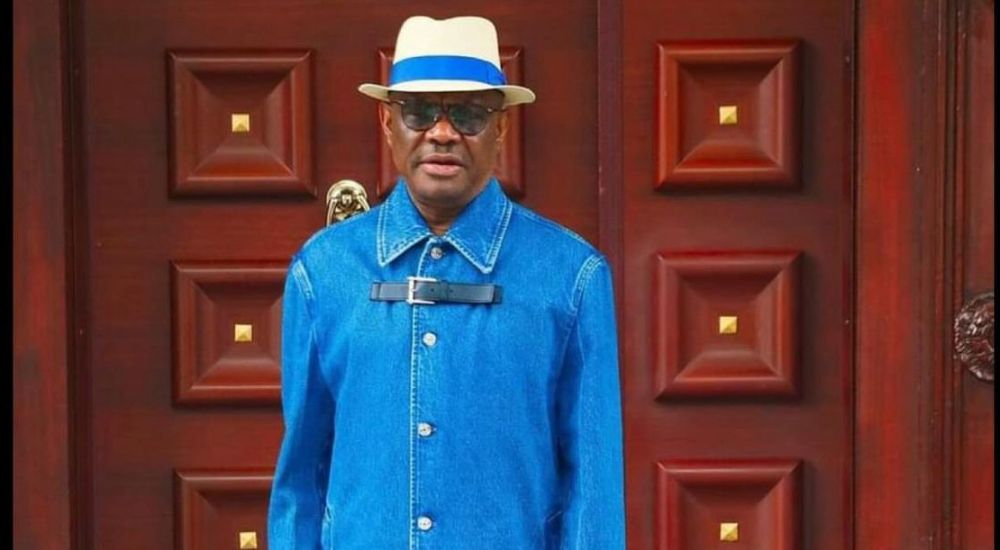
If you follow Nigerian news at all, you know that Rivers State has been a hotbed of non-stop political drama. The ongoing fight between the Minister of the Federal Capital Territory, Nyesom Wike, and his successor, Governor Siminalayi Fubara, has kept the entire country talking for months.
At the center of this battle is one major complaint from Wike: he claims that Governor Fubara made a massive mistake by trying to break away and build his own political structure in the state.
Here at WhatsBuzzN, we love breaking down big news stories so everyone can understand what is really going on. You do not need a degree in political science to follow this story. We are going to explain what Wike said, why he said it, how political structures work in Nigeria, and what this feud means for the people of Rivers State.
What Did Nyesom Wike Actually Say?
Nyesom Wike did not hold back when addressing the political crisis in Rivers State. In several public statements and interviews, the former governor made it clear that he felt betrayed by his political godson.
Wike explained that when a politician comes into power through an established group, trying to destroy that group or build a separate power base is a huge misstep. According to him, Fubara tried to create his own independent network of supporters, local leaders, and political allies while discarding the foundation that brought him into office.
The $0 Secret To Launching Your Entire Online Empire
Why pay hundreds every month for separate software? Build funnels, send emails, and make sales with Systeme.io completely free.
Get Started For $0Free Forever • No Credit Card Needed • Beginner-Friendly
Wike argued that political power is not something you grab overnight without respect for the team that spent years building the foundation. In his view, attempting to dismantle the existing system while sitting in government house was the exact moment things went wrong for Fubara.
The Backstory: How Best Friends Became Political Rivals
To understand why this relationship broke down so fast, we have to look back at how Governor Fubara got into office in the first place.
Before becoming governor, Siminalayi Fubara was a senior civil servant. He served as the Accountant-General of Rivers State under Wike’s administration. He was quiet, worked mostly behind the scenes, and was not widely known as a street-level politician.
When the time came to pick a successor for the 2023 governorship election, Wike threw his full weight behind Fubara. Wike brought the funding, the party loyalists, the grassroots campaigns, and the political muscle needed to win. Fubara won the election under the banner of the Peoples Democratic Party (PDP).
For a brief moment, everything looked smooth. But within just a few months of taking office, rumors of a rift started spreading. Soon, those rumors turned into full-blown political chaos:
- October 2023: A fire mysteriously gutted part of the Rivers State House of Assembly complex.
- Impeachment Threats: Lawmakers loyal to Wike moved to impeach Governor Fubara.
- The Assembly Split: The state legislature divided into two camps—a large group loyal to Wike and a smaller group supporting Fubara.
- Lawmakers Defect: Dozens of assembly members announced their movement to the All Progressives Congress (APC), sparking intense legal battles.
If you want to read more about how major news outlets reported these early clashes, you can check out detailed coverage on platforms like Punch Newspapers or Vanguard News.
“You cannot use the structure that built a house to tear it down just because you now hold the keys.” — A common theme behind Wike’s public messages.
What Exactly Is a “Political Structure” in Nigeria?
We hear the phrase “political structure” on the news every day, but what does it actually mean in simple English?
In Nigerian politics, a political structure is simply the network of people and systems that control votes and political power in a state or region. It is not a physical building. It is a web of relationships.
Here are the main pieces that make up a political structure:
- Grassroots Mobilizers: The ward leaders, youth leaders, and women leaders in every local community who tell people who to vote for.
- Lawmakers: The members of the State House of Assembly who pass laws and approve state budgets.
- Local Government Chairmen: The leaders of the local councils who control local resources and grassroots contact.
- Party Executives: The officials who control the political party machinery at the state and local levels.
- Financial Supporters: The business leaders and influential figures who fund political campaigns.
When Wike talks about his structure, he means he spent eight years as governor building deep personal ties with almost every local chairman, party leader, and lawmaker in Rivers State.
When Fubara became governor, he was expected to rule alongside this existing team. But as governor, Fubara wanted to make his own decisions, appoint his own people, and earn the direct loyalty of local leaders. That is where the clash started.
Why Wike Believes Fubara Made a Grave Error
From Wike’s perspective, trying to set up a new political structure was a strategic disaster for several clear reasons.
1. Lack of Legislative Support
A governor needs the State House of Assembly to pass state budgets, approve commissioners, and pass laws. Because the majority of the lawmakers remained loyal to Wike, Fubara immediately lost control of the legislature. This left his administration facing constant threats of impeachment and legal blockages.
2. Battles Over Local Government Councils
Local government chairmen hold a lot of power in rural communities. Most of the council chairmen elected under Wike were fiercely loyal to Wike. When their tenure expired, Fubara tried to replace them with caretaker committees, leading to physical fights, police lockouts, and endless court cases across local government headquarters.
Send, Spend & Hold Money Worldwide Without Hidden Fees
Transfer money internationally at the real exchange rate and hold 40+ currencies in one account.
Open a Wise AccountMid-market rate • Fast transfers • 40+ currencies
3. Fighting on Multiple Fronts
By breaking away from his political godfather, Fubara had to defend his seat against the legislature, local government leaders, and party executives all at once. Wike believes that no governor can govern smoothly while fighting the very machinery that put them in office.
The Fubara Perspective: Why the Governor Stood His Ground
While Wike sees Fubara’s actions as a mistake and act of disloyalty, many supporters of Governor Fubara view the situation completely differently.
From Fubara’s point of view, being governor comes with constitutional authority. According to the Nigerian Constitution, the executive governor is the chief executive officer of the state.
Here is why Fubara and his team felt they had no choice but to build their own path:
- Executive Independence: No elected governor wants to operate as a puppet who answers to a predecessor on every minor decision.
- Control of State Resources: To deliver development projects, a governor needs freedom to manage state funds and assign contracts without outside interference.
- Building a Personal Legacy: Fubara needed to show the public that he was in charge and capable of leading Rivers State into a new chapter.
- Public Support: As the fight grew public, many ordinary citizens, civil society groups, and opposition figures rallied around Fubara, encouraging him to stand firm as the constitutional leader of the state.
This tension between a godfather who wants to maintain control and a godson who wants complete independence is a story we have seen many times in Nigerian history. We saw it in Lagos, Kano, Enugu, and Kwara over the years. Rivers State is simply the latest state to experience this battle.
The Role of President Bola Tinubu and Peace Pacts
The crisis in Rivers State got so intense that President Bola Ahmed Tinubu had to intervene. In late 2023, the President invited both Wike and Fubara to the State House in Abuja to sign a peace resolution.
The agreement asked both parties to withdraw court cases, recognize the state lawmakers, and reinstate political appointees who had resigned or been dismissed.
However, political peace pacts are often easier to sign on paper than to practice on the ground. Despite the Abuja meeting, tension returned shortly after. Court cases kept piling up, local government elections caused fresh friction, and public statements continued to blow hot and cold.
Lessons from the Rivers State Crisis
The feud between Wike and Fubara offers major lessons about power, loyalty, and governance in modern Nigeria.
- Godfatherism has limits: While political godfathers can help someone win an election, controlling a sitting governor with full state power is nearly impossible in the long run.
- Governance suffers during political wars: When leaders spend all their energy fighting for political survival, public projects, worker welfare, and community development can easily slow down.
- Loyalty in politics is flexible: Political allies can change sides overnight depending on where the power and resources flow.
Building Your Own Systems in the Digital Age
While politicians are busy battling over traditional political structures, the rest of the world is moving forward by building personal platforms and modern systems online.
The $0 Secret To Launching Your Entire Online Empire
Why pay hundreds every month for separate software? Build funnels, send emails, and make sales with Systeme.io completely free.
Get Started For $0Free Forever • No Credit Card Needed • Beginner-Friendly
Instead of relying on old-fashioned power brokers, creators and entrepreneurs are learning to build independent systems through technology and digital media.
If you are interested in building modern platforms that you fully own and control without needing anyone’s permission, check out these helpful topics on our blog:
- Learn how modern creators automate digital content using our guide on YouTube Automation.
- Discover how artificial intelligence is changing how people build digital products in our Technology & AI section.
Building your own system—whether in business, media, or tech—gives you independence. Unlike political structures, digital assets belong directly to you.
Frequently Asked Questions (FAQs)
Who is Nyesom Wike?
Nyesom Wike is the current Minister of the Federal Capital Territory (FCT). He previously served as the Governor of Rivers State from 2015 to 2023 and is a major political heavy hitter in Nigeria.
Who is Siminalayi Fubara?
Siminalayi Fubara is the current Governor of Rivers State. He was elected in 2023 after serving as the Accountant-General of the state under Wike’s administration.
What caused the main fight between Wike and Fubara?
The conflict started over disagreements regarding political control, cabinet appointments, local government leadership, and Fubara’s effort to create an independent power base away from Wike’s political structure.
What does “political structure” mean in Nigeria?
It refers to the organized network of local leaders, ward mobilizers, lawmakers, council chairmen, and party executives who control votes and influence in a state or region.
Has President Tinubu tried to settle the fight?
Yes. President Bola Tinubu hosted a peace meeting in Abuja in late 2023 where both leaders signed a resolution, though political tension has continued to flare up periodically since then.
Conclusion
Nyesom Wike believes that Governor Siminalayi Fubara made a grave mistake by attempting to build his own political structure while abandoning the machine that brought him into power. On the flip side, Fubara’s supporters argue that an elected governor must exercise full independence to serve the people effectively.
This feud is far from over, and it will shape the future of Rivers State politics for years to come. Whether Fubara can successfully cement his own independent base or whether Wike’s deep-rooted structure will remain dominant is a story that is still unfolding.
What do you think about the situation in Rivers State? Do you agree with Wike, or do you stand with Fubara?
Stay connected with us for more breaking updates and insightful stories:
- Follow us on Instagram
- Join our community on Facebook
- Get real-time updates on X (Twitter)
Got questions, tips, or feedback? Feel free to reach out to us directly through our Contact Page. We love hearing from our readers!
