
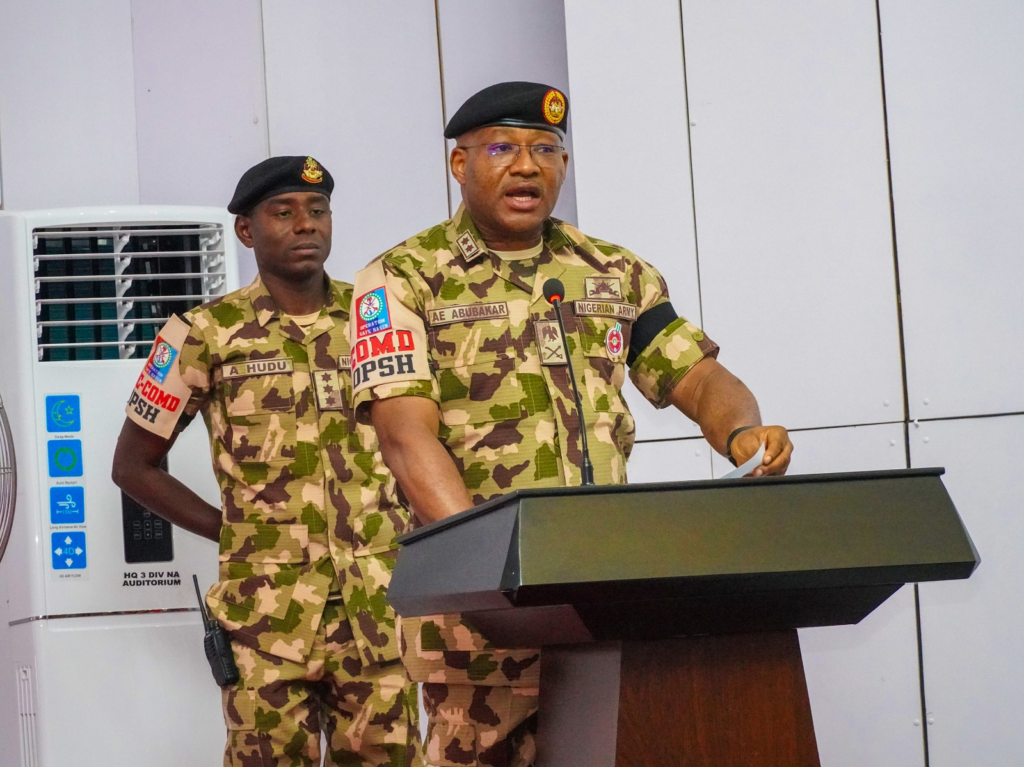
Taking care of the men and women who protect a nation is one of the most important duties of any government. When soldiers are well-funded, fed, and compensated, national security improves naturally. However, the conversation surrounding the living conditions and pay scale of Nigerian troops has sparked heated debates across the country.
Recently, Major General John Enenche (retired), a former Director of Defence Information, stepped into the spotlight with a bold statement. Speaking in a live interview on ARISE TV, the retired general argued that no rank-and-file Nigerian soldier should earn less than ₦250,000 every month.
His proposal has quickly become one of the most talked-about national issues. People across social media, political spaces, and civil society groups are discussing whether this pay rise is long overdue or financially difficult for the country to achieve.
At WhatsBuzzn, we keep our eyes on the big stories shaping public life. This article looks closely at why General Enenche made this recommendation, the real living costs faced by troops, what military veterans are doing about it, and why soldier welfare directly affects the safety of every Nigerian.
Breaking Down the Statement by Major General John Enenche
Major General John Enenche is not a stranger to military operations or logistics. As a senior officer who served in key defense positions, he understands the daily reality of a Nigerian soldier both on the battlefields and in the barracks.
Build Funnels, Email Lists & Sell Online With One Free Tool
Create funnels, send emails, and sell online using Systeme.io without paying for multiple tools.
Create Free AccountFree forever • No credit card • Beginner-friendly
During his television interview, Enenche emphasized that ₦250,000 monthly is not a luxury salary. Instead, he described it as a modest baseline needed just to cover basic survival expenses in today’s economic conditions.
He pointed out that feeding alone consumes a huge part of a soldier’s earnings. When you add transportation, health needs, and family support, the current pay structure falls short.
Enenche made it clear that military personnel are unique public servants. They do not work fixed eight-hour shifts, nor can they turn off their commitment when a workday ends. They are on duty all day, every day.
Why ₦250,000 Is Necessary: The Cost of Living Reality
To understand why the retired general fixed his suggestion at ₦250,000, it helps to examine basic household expenses in Nigeria today. Prices of staple foods, transit, and essentials have risen steadily.
Food and Basic Grocery Costs
A single bag of rice, a carton of noodles, or basic cooking ingredients can swallow a large part of an average worker’s income. Soldiers have families to feed back home while they are deployed to remote combat locations. When feeding costs alone run into tens of thousands of Naira every week, low salaries create heavy emotional strain on soldiers on the frontline.
Transportation Expenses
General Enenche specifically raised the issue of transportation costs. He noted that in major cities like Abuja or Lagos, moving from one place to another costs between ₦1,000 and ₦2,000 per single trip.
Soldiers and their family members move around like everyone else. They travel to market centers, send children to school, and commute for official duties. These transportation fees quickly add up to tens of thousands of Naira each month.
Barracks Life and Accommodation Myths
Many people assume that because soldiers live in barracks, they do not spend money on living expenses. Enenche challenged this assumption directly.
While barracks provide basic shelter, soldiers still buy their own food, pay utility charges, buy clothes for their families, pay school fees for their children, and cover medical costs for extended family members. Accommodation alone does not pay for daily survival.
Why Soldiers Cannot Have Side Hustles
In many sectors of the Nigerian economy, workers supplement their main salary by starting small side hustles. A civil servant might manage a small poultry farm on weekends, or run a neighborhood shop.
In the modern digital economy, civilians also explore alternative streams of income. For instance, tech-savvy Nigerians spend their free time exploring technology and AI solutions or learning about building online channels through YouTube automation to bring in extra cash.
Soldiers do not have that freedom. Military law and the strict demands of military service prevent troops from running private businesses or taking up second jobs.
As General Enenche explained, a soldier cannot go and farm or run a business because there is simply no time. The military owns 100% of a soldier’s time. They can be called up for deployment anywhere in the country at a moment’s notice.
Even after retirement, senior military officers remain available to serve the state if called upon. Because military personnel cannot earn money through external hustles, their primary monthly pay must be enough to sustain them comfortably.
Current Soldier Salary vs. Economic Pressures
Understanding the gap between current pay and the proposed ₦250,000 figure requires looking at recent salary updates in the armed forces.
Earlier, Minister of Defence Christopher Musa announced that the Federal Government had increased the starting monthly pay for lower-ranking soldiers from ₦49,000 to ₦100,000. This was done to ease financial pressure on troops.
While moving pay from ₦49,000 to ₦100,000 was a positive step, economic realities have moved even faster. Inflation has reduced the buying power of ₦100,000 significantly.
For a soldier deployed in challenging areas like Sambisa forest, the Niger Delta, or the forests of the Northwest, earning ₦100,000 while trying to support a wife and children in a distant city remains extremely stressful. This gap is why the call for ₦250,000 has gained such strong support across military circles.
Legislative Background and Veteran Agitation
General Enenche is not the only voice raising this issue. Military veterans across Nigeria have organized meetings to demand the immediate implementation of a ₦250,000 minimum wage for serving troops.
According to reports covered by Punch Newspapers, retired military officers under the leadership of Colonel Innocent Azubike (retired) met with representatives of the Chief of Defence Staff to press home these demands.
The background to this movement dates back to late 2025, when the National Assembly conducted a comparative study on military pay scales across several African nations. The study revealed that Nigerian soldiers were among the lowest paid relative to the country’s size and security challenges.
Following that discovery, the Senate passed a bill recommending ₦250,000 as the baseline monthly pay for the lowest-ranked soldier. The House of Representatives agreed with the proposal, and the bill was later submitted for executive approval.
As reported by BusinessDay, veterans claim that although official approvals were given, administrative delays have kept serving troops on older salary rates. Veterans argue that delayed implementation creates confusion, prompting calls for quick action from defense authorities.
The Difference Between Soldiers and Mercenaries
One of the most powerful points General Enenche made during his interview was the difference between a national soldier and a mercenary soldier.
A mercenary fights purely for financial profit. Mercenaries buy their own weapons, choose their battles, and leave when conditions become too dangerous or when the money stops coming in.
A Nigerian soldier is not a mercenary. A soldier signs a contract with the country, taking an oath to protect the constitution and defend citizens, even at the cost of their own life. The state provides their uniform, equipment, and weapons because their time and loyalty belong entirely to the nation.
Asking individuals who carry this weight to live on inadequate monthly pay undermines the sacrifice they make every day. Ensuring they receive proper financial support is a matter of respect and national honor.
Build Funnels, Email Lists & Sell Online With One Free Tool
Create funnels, send emails, and sell online using Systeme.io without paying for multiple tools.
Create Free AccountFree forever • No credit card • Beginner-friendly
How Soldier Welfare Impacts National Security
It is a basic truth in military strategy that a motivated soldier performs better on the battlefield. Welfare is directly tied to national security.
Better Focus on the Frontline
When a soldier is deployed to fight insurgents or bandits, their mind needs to be 100% focused on the mission. If a soldier is constantly receiving phone calls from home about unpaid school fees, unpaid medical bills, or lack of food, their concentration splits. Distraction on the frontline can lead to tactical errors, put operational safety at risk, and endanger human lives.
Boosting Recruitment and Retention
When military service pays a fair wage, the armed forces attract high-quality young men and women who view military service as a proud career. High pay also encourages experienced personnel to remain in service rather than seeking early discharge to pursue civilian opportunities.
Reducing Extortion and Checkpoint Misconduct
Inadequate pay can create bad behavior among a tiny fraction of security personnel. When soldiers earn a wage that covers their family needs, misconduct at checkpoints drops, public trust in the armed forces rises, and community relations improve across the board.
Can Nigeria Afford ₦250,000 Monthly for Soldiers?
Whenever salary increases are discussed for public sector workers, the immediate question is financial affordability. Can the Nigerian government afford to pay every rank-and-file soldier ₦250,000 monthly?
General Enenche acknowledged that government resources are limited and that other sectors like education, health, and infrastructure also require funding. However, he argued that security is the foundation upon which every other sector rests. Without security, farmers cannot go to fields, traders cannot travel safely across highways, and foreign investors stay away.
To fund this salary review, financial experts and defense analysts suggest several practical options:
- Trimming Political Governance Costs: Reducing government waste and political office allowances can free up billions of Naira to support frontline troops.
- Plugging Revenue Leakages: Improving revenue collection in crude oil production and solid minerals can provide steady funding for defense welfare.
- Prioritizing Personnel Over Administration: Restructuring defense budgets to put a higher percentage of funds directly into troops’ pockets rather than administrative overheads.
How the Public Is Reacting
The call for ₦250,000 monthly pay for soldiers has generated massive engagement across major social media channels.
On platforms like X (formerly Twitter), many users agree with General Enenche. They point out that given the high risk involved in military operations, ₦250,000 is a fair amount for anyone putting their life on the line every day.
On our Facebook page, readers have engaged in lively debates. While most agree that troops deserve better pay, some raise questions about how the government will manage the overall wage bill alongside civilian minimum wage commitments.
Over on Instagram, public commentary centers on how living costs affect average families across Nigeria, with many noting that ₦250,000 reflects true market prices in 2026.
Frequently Asked Questions (FAQs)
Who proposed that Nigerian soldiers should earn ₦250,000 monthly?
Major General John Enenche (retired), a former Director of Defence Information and military strategist, publicly proposed the ₦250,000 figure during an interview on ARISE TV.
What is the current starting salary for a Nigerian soldier?
The Federal Government recently updated the base monthly salary for rank-and-file soldiers from ₦49,000 to ₦100,000. However, critics and veterans argue that this amount remains insufficient due to inflation.
Why can’t soldiers do side jobs to earn extra money?
Military personnel are bound by strict regulations that forbid taking outside employment or running personal businesses. They are on duty around the clock, meaning their official salary is their only source of income.
Did the National Assembly pass a bill regarding military salary review?
Yes, military veteran groups note that the National Assembly reviewed military pay structures after a comparative study revealed Nigerian military pay was lower than many African peers. The Senate subsequently approved a minimum salary benchmark of ₦250,000.
Why are military veterans threatening peaceful protests?
Veterans are expressing frustration over administrative delays in implementing the approved salary increase and paying the outstanding arrears owed to troops and retirees.
How does soldier pay affect ordinary citizens?
When troops are well-compensated, morale increases, operational focus improves, and security across highways, farms, and cities gets stronger. Better security directly boosts economic activities for all citizens.
The debate over military pay brings to light the broader challenge of balancing living costs with state budgets. Major General John Enenche’s call for a ₦250,000 monthly wage for Nigerian soldiers highlights the sacrifices made by troops guarding the nation every day.
As discussions between defense authorities, military veterans, and government leaders continue, the ultimate goal remains building an armed forces that is well-equipped, highly motivated, and financially secure.
What do you think about this ₦250,000 salary proposal? Should the government implement it immediately? We would love to hear your perspective. Feel free to reach out to our team directly through our contact page and join the ongoing discussion across our social media platforms.
