
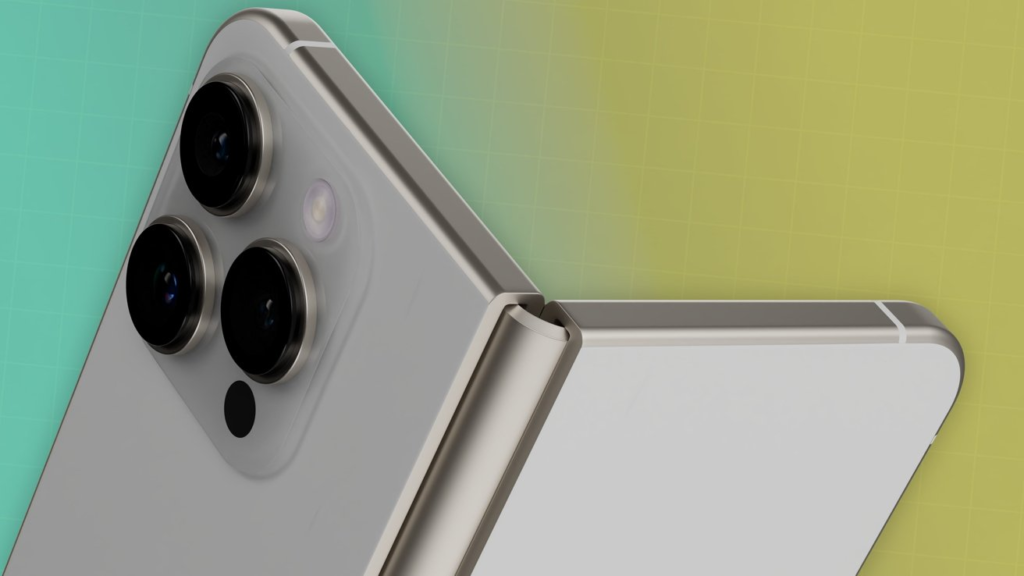
Apple appears to be working on something massive for its mobile lineup. Reports indicate that the tech giant is currently testing a display panel measuring nearly 7 inches for an upcoming flagship smartphone. This experimental screen is expected to power the largest model in the highly anticipated 20th anniversary iPhone series.
Here at WhatsBuzzn, we keep a close eye on major tech shifts that change how people live and work. In our Technology & AI coverage, we break down trending stories into simple, real-world insights. A 7-inch iPhone screen is certainly one of those developments worth talking about.
If this display reaches final production, it will mark the largest smartphone display Apple has ever put into a hand-held device. But what does testing a screen of this size actually mean for everyday users, and why is Apple pushing display limits right now? Let’s take a closer look at what is happening behind the scenes in Cupertino.
The 7-Inch Display Rumor: What Apple Is Actually Prototyping
The story broke after well-known supply chain insider Digital Chat Station shared details on Chinese social media platform Weibo. The report, which was highlighted by MacRumors, reveals that Apple is internally prototyping a display measuring approximately 6.96 inches diagonally.
While the exact measurement sits just under the 7-inch mark, Apple’s marketing division would almost certainly round it up to 7 inches for promotional materials. In the tech industry, display sizes are routinely rounded to the nearest clean decimal point for consumer clarity.
Build Funnels, Email Lists & Sell Online With One Free Tool
Create funnels, send emails, and sell online using Systeme.io without paying for multiple tools.
Create Free AccountFree forever • No credit card • Beginner-friendly
To put this in perspective, the current top-tier Pro Max models feature screens around 6.86 to 6.9 inches. Moving to a 6.96-inch display represents roughly a 2% increase in total diagonal screen real estate. While that might sound like a tiny bump on paper, even a few fractions of an inch can change how a phone feels in your palm and how much content fits on screen.
The prototype is said to retain the same aspect ratio as recent Pro Max handsets. That means the phone will grow slightly taller and wider in equal proportion, rather than becoming awkwardly long or overly wide.
Understanding Apple Screen Growth Over the Years
To appreciate why a 7-inch iPhone screen is such a milestone, it helps to look back at how screen sizes have evolved across different generations.
| iPhone Generation | Screen Size (Pro Max / Flagship) | Key Display Changes |
| Original iPhone (2007) | 3.5 inches | Classic LCD screen with thick top and bottom bezels |
| iPhone 6 Plus (2014) | 5.5 inches | First “Plus” size phone with a larger body |
| iPhone X (2017) | 5.8 inches | Introduction of OLED, edge-to-edge design, and the notch |
| iPhone 12 Pro Max (2020) | 6.7 inches | Flat edges, reduced bezel thickness |
| iPhone 16 Pro Max (2024) | 6.9 inches | Ultra-thin bezels, expanded visual area |
| 20th Anniversary Prototype | 6.96 inches (Marketed as 7-inch) | Near-borderless “Liquid Glass” curved design |
When Steve Jobs revealed the original iPhone in 2007, its 3.5-inch display was considered giant for a mobile phone. Today, a 3.5-inch screen looks tiny next to modern standards. Over the past decade, user habits shifted dramatically toward video streaming, mobile gaming, remote document editing, and video conferencing. Larger screens became an absolute necessity rather than a luxury.
Why 2027 Matters: The 20th Anniversary Milestone
Why is Apple testing such ambitious hardware right now? The answer comes down to timing. The year 2027 marks exactly 20 years since the launch of the first iPhone.
Apple loves celebrating major anniversaries with dramatic redesigns. Ten years ago, Apple commemorated its first decade by skipping the standard naming scheme to launch the iPhone X. That device completely rewrote Apple’s design language by eliminating the iconic physical Home button, shrinking the borders, and introducing Face ID.
Industry reporting from outlets like Digital Trends suggests Apple wants the 20th anniversary release—often referred to informally as the iPhone 20 or iPhone XX—to deliver a similar leap forward.
Apple leadership has reportedly pursued a long-term goal for over a decade: an iPhone that looks and feels like a single, seamless slab of glass. A 7-inch, borderless screen is a massive step toward making that vision a reality.
The Engineering Behind the “Liquid Glass” Display
Creating a 7-inch screen for a pocket device isn’t just about making the glass panel bigger. It requires completely reinventing how phone displays are manufactured.
According to supply chain leaks, Apple is working directly with display manufacturing partners like Samsung Display to develop advanced quad-curved OLED panels. Here are the key technical concepts behind this experimental display:
1. Quad-Curved Glass Edges
Unlike traditional curved screens from years past that had sharp slopes along the left and right sides, Apple’s concept uses a very gentle micro-curve on all four sides. The curve is subtle enough that it won’t cause accidental touch inputs when holding the device. Instead, it uses optical light bending to trick the human eye into seeing zero visible borders around the screen edge.
2. Removal of Polarizing Layers
Standard smartphone OLED displays use a dark polarizing filter on top of the screen to cut down glare from sunlight. However, this filter makes the screen thicker and reduces the amount of light that passes through. Apple is testing a technology called Color Filter on Encapsulation (COE). By printing the color filters directly onto the display layers, engineers can make the entire panel significantly thinner, brighter, and more energy efficient.
3. Under-Display Technology
A major barrier to a true all-screen phone has always been the front camera and sensor cutouts. For the anniversary model, engineers are trying to hide Face ID components underneath the display glass. This would significantly shrink or completely remove the camera cutout, giving users a uninterrupted view across the entire 7-inch surface.
Additional Features Expected for the Anniversary Flagship
A bigger display is only one piece of the puzzle. Reports published by AppleInsider and tech analysts suggest the 20th anniversary flagship will carry several major internal upgrades:
- Solid-State Haptic Buttons: Instead of physical mechanical buttons that push inward, the phone could use flush, solid-state touch areas that vibrate to mimic a real click.
- Ultra-Low Energy Coprocessor: Apple is reportedly testing a tiny secondary chip that keeps basic haptic buttons responsive even if the phone’s primary battery is completely drained.
- Next-Generation 2nm Processors: The device is expected to run on an advanced A-series chip built using a 2-nanometer manufacturing process, delivering high processing speeds with minimal power draw.
- Advanced Thermal Management: A larger display panel generates more internal heat. Apple is working on updated vapor chamber cooling systems to keep performance smooth during heavy tasks.
For modern creators—especially those managing digital channels or exploring strategies in YouTube Automation—having top-tier mobile processing speed and massive screen visibility makes editing clips, managing analytics, and working on the go much easier.
Will a 7-Inch Phone Be Too Big to Hold?
When people hear “7-inch screen,” the immediate worry is ergonomics. Nobody wants a phone that feels like holding a heavy brick or one that falls out of a back pocket.
The good news is that screen size and total device size are not the same thing. In the past, adding display area meant making the metal body of the phone bigger. Today, display size growth mostly comes from shaving down the black borders (bezels) around the glass.
Because Apple is using ultra-thin bezels and shallow curved edges, a 6.96-inch phone screen might fit into a body that is only slightly larger than current Pro Max models. If you are already comfortable using a recent Pro Max device, transitioning to a 7-inch model will likely feel very familiar in the hand.
Still, single-handed use will remain a challenge for people with smaller hands. Apple will likely rely on software adjustments, like Reachability modes and adaptive keyboards, to help users navigate the larger surface area without straining their thumbs.
Who Is the 7-Inch iPhone Really Built For?
A phone with a screen this large serves specific user groups who demand maximum screen room from their mobile gear:
Mobile Gamers
Mobile games are becoming more visually demanding every year. A 7-inch display provides clearer visibility for detailed graphics and gives your fingers more room to use touch controls without blocking the action.
Content Creators & Editors
Editing photos, reviewing high-resolution video clips, or tweaking graphics on a smaller screen can be frustrating. Extra display space allows creative apps to show more toolbars and timelines side by side.
Productivity Power Users
Reading lengthy reports, reviewing spreadsheets, and multitasking with split-screen windows works much better on a larger panel. For remote workers who rely on their phones while traveling, every millimeter of extra space helps.
Media Enthusiasts
If you watch a lot of movies, YouTube videos, or live sports streams on your phone, a borderless 7-inch display offers an immersive view that comes very close to a small tablet experience.
Testing Doesn’t Always Mean Launching
It is important to keep one crucial detail in mind: internal prototyping is a standard part of Apple’s research process. Tech companies test dozens of display sizes, materials, and form factors that never make it to retail store shelves.
Digital Chat Station noted that while Apple has manufactured test panels for a 6.96-inch screen, the company has not yet made a final decision on whether this exact size will be selected for mass production.
Engineers test these screens to evaluate durability, battery drain, panel yields during manufacturing, and drop resistance. If a 7-inch panel proves too fragile or too costly to produce in millions of units, Apple could easily opt for a slightly smaller screen size before locking in the final design.
Build Funnels, Email Lists & Sell Online With One Free Tool
Create funnels, send emails, and sell online using Systeme.io without paying for multiple tools.
Create Free AccountFree forever • No credit card • Beginner-friendly
Frequently Asked Questions (FAQs)
Is Apple really making a 7-inch iPhone?
Apple is currently testing and prototyping a 6.96-inch display panel internally. While rumors suggest it is being developed for an upcoming flagship model, Apple has not officially confirmed production plans.
When is the 20th anniversary iPhone expected to launch?
The original iPhone launched in June 2007. Therefore, the 20th anniversary model is expected to be released in the fall of 2027.
Will a 7-inch screen make the physical phone much larger?
Not necessarily. Because Apple is reducing bezel size and using curved glass edges, the physical dimensions of the phone body may only grow by a tiny fraction compared to current Pro Max models.
What will the 20th anniversary iPhone be called?
Apple has not revealed an official name. Tech commentators often refer to it as the iPhone 20, iPhone XX, or the 20th Anniversary iPhone.
How much will the 20th anniversary iPhone cost?
Pricing details are not available yet. However, given the advanced display technology, new materials, and premium positioning, it is expected to sit at the highest price tier in Apple’s lineup.
Final Thoughts
The rumor that Apple is testing a 7-inch display shows just how far smartphone technology has come over the last two decades. What started as a small 3.5-inch device has transformed into a powerful pocket computer capable of handling complex work, gaming, and content creation.
Whether Apple ultimately ships a full 7-inch phone or settles on a slightly smaller dimension, one thing is clear: the 20th anniversary release is shaping up to be one of the most exciting tech announcements in years.
We want to hear what you think! Would you use a 7-inch iPhone, or is that screen size too large for your daily needs? Share your thoughts with us on our social channels:
- Follow us on Instagram
- Connect with us on Facebook
- Join the conversation on X (formerly Twitter)
Have a story suggestion or a question for our team? Feel free to reach out directly through our WhatsBuzzn Contact Page. We love hearing from our readers!
