
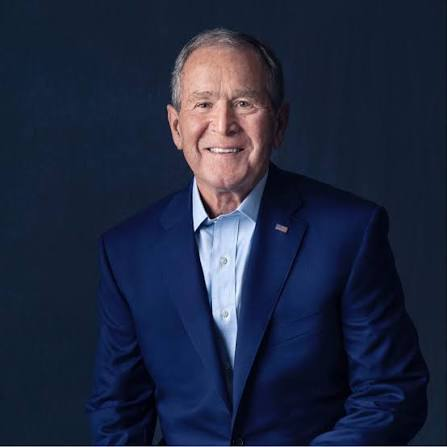
Former U.S. President George W. Bush recently shared strong words about how Americans view global events today. Speaking alongside former Secretary of State Condoleezza Rice at the George W. Bush Presidential Center in Dallas, Texas, Bush warned that many people in the country are slipping into an isolationist mindset. According to him, turning away from global affairs shows that people have forgotten the most important lesson of September 11, 2001.
His message comes as the United States marks 25 years since the tragic terrorist attacks. Bush pointed out that when people focus only on domestic issues and ignore what happens across the globe, they put national security at risk. What happens on the other side of the planet eventually reaches American shores, whether people want to admit it or not.
The conversation offers a rare look into how leadership decisions were made during one of the darkest times in American history. It also raises serious questions about how nations should handle foreign policy, protect human rights, and maintain safety in an interconnected world.
Understanding the Warning About Isolationism
During the event in Dallas, Bush addressed a growing trend among the public and political leaders. He noted that the country frequently passes through periods where citizens pull back from international issues.
He explained that during these times, the general mood becomes centered around local problems. People start asking why America should care about events happening thousands of miles away when there are plenty of troubles at home.
Build Funnels, Email Lists & Sell Online With One Free Tool
Create funnels, send emails, and sell online using Systeme.io without paying for multiple tools.
Create Free AccountFree forever • No credit card • Beginner-friendly
According to Bush, that line of thinking misses the point entirely. “Which really means to me they just don’t pay attention to the lessons of 9/11,” Bush stated, emphasizing that foreign events directly impact domestic safety.
Isolationism is the idea that a country should stay out of international political affairs, foreign wars, and global alliances. While focusing on internal issues sounds appealing, history shows that ignoring global threats rarely makes those threats disappear.
Why Isolationism Can Be Dangerous
When a country decides to step back from global leadership, a vacuum is created. Hostile groups and aggressive foreign governments often step into that void to expand their influence.
Before September 11, 2001, many people believed that oceans protected North America from major foreign attacks. The events of that Tuesday morning shattered that belief in a matter of hours.
Bush pointed out that terrorist groups and extremist networks operate across borders. If they are allowed to plan, train, and build power overseas without interference, they eventually target free nations.
The September 12 Mentality and Real-Time Decision Making
Condoleezza Rice, who served as National Security Adviser during the attacks before becoming Secretary of State, joined Bush on stage to reflect on the mindset shift that occurred immediately after the tragedy.
She recalled how the administration had to move quickly into what she described as a “September 12 mentality.” On September 11, the nation was hit. On September 12, the job shifted completely to preventing another strike before it could happen.
Rice mentioned that people today often forget how heavy and terrifying those early days were. Officials were receiving constant threat intelligence, and every commercial aircraft in the sky suddenly looked like a potential weapon.
Making High-Stakes Decisions Under Pressure
Bush recalled the exact moment he became a wartime leader. He was visiting an elementary school in Florida when his chief of staff, Andy Card, whispered the news into his ear.
In that moment, his entire presidency transformed. He realized his primary duty was to rally the nation, protect the public, and take steps to ensure enemies could not attack again.
Orders were given to clear the skies, forcing thousands of commercial planes to land immediately. Military commanders were authorized to shoot down any plane that refused to comply or showed signs of being hijacked.
Bush shared that making those decisions under extreme time constraints was one of the hardest parts of his presidency. Standing at Ground Zero three days later alongside emergency workers revealed the full scale of the destruction and trauma.
Defending Human Rights and Supporting Global Allies
A major part of the discussion centered on whether free countries should support democratic movements around the globe. Bush strongly defended the idea that human freedom is a universal desire, not just a Western concept.
He pushed back against critics who argue that people living in authoritarian regions do not understand or care about democracy. He pointed out that millions of people around the world fight for basic rights every single day.
The Example of Women and Girls in Conflict Zones
Bush brought up Afghanistan as a primary example. Following the U.S. intervention in 2001, millions of young girls went to school for the first time, and women entered fields like medicine, law, and education.
He expressed deep sadness over the return of Taliban rule in 2021, which stripped away those opportunities for women and girls. “Women becoming doctors and professors know the difference between a free society and a tyrannical society,” Bush explained.
He argued that standing beside people who fight for their liberty does not always require sending military forces. Instead, it means offering diplomatic support, financial assistance, moral backing, and international solidarity.
Protecting Core Values and Religious Freedom at Home
While national defense was the top priority following the attacks, Bush reflected on the vital importance of protecting domestic civil liberties and values during a crisis.
Just days after September 11, Bush visited an Islamic center and mosque in Washington, D.C.. He did this because reports were emerging of Muslim Americans and women of color being harassed in public spaces.
He recognized early on that mistreating innocent citizens based on their religion or ethnicity would mean handing a victory to extremists. The struggle was against violent terror networks, not against a religion or a group of peaceful citizens.
Lessons for Modern Society
- Protecting freedom of worship is a fundamental pillar of democratic life.
- Crises can bring out fear, but leaders must work to prevent prejudice from spreading.
- National unity relies on treating all citizens with dignity and fairness.
- Standing up for minorities during tense moments preserves the nation’s core identity.
How Modern Technology and AI Change the Security Landscape
The world looks very different today than it did in 2001. Terrorist groups no longer rely solely on physical training camps; they use digital networks, encrypted apps, and social platforms to recruit and organize.
Cybersecurity is now just as important as physical security. Foreign actors can attack power grids, financial systems, and water supplies using advanced digital tools without ever stepping foot inside a country.
Artificial intelligence has accelerated how fast information and misinformation travel. To understand how digital tools impact modern society, explore our updates on technology and AI to see how emerging systems shape security and news.
Content creators, journalists, and independent media outlets also rely on automation tools to cover breaking news instantly across platforms like YouTube and social networks. Those interested in modern media production can check out our resources on YouTube automation guides to see how modern creators share information at scale.
National Unity: Comparing Post-9/11 America to Today
In the days immediately following the 2001 attacks, the United States experienced an extraordinary surge of national unity. Neighbors helped neighbors, political parties worked together, and citizens donated blood and supplies in massive quantities.
Over the past quarter-century, that sense of shared purpose has frayed. Political polarization has increased, and public trust in institutions has dropped significantly.
Bush has previously noted that internal political anger can become a major vulnerability. When a nation is deeply divided against itself, responding effectively to external threats becomes much harder.
Build Funnels, Email Lists & Sell Online With One Free Tool
Create funnels, send emails, and sell online using Systeme.io without paying for multiple tools.
Create Free AccountFree forever • No credit card • Beginner-friendly
Rebuilding a Culture of Shared Purpose
- Focusing on shared values: Remembering basic principles like freedom, equal rights, and justice brings people together.
- Encouraging civil discourse: Discussing political differences without treating opponents as enemies keeps communities healthy.
- Promoting civic awareness: Understanding history helps citizens recognize how global stability protects local communities.
- Supporting public service: Encouraging young people to serve in community programs, military roles, or public health creates stronger bonds.
Why Overseas Events Still Matter to Everyday Citizens
It is easy to wonder why events happening in distant corners of the world should matter to everyday families dealing with inflation, housing costs, or local issues.
The reality is that modern life is globalized. Disruptions in key international shipping lanes can cause prices to rise at local grocery stores. Instability in energy-producing regions impacts fuel costs at the pump.
Furthermore, when violent conflict breaks out overseas, it often generates humanitarian crises that displace millions of people. Remaining engaged internationally helps resolve problems before they grow into massive global emergencies.
You can read full coverage of these remarks from media reports at CBS News.
Frequently Asked Questions
What did George W. Bush mean by saying Americans don’t pay attention to the lesson of 9/11?
He meant that whenever Americans adopt an isolationist mindset and ignore international events, they forget that instability and threats overseas directly impact safety and national security at home.
Who joined George W. Bush during this anniversary discussion?
Former U.S. Secretary of State Condoleezza Rice joined him at the George W. Bush Presidential Center in Dallas, Texas. Rice served as National Security Adviser during the 9/11 attacks.
Is George W. Bush calling for troops to be sent overseas?
No. Bush specifically clarified that standing with global allies fighting for freedom does not always mean sending military troops. It means offering diplomatic support, moral backing, and foreign aid.
What was the “September 12 mentality” mentioned by Condoleezza Rice?
It was the total operational shift from reacting to an attack to aggressively taking steps to prevent future attacks before they could happen.
Why did Bush highlight his post-9/11 visit to a mosque?
He wanted to remind people that defending freedom includes protecting religious minorities at home. Allowing harassment against fellow citizens harms national unity and contradicts democratic values.
Staying Informed and Looking Ahead
Remembering major historical events is about more than looking backward. It is about taking the lessons learned from hard times and applying them to modern challenges.
George W. Bush’s recent comments remind us that peace and security require ongoing attention, global awareness, and strong principles. Staying engaged with world news helps everyone make better decisions as informed citizens.
To learn more about our mission and story, visit our about page. If you have questions, feedback, or topics you want us to cover, reach out directly through our contact page.
You can also join our growing community online and join the conversation across our official social channels:
- Follow us on Instagram for daily updates.
- Connect with us on Facebook to share your thoughts.
- Catch the latest discussions on X (Twitter).
