
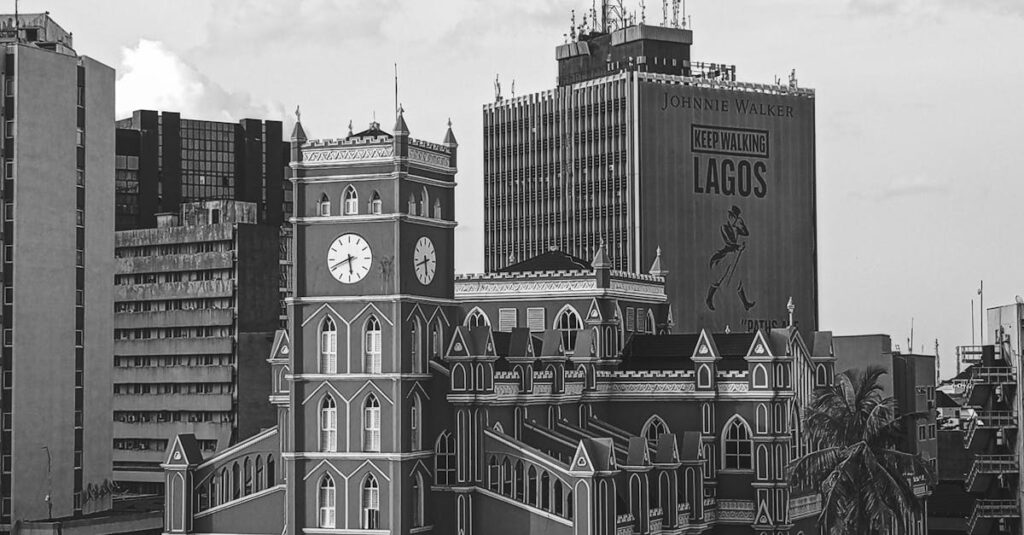
Look, let’s be honest for a second. Nigeria has all the ingredients. A massive population. More people than any other country in Africa. Oil, gas, solid minerals, fertile land.
A diaspora that’s crushing it in tech, medicine, and entertainment all over the world. Afrobeats is everywhere now. Nollywood is the second biggest film industry on the planet by volume. On paper, this should be the African superpower.
But we’re not. Not yet. Probably not for a while.
So what’s actually stopping us? Not the political slogans. Not the blame game. The real, boring, frustrating reasons. Because until we name the problem properly, we can’t fix it. And honestly? Most of these problems are fixable. That’s the painful part.
The Electricity Problem Nobody Wants to Talk About
You cannot become a superpower if your factories run on generators.
This is not an exaggeration. A business in Lagos might spend 40% of its operating costs just on fuel and diesel. That’s money that could hire more people, buy better equipment, or lower prices for customers. Instead, it goes up in smoke. Literally.
Manufacturing needs reliable power. So does healthcare, education, and even just basic quality of life. When a hospital has to turn away patients because the generator ran out of fuel, that’s not a small problem. That’s a fundamental barrier to being taken seriously on the world stage.
Compare this to China or India during their growth phases. They built out power infrastructure first. It wasn’t flashy. Nobody cut ribbons for every transformer. But factories could run at night. Students could study after dark. That changes everything over ten or twenty years.
Nigeria’s grid produces a fraction of what South Africa’s does, and South Africa’s grid is famously struggling. Until this changes, every other conversation about “superpower status” is just talk.
Corruption That Punishes the Right People (the Wrong Way)
Here’s something you don’t hear often: corruption in Nigeria is actually pretty smart at one thing. It knows exactly where to steal from to cause maximum damage.
Think about it. When a minister takes a cut from a road contract, that road doesn’t get built properly. Now farmers can’t get goods to market. Food rots. Prices go up. Everyone suffers, but the politician is fine. That’s not just theft. That’s theft that actively destroys economic activity.
The worst part? Corruption isn’t even necessary anymore. There’s enough wealth in this country for everyone to eat well. But when the system rewards connections over competence, the wrong people end up in charge. And those people protect the system that put them there.
You see this in procurement. A government agency needs computers. A decent laptop costs 400,000 naira. But the contract goes for 1.2 million each. Someone pockets the difference. The agency gets bad computers that break in six months. Then they need new ones next year. Same cycle.
This isn’t a cultural problem. Nigerians are not naturally corrupt. The incentives are just broken. When the risk of getting caught is low and the reward is life-changing money, people make predictable choices.
Brain Drain That Keeps Getting Worse
Here’s the quiet part. The smartest, most ambitious Nigerians are leaving.
Not because they hate home. Most of them desperately want to stay. But when a fresh graduate can work remotely for a US company and earn in dollars what would take five years to save in naira, the math is brutal.
This is called brain drain, but it’s worse than that. It’s talent drain, energy drain, and future-leader drain all at once. The doctor who could have run a teaching hospital is now driving a taxi in Toronto while waiting for their license to transfer. The engineer who could have fixed the power grid is writing code for Amazon in Seattle.
And you can’t blame them. That’s what makes it so hard to solve. Asking someone to take a 90% pay cut out of patriotism is not a strategy. People have families. Rent is due. Children need school fees.
The countries receiving Nigerian talent know exactly what they’re doing. Canada’s immigration system actively targets skilled Nigerians. The UK’s health service recruited thousands of Nigerian nurses. Even Gulf countries are getting in on it.
Every exit flight is a loss of potential GDP. Not sentimental loss. Real, measurable, dollars-and-naira loss.
Over-Reliance on Oil Is a Trap
Oil made Nigeria rich. Then oil kept Nigeria poor.
It sounds backwards, but it’s a well-known problem in economics called the resource curse. When a country has one hugely valuable natural resource, everything else stops mattering. Why build factories when oil money flows in? Why invest in agriculture when crude pays the bills?
Then oil prices crash. And suddenly there’s no backup plan.
The numbers tell the story. Oil and gas account for over 90% of export earnings but less than 10% of jobs. That means the wealth is incredibly concentrated. When oil does well, a few people get very rich. When oil does badly, everyone suffers, but the wealthy class still has savings outside the country.
Countries that escaped this trap did something hard. Norway invested oil money into a sovereign wealth fund. Botswana used diamond revenue to build institutions. Nigeria… built more oil infrastructure.
Until non-oil exports matter — real manufacturing, processed agriculture, tech services — the economy will stay fragile. And fragile economies don’t become superpowers.
Population Growth Without Productivity Growth
Having 220 million people is an advantage. Having 220 million people who aren’t producing enough is a disaster.
Nigeria’s population is growing incredibly fast. By 2050, it’s projected to be 400 million. That’s more people than the United States. But right now, the economy isn’t creating jobs anywhere near fast enough to keep up.
Youth unemployment is staggering. And here’s the dangerous part: young men with no jobs, no prospects, and no hope are not a stable political force. They’re not a productive workforce. They’re a time bomb.
The solution isn’t population control. That conversation always gets weird and colonial real fast. The solution is creating economic opportunities faster than people are being born. That means jobs. Real jobs. Not “hustle culture” and gig work, though that helps. Factory jobs. Logistics jobs. Farming that pays well. Construction that never stops.
For that to happen, the other problems need solving first. Power. Corruption. Policy stability. It all connects.
Security Challenges That Scar Everything Else
Boko Haram in the northeast. Banditry in the northwest. Separatist tensions in the southeast. Farmer-herder clashes in the middle belt. Kidnapping for ransom basically everywhere.
None of this is new, but the cumulative effect is devastating. Investment doesn’t flow to unstable places. Tourism is basically dead outside a few safe bubbles. Farmers can’t work their land if they’re afraid of being kidnapped.
And here’s what people outside Nigeria don’t understand: security spending doesn’t just hurt the budget. It kills small businesses. A company that has to hire private security, install panic rooms, and budget for ransom insurance isn’t a company that’s growing. It’s a company that’s surviving.
The military and police are underfunded, undertrained, and in some cases actively corrupt. Fixing that would take years of sustained attention. But every administration has to focus on what’s urgent right now. So the deeper problems never get solved.
Poor Infrastructure Beyond Just Electricity
Power gets all the attention, but roads, rail, ports, and digital infrastructure are almost as bad.
Lagos to Ibadan is about 120 kilometers. In normal countries, that’s a 90-minute drive. In Nigeria, it can take five or six hours. Every hour a truck sits in traffic is an hour goods aren’t moving, an hour the driver isn’t earning, an hour fuel is burning.
The ports are legendary for their dysfunction. Ships sometimes wait weeks to unload because of customs delays, poor equipment, and straight-up extortion. That cost gets passed to consumers. Everything imported is more expensive than it should be.
Good infrastructure is invisible when it works. You don’t notice it. But when it’s broken, you notice every single day.
A Political System That Rewards the Wrong Things
Here’s the structural problem nobody wants to name. Nigerian politics is incredibly expensive to enter. To run for governor or senator, you need serious money. That money usually comes from a small group of wealthy patrons.
Once you’re in office, you owe those patrons. Not the people who voted for you. The people who funded your campaign.
This means policy gets made for the benefit of a tiny elite, not the broader population. Subsidies that help rich fuel importers stay in business. Contracts that go to connected companies regardless of quality. Regulations that protect existing businesses from competition.
The system isn’t broken by accident. It works exactly as designed. It just wasn’t designed for Nigeria to become a superpower. It was designed for a small group to stay wealthy.
So What Actually Changes Things?
Here’s the honest answer. No single fix works. But some changes would create a multiplier effect.
Fixing electricity alone would unlock manufacturing, reduce costs for every business, and keep more talent home. That’s probably the highest-leverage investment.
Reducing corruption in just one area — say, port operations or procurement — would build trust. And trust attracts investment more than tax breaks ever will.
Stabilizing security in the north would let farmers return to land, which would bring down food prices, which would help everyone.
None of this is easy. But it’s also not impossible. Countries worse off than Nigeria have turned around in a single generation. Botswana did it. Vietnam did it. Indonesia did it.
The question isn’t whether Nigeria can. It’s whether the people currently in power have any reason to let it happen.
FAQ
Isn’t Nigeria already a superpower in Africa?
Influence and superpower are different things. Nigeria is influential in West Africa and African politics. But a true superpower projects economic and military strength globally. Nigeria isn’t close to that yet.
Does China or the US have anything to do with this?
Indirectly, yes. The global system rewards countries with stable policies and infrastructure. Nigeria’s struggles are mostly internal, but external factors like oil price volatility make things harder.
Is there any reason to be optimistic?
Absolutely. The tech sector is growing despite all these problems. The creative industry is world-class. The diaspora sends back billions of dollars annually. If even two or three of these problems get serious attention, momentum could build fast.
What can an average Nigerian do?
Pay attention to local elections. They matter more than presidential ones for infrastructure and security. Support businesses that actually produce things instead of just trading. And honestly? Stay. Or if you leave, stay connected and invest back home.
Here’s what I keep coming back to. Nigeria isn’t failing because Nigerians are lazy or stupid or corrupt by nature. That’s not real. The systems are broken. The incentives are misaligned. The people are incredible — hardworking, creative, resilient, funny as hell despite everything.
The gap between potential and reality isn’t a mystery. It’s a list of solvable problems. Some expensive. Some politically difficult. But none impossible.
So the real question isn’t “what’s holding Nigeria back?” We know the answer.
The real question is harder. Who actually benefits from keeping things exactly as they are? And what are the rest of us willing to do about it?
Think about that one. Then maybe leave a comment with what you’d fix first if you had the power. Because honestly, I’d love to know where you’d start.
