
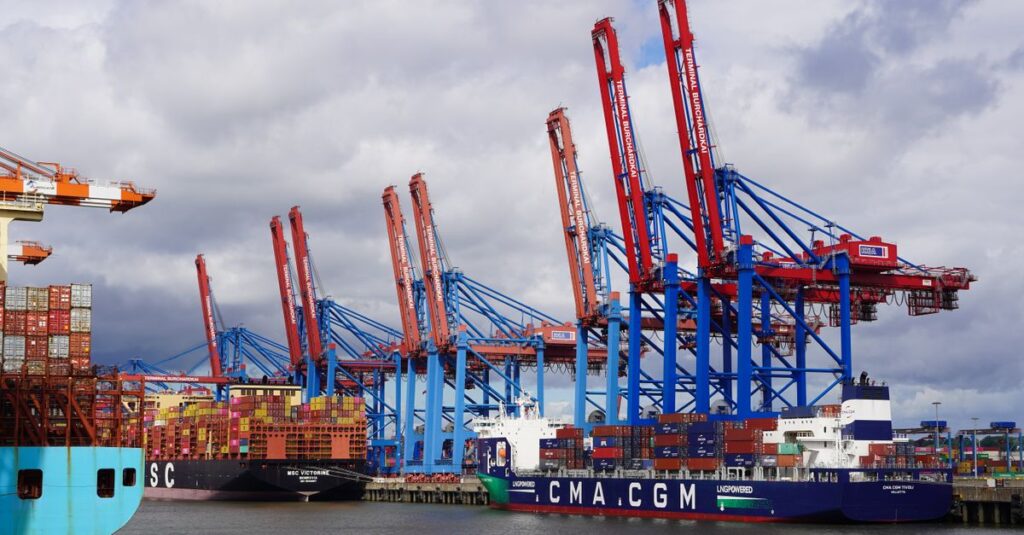
Nigeria’s ports have been on a remarkable journey in recent years, but 2025 is shaping up as a true turning point. The latest report from the Nigerian Ports Authority (NPA) shows a massive jump in cargo activity, and one name is leading the charge: Lekki Deep Sea Port.
If you’ve been watching Nigeria’s trade sector or thinking about opportunities in logistics, here’s what you need to know about the numbers and what they mean.
The Numbers Behind the Growth
Let’s start with the headline. The NPA’s 2025 Operational Performance Report revealed that total cargo throughput across Nigeria’s ports surged by 24.8%, rising from about 103.6 million metric tonnes in 2024 to over 129.3 million metric tonnes in 2025. That’s a significant jump in just one year. Container traffic also saw a major boost, growing 25.7% to surpass 2.1 million TEUs (twenty-foot equivalent units).
But the real story here is not just the overall growth—it’s which port drove most of it.
Lekki Port Takes the Lead: 40.6% of All Cargo
Lekki Deep Sea Port handled 40.6% of the nation’s total cargo throughput, making it the busiest port in Nigeria for 2025. To put that in perspective, Onne Port came in second with 19.1%, and the historically dominant Apapa Port followed with 16.7%. Lekki’s performance reflects its growing importance as a hub for both imports and exports, surpassing older ports in volume. It’s a clear shift in where the action is happening.
Why Lekki Port Is Beating the Others
Handles the Largest Vessels
One of the biggest advantages of the Lekki Deep Sea Port is its ability to accommodate very large vessels. The average gross registered tonnage (GRT) of ships calling at Lekki was 55,712, the highest in the country. Onne followed closely at 53,022 GRT, while Apapa and Tin Can Island handled much smaller ships, averaging 33,251 GRT and 36,909 GRT respectively. This means Lekki is attracting the “heavyweight” ships, which brings in more valuable cargo and improves efficiency.
Modern Infrastructure
Lekki is a fully automated terminal, designed from the ground up with modern technology. It has deeper berths, better cargo-handling equipment, and digital systems that reduce delays. It’s also still growing: as of late 2025, the port was operating at close to 50% of its installed capacity, with steady month-on-month growth. That leaves plenty of room to handle even more cargo in the coming years.
Strategic Location
Lekki’s location within the Lekki Free Trade Zone gives it strong access to industrial areas, and it benefits from ongoing infrastructure projects like the Lagos–Calabar Coastal Road. However, rail connectivity remains a key challenge.
More Exports, More Diversification
For a long time, Nigeria’s ports have been heavily focused on imports. That picture is slowly changing.
In 2025, exports accounted for 39% of total cargo throughput, while imports made up 59.2%. That might not sound like a massive shift, but it represents a steady rise in outward trade and is seen as validation of the government’s push to diversify the economy beyond crude oil.
The breakdown of cargo types also tells an interesting story:
- Liquid bulk cargo (fuel, chemicals) remained dominant at 54.7%
- Containerised cargo represented 24% of total volumes
Transshipment Is Exploding
One of the most eye-catching figures in the report is the 205.8% surge in transshipment containers. Transshipment means cargo that arrives at a Nigerian port but is destined for other countries in West and Central Africa. This sharp increase signals that Nigeria is emerging as a regional logistics hub, attracting international shipping lines and generating more revenue for the NPA.
Tin Can Island Still Leads in Ship Traffic
While Lekki won on cargo volume, Tin Can Island Port recorded the highest number of ship arrivals, accounting for 22.7% of all vessel calls in 2025. Total ship calls across all ports rose nearly 12% to 4,477 vessels, reflecting broad-based growth in maritime operations. Tin Can remains a very busy port, just not with the same volume of heavy cargo as Lekki.
What This Means for Businesses
If you are in import/export, manufacturing, logistics, or e-commerce, these developments matter to you:
- Bigger ships, better efficiency: Lekki’s ability to handle larger vessels means lower shipping costs per container, faster turnaround times, and fewer delays.
- More export opportunities: The growth in containerised exports (up 3.1%) and transshipment activity opens doors for Nigerian producers looking to reach regional markets.
- Infrastructure improvements on the way: The NPA has a federal government-approved port modernisation programme, and a National Single Window system is planned. These reforms aim to reduce cargo dwell time, upgrade berths, and expand handling capacity.
Challenges Still Exist
No growth story is without hurdles. Nigerian ports still face issues with port congestion, road access, and full digital integration. The Managing Director of Lekki Port has stressed that customs procedures and other services must be fully digitalised to reduce cargo dwell time.
He noted that for automation to work efficiently, “all players must be ready — customers, government and every stakeholder”. Rail connectivity to the Lekki corridor also remains a missing piece of the puzzle.
Frequently Asked Questions
How much cargo did Nigerian ports handle in total in 2025?
Over 129.3 million metric tonnes, up from about 103.6 million tonnes in 2024.
Why is Lekki Port growing so fast?
Its deep water allows very large ships to dock directly, it is fully automated, and it has significant spare capacity (currently around 50% utilised).
Is Lekki Port now the busiest in Nigeria?
Yes, by cargo volume. In 2025, it handled 40.6% of the nation’s total cargo, ahead of Onne (19.1%) and Apapa (16.7%).
What is transshipment, and why does the 205.8% increase matter?
Transshipment is cargo that arrives at a Nigerian port but is headed to another country. The sharp rise shows Nigeria is becoming a regional logistics hub, bringing in more shipping lines and revenue.
What are the main goods moving through the ports?
Liquid bulk (fuel, chemicals) dominates at 54.7%. Containerised goods (manufactured products, agricultural exports) account for 24%.
Conclusion
2025 is a milestone year for Nigeria’s maritime sector. With total cargo up nearly 25% and Lekki Port claiming over 40% of the market, the old hierarchy of Nigerian ports has changed. Lekki is not just competing—it is leading.
The rise in exports and the explosion of transshipment traffic suggest that Nigeria is slowly becoming more than just an import-dependent economy. The next few years will depend on how well infrastructure and digital systems keep up with the momentum.
If you are involved in trade, logistics, or any business that moves goods, here is a question worth sitting with: Is your supply chain ready for a Nigeria where Lekki Port is the new centre of gravity?
